
Band-tailed Pigeon


Band-tailed Pigeon (Patagioenas fasciata): Complete Identification, Habitat Guide & Sound Library
Quick Answer: How to Attract & Identify the Band-tailed Pigeon
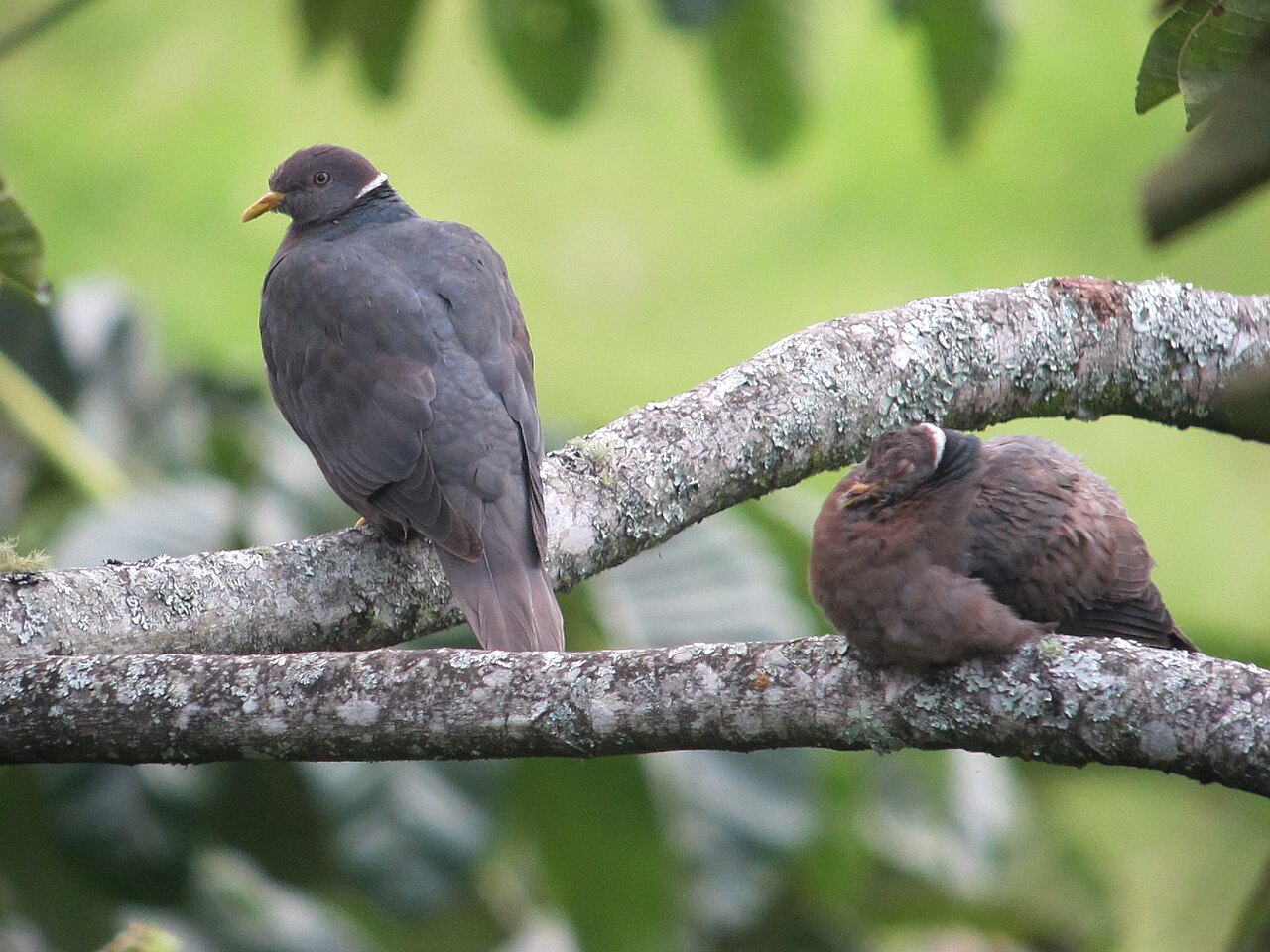
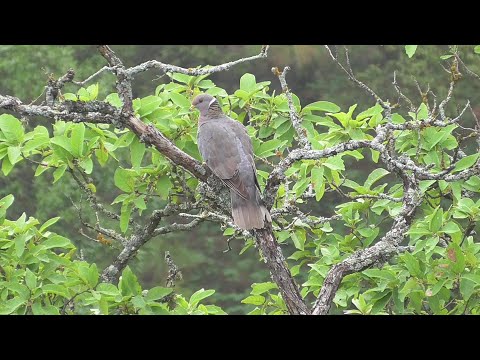
The Band-tailed Pigeon (Patagioenas fasciata) is the West’s native wild pigeon — a big, forest-dwelling pigeon marked by a yellow bill with a black tip, an iridescent green nape with a white crescent, and a broad pale band across the tail. Unlike the city Rock Pigeon, it lives in oak and conifer woodland, following acorn and berry crops in flocks. The voice is a slow, deep, owl-like cooing. Western yards near forest can attract them with platform feeders of sunflower seed, large water sources, and native berry trees. They share the woodland edge with the Mourning Dove.
Species Physical Profile & Morphometrics
The Band-tailed Pigeon belongs to the pigeon and dove family (Columbidae) and is North America’s closest relative of the extinct Passenger Pigeon. It lives year-round along the Pacific coast and in the mountain Southwest, with northern birds drifting south in winter.
The identification formula: yellow bill with black tip + white crescent on the nape + pale tail band. A Rock Pigeon has a dark bill, white rump, and two black wingbars; a Mourning Dove is far slimmer with a long pointed tail. Band-tails are big, dark, and forest-shy, usually in flocks rather than pairs.
Essential Morphometric Field Marks:
- Body Length & Mass: 13.0 to 15.7 inches (33–40 cm) and 7.9 to 12.0 ounces (225–340 grams) — crow-sized, plump and small-headed like all pigeons.
- Wingspan: 26.0 inches (66 cm); flight is swift and direct with strong, steady wingbeats, flocks swinging over ridge tops between feeding and roosting woods.
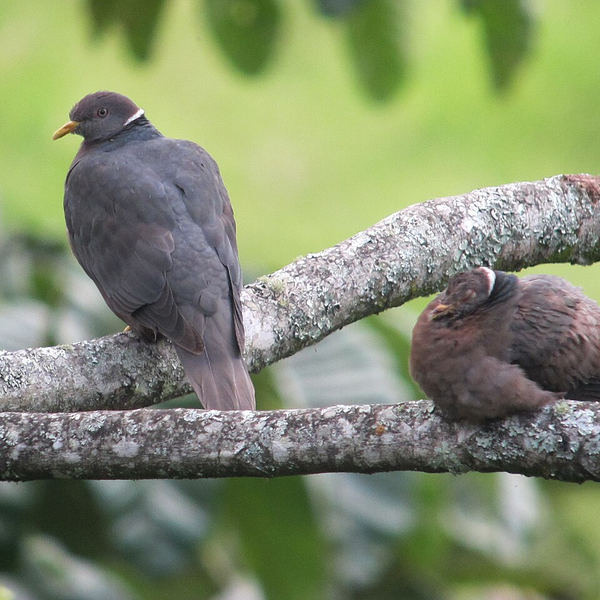
- Bill Structure & Color: A yellow bill tipped with black plus yellow feet — the combination is unique among U.S. pigeons and visible at feeder distance.
- Color Pattern: Slate-gray overall with a purplish wash on head and breast, iridescent green-bronze nape set off by a white crescent, and a pale gray band across the tail tip.
- Male vs. Female: The sexes look nearly alike — the male averages slightly brighter on the neck; juveniles lack the white crescent and show scaly pale-edged feathers instead.
The flock leader in silhouette: slate-gray with a purplish sheen, yellow bill flashing as he feeds, announcing his presence with slow, owl-like coos from a high conifer snag.
Near-identical to the male — the same yellow bill, white crescent, and banded tail — she lays a single egg on a flimsy stick platform tucked into a forest tree, and both parents share incubation.
Band-tailed Pigeon Vocalization Guide (0 Field Recordings)
The Band-tailed Pigeon’s voice is slow, deep cooing — low, two-syllable notes easily mistaken for an owl at dawn. All recordings below are real field audio via Wikimedia Commons — no simulations. For a deeper library, browse xeno-canto: Band-tailed Pigeon.
1. The Owl-Like Coo
2. Flock Chatter
3. The Wing Whistle
Habitat, Range & the Western Woodland
The Band-tailed Pigeon is a bird of western oak and conifer woodland: coastal evergreen forest, oak savanna, pinyon-juniper and montane forest of the interior West. It visits yards that adjoin mature woods, especially where native berry trees and oaks border open feeding ground.

The West’s Native Pigeon
The range splits into two populations: a Pacific coastal band from British Columbia through California, and an interior mountain population in Arizona, New Mexico, Colorado, and Utah. Northern birds withdraw south in winter, while coastal birds often stay year-round.
For backyard birders: yards bordering mature oaks, madrones, or conifers anywhere along the Pacific slope can host wandering flocks — especially in late summer and fall when berry crops ripen and flocks roam widely in search of food and mineral water.
Backyard Behavioral Patterns & Social Dynamics
The Band-tailed Pigeon is a nomadic flock bird of the western woods — a woodland feeder with real backyard potential. Four behaviors explain most of what you will observe:
🌰 The Acorn & Berry Nomad
Flocks track acorns, pine nuts, madrone and elderberry crops across the landscape — the same tree can host dozens of birds one week and none the next, depending on the crop.
🧂 The Mineral Seeker
Band-tails famously visit mineral springs, salt licks, and even seaside seeps — they need sodium and calcium, and a yard water source with a mineral block draws them reliably.
🐦 The Flock Feeder
Unlike solitary Mourning Doves, Band-tails arrive in flocks of five to fifty, dominating a platform feeder in a whirl of wings — plan feeder capacity accordingly.
🌳 The Canopy Nester
Nests are flimsy stick platforms in forest trees, holding a single white egg; the species may raise several broods a year, which keeps flocks visiting water all season.
Problem: “A Flock of Big Dark Pigeons Appeared, Then Vanished. What Should I Do?”
The three most common Band-tailed Pigeon puzzles all have proven answers:
First, the wandering flock: Band-tails are nomads tracking food crops — a visit lasts as long as the acorns or berries do. Note what they were eating; when that crop peaks again next year, the flock usually returns. Second, the identification doubt: city Rock Pigeons occasionally wander to rural yards — check the bill; yellow with a black tip and a white neck crescent confirm Band-tailed. Third, the crowding worry: a big flock can strip a feeder fast and spread disease — use large platform feeders, spread seed in several spots, and scrub the feeding area weekly to keep the flock healthy.
Method 1: Set the Table — Platform Feeders & Mineral Water
Design for a big, flocking woodland pigeon:
-
Offer Platform Feeders
A large, sturdy platform or tray feeder — Band-tails are too heavy for most hanging tubes; a solid tray with black-oil sunflower and cracked corn is the draw.
-
Provide a Large Water Source
A ground-level bath or shallow stock pan kept clean — flocks drink together, and water often pulls in birds that ignore the seed.
-
Add Mineral Sources
A mineral block or a pinch of grit with crushed oyster shell near the water — the species actively seeks minerals, one of its most exploitable habits.
-
Feed in Several Spots
Scatter seed across two or three trays rather than one crowded pile — flocks feed more calmly and disease risk drops sharply.
Method 2: Build the Habitat — Native Berries & Forest Edge
Feed the seasons, and the flock finds you each year:
-
Plant Native Berry Trees
Madrone, elderberry, dogwood, cascara, and serviceberry — the fall fruit that wandering flocks track; a berrying tree beats any feeder.
-
Keep Mature Oaks & Conifers
Band-tails feed and nest in mature woodland — preserve veteran oaks and tall conifers adjoining your lot; canopy trees are the anchor of every flock’s circuit.
-
Leave a Quiet Roost Corner
Flocks rest in dense evergreen cover between feeding bouts — an undisturbed corner of tall shrubs or conifers keeps them lingering near your yard.
-
Protect Water in Late Summer
August–October is peak wandering season — keep baths full and clean as natural sources dry up; water is the flock’s first search image.
Tool Solution: Recommended Hardware for Band-tailed Pigeon
Equipment matched to a flocking woodland pigeon:
Large Platform Feeder
A wide, weight-bearing tray feeder with black-oil sunflower — the standard setup that turns a wandering flock into regular visitors.
- • Food: Black-oil sunflower, cracked corn
- • Style: Sturdy tray or platform
- • Capacity: Flock-sized
Ground-Level Water Source
A large shallow bath or pan at ground level, scrubbed weekly — the single most reliable draw for thirsty flocks in late summer.
- • Feature: Wide, shallow, ground-level
- • Placement: Open sightlines
- • Care: Weekly scrub
Native Berry Plantings
Madrone, elderberry, and dogwood — the natural fall buffet that wandering flocks remember year after year.
- • Plants: Madrone, elderberry, dogwood
- • Season: Late summer–fall
- • Bonus: Thrushes & waxwings too
Frequently Asked Questions
- Species Profile: The Band-tailed Pigeon (Patagioenas fasciata) is a 13.0–15.7 inch, 7.9–12.0 ounce pigeon (Columbidae), band code BTPI — the West’s native wild woodland pigeon.
- ID in One Look: Yellow bill with black tip, white nape crescent, iridescent green neck, pale tail band — no city pigeon shows these marks.
- The Sound: Slow, deep, owl-like cooing from high forest perches; real field recordings above.
- Range & Habit: Pacific coast and mountain West woodlands; nomadic flocks tracking acorns and berries; visits wooded yards with water and platforms.
- Feeder Formula: Sturdy platform trays with sunflower, large clean ground water, mineral grit, and native berry trees.
- The Flock Rule: Feed in several spots and scrub weekly — healthy flocks return every season.
Bird Watching Log
Species: Band-tailed Pigeon (Patagioenas fasciata)
| Band-tailed Pigeon (Flock Size: ___ — Yellow Bill Seen: Yes / No — At Water: Yes / No — Food Taken: Seed / Berry / Mineral — Date & Time: ___ — Direction of Flight: ___) | |