
Best Hummingbird Feeders


Best Hummingbird Feeders: Saucer vs Bottle, Recipe & Cleaning
What’s the best hummingbird feeder and nectar recipe?
The best feeder is the one you can take apart and scrub completely — saucer-style feeders win for most people because they disassemble fully, don’t drip, and clean in a minute. Fill it with 1 part white table sugar to 4 parts water, nothing else: no dye, no honey, no brown sugar, no store nectar with additives. Clean and refill every 2–3 days in summer heat (weekly in cool weather), because fermented or moldy nectar harms hummingbirds. Add an ant moat, skip yellow parts that attract bees, and hang it where you can watch from a window — the whole hobby in one paragraph.
Saucer vs. Bottle: The Design Decision
| Saucer (Dish) Style | Bottle (Inverted) Style | |
|---|---|---|
| Design | Nectar sits in a shallow dish below the feeding ports | Nectar reservoir inverted above the ports, gravity-fed |
| Dripping | Never drips — no pressure differential | Drips when heat expands air in the bottle; drips attract bees and ants |
| Cleaning | Fully disassembles; every surface reachable | Narrow necks need brushes; bases hide mold in seams |
| Capacity | Smaller (8–12 oz typical) | Larger (16–32 oz) |
| Best for | Most yards, hot climates, beginners | Heavy-traffic stations with disciplined cleaning |
Thirty years of both types on my deck: the saucer wins on the only metric that protects birds — cleanability. A bottle feeder with hidden seam mold is a hazard; a saucer you can scrub bare in sixty seconds is a tool. Whatever style you buy, apply the disassembly test in the store: if you can’t take it completely apart and see every surface the nectar touches, put it back.
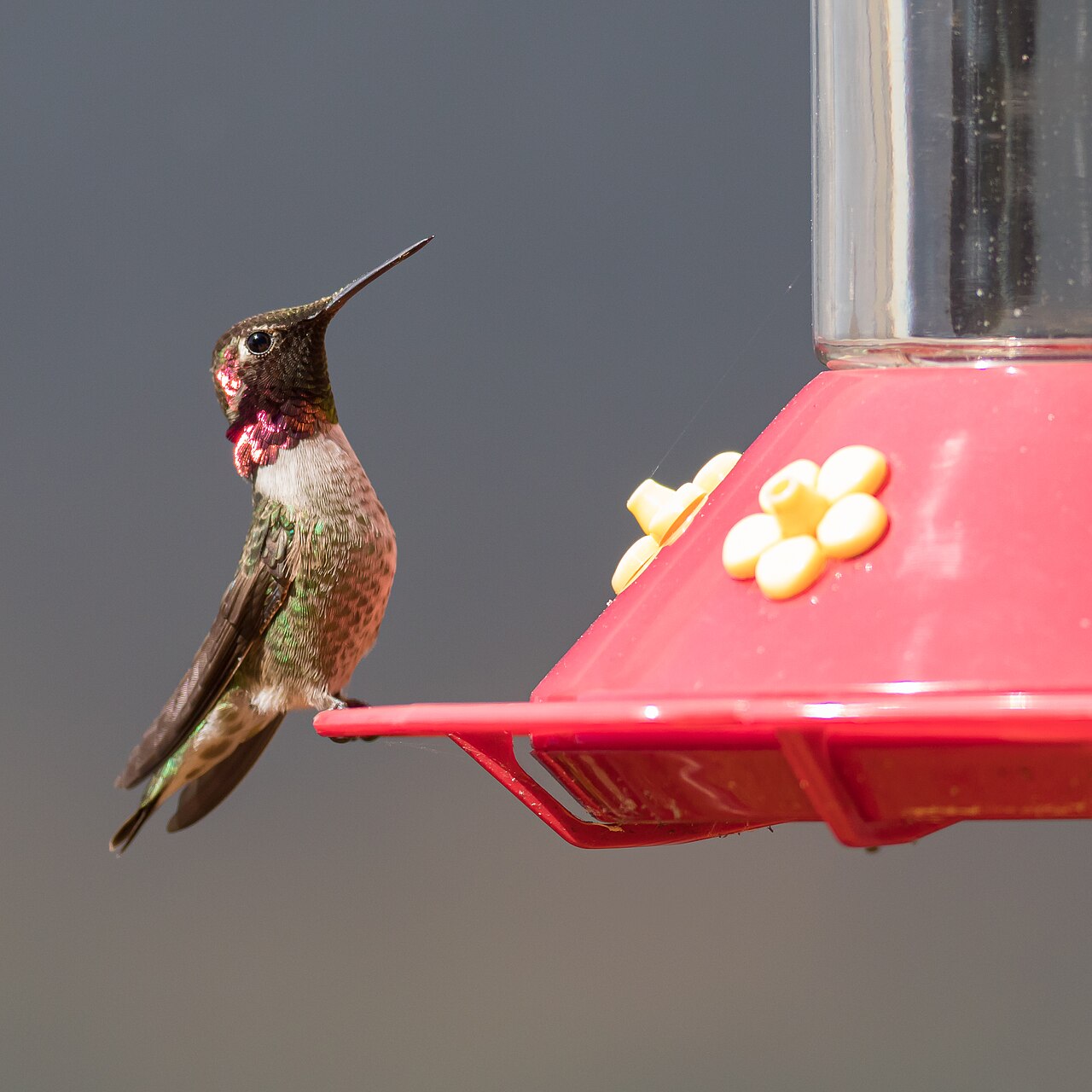
Features that matter beyond the body style: an ant moat (the water cup above the feeder — non-negotiable), bee guards or small ports if wasps mob your station, perches (hummingbirds feed resting when they can — perched birds stay longer and you see more), and no yellow parts, which draw bees. Red is the attractant; it should be on the feeder, not in the liquid.
The Only Nectar Recipe You Need
1 part white table sugar, dissolved in 4 parts water. That’s it — and it isn’t minimalism, it’s biology: the ratio closely matches the sucrose concentration of natural flower nectar, and white sugar dissolves clean without additives. What doesn’t belong in the feeder, and why:
- No red dye. Unnecessary (the feeder’s red parts attract the birds) and the safety of concentrated dyes at hummingbird consumption levels is unproven. A bird drinking several times its weight daily concentrates anything in the liquid. Skip it.
- No honey. It ferments fast and grows a fungus that causes a fatal tongue infection in hummingbirds. This one kills; never use it.
- No brown, raw, or powdered sugar. Molasses content adds iron and minerals that birds can’t excrete at nectar volumes; powdered sugar carries cornstarch. White refined sugar only.
- No commercial “instant nectar” with additives. Vitamins, preservatives and dyes add cost and risk; sugar and water is what flowers serve.
Practical prep: stir sugar into hot tap water until clear (no boiling needed for small batches), cool, fill. Refrigerate surplus up to a week. In cold winters, a slightly richer 1:3 mix for Anna’s Hummingbirds in freezing weather is accepted practice; return to 1:4 when temperatures moderate.
Ants, Bees, and Bears (Yes, Bears)
- Ants: an ant moat — the small water cup hung between hook and feeder — stops them completely. Keep it filled; in hot weather it evaporates in two days. Greased poles and sticky barriers fail or foul feathers; water is the clean barrier.
- Bees and wasps: drips are the cause nine times in ten — switch to a saucer, tighten bottle gaskets, and don’t overfill. Bee guards help; yellow feeder parts hurt. Moving the feeder a few feet confuses bee scouts for days while hummingbirds find it in minutes.
- Rufous tyranny: where Rufous Hummingbirds migrate through, one male may claim your feeder and fight all comers. The fix is a second feeder around a corner — one bird can’t guard two stations it can’t see simultaneously.
- Bears: in bear country, feeders come in at night or come down entirely in spring and fall. A bear that learns feeders becomes a problem for the whole neighborhood, and the feeder never survives the lesson.
Cleaning: The Schedule That Protects Birds
Nectar is sugar water — a bacterial and fungal culture medium. Black mold in a feeder port causes tongue infections that kill hummingbirds slowly. The schedule isn’t optional:
| Temperature | Clean & Refill Every |
|---|---|
| Above 90°F | Daily |
| 80–90°F | 2 days |
| 70–80°F | 3 days |
| 60–70°F | 4–5 days |
| Below 60°F | Weekly |
Method: hot water and a bottle brush into every port and seam; a splash of white vinegar for film; a monthly soak in a weak bleach solution (1:9) if you see any black specks, rinsed thoroughly. Cloudy nectar is already late — nectar should be water-clear. If it hazes, dump it and clean, no exceptions. This is the section of the page that matters most; a hummingbird feeder is a responsibility, not an ornament.
Where to Hang It
- Shade or morning-sun spots. Afternoon sun ferments nectar fast and heats it to temperatures hummingbirds avoid. Dappled shade near flowers is ideal.
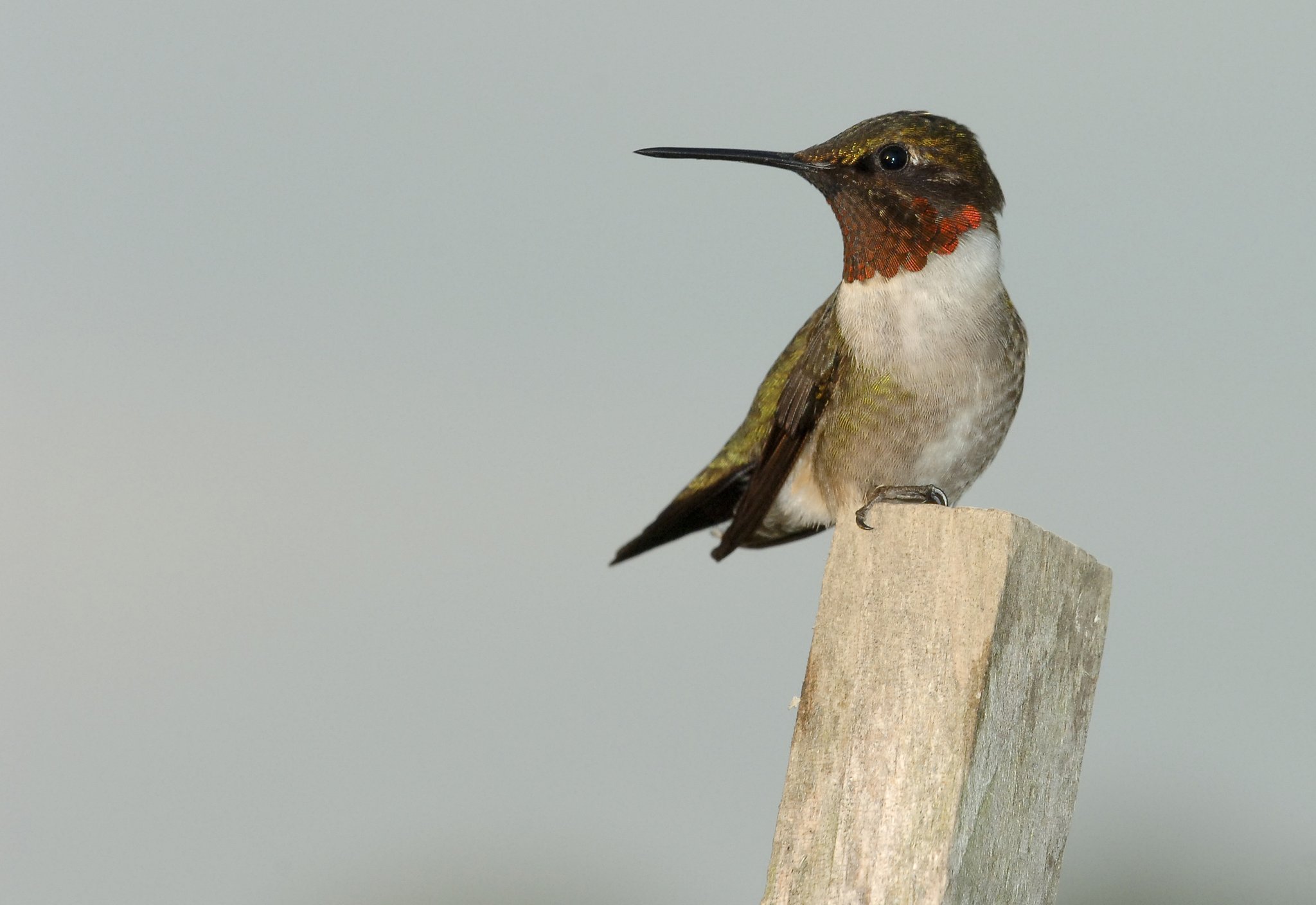
- Near cover, in the open. Hummingbirds want a lookout perch — a bare twig, a wire, a shrub top — within sight of the feeder, with the feeder itself in open fly space. Ruby-throats will adopt a station within a day if a perch and a flower bed flank it.
- Window rules apply. Within 3 feet of glass or beyond 30 feet — hummingbirds strike windows too, and at their speeds the 3-foot rule is the safe one.
- Where you can see it. This sounds frivolous and isn’t: the feeder you watch is the feeder you keep clean and full. Kitchen window beats garden corner for most households.
Winter Feeding and Migration Myths
The persistent myth: leaving feeders up in fall “stops” migration. It doesn’t — migration is triggered by day length, not dessert. Western Anna’s Hummingbirds winter as far north as coastal British Columbia entirely because of feeders and planted winter bloomers, and a winter feeder in the Southeast occasionally hosts a rare Rufous or Calliope that makes the local birding listserv.
Winter practice: keep nectar from freezing (bring it in overnight, or use a feeder warmer or a clamp light in hard freezes), maintain the 1:4 ratio (1:3 only during freezing snaps), and clean on the cool-weather weekly schedule. In the East, conventional wisdom says take feeders down two weeks after your last sighting in fall — but leaving one up through November costs nothing and occasionally feeds a genuine rarity.
7 Hummingbird Feeder Mistakes
- Red dye in the nectar. Unproven safety at hummingbird volumes; the red feeder does the attracting.
- Honey or brown sugar. Honey ferments into fatal fungus; molasses-rich sugars overload iron. White sugar only.
- Weekly cleaning in August. Heat ferments nectar in two days; temperature sets the schedule, not the calendar.
- A feeder you can’t fully disassemble. Hidden seams grow the mold that infects tongues.
- No ant moat. A drowned ant raft in the nectar fouls the whole fill; the moat is mandatory.
- Yellow ports. They advertise to bees; red-only feeders have fewer bee problems.
- Taking feeders down “so they’ll migrate.” Day length drives migration; your feeder risks nothing and might carry a late migrant through.
Frequently Asked Questions
- 1:4 white sugar and water — no dye, no honey, no exceptions.
- Cleanability is the feature — full disassembly or don’t buy it.
- Heat sets the cleaning schedule — daily above 90°F; cloudy is already late.
- Ant moat mandatory — water barrier beats grease and gimmicks.
- Red attracts, yellow invites bees — color the feeder, never the nectar.
- Saucers don’t drip — drips are the root of most bee problems.
- Feeders never stop migration — day length does; a late feeder is charity, not sabotage.