
Black-chinned Hummingbird
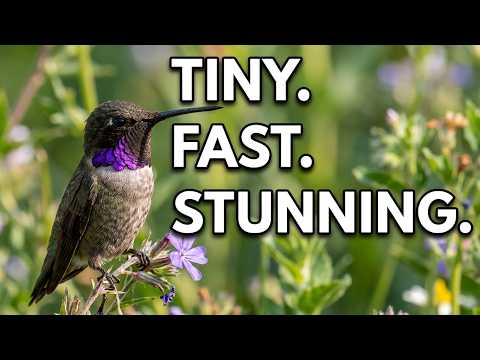


Black-chinned Hummingbird (Archilochus alexandri): Complete Identification, Feeder Guide & Attraction Handbook
Quick Answer: How to Attract & Identify Black-chinned Hummingbirds
The Black-chinned Hummingbird (Archilochus alexandri) is the adaptable river-corridor hummingbird of the American West and Southwest — a 3.5-inch bird that follows cottonwood canyons, desert washes, and shady suburban streets from British Columbia to Texas. The male wears a black chin with a thin violet-purple band that flashes only in good light; the female is plain green and white and pumps her tail while hovering. To attract them: hang red feeders of 4:1 white-sugar water in dappled shade from early March through September, scrub them often in the heat, and plant the native tubular flowers of the river corridor — penstemon, salvia, ocotillo, and desert willow. It shares western yards with the Anna’s Hummingbird and the migrating Rufous Hummingbird.
Species Physical Profile & Morphometrics
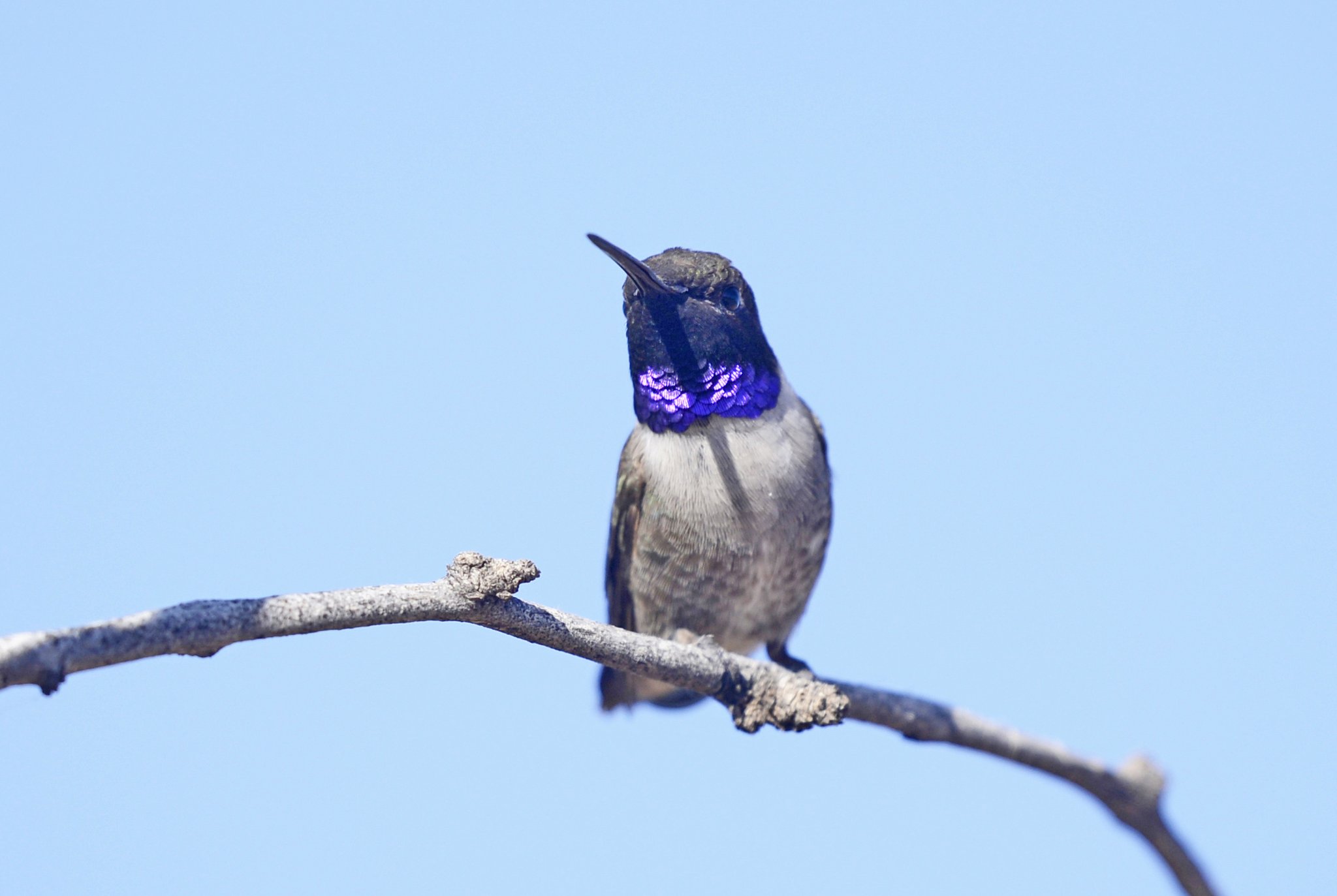
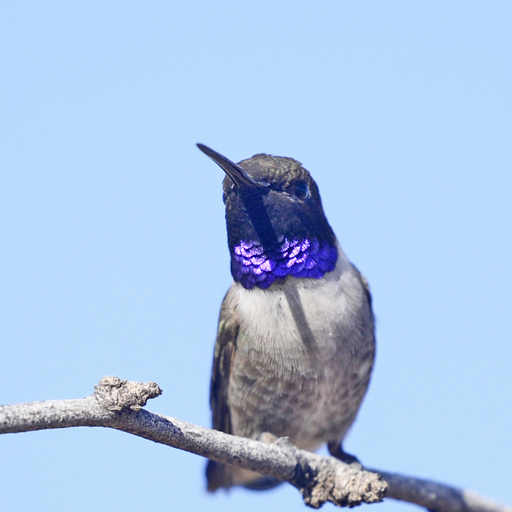
The Black-chinned Hummingbird is a small, slender member of the hummingbird family (Trochilidae) with a long straight bill, a slightly forked tail, and a habit of hovering with the tail pumping up and down. In the harsh light of the Southwest, many males look simply black-throated — the violet band is a close-range, good-light reward.
The identification formula: slender green-and-white hummingbird + (on the male) a black chin with a violet band + a constantly pumping tail + a western river-corridor address. The classic confusion species is its close eastern cousin the Ruby-throated Hummingbird — the two meet only in a narrow zone from Texas to Oklahoma, and females are separated best by behavior: a Black-chinned pumps its tail almost nonstop while feeding.
Essential Morphometric Field Marks:
- Body Length & Mass: about 3.25 to 3.75 inches (8–9.5 cm) and 0.1 to 0.2 ounces (2.5–4.5 grams) — a mid-sized hummingbird, slightly larger and longer-billed than a Ruby-throated.
- Wingspan: about 4.3 inches (11 cm); flight is buoyant and nimble, with the wings a blur and the tail see-sawing at every hover.
- Bill Structure & Color: A long, straight black bill — noticeably longer than a Ruby-throated’s — built for probing the deep tubular blooms of penstemon, salvia, and ocotillo.
- Color Pattern: Male: green back, white chest, and a black chin and throat edged below by a narrow iridescent violet-purple band that appears only when light strikes it directly. Crown dull black-green; tail forked and dusky.
- Male vs. Female: The female is bright green above and clean gray-white below with no gorget at all, white tips on the outer tail feathers, and a long bill. Juveniles resemble her; young males show a streaked throat with scattered dark-and-violet feathers by late summer.
The violet-edged sentinel: black-chinned in most lights, flashing a royal-purple band when the sun strikes his throat. He claims a bare high perch — a dead branch or utility wire — sallies out to feed, and courts females with a wide, pendulum-like dive display that traces a deep U through the air.
The canyon architect: plain green and white, slightly larger than her mate, pumping her tail at every hover. She alone builds the walnut-sized nest of plant down bound with spider silk, camouflaged with lichen and saddled on a drooping branch — often near or over water — lays 2 eggs, and raises the chicks solo.
Black-chinned Hummingbird Vocalization Guide (3 Field Recordings)
A Black-chinned has no true song — its soundtrack is the high, thin “tchew” chip note, the buzzy chatter of feeder disputes, and the soft wing-whir of the courtship dive. All three recordings below are real field audio shared under commercial-use licenses — no simulations. For a deeper library, browse xeno-canto: Black-chinned Hummingbird.
1. The Thin Chip Notes
2. The Texas Spring Voice
3. The Northern Frontier
Habitat, Range & the Human Landscape
The Black-chinned Hummingbird follows water through the dry West: cottonwood and willow river corridors, sycamore-lined canyons, desert washes, oak woodlands — and the irrigated yards and parks that mimic them. It is one of the most adaptable hummingbirds on the continent, equally at home in a wild canyon and a downtown garden.

From British Columbia to Western Mexico
The breeding range (yellow) runs from interior British Columbia through the Great Basin and Rocky Mountains, across the Southwest, and east to central Texas — always tied to water: rivers, streams, springs, and the green corridors they feed. The winter range (blue) centers on the lowlands of western Mexico, with small numbers wintering along the Gulf Coast of Texas and Louisiana.
Backyards score best by mimicking the corridor: a feeder in dappled shade, native tubular blooms from spring through fall, and a reliable water feature. In much of the West this is the default hummingbird — the first at the feeder in March and often the last to leave in September.
Backyard Behavioral Patterns & Social Dynamics
The Black-chinned Hummingbird is calmer than its Rufous cousin but no less busy — a bird of perches, corridors, and constant motion. Four behaviors explain most backyard encounters:
🐦 The Tail Pumper
The single most useful behavioral clue: a Black-chinned pumps its tail up and down almost constantly while hovering — a see-saw motion far more pronounced than in other hummingbirds. Watching a plain green female? Tail-pumping plus a long bill settles the ID in seconds.
🌊 The River-Corridor Loyalist
This species maps its world by water — cottonwood rivers, sycamore canyons, desert washes with running springs. Females often nest on drooping branches near or directly over water, and backyard birders close to a creek or irrigated greenbelt see far more of them than dry-lot neighbors do.
🏙️ The Adaptable Neighbor
Few hummingbirds take to towns better. Black-chinneds nest in shade trees, visit window feeders, and rest on utility wires between feeding bouts. Their willingness to use ordinary suburban yards makes them the default hummingbird across much of the urban West.
💜 The Pendulum Display
The courting male performs a wide, U-shaped pendulum dive before a perched female, swooping back and forth like a swing while his gorget flashes violet in the sun. Between displays he advertises from a bare high perch — the dead branch above your garden is his stage.
Problem: “The Heat Spoils My Nectar, Bees Mob the Feeder, and a Bully Chases Everyone Off. What Do I Do?”
The three most common Black-chinned Hummingbird frustrations all have proven answers:
First, fermented nectar: in southwestern heat, sugar water can spoil in two days — hang feeders in dappled shade, fill them only partway, and dump, scrub, and refill every 2–3 days in summer (weekly in cool weather), with an occasional 10% bleach rinse for black mold in the ports. Second, bees and ants: choose a feeder with bee guards and a built-in ant moat, avoid models with yellow parts, wipe drips from the outside, and never coat the hanger with anything sticky. Third, the late-summer bully: migrating Rufous Hummingbirds pass through western yards from July onward and will try to own every feeder — hang a second or third feeder around a corner and out of sight so your resident Black-chinneds can feed in peace. Solve these three and the corridor comes to you.
Method 1: Mix & Serve Perfect Nectar (Hot-Climate Edition)
Design for a species whose entire range sits under a hard summer sun:
-
The 4:1 Recipe
Mix 1 part plain white sugar to 4 parts water — ¼ cup of sugar per 1 cup of water — stirred until clear (brief boiling helps it dissolve; cool before filling). This matches the sweetness of the wildflower nectar hummingbirds evolved on.
-
Never Red Dye, Never Honey
Skip red food coloring entirely — the red parts of the feeder itself are all the advertising needed. Honey is dangerous: it grows a fungus that is fatal to hummingbirds. White sugar only — no brown sugar, no raw sugar, no sweeteners.
-
Shade It, Half-Fill It
In hot climates, hang the feeder in dappled shade and fill it only as full as the birds can drain in two or three days. A small, fresh feeder beats a big, fermented one every time — and shade keeps the sugar water from cooking by noon.
-
Clean on a Heat Schedule
Empty, scrub, and refill every 2–3 days in summer heat — weekly when it’s cool — whether or not the feeder looks empty. If the nectar turns cloudy, it has already turned: dump it immediately and give the ports a 10% bleach rinse, rinsed thoroughly.
Method 2: Plant the River-Corridor Garden
Feeders win the visit; the right native blooms hold the territory:
-
Spring Bloomers for Returning Migrants
Catch the March-and-April homecoming with early tubular natives: penstemon, salvia, manzanita, and desert honeysuckle. A yard already blooming when the males arrive becomes their season-long headquarters.
-
Summer Staples for the Long Heat
Carry the season with heat-proof bloomers: ocotillo, agave, desert willow, bee balm, and autumn sage. Desert willow in particular is a Black-chinned magnet — a small tree covered in orchid-like trumpets through the hottest months.
-
Leave the Cobwebs and the Fluff
Nesting females build from spider silk and plant down — willow fluff, dandelion clocks, thistledown. Leave eave cobwebs standing and a patch of seed heads untrimmed, and a female may saddle her lichen-camouflaged nest on a drooping branch in view of your window.
-
Skip the Pesticides, Add a Mister
Hummingbirds need tiny insects and spiders for protein — nectar alone cannot raise chicks — so a pesticide-free garden feeds them twice. On hot afternoons a mister on foliage draws them in to bathe, droplet by droplet, between feeding runs.
Tool Solution: Recommended Hardware for Black-chinned Hummingbirds
Equipment matched to a heat-adapted, corridor-following nectar feeder:
Red Hummingbird Feeder (with Ant Moat & Bee Guards)
A red feeder with a built-in ant moat, bee-proof ports, and no yellow parts that comes apart easily for scrubbing — the workhorse for a species that visits dozens of times a day in the heat.
- • Food: 4:1 white-sugar water, no dye, no honey
- • Style: Easy-clean reservoir, ant moat, bee guards
- • Routine: Scrub every 2–3 days in summer heat
Second Feeder (Out of Sight)
The reliable answer to late-summer Rufous bullies passing through: a spare feeder hung around a corner or on the far side of the house, so no single bird can guard them all. Window-mounted versions double as close-up viewing stations.
- • Placement: Out of sight of the main feeder
- • Style: Window-mount for close viewing
- • Effect: Lets females and juveniles feed in peace
Mister or Dripper
Hummingbirds bathe in fine spray and on wet leaves rather than deep pools — a mister aimed at foliage, or a dripper over a shallow stone, gets heavy use from thirsty birds on hot afternoons and echoes the river corridors they evolved in.
- • Depth: Fine spray or under 1 in of water
- • Extras: Timer for dry spells
- • Placement: Near perching branches, in view of flowers
Frequently Asked Questions
- Species Profile: The Black-chinned Hummingbird (Archilochus alexandri) is a 3.25–3.75 inch, 2.5–4.5 gram hummingbird (Trochilidae) of the West — the male black-chinned with a violet band, the female plain green and white, band code BCHU.
- ID in One Look: Slender green-and-white hummingbird pumping its tail at the hover; the male’s black throat flashes violet only in good light. Eastern look-alike: the Ruby-throated.
- The Corridor Range: Breeds from interior British Columbia through the Great Basin and Rockies to Texas, always along water; winters mostly in western Mexico, with small numbers on the Gulf Coast.
- The Sound: No true song — thin “tchew” chips, buzzy feeder chatter, and the soft wing-whir of the pendulum display dive; three real field recordings above.
- Feeder Formula: 4:1 white-sugar water, no dye and no honey, hung in dappled shade and scrubbed every 2–3 days in summer heat — plus a spare feeder out of sight for when Rufous bullies pass through.
- Garden Formula: Plant the river corridor — penstemon, salvia, and manzanita for spring, ocotillo, agave, and desert willow for summer — no pesticides, cobwebs left standing, and a mister for bathing.
Bird Watching Log
Species: Black-chinned Hummingbird (Archilochus alexandri)
| Black-chinned Hummingbird (Violet Band Seen: Yes / No — Feeder Visits: ___ — Tail Pumping: Yes / No — Thin Chips Heard: Yes / No) | |