
Suet Feeding: The Complete Guide


How to Feed Suet to Birds: Cakes, Recipes & Seasons
How do I feed suet to birds?
Buy or render beef suet or commercial suet cakes and serve them in a simple wire cage feeder hung where woodpeckers, nuthatches and chickadees can cling. Suet is concentrated fat — the best cold-weather energy food you can offer — and it’s served roughly October through April in most climates; in summer heat, use no-melt rendered cakes or pause entirely so fat doesn’t turn rancid or coat feathers. To keep starlings from mobbing it, choose an upside-down feeder. That’s the whole system: cage, cake, cool season.
What Suet Actually Is
Suet is the hard fat from around the kidneys of cattle — dense, white, and solid at room temperature. That’s different from the soft fat trimmings left on a steak, which smear and spoil; true suet’s hardness is what makes it safe and useful as bird food. Rendered (melted and strained), it becomes the base of every suet cake on the shelf.
Why birds crave it: fat carries more than twice the calories per gram of seed or insects, and in cold weather a small bird’s survival math runs on exactly that margin. A Black-capped Chickadee on a zero-degree night burns through fat reserves that would astonish you — one researcher famously described winter chickadees as flying campfires. Suet is firewood delivery.
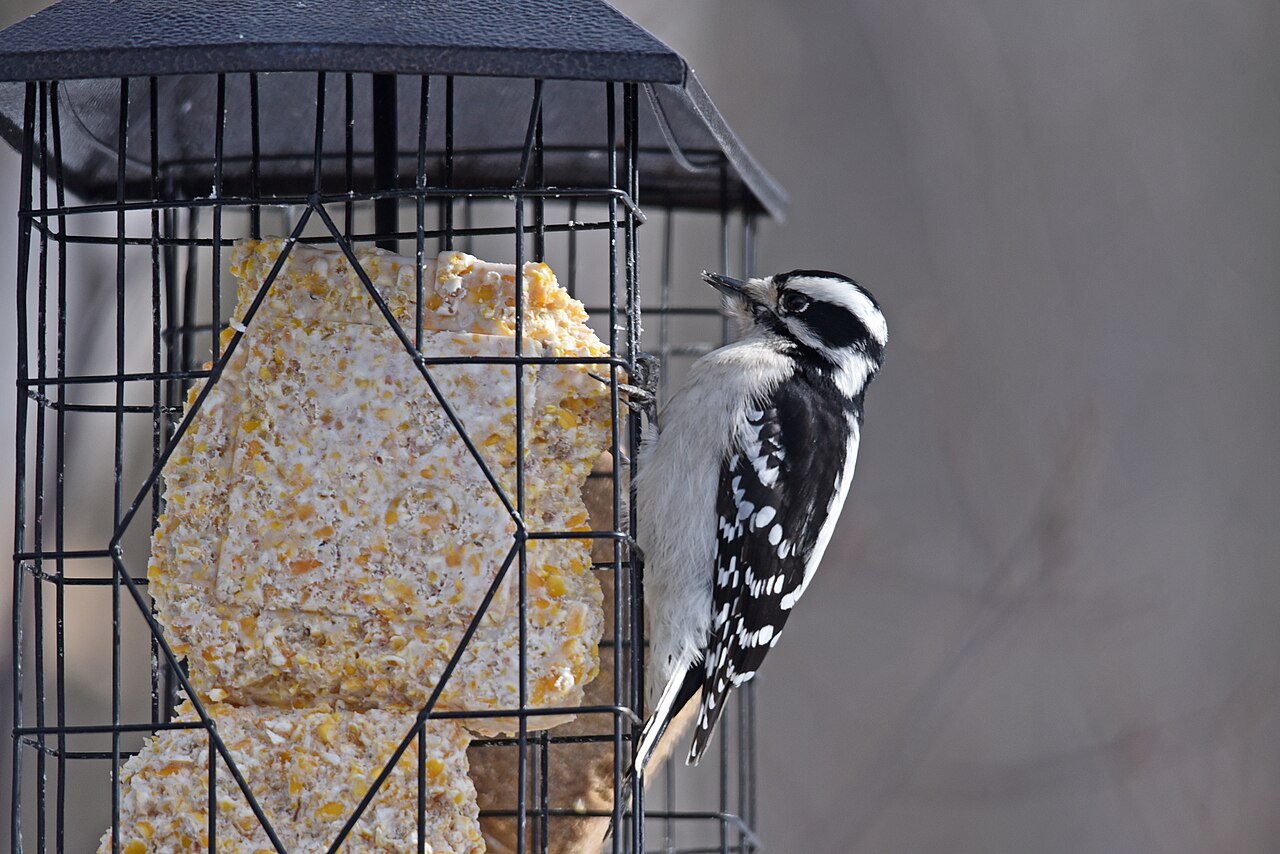
In my own yard the suet cage is the first feeder the January crowd checks at dawn: the Downy before first light, the nuthatch upside down two minutes later, a Carolina Wren snipping pieces from below. Thirty years of winters, and no feeder has ever paid rent more reliably.
The Forms: Raw, Rendered, Cakes, Balls, Plugs
| Form | What It Is | Best Use |
|---|---|---|
| Raw suet | Fresh beef kidney fat from a butcher | Free or cheap; hang chunks in a cage in cold weather; must be fresh |
| Commercial cakes | Rendered suet pressed with seeds/nuts/fruit | The everyday standard — fits cage feeders, consistent quality |
| No-melt cakes/dough | Suet rendered harder, or blended doughs | Warm-weather and summer feeding |
| Balls and plugs | Suet spheres; cylinders for log feeders | Specialty feeders; plugs suit log-style woodpecker feeders |
| Suet sprinkles/crumbles | Shredded suet | Platform feeding for bluebirds, wrens, and other non-clingers |
Butcher note: many meat counters give suet away or sell it for almost nothing. Ask for clean kidney fat, not mixed trimmings, and never serve fat that’s been cooked, seasoned, or salted — bacon grease and drippings are off the table entirely (salt, and they stay soft enough to coat feathers and destroy waterproofing).
Cake Flavors: What’s Worth Buying
The shelf offers everything from “hot pepper” to “blueberry blast.” What actually matters to the birds:
- High-fat, low-filler. Flip the cake over: suet should head the ingredient list, with peanuts, sunflower chips or cornmeal as the bulk. Cakes bulked with milo and millet feed the ground, not the woodpeckers.
- Peanut and nut blends are the reliable crowd-pleasers — woodpeckers, nuthatches, chickadees, titmice all prioritize them.
- Fruit blends (raisin, berry) add robins, mockingbirds and catbirds in the cooler months — worth one cage if you want the thrush crowd.
- Hot-pepper suet genuinely deters squirrels and raccoons (mammals feel capsaicin; birds don’t) — the answer when a squirrel has claimed your cage.
- Insect blends shine in spring when woodpeckers are feeding nestlings protein; a decent seasonal rotation.
Making Your Own: The Render-and-Mix Recipe
Homemade suet costs a fraction of commercial cakes and lets you control the filler. The method I’ve used since the 1990s:
- Render: chop raw suet, melt it in a heavy pot on low heat (never high — it scorches), and strain through cheesecloth. For extra hardness, cool it, remelt, and strain again — double-rendered suet resists melting noticeably better.
- Mix: while liquid, stir in roughly equal parts peanut butter, then cornmeal and rolled oats to thicken, plus sunflower chips, chopped peanuts or raisins to taste. The classic ratio: 1 part rendered suet, 1 part peanut butter, 2 parts dry mix.
- Mold: pack into saved commercial suet trays, a lined loaf pan, or muffin tins; chill until solid.
- Store: refrigerate a week or freeze for months. Make a winter’s batch in one November session and you’re set.
Two safety rules I don’t bend: no salt, ever (unsalted peanut butter only), and no soft substitutes in warm weather — a homemade cake that goes soft at 80°F is a winter-only recipe. If the mixture drips or greases at room temperature, it can mat feathers; add dry mix until it holds firm.
The Seasonal Calendar
| Season | Suet Strategy | Who’s Visiting |
|---|---|---|
| Fall (Oct–Nov) | Start cakes as nights cool; peak demand begins | Woodpeckers caching, nuthatches, chickadees |
| Winter (Dec–Feb) | Peak season — keep cages full; the highest-value feeding you do all year | All suet regulars plus winter Yellow-rumped Warblers and kinglets |
| Spring (Mar–May) | Continue; insect blends fit nesting protein demand | Parents provisioning nestlings |
| Summer (Jun–Sep) | No-melt cakes only, in shade — or pause; rancid fat and matted feathers are real risks above ~80°F | Reduced traffic; natural insects abundant anyway |
The summer question comes up every June: yes, you can feed suet year-round with true no-melt formulas in shade, and parent woodpeckers will bring fledglings to the cage — a spectacle worth the trouble. But know the risk line: soft fat smears onto belly feathers, compromises waterproofing and insulation, and in heat it turns rancid fast. When in doubt, pull suet for the summer and let the seed feeders carry the yard.
Beating Starlings, Grackles and Squirrels
Suet’s downside is its magnetism for the exact birds many hosts don’t want: a starling flock can strip a cake in an hour, and a squirrel will simply carry the cage away. The defenses, in order of effectiveness:
- Upside-down suet feeders. The cake faces downward; woodpeckers, nuthatches and chickadees cling underneath comfortably, while starlings and grackles can’t hold the position long enough to feed. This single hardware choice solves 90% of starling problems.
- Cage-within-a-cage designs. A wire cage around the suet cage with openings too small for starlings; also excludes squirrels’ heads.
- Hot-pepper suet. Mammals taste the heat; birds don’t. Squirrel interest collapses after a few bites.
- Baffles, always. The pole baffle that guards your seed feeders guards the suet too.
- Timing. Some hosts feed suet only in the coldest months, when starling flocks are thinner — seasonal triage as strategy.
A wry footnote from experience: Blue Jays will figure out an upside-down feeder by hovering briefly underneath it, and the day you watch one succeed you’ll forgive it the whole cake.
7 Suet Mistakes
- Feeding soft fat or drippings. Bacon grease and pan drippings carry salt and never harden — they mat feathers and spoil. Kidney suet only.
- Buying filler-heavy cakes. Milo-first ingredient lists feed the ground. Read the label.
- Summer cakes in full sun. Soft fat coats feathers; rancid fat sickens birds. Shade and no-melt formulas, or pause.
- No starling plan. An open cage in starling country is a donation; go upside-down from day one.
- Hanging suet within squirrel leap range. Eight feet from the nearest launch point, baffle below.
- Salted peanut butter in DIY cakes. Unsalted only — birds process salt poorly.
- Letting cakes sit past their season. Old cakes grow mold around the edges; a suet cage needs the same cleaning discipline as any feeder.
Frequently Asked Questions
- Suet is winter’s best calories — fat beats seed gram for gram when nights drop below freezing.
- Kidney suet only — never bacon grease, drippings, or salted anything.
- Upside-down feeders beat starlings — one hardware choice solves the mob problem.
- Read the ingredient list — suet first, peanuts and chips as bulk, filler grains are a red flag.
- Summer = shade, no-melt, or pause — soft fat mats feathers; rancid fat sickens.
- DIY is easy and cheap — render, mix with unsalted peanut butter and dry goods, freeze.
- Clean the cage like a feeder — fat residue goes rancid between cakes.