
American Goldfinch




American Goldfinch (Spinus tristis): Complete Identification, Feeder Guide & Call Library
Quick Answer: How to Attract & Identify American Goldfinches
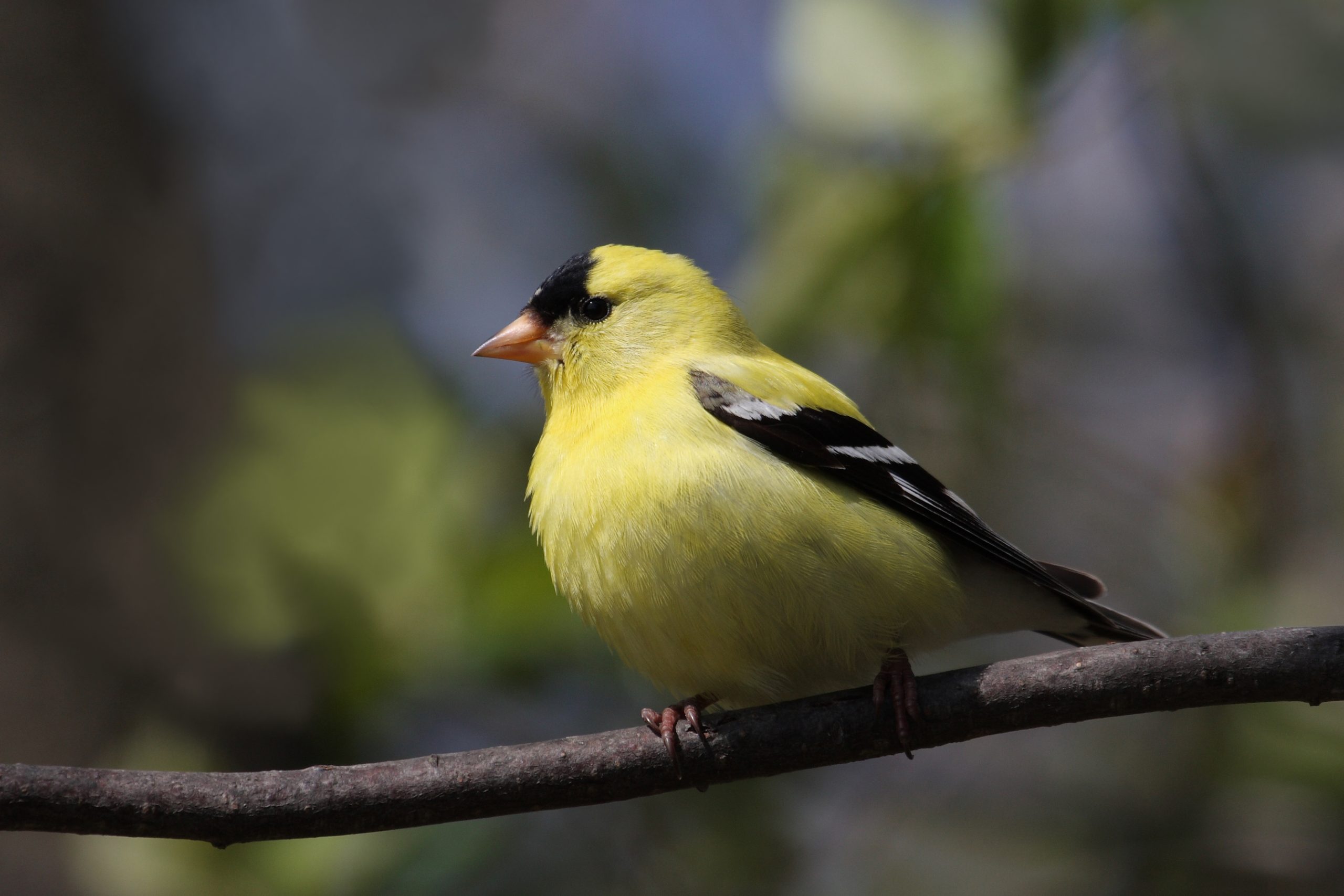
The American Goldfinch (Spinus tristis) is the “wild canary” of North American backyards — a tiny 4.3–5.1-inch finch with a small, sharp conical bill. The breeding male is brilliant yellow with a jet-black forehead cap; the female is soft yellow-olive, and both sexes fade to drab buff in winter — the molt that fools beginners. It is one of the strictest seed-eaters in the bird world, and it nests late (June–August) on a timetable set by thistledown. The call is a bouncy “po-ta-to-chip” given on the upstroke of its roller-coaster flight. Attract flocks with fresh Nyjer in a mesh or fine-port tube feeder, plus sunflower chips, a shallow bath, and a garden of seed-bearing natives like coneflowers.
Species Physical Profile & Morphometrics
The American Goldfinch belongs to the true finch family (Fringillidae), genus Spinus — the same group as the Lesser Goldfinch and the Pine Siskin. It is the state bird of New Jersey, Iowa, and Washington, and one of the most recognized feeder birds on the continent.
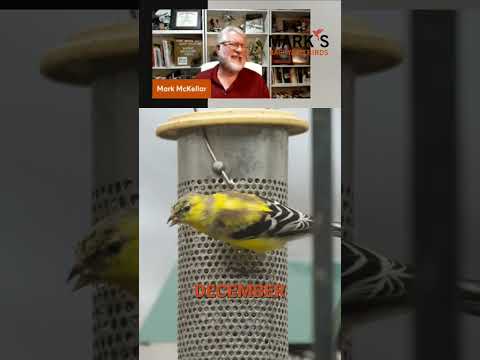
Its signature trait is a dramatic double molt: each spring the male sheds drab winter feathers for brilliant yellow with a black cap, and each fall he molts back into the same buff-olive coat the female wears year-round. In any plumage, look for the bold black wings with white bars, the notched tail, and the small, sharply pointed conical bill built for extracting tiny seeds.
Essential Morphometric Field Marks:
- Body Length & Mass: Just 4.3 to 5.1 inches (11–13 cm) and 0.4 to 0.7 ounces (11–20 grams) — smaller and more delicate than a House Finch.
- Wingspan: About 7.5 to 8.7 inches (19–22 cm), driving a deeply undulating, bounds-and-dips flight.
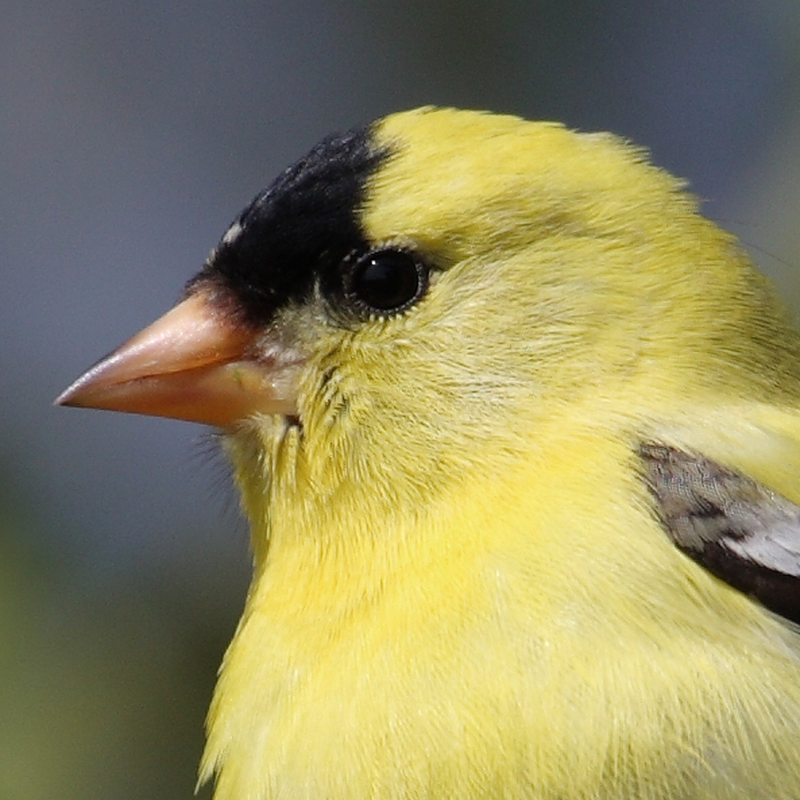
- Bill Structure & Color: A small, slender, sharply conical bill — pink-orange in the breeding season, darker in winter — precision tooling for thistle and Nyjer seeds.
- Color Pattern: Breeding male: canary yellow with black forehead cap and black wings with white bars. Female & winter birds: dull yellow-olive to buff-brown, capless, with the same bold wing pattern. Molt patchwork in spring and fall is normal.
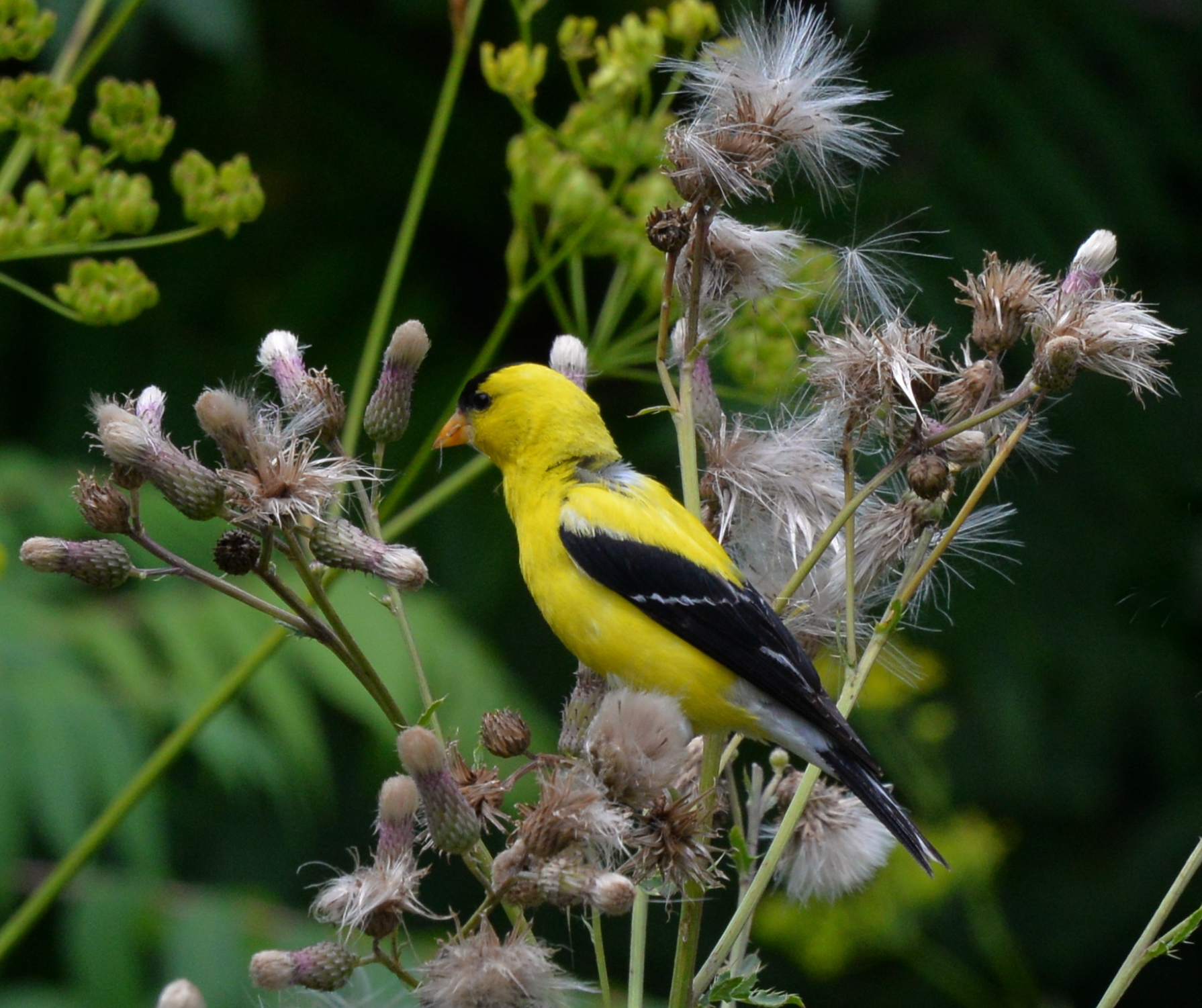
Unmistakable: brilliant lemon yellow with a jet-black forehead cap, black wings crossed by crisp white bars, and white rump patches that flash in flight. By late fall he molts into the same muted olive-buff as the female — keep the wing bars in mind and you can still name him in January.
Soft yellow-olive above, paler yellow below, with no black cap — her dark wings still carry the white bars. She looks like a washed-out version of the male, and in winter the two sexes are nearly identical: drab, buffy, and best told from other finches by the unstreaked back and those sharp wing bars.
American Goldfinch Vocalization Guide (2 Field Recordings + 1 Simulation)
The song is a long, bright, canary-like series of twitters and warbles — males sing from exposed perches and even in flight through the summer. The everyday sound of the species is the flight call, a cheerful “po-ta-to-chip” synced to its bounding flight. The first two cards below are real field recordings shared under Creative Commons licenses; the third is a clearly labeled acoustic simulation of the flight call. For more wild audio, browse xeno-canto: American Goldfinch.
1. Real Recording — Song from a Residential Yard
2. Real Recording — Song from a City Park Spruce
3. Flight Call Simulation — “Po-ta-to-chip!”
Habitat, Range & Seasonal Shifts
American Goldfinches live in open, weedy country: meadows, field edges, roadsides, orchards, parks, and backyards — anywhere annual plants go to seed. They breed across southern Canada and most of the United States, and winter from the northern U.S. south into Mexico.

Here All Year — Just Harder to Recognize
Goldfinches are partial, short-distance migrants: Canadian and northern birds move south in winter, while mid-latitude birds largely stay put. Most of the U.S. keeps goldfinches all year — they simply trade the yellow coat for a drab one.
In winter they roam in restless flocks through weedy fields and feeder yards, often mixed with House Finches and Pine Siskins, settling wherever seed is most reliable.
Backyard Behavioral Patterns & Social Dynamics
The American Goldfinch is a sociable, acrobatic little finch with a few signature habits. Four behaviors explain most of what you will observe:
🎢 The Roller-Coaster Flock
Goldfinches fly in deep, bouncy dips and rises, calling “po-ta-to-chip” on each upstroke. A flock crossing the yard looks — and sounds — like it is riding an invisible roller coaster.
🌻 The Strict Vegetarian
Almost uniquely among backyard birds, goldfinches feed their chicks an all-seed diet — no insects. Cowbird chicks fostered in goldfinch nests usually starve on it, which makes the goldfinch one of the few species cowbird parasitism cannot exploit.
🧵 The Late, Downy Nester
Nesting waits for June through August, when thistles bloom. The female weaves a cup so tight it can hold water, lined with thistledown — and the male feeds her on the nest while she incubates 4–6 pale blue-white eggs.
🤸 The Upside-Down Acrobat
Goldfinches cling at any angle — even upside down — to reach seed heads and feeder mesh. A Nyjer sock swinging in the breeze, covered with clinging yellow birds, is the classic goldfinch scene.
Problem: “My Goldfinches Vanished — and My Nyjer Feeder Went Quiet”
The two most common goldfinch complaints — “the yellow birds disappeared” and “they ignore my thistle feeder” — both have simple, fixable causes:
First, the molt: every fall the birds trade bright yellow for drab olive-buff, and many backyard watchers simply stop recognizing them. The “plain brown finches” at your November feeder are very often your own goldfinches. Second, the wild buffet: when thistles, coneflowers, and asters ripen in late summer, flocks scatter to free natural seed and feeder visits naturally dip. Third, stale Nyjer: this oily seed dries out within weeks and clumps when damp — goldfinches sample it, reject it, and leave, while the feeder looks untouched for months. And fourth, the wrong feeder: Nyjer poured into a regular large-port tube spills out, and a feeder without enough perching room keeps a flock from settling in. Refresh the seed, add mesh surfaces the whole flock can cling to, and learn the winter plumage — the birds likely never left.
Method 1: Set the Table — Nyjer & Sunflower Chips, Done Right
Design for a tiny, acrobatic, all-seed flocking finch:
-
Make Fresh Nyjer the Main Course
Nyjer (“thistle”) seed is the goldfinch favorite — tiny, oil-rich, and perfectly sized for that sharp little bill. Serve it in a mesh sock or fine-port tube feeder, and buy small bags often: Nyjer goes stale in weeks, and goldfinches refuse old seed. Our lab-tested roundup of the Best Tube Feeders for Small Birds includes dedicated finch models.
-
Add a Second Station with Sunflower Chips
Hulled sunflower chips are the goldfinch’s close second choice — no shells, no mess, and they draw House Finches and chickadees to a separate station, leaving the Nyjer mesh to the goldfinches.
-
Hang It Where They Can Swing
Goldfinches cling at any angle, so mesh and sock feeders let a whole flock feed at once. Hang feeders in the open near a shrub or small tree — close cover for a quick escape, clear sightlines for a nervous flock.
-
Offer Water Year-Round
Goldfinches drink and bathe daily and love a shallow bath near the feeders. In freezing weather a heated bird bath can outdraw every feeder in the yard.
Method 2: Grow the Feeder — A Living Seed Garden
Let the garden itself do the feeding:
-
Plant Seed-Bearing Natives
Purple coneflowers, asters, native sunflowers, black-eyed Susans, and zinnias are goldfinch magnets. Let the flower heads stand into fall and winter — the seeds feed the flocks for months.
-
Skip the Fall Cut-Down
The single easiest goldfinch strategy is doing nothing: leave seed heads and weedy corners standing until spring. What looks untidy in October is a stocked pantry in December.
-
Welcome (Native) Thistles and Milkweed
Where local rules allow, native thistles and milkweed provide both summer seed and the down goldfinches line their nests with — the two ingredients behind their late nesting season.
-
Keep the Station Clean
Dense finch flocks spread disease fast at dirty feeders. Empty, scrub, and fully dry feeders every one to two weeks, and rake up old hulls and droppings beneath the station.
Tool Solution: Recommended Hardware for American Goldfinches
Equipment matched to a small, clinging, seed-loving flock bird:
Nyjer Mesh / Finch Tube Feeder
A mesh sock or fine-port tube filled with fresh Nyjer — the one setup goldfinches will mob, cling to upside down, and return to daily from winter through spring.
- • Seed: Fresh Nyjer (buy small, often)
- • Style: Mesh or micro-port tube
- • Capacity: Serves a whole flock
Tube Feeder with Sunflower Chips
A standard multi-port tube filled with hulled sunflower chips — the no-mess backup that keeps goldfinches fed when the Nyjer runs low and diversifies your flock.
- • Seed: Hulled sunflower chips
- • Ports: 4–6 perches
- • Mess: Near zero
Shallow Heated Bird Bath
A shallow, gently sloped bath with a thermostatic heater — goldfinches drink and bathe daily, and open winter water pulls in every seed-eater in the neighborhood.
- • Depth: 1–2 in, gently sloped
- • Winter: Thermostatic heater
- • Placement: Near shrubs, off the lawn
Frequently Asked Questions
- Species Profile: The American Goldfinch (Spinus tristis) is a tiny 4.3–5.1 inch, 11–20 gram true finch (Fringillidae) with a sharp little conical bill — the state bird of New Jersey, Iowa, and Washington.
- Two Coats a Year: Breeding males are canary yellow with a black forehead cap; females are soft yellow-olive, and both sexes molt into drab buff for winter — the same birds, disguised.
- The Strict Vegetarian: One of the most seed-dependent birds on the continent — even chicks are raised on seeds, which is why nesting waits for thistledown season in June–August.
- Feeder Formula: Fresh Nyjer in a mesh sock or fine-port tube, plus a second station with sunflower chips, near cover — and replace stale seed without mercy.
- The Bouncy Call: A canary-like warbling song, and the famous “po-ta-to-chip” flight call synced to its roller-coaster flight.
- Garden Bonus: Let coneflowers, asters, and native sunflowers stand through fall — a living feeder that holds flocks for months.
Bird Watching Log
Species: American Goldfinch (Spinus tristis)
| American Goldfinch (Plumage Bright / Drab — Flock Size: ____________________________) | |