
American Goldfinch vs Common Redpoll

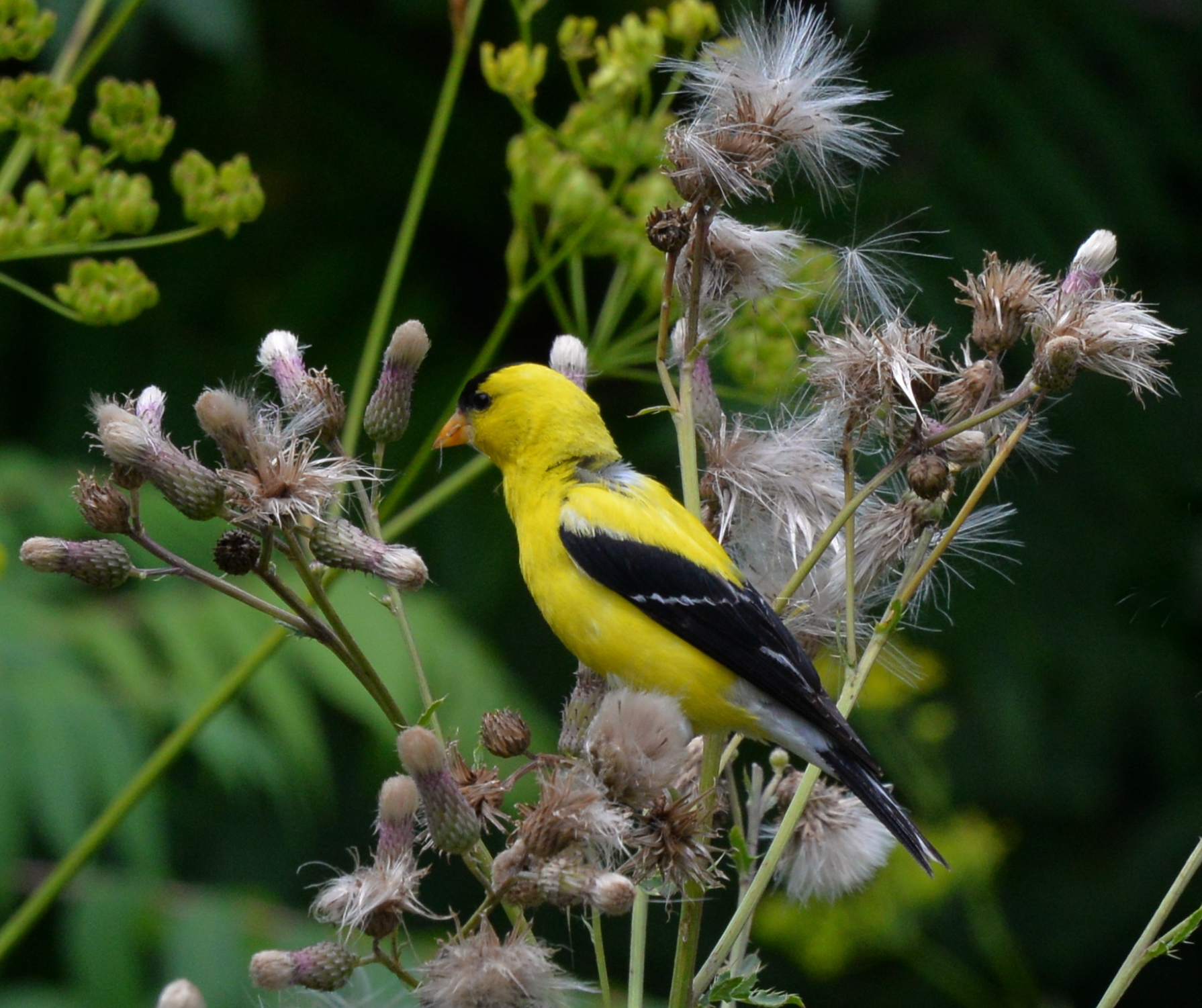


American Goldfinch vs Common Redpoll (Spinus tristis vs Acanthis flammea): The Complete Backyard Identification Guide
Quick Answer: The Fastest Way to Tell Them Apart
They swarm the same nyjer socks in the same flocks. Three rules:
- Forehead: a bright red patch on the forehead = Common Redpoll; no red on the head = American Goldfinch (winter plumage).
- Breast: heavily streaked below with a black chin = redpoll; plain, unstreaked drab-yellow = winter goldfinch.
- Size and shape: redpolls are tinier, rounder and stub-billed; goldfinches are larger, sleeker and longer-winged.
At-a-Glance Comparison Table
The nyjer-feeder pair, side by side. KEY rows separate fastest.
| Feature | American Goldfinch | Common Redpoll |
|---|---|---|
| Scientific Name | Spinus tristis | Acanthis flammea |
| Length KEY | 4.3–5.1 in (11–13 cm) | 5.3 in (13 cm) |
| Wingspan | 7.5–8.7 in (19–22 cm) | 8.7 in (22 cm) |
| Weight | 0.4–0.7 oz (11–20 g) | 0.4–0.7 oz (11–20 g) |
| Overall Shape | Small, slim finch with a short, deeply notched tail | Tiny, heavily streaked winter finch |
| Male Plumage KEY | Breeding male unmistakable: brilliant lemon-yellow with a jet-black forehead cap and black wings with white bars; winter male dull olive-brown | Brown-streaked body, red forehead patch, black chin, two white wing bars, and a rosy-pink wash across the breast |
| Female Plumage KEY | Dull yellow-olive overall, cleaner and completely unstreaked below; wings darker with pale bars | Like the male but without the pink breast — streaky white below |
| Bill Shape | Small, neat conical bill; pinkish-orange in breeding season, gray-brown in winter | Small, yellow, sharply pointed |
| Tail | Short tail with a clear notch | Short, notched, dark |
| Core Range | Across most of the US and southern Canada; weedy fields, forest edges, gardens | Breeds across the Arctic and subarctic; irrupts south into the northern US in winter |
| Migration KEY | Northern birds migrate south; much of the range holds goldfinches year-round | Irruptive winter migrant — common some winters, absent others |
| Feeder Presence | Year-round where present; acrobatic, clings to nyjer socks and fine tube perches | Irruption winters bring chattering flocks to nyjer and sunflower-chip feeders, often mixed with goldfinches and siskins |
| Favorite Foods | Nyjer (thistle), sunflower hearts; almost entirely vegetarian, even feeds nestlings seeds | Birch and alder seed; nyjer and fine sunflower chips at feeders |
| Song | Sweet, canary-like series of twitters and warbles | A twittering medley given in flight |
| Flight Call | Bouncy flight call rendered “po-ta-to-chip” or “per-chic-o-ree” | A dry rattle “chet-chet-chet” and a rising, buzzy “zhee” |
| Population Trend | Common and stable; a classic backyard finch | Stable in the far north; winter numbers swing with birch seed crops |
Male Field Marks, Side by Side
American Goldfinch — Male
- Breeding male is brilliant lemon-yellow with a jet-black forehead cap.
- Black wings carry clean white bars; rump white in flight.
- In winter, males fade to dull olive — the black cap disappears.
- No streaking below at any season.
Common Redpoll — Male
- Red forehead patch + black chin — the redpoll badge.
- Rosy-pink breast wash on a streaky body.
- Tiny — smaller than a goldfinch — and always in flocks.
Female & Juvenile Marks, Side by Side
American Goldfinch — Female
- Dull yellow-olive, soft and clean-looking.
- Underparts completely unstreaked — the key female clue.
- Small pinkish-gray conical bill; dark wings with pale bars.
Common Redpoll — Female
- Same red forehead and black chin; no pink on the breast.
- Heavily streaked below, unlike a winter goldfinch.
- Feeds acrobatically at nyjer socks in mixed winter flocks.
Part-by-Part Anatomy Breakdown
In winter both are drab — streaking and the red forehead do the work:
| Body Part | American Goldfinch | Common Redpoll |
|---|---|---|
| Forehead | Plain gray-olive | Bright red patch — the namesake “poll” |
| Chin | Plain | Black patch |
| Breast | Unstreaked drab yellow-buff | Heavily streaked (male washed rosy-pink) |
| Back | Drab gray-olive, faintly streaked | Heavily streaked brown-and-white |
| Wings | Bold black with two wing bars | Dark with two narrow white bars |
| Bill | Conical, pale orange-pink in winter | Tiny, sharply pointed, yellow |
| Build | Sleek, longer-winged | Round, big-headed, short-tailed |
Song & Call Comparison
American Goldfinch
Song: a sweet, canary-like series of twitters, trills and warbles delivered from a perch or in flight.
Calls: the bounding flight call sounds like po-ta-to-chip; also soft tsee contact notes.
Common Redpoll
Voice: a dry chet-chet-chet rattle and a rising buzzy zhee.
Flocks: constant twittering contact calls at winter feeders.
Range & Seasonal Presence
The American Goldfinch lives across nearly the whole US and southern Canada year-round; northern birds drift south in winter, but feeders everywhere host them in every month.
The Common Redpoll breeds in the Arctic and subarctic and irrupts into the northern US only in winters when birch seed crops fail — abundant one year, absent the next, always in chattering flocks.
Feeder Behavior & Favorite Foods
- American Goldfinch: the dependable nyjer and sunflower-chip bird, present in every season; flocks peak in late winter.
- Common Redpoll: in irruption winters, redpoll flocks pile onto nyjer feeders and socks alongside goldfinches and Pine Siskins — check every streaky bird for the red forehead.
- Best foods: nyjer and fine sunflower chips for both; redpolls also glean birch and alder catkins in the yard.
- Irruption alerts: winter finch forecasts each fall predict redpoll years — a redpoll winter is a banner year at northern feeders.
Temperament & Flock Behavior
American Goldfinches feed in bouncing, twittering flocks, bickering mildly over feeder ports.
Common Redpolls feed in tight, fearless, hyperactive swarms — tame enough to approach within feet, hanging upside down at every angle.
6-Step Backyard ID Checklist
- Red forehead? Yes = redpoll; no = goldfinch.
- Black chin? Yes = redpoll; plain chin = goldfinch.
- Breast streaking. Heavily streaked = redpoll; clean drab breast = goldfinch.
- Size. Tiny and round = redpoll; sleek and larger = goldfinch.
- Bill. Tiny yellow point = redpoll; larger pale cone = goldfinch.
- Year. A feeder full of streaky finches in a forecast irruption year = redpolls among the goldfinches.
Frequently Asked Questions
- Forehead: Red patch = redpoll; plain = goldfinch.
- Chin: Black chin = redpoll; plain = goldfinch.
- Streaking: Heavily streaked = redpoll; clean breast = goldfinch.
- Size: Tiny and round = redpoll; sleeker and larger = goldfinch.
- Season: Goldfinch every winter; redpoll only in irruption years.
- Flocking: Check goldfinch flocks bird-by-bird for redpolls.