
American Goldfinch vs House Finch

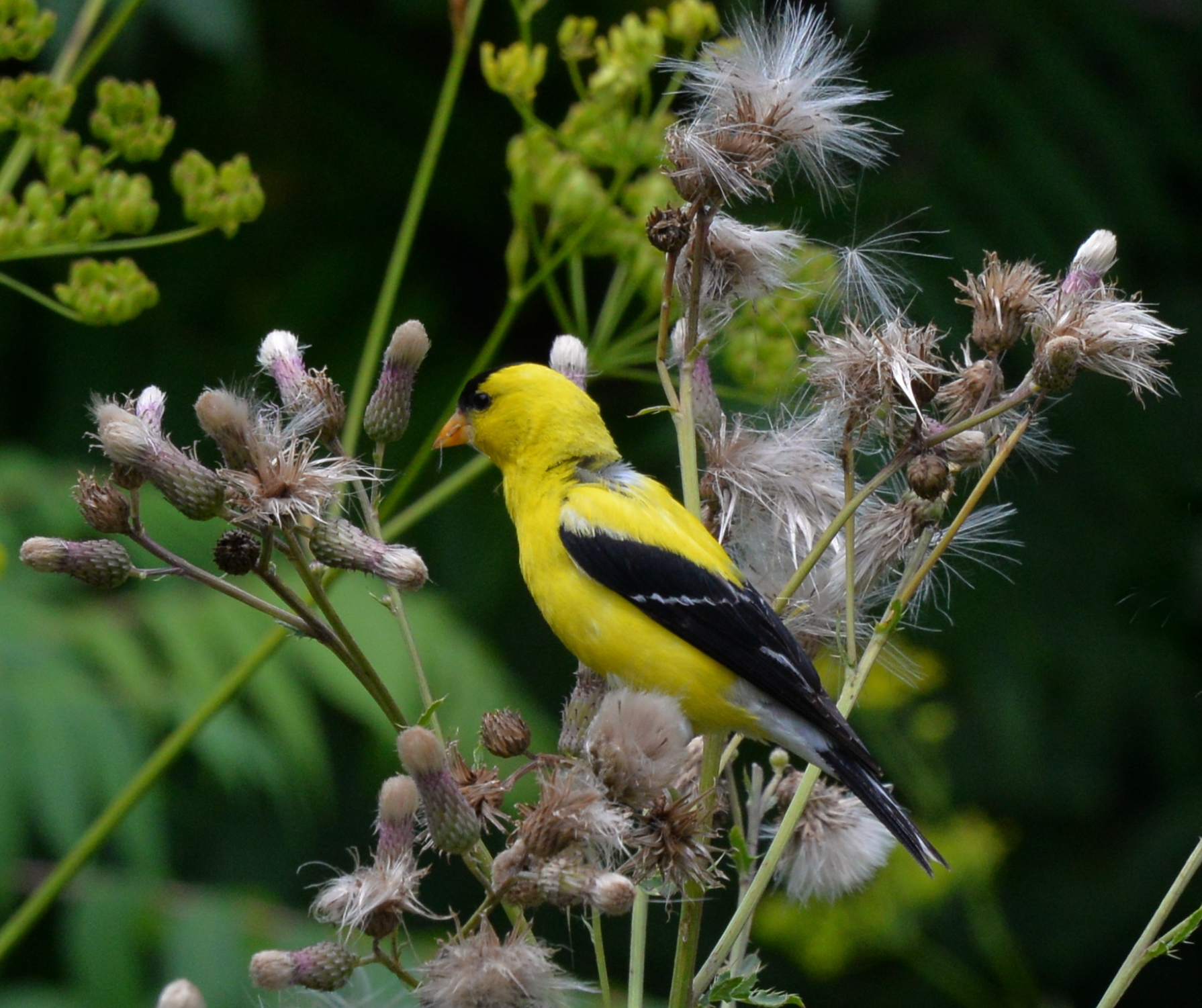


American Goldfinch vs House Finch (Spinus tristis vs Haemorhous mexicanus): The Complete Backyard Identification Guide
Quick Answer: The Fastest Way to Tell Them Apart
One is the “wild canary” of American gardens, the other is the most widespread red finch on the continent. Three rules separate them at the feeder:
- Breeding male: impossible to confuse — brilliant yellow with a black cap (goldfinch) vs a red bib over brown-streaked flanks (House Finch).
- Females and winter birds: check the belly — goldfinches are completely unstreaked below, while House Finches are blurry-streaked head to tail.
- Flight: goldfinches bound deeply through the air calling po-ta-to-chip; House Finches fly flatter and stay quiet.
At-a-Glance Comparison Table
Every difference that matters at the feeder, side by side. Rows flagged KEY are the fastest separators.
| Feature | American Goldfinch | House Finch |
|---|---|---|
| Scientific Name | Spinus tristis | Haemorhous mexicanus |
| Length | 4.3–5.1 in (11–13 cm) | 5.1–5.5 in (13–14 cm) |
| Wingspan | 7.5–8.7 in (19–22 cm) | 7.9–9.8 in (20–25 cm) |
| Weight | 0.4–0.7 oz (11–20 g) | 0.6–0.9 oz (16–27 g) |
| Overall Shape | Small, slim finch with a short, deeply notched tail | Slim, small-headed finch with a longish tail |
| Male Plumage KEY | Breeding male unmistakable: brilliant lemon-yellow with a jet-black forehead cap and black wings with white bars; winter male dull olive-brown | Red confined to a bib on head, throat and chest plus a red rump; flanks and belly heavily streaked brown; red may be replaced by orange or yellow |
| Female Plumage KEY | Dull yellow-olive overall, cleaner and completely unstreaked below; wings darker with pale bars | Plain gray-brown with soft, blurry streaks; face completely unmarked — no eyebrow, no ear patch |
| Bill Shape KEY | Small, neat conical bill; pinkish-orange in breeding season, gray-brown in winter | Small, rounded conical bill with a curved culmen; gray |
| Tail | Short tail with a clear notch | Longish tail with a shallow notch |
| Core Range | Across most of the US and southern Canada; weedy fields, forest edges, gardens | Nearly the entire US year-round; cities, suburbs, farms, desert edges |
| Migration | Northern birds migrate south; much of the range holds goldfinches year-round | Essentially non-migratory resident |
| Feeder Presence KEY | Year-round where present; acrobatic, clings to nyjer socks and fine tube perches | Year-round, gregarious, often dominant; accepts tubes, hoppers and platforms |
| Favorite Foods | Nyjer (thistle), sunflower hearts; almost entirely vegetarian, even feeds nestlings seeds | Black oil sunflower, nyjer, millet, safflower |
| Song | Sweet, canary-like series of twitters and warbles | Long, jumbled, cheery warble ending in an abrupt nasal “zweee” |
| Flight Call KEY | Bouncy flight call rendered “po-ta-to-chip” or “per-chic-o-ree” | Soft “cheep” notes and a dry “chek” |
| Population Trend | Common and stable; a classic backyard finch | Expanding; eastern birds descend from 1940 Long Island pet-trade releases |
Male Field Marks, Side by Side
American Goldfinch — Male
- Breeding male is brilliant lemon-yellow with a jet-black forehead cap.
- Black wings carry clean white bars; rump white in flight.
- In winter, males fade to dull olive — the black cap disappears.
- No streaking below at any season.
House Finch — Male
- Red forms a discrete bib on head and chest, plus a red rump.
- Flanks and belly below the bib are heavily streaked brown.
- Red may be replaced by orange or yellow depending on diet during molt.
- Brown cheek patch frames the red throat.
Female & Juvenile Marks, Side by Side
American Goldfinch — Female
- Dull yellow-olive, soft and clean-looking.
- Underparts completely unstreaked — the key female clue.
- Small pinkish-gray conical bill; dark wings with pale bars.
House Finch — Female
- Uniformly gray-brown with soft, blurry streaks overall.
- Face completely plain: no eyebrow, no ear patch.
- Slim bill and longish tail give a small-headed silhouette.
Part-by-Part Anatomy Breakdown
When a winter flock mixes both species on one feeder, walk down this checklist — any single cell usually settles the ID.
| Body Part | American Goldfinch | House Finch |
|---|---|---|
| Crown | Male: black cap (breeding); plain olive crown in winter | Male: red forecrown, brown rear crown; female plain |
| Face | Plain soft face, no markings | Plain face too — but blurry streaks continue onto the throat |
| Underparts | Clean, unstreaked yellowish or buff | Heavily blurry-streaked brown on buff |
| Wings | Black with bold white wing bars | Brown with faint, indistinct edging |
| Bill | Small, neat, pinkish (breeding) | Larger, rounded, gray |
| Tail | Short, clearly notched | Longish, shallow notch |
| Flight Style | Deep bounding arcs, calls in flight | Flatter, steadier wingbeats |
Song & Call Comparison
American Goldfinch
Song: a sweet, canary-like series of twitters, trills and warbles delivered from a perch or in flight.
Calls: the bounding flight call sounds like po-ta-to-chip; also soft tsee contact notes.
House Finch
Song: a long, jumbled, cheery warble of hurried notes ending with an abrupt nasal zweee or veer.
Calls: soft cheep notes and a dry chek around feeders.
Range & Seasonal Presence
The American Goldfinch breeds in weedy fields, forest edges and gardens across most of the United States and southern Canada. Northern populations migrate south for winter, but feeders across most of the country hold goldfinches — in drab winter plumage — all year.
The House Finch is a year-round resident across nearly the entire United States, native to the West and spread across the East from 1940 Long Island pet-trade releases. It does not migrate: the same birds visit your feeder in January and July.
Overlap is nearly total in the East and Midwest. The seasonal trap: a winter goldfinch in dull olive plumage is the bird most often misreported as a “female House Finch” — check for unstreaked underparts.
Feeder Behavior & Favorite Foods
- American Goldfinch: the nyjer specialist. Clings acrobatically to thistle socks and fine-mesh tubes, and takes sunflower hearts. Feeds quietly, often in compact flocks of a dozen or more.
- House Finch: the generalist. Accepts tubes, hoppers and platforms, eats black oil sunflower, millet, nyjer and safflower, and dominates busy stations in chatty flocks.
- Feeder strategy: a nyjer sock hung apart from the main station will hold goldfinches while House Finches crowd the sunflower — the fastest way to see both species side by side.
- Hygiene: House Finches carry Mycoplasma conjunctivitis (finch eye disease); clean feeders weekly with a 10% bleach solution whenever they are present.
Temperament & Flock Behavior
American Goldfinches are gentle, acrobatic flockers. They perch in tight, polite groups, hang upside down on nyjer mesh, and flush in bouncing flight while calling. They rarely squabble at feeders.
House Finches are bolder and more assertive: they sit in place crushing seed after seed, defend perches with open-bill threats, and dominate mixed flocks. Males sing their jumbled warbles from wires and rooftops nearly year-round.
Nesting & Breeding Comparison
| Feature | American Goldfinch | House Finch |
|---|---|---|
| Nest Timing | Very late — usually July–August, timed to thistle seed crops | Early spring onward; 2 or more broods per year |
| Nest Site | Shrubs and small trees in open or edge habitat | Extremely adaptable: conifers, ivy, hanging planters, building ledges |
| Eggs | 4–6, pale bluish-white, unmarked | 2–6, pale blue with fine black and purple dots |
| Nestling Diet | Regurgitated seeds — almost entirely vegetarian | Regurgitated seeds as well |
| Near Houses | Common in garden shrubs | Defining trait — nests on and around buildings |
6-Step Backyard ID Checklist
- Check the calendar and plumage. April–August yellow bird with black cap = male goldfinch; no House Finch ever shows this pattern.
- Streaked or clean? Blurry streaks on the breast and flanks = House Finch (any age, any season). Completely clean underparts = goldfinch.
- Read the wings. Bold white bars on black wings = goldfinch. Plain brown wings = House Finch.
- Judge the bill. Small, neat, pinkish = goldfinch. Larger, rounded, gray = House Finch.
- Watch the flight. Deep bounding arcs with a “po-ta-to-chip” call = goldfinch.
- Note the feeder. A bird clinging upside-down to a nyjer sock is almost always a goldfinch; House Finches prefer sunflower at tubes and trays.
Frequently Asked Questions
- Breeding Male: Yellow with black cap = goldfinch; red bib over streaked flanks = House Finch.
- Winter & Female Rule: Unstreaked underparts = goldfinch; blurry streaks = House Finch.
- Wing Bars: Bold white bars on black wings belong to the goldfinch.
- Flight Style: Deep bounding flight with “po-ta-to-chip” calls = goldfinch.
- Feeder Split: Nyjer socks favor goldfinches; sunflower tubes and trays favor House Finches.
- Late Nester: Goldfinches nest in July–August on the thistle crop; House Finches nest from early spring.