
House Finch


House Finch (Haemorhous mexicanus): Complete Identification, Feeder Guide & Call Library
Quick Answer: How to Attract & Identify House Finches
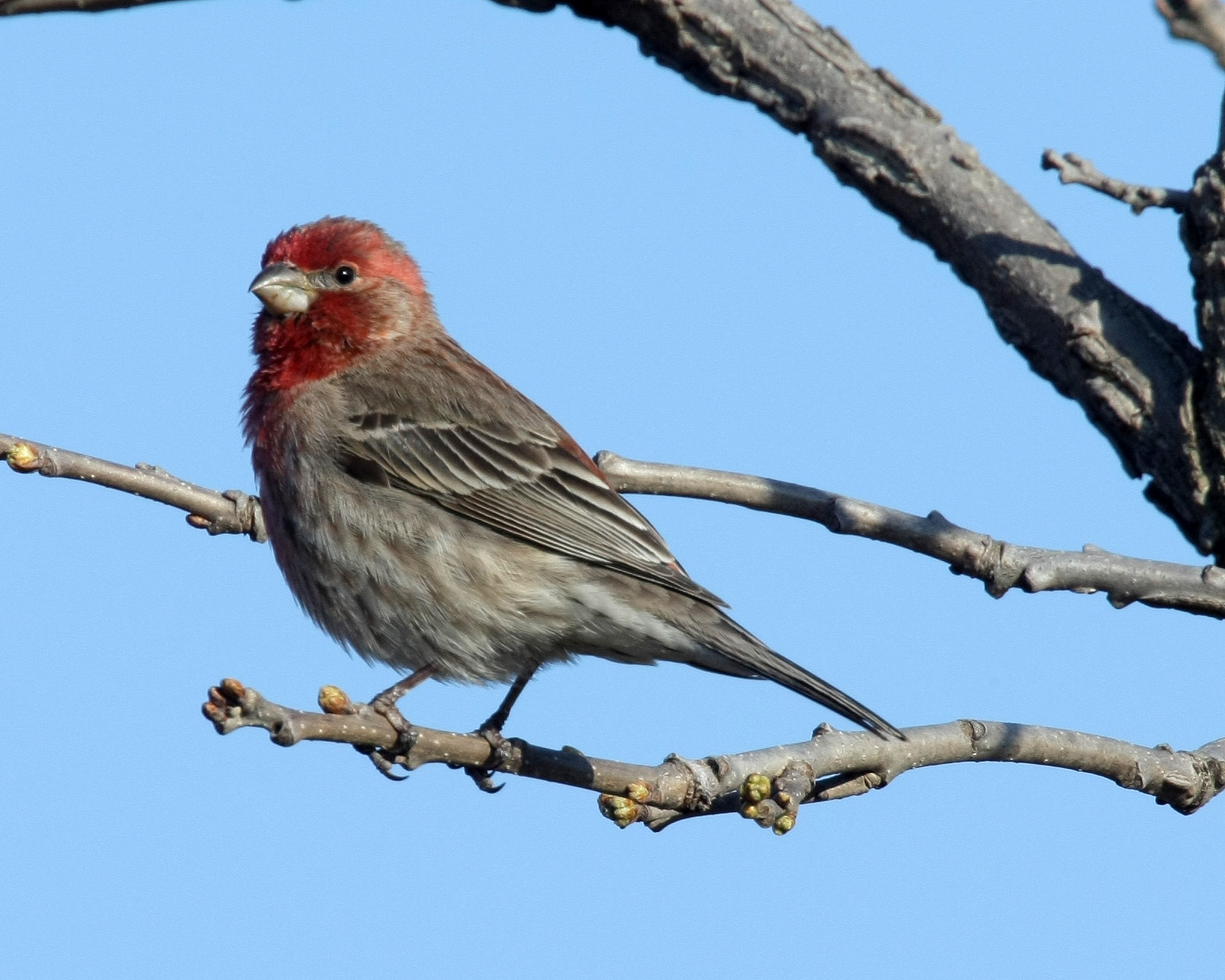
The House Finch (Haemorhous mexicanus) is the most widespread feeder finch in North America — a 5.1–5.5-inch bird with a stout conical bill and a long, slightly notched tail. The male wears rosy red on the head, breast, and rump (diet can shade it orange or yellow); the female is plain gray-brown, heavily streaked, with no red at all. Originally a bird of the western deserts, it was released on Long Island in 1940 and now lives in cities, farms, and backyards coast to coast. The male’s long, jumbled warble — often ending in an upward “zreeee” — is a soundtrack of American neighborhoods. Attract flocks with tube feeders of black oil sunflower and Nyjer seed, a bird bath, and hanging baskets left up for nesting.
Species Physical Profile & Morphometrics
The House Finch belongs to the true finch family (Fringillidae) and the red-finch genus Haemorhous, alongside the Purple Finch and Cassin’s Finch. The overall build is classic finch: a stocky body, a short, deep, conical bill built to crack seeds, and a long tail with a shallow notch.
The famous red deserves a closer look. Males are not born red and do not stay one shade: the color comes from carotenoid pigments in food, so a male’s head and breast can run from deep strawberry red to orange or even yellow depending on what he ate while molting. Females actively prefer the reddest males — in this species, bright feathers honestly advertise a good provider.
Essential Morphometric Field Marks:
- Body Length & Mass: Averages 5.1 to 5.5 inches (13–14 cm) with an adult mass of 0.6 to 0.9 ounces (16–27 grams) — slightly smaller than a House Sparrow.
- Wingspan: About 7.9 to 9.8 inches (20–25 cm), with a bounding, undulating flight between perches.
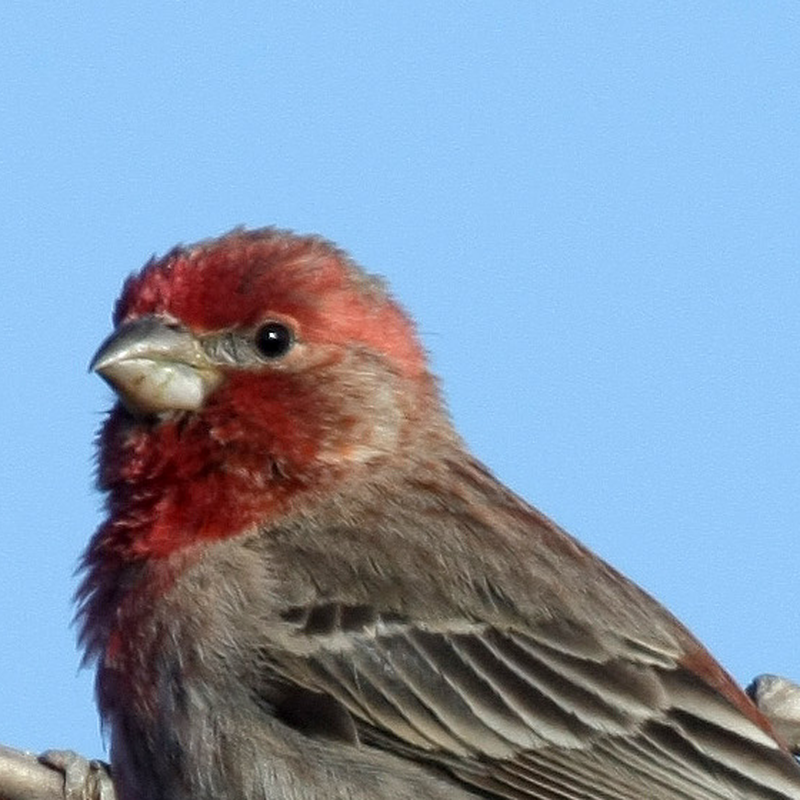
- Bill Structure & Color: A stout, gray conical bill with a curved upper ridge — a dedicated seed-cracking tool.
- Color Pattern: Male: rosy red forehead, eyebrow stripe, throat, breast, and rump over a brown cap, brown-streaked back, and streaked flanks. Female: plain gray-brown overall with heavy blurry streaks and an unmarked face.
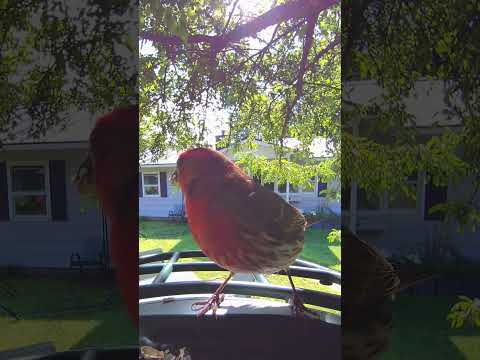
Rosy red on the head, throat, breast, and rump, with brown streaks on the belly and flanks. The red intensity is diet-driven — the same male could molt in orange or yellow next year. Beware the similar Purple Finch: that species looks dipped head-to-back in raspberry and has cleaner, less streaked flanks.
Plain gray-brown and heavily streaked from chin to undertail, with a blank, patternless face — no eyebrow stripe, no red anywhere. The streaky look invites confusion with sparrows, but note the conical finch bill, plainer face, and longer notched tail.
House Finch Vocalization Guide (3 Field Recordings)
The male’s song is a long, jumbled, cheerful warble of short notes, lasting about three seconds and typically finishing with an upward or downward slur — “veer” or “zreeee”. Males sing from wires, treetops, and roof peaks through much of the year, and in the West they sometimes sing at night near streetlights. The everyday call is a sharp, squeaky “cheep” or “wheat” given in flight. All three cards below are real field recordings with open licenses.
1. Full Song — Spruce Treetop at a Yard’s Edge
2. Dawn Song + Flight Calls
3. Close-Range Vocalizations — Research Recording
Habitat, Range & the Great Eastern Expansion
House Finches live where people live: city parks, suburbs, farms, orchards, and desert edges, from sea level to about 6,000 feet. The species is native to the western United States and Mexico — and the eastern population traces to a handful of caged birds, sold as “Hollywood Finches,” that were released on Long Island, New York, in 1940. From that release the species spread to blanket the entire East and meet its western relatives on the Great Plains.

A Permanent Neighbor in Nearly Every Zip Code
House Finches are mostly non-migratory. Birds from the coldest northern and inland areas drift south or downhill in winter, so feeder flocks can grow in the cold months — but your local birds are present all year.
Expect them in mixed company at feeders with goldfinches, House Sparrows, and Black-capped Chickadees. A reliable seed supply makes a yard a daily stop on their rounds.
Backyard Behavioral Patterns & Social Dynamics
House Finches are cheerful, social, and endlessly adaptable. Four signature behaviors explain most of what you will observe:
🎨 Diet-Made Red
The male’s red is painted by his food: carotenoid pigments from fruits and seeds are laid into the feathers at molt. Well-fed males turn deep strawberry; poorly fed ones come out orange or yellow. Females consistently choose the reddest mates.
🌆 The Hollywood Finch Story
Every House Finch east of the Plains descends from pet-store birds released on Long Island in 1940, when sellers dodging new wildlife laws let their “Hollywood Finches” go. One of the most successful avian introductions ever — now numbering in the hundreds of millions.
🎶 The Neighborhood Crooner
Males sing a long, rambling warble from exposed perches — wires, roof peaks, treetops — starting as early as late winter. In towns they sometimes sing at night near artificial light. The song always seems to end with a rising question mark: “zreeee?”
🏠 Nests Where You Live
Hanging baskets, porch wreaths, vents, ledges, dense conifers, and old nests of other birds all serve. The female builds the cup and lays 2–6 pale blue eggs with fine black specks, and pairs routinely raise two or more broods per year.
Problem: When the Finches Vanish — Feeders and Eye Disease
The commonest House Finch complaint runs: “they were everywhere, then suddenly gone.” The usual reasons are predictable:
First, House Finch eye disease: since 1994 a bacterial conjunctivitis (Mycoplasma gallisepticum) has spread through eastern populations at crowded, dirty feeders — sick birds show red, swollen, crusty eyes and sit fluffed and listless. Second, stale, wet seed: clumped or moldy seed drives healthy flocks elsewhere and breeds disease. Third, seasonal abundance: when natural seeds ripen in late summer and fall, feeder traffic naturally dips. The fix is hygiene and consistency: clean feeders every week or two with a 10% bleach solution, rake up old hulls, store seed dry, and if you ever see a crusty-eyed bird, take the feeders down for two weeks, disinfect them, and let the flock disperse. A clean station is a busy station.
Method 1: Set the Table — Seeds & Tube Feeders
Design for a small, social, seed-cracking finch:
-
Hang a Tube Feeder with Black Oil Sunflower
A multi-port tube feeder filled with black oil sunflower seed is the House Finch staple — thin shells, high fat, easy for a small bill to crack. Our lab-tested roundup of the Best Tube Feeders for Small Birds compares proven models.
-
Add a Nyjer (Thistle) Option
House Finches happily share a Nyjer tube or finch sock with goldfinches. Tiny, oil-rich Nyjer seed keeps a mixed finch flock circling the yard all day.
-
Keep Seed Fresh and Stations Clean
Buy seed in amounts you use within a few weeks, store it dry, and disinfect feeders every week or two. Fresh seed plus clean ports is the difference between a flock and a memory.
-
Offer Water Nearby
A shallow bath within a short flight of the feeder doubles the appeal of the station. In freezing weather a heated bird bath keeps the water — and the finches — coming.
Method 2: Keep Them Year-Round — Nesting & Everyday Cover
Turn feeder visitors into resident neighbors:
-
Leave Up a Hanging Basket or Wreath
The species’ favorite urban nest site is the hanging flower basket. Leave one up near the porch from early spring — if a female claims it, you get weeks of nesting drama at eye level. Water the plant from below, gently.
-
Plant Seeding Flowers and Native Grasses
Sunflowers, coneflowers, cosmos, and dandelions left standing feed finches naturally from summer into winter — and that wild diet rich in carotenoids is what keeps your males deep red.
-
Give Them a Dense Evergreen
An arborvitae, spruce, or dense shrub near the feeder supplies nesting structure, night roosts, and hawk cover — the backbone of a finch-friendly yard.
-
Feed Through Every Season
Because the birds are mostly resident, summer reliability matters as much as winter. Keep at least one feeder stocked year-round and the same local flock will raise its young within sight of your window.
Tool Solution: Recommended Hardware for House Finches
Equipment matched to a small, sociable, seed-cracking finch:
Multi-Port Tube Feeder
The classic clear tube with four to six perching ports — exactly the design House Finches queue up on, morning to dusk.
- • Seed: Black oil sunflower
- • Ports: 4–6 perches
- • Mount: Pole or hook near cover
Nyjer (Thistle) Feeder or Sock
A fine-mesh Nyjer tube or hanging sock packed with tiny thistle seed — shared happily with goldfinches and siskins all winter.
- • Seed: Fresh Nyjer only
- • Mesh: Fine, clog-resistant
- • Care: Shake out clumps weekly
Shallow Bath + Heater
A shallow, gently sloped bath near the feeders — add a thermostatic heater and it pulls finch flocks through the coldest weeks of winter.
- • Depth: 1–2 in, gently sloped
- • Winter: Thermostatic heater
- • Placement: Near shrubs, off the lawn
Frequently Asked Questions
- Species Profile: The House Finch (Haemorhous mexicanus) is a 5.1–5.5 inch, 16–27 gram true finch (Fringillidae) with a stout conical bill and a long, slightly notched tail — America’s most widespread feeder finch.
- Two Looks: Males wear rosy red on the head, breast, and rump (diet can shade it orange or yellow); females are plain gray-brown with heavy streaks and no red at all.
- Coast to Coast: Native to the West and Mexico; the entire eastern population descends from pet birds released on Long Island in 1940. Mostly non-migratory year-round residents.
- Feeder Formula: A tube feeder of black oil sunflower plus a Nyjer feeder, kept clean and filled — House Finch eye disease spreads at dirty feeders, so disinfect every week or two.
- The Neighborhood Nester: Nests in hanging baskets, wreaths, ledges, and conifers; 2–6 pale blue speckled eggs, incubated about 12–14 days, with two or more broods a year.
- The Rambling Song: A long, jumbled warble of about three seconds ending in a slurred “zreeee”; the flight call is a sharp, squeaky “cheep.”
Bird Watching Log
Species: House Finch (Haemorhous mexicanus)
| House Finch (Male Color: Red / Orange / Yellow — Flock Size: ____________________________) | |