
Indigo Bunting


Indigo Bunting (Passerina cyanea): Complete US Backyard Identification, Feeder Guide & Vocalization Library
Quick Answer: How to Attract & Identify Indigo Buntings
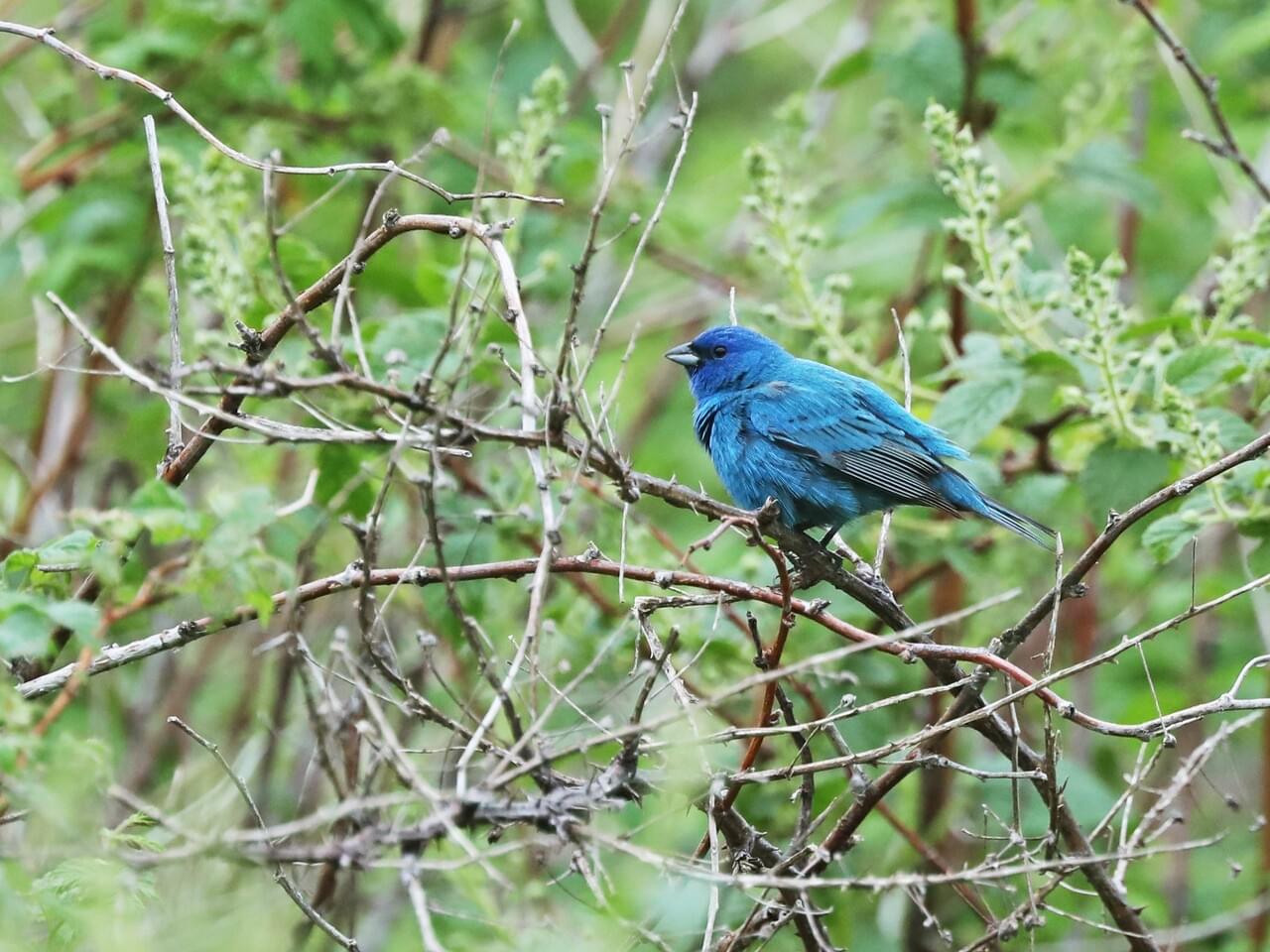
The Indigo Bunting (Passerina cyanea) is a petite, sparrow-sized songbird famous for the adult male’s glowing cerulean-to-indigo blue plumage (females are cryptically warm buff-brown) and a short, conical silver-slate seed beak. They are long-distance Neotropical nocturnal migrants that breed across the Eastern and Midwestern United States from May through September. Because they do not possess blue pigment (their color is pure structural light scattering), they often appear blackish in deep shade. To attract Indigo Buntings to your yard, hang mesh thistle socks or fine-perch tube feeders filled with Nyjer (thistle) seeds and sunflower chips, offer white proso millet and live mealworms on low platforms near overgrown brushy borders, and provide an active dripping bird bath.
Species Physical Profile & Morphometrics
Despite their petite dimensions, Indigo Buntings belong to the cardinal family (Cardinalidae). Their short, conical bills are sharply pointed at the tip, expertly adapted for husking miniature weed seeds and plucking insects from tangled brambles.
In field identification, birders often compare them to the larger Blue Grosbeak (which possesses massive silver bills and prominent chestnut wing bars) and the Eastern Bluebird (which features a rusty breast and white belly). Along the Western Great Plains border, Indigo Buntings frequently hybridize with their sister species, the Lazuli Bunting.
Essential Morphometric Field Marks:
- Body Length & Mass: Measures just 4.7 to 5.1 inches (12–13 cm) with a featherweight mass of 0.4 to 0.7 ounces (11–18 grams)—roughly one-third the weight of a Northern Cardinal.
- Wingspan: Spans 7.5 to 9.1 inches (19–23 cm) with pointed wings built for trans-Gulf and cross-continental nocturnal migration.
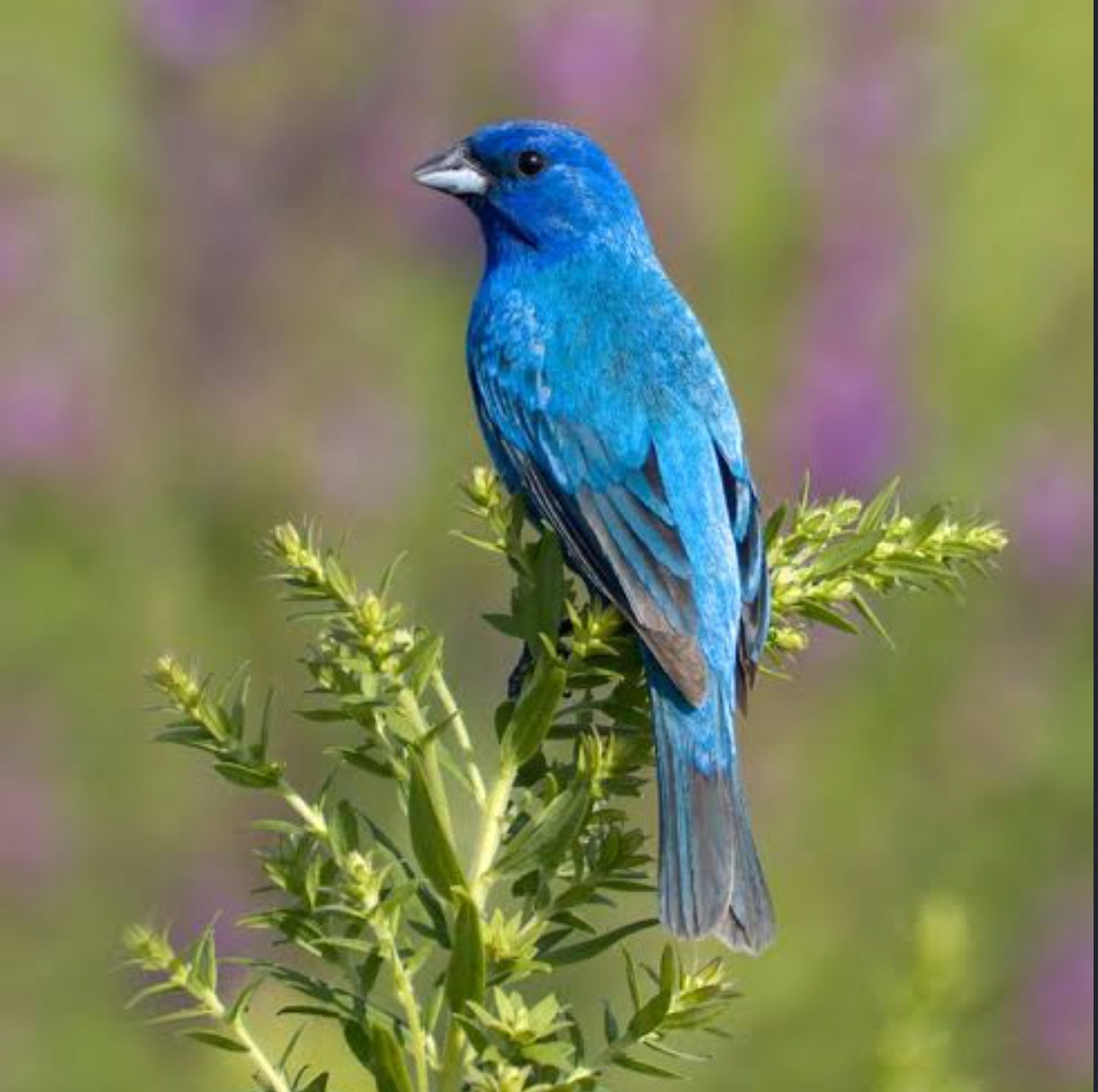
- Bill Structure: Short, sharply conical seed-eating bill, typically two-toned with a dark grayish-black upper mandible and a paler silvery-slate lower mandible.
- Structural Feather Physics: Possesses zero blue pigment. The intense cerulean hue is generated through microscopic feather prism nanostructures that scatter short blue wavelengths of sunlight (Tyndall scattering).
Drenched in uniform, radiant indigo-to-cerulean blue throughout the head and body, with a slightly deeper royal violet wash across the crown. Flight feathers on the wings and tail are dusky blackish with fine cobalt edges.
Unassuming grassland camouflage: soft warm buffy-brown overall, featuring faint, subtle breast streaking, a pale whitish chin, and dual indistinct buff wing bars, occasionally showing an understated cyan sheen on the outer tail feathers.
Bunting Vocalization Library (4 Key Sounds)
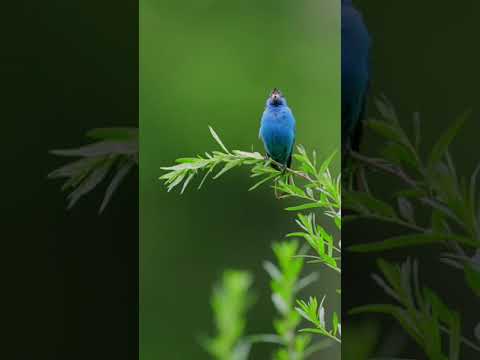
The Indigo Bunting is celebrated for singing relentlessly throughout the hottest midday hours of summer when other birds fall silent. Its song is easily recognized by its rhythmic structure: cheerful whistled musical phrases sung in distinct couplets (two-by-two).
1. Paired Couplet Song
2. Sharp “Spit” / “Tsick” Call
3. Dawn Canopy Carol
4. Flight & Nocturnal Migration Pip
US Range & Nocturnal Celestial Migration
In the United States, Indigo Buntings nest across brushy pastures, overgrown farm ditches, transmission line rights-of-way, woodland edges, and clearcuts throughout the Eastern and Midwestern states, from the Great Plains eastward to the Atlantic Coast.

Blue = Wintering Grounds (Central America & Caribbean)
Green = US Spring/Fall Migration Corridor.
Celestial Navigators: Spring Arrival from the Tropics
Indigo Buntings winter throughout Central America and the Caribbean. During their journey across the Gulf of Mexico, they fly strictly at night, using the constellations rotating around the North Star (Polaris) as their primary navigational compass.
Arriving across the Southern and Midwestern US from late April through mid-May, tired migrants often drop into suburban gardens in small flocks, feeding alongside American Goldfinches, Rose-breasted Grosbeaks, and Blue Grosbeaks before establishing territory in dense field edges.
Backyard Behavioral Patterns & Social Dynamics
Observing Indigo Buntings in American yards reveals distinct habits shaped by their small size and structural feather coloration:
☀️ Midday Singing Endurance
While most songbirds retreat into shaded foliage during the sweltering heat of midday, male Indigo Buntings actively seek the highest, most exposed perches (telephone wires, dead treetops, or antenna tips) to sing for hours under direct summer sunlight.
🪶 Optical Structural Color Shifts
Because their blue color relies on scattered light rather than pigment, buntings appear to change colors dramatically. In direct sun, they flash radiant electric cobalt; under overcast skies or backlighting, they can appear completely dull slate-gray or brownish-black.
🐛 Summer Insect Gleaning
While seeds fuel their long migratory flights, parents feed their nestlings almost entirely on soft-bodied insects. Adults tirelessly scour garden plants and grass heads for green caterpillars, spiders, grasshoppers, and aphids to nourish their chicks.
🌾 Early Successional Thicket Nesting
Females build small, compact open cup nests woven from leaves, weed stems, and strips of bark nestled low inside dense blackberry brambles, sumac thickets, or wild rose bushes only 2 to 4 feet above the turf.
Problem: Why Indigo Buntings Bypass Backyard Feeders
Many American bird watchers notice Indigo Buntings singing along roadside fields, yet struggle to attract them into their home yards. This feeder absence is typically caused by three specific feeder conflicts:
First, Indigo Buntings have tiny finch-sized beaks and small bodies (0.5 oz). They cannot easily crack large striped sunflower seeds or whole peanuts built for cardinals and jays. Second, standard grocery store bird seed mixes contain heavy quantities of cracked corn and red milo, which buntings ignore completely. Third, buntings are timid brush foragers that avoid hanging feeders situated far away from protective vegetation, retreating instantly if aggressive flock birds like House Sparrows or starlings crowd the station.
Method 1: Install Fine-Seed Finch Feeders & Low Brush Trays
Deploy specialized feeder hardware that caters to small-billed, brush-loving buntings:
-
Hang Mesh Thistle Socks or Small-Port Finch Tube Feeders
Deploy fine-mesh nylon thistle socks or dedicated finch tube feeders with miniature feeding ports. These allow tiny buntings to feed upright or cling comfortably without competition from larger nuisance birds.
-
Position Feeders Within 8 to 10 Feet of Overgrown Brush
Situate your finch station near native hedgerows, raspberry briars, or shrub borders. Indigo Buntings require quick access to protective cover before venturing out into open lawn space.
-
Deploy a Screened Low Platform Tray
Mount an open wooden tray feeder 4 to 5 feet high near garden borders. A flat horizontal surface allows visiting pairs and fledglings to forage side-by-side during peak summer breeding months.
-
Install a Dripping Water Feature
Buntings are acoustically attracted to running water. A shallow bird bath (1 to 1.5 inches deep) equipped with a gentle solar fountain or dripping mister will reliably draw them down from tree crowns.
Method 2: Optimize Nyjer Seed, White Proso Millet & Live Mealworms
Offer energy-dense micro-seeds and summer insect protein tailored to bunting physiology:
-
Offer Fresh Nyjer (Thistle) Seeds
Nyjer seed (Guizotia abyssinica) is an oily, high-calorie micro-seed containing 35% crude fat and 18% protein. Ensure seeds are fresh and shiny, as dried-out Nyjer will be rejected.
-
Provide Fine Hulled Sunflower Chips
Because buntings struggle with thick outer shells, provide finely chopped sunflower hearts (meats). This gives them instant access to rich sunflower oils with zero wasted energy.
-
Scatter Plump White Proso Millet on Low Trays
White proso millet mimics the wild grass grains buntings forage in meadows. Scatter two handfuls along low feeding trays or clean garden paths near thicket borders.
-
Supply Dishes of Live Mealworms in Summer
During June and July, provide small dishes of live mealworms. The high moisture and protein content provides critical sustenance for adult buntings feeding hungry broods.
Tool Solution: Recommended Hardware for Indigo Buntings
Fine-scale backyard equipment engineered for small, seed-cracking passerines:
Fine-Mesh Nyjer Thistle Sock Feeder
Durable all-weather mesh pouch allowing small songbirds to cling anywhere across the surface to extract tiny thistle seeds.
- • Capacity: 1.5 lbs Nyjer Seed
- • Target Species: Buntings, Goldfinches, Siskins
- • Design: 360-degree all-angle cling mesh
Pure Nyjer & Fine Sunflower Chip Blend
A specialized 50/50 blend of fresh Ethiopian Nyjer seeds and finely diced sunflower hearts for high-energy intake with zero waste.
- • Purity: 100% Edible (No Shell Mess)
- • Oil Content: 36% Concentrated Lipids
- • Pest Resistance: Squirrel & Grackle Proof
Shallow Songbird Bath with Water Dripper
Textured shallow ceramic basin (1.25 inches deep) equipped with a continuous dripping mister to attract warblers and buntings.
- • Depth: 1.25 in (Safe for small passerines)
- • Acoustics: Continuous water ripple sound
- • Mount: Garden stake or pedestal ready
Frequently Asked Questions
1. Offer Nyjer & Fine Sunflower Chips: Buntings have small bills and love high-oil micro-seeds. Hang mesh finch socks or small-perch tube feeders filled with fresh Nyjer (thistle) seed and finely chipped sunflower hearts.
2. Scatter White Proso Millet Near Brush: Buntings naturally forage in low weeds. Sprinkle white proso millet along low platform trays or clean garden paths placed 8 to 10 feet from dense shrubbery or blackberry brambles.
3. Provide Live Mealworms: During June and July, breeding pairs need rich insect protein to feed their nestlings. Placing dishes of live mealworms near garden borders will turn your yard into a daily destination.
4. Provide a Dripping Water Bath: Buntings are intensely drawn to the sound of moving water. A shallow bird bath (1.25 inches deep) equipped with a dripper or mister will reliably draw them down from tall singing perches.
• Breeding Male: Draped in radiant, electric cerulean-to-indigo blue plumage all over, with a slightly deeper purplish hue on the crown and dark wing feathers edged in blue. In bright sunlight, the feathers appear to glow intensely.
• Adult Female: Dressed in subtle, warm buffy-brown overall with faint, blurry breast streaking, a pale whitish throat, and occasionally a soft bluish tint on the wings or tail.
• Non-Breeding Male: During autumn molt, males take on a mottled “patchwork” appearance, mixing blotches of blue with warm brown feathers before heading to tropical wintering grounds.
• Versus Blue Grosbeak: The Blue Grosbeak is substantially larger (about 6.5 inches) with a huge, heavy triangular bill and two prominent warm chestnut-cinnamon wing bars. Indigo Buntings lack chestnut wing bars and have small, delicate beaks.
• Versus Eastern Bluebird: An Eastern Bluebird features a slender black insect-eating beak, a bright brick-red chest, and a clean white belly, whereas a male Indigo Bunting is solid electric blue from head to tail with a stout conical seed-cracking bill.
- Species Profile: The Indigo Bunting (Passerina cyanea) is a small 5-inch passerine identified by the male’s glowing electric blue plumage, female buffy-brown camouflage, and short conical silver-slate bill.
- US Summer Resident: Breeds across Eastern and Midwestern US fields, pastures, and brushy woodland margins from May through September before traveling to Central America.
- Structural Color Marvel: Feathers contain no blue pigment; the vibrant color is created entirely by microscopic structural light refraction and can appear black in deep shade.
- Nocturnal Star Migrant: Migrates strictly at night, navigating thousands of miles using learned celestial constellations centered on the North Star.
- Feeder Preferences: Strongly prefers fine Nyjer (thistle) mesh socks, finely chipped sunflower hearts, white proso millet on low trays, and summer mealworms.
- Water & Brush Magnet: Providing an active dripping water bath within 10 feet of dense overgrown hedges or bramble patches dramatically increases backyard visits.
Bird Watching Log
Species: Indigo Bunting (Passerina cyanea)
| Indigo Bunting (US Region / Notes: ____________________________) | |