
House Sparrow


House Sparrow (Passer domesticus): Complete Identification, Feeder Guide & Call Library
Quick Answer: How to Attract & Identify House Sparrows
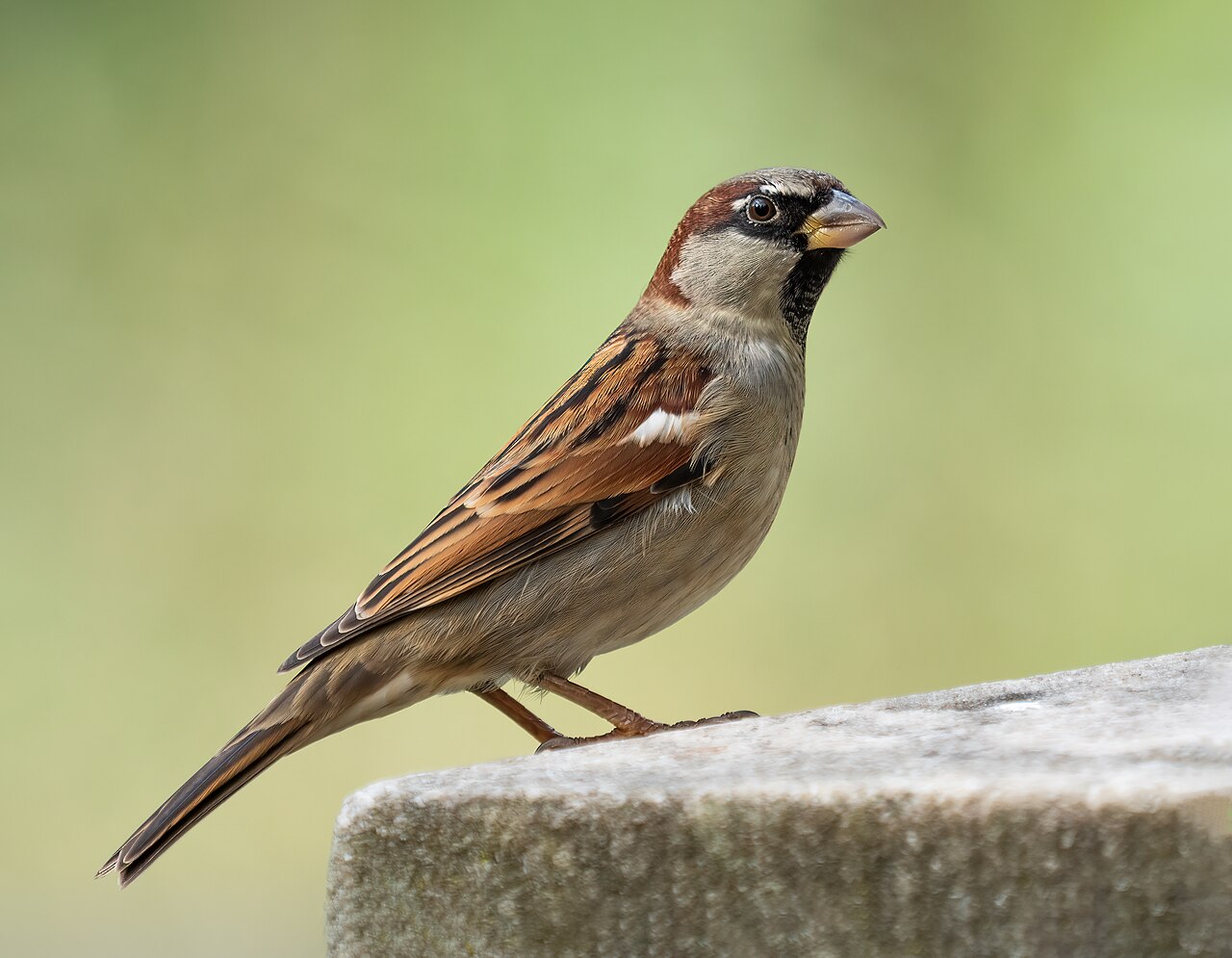
The House Sparrow (Passer domesticus) is the small, stocky sparrow that lives alongside people across the United States — cities, suburbs, farms, and parking lots. The male wears a gray crown, black bib, white cheeks, and a chestnut-streaked back; the female is plain buffy brown with a pale eyebrow. An introduced, non-migratory resident since its 1851–1852 release in Brooklyn, New York, it feeds in busy ground flocks beside birds like the House Finch and the Dark-eyed Junco. To attract it: scatter cracked corn, white millet, or breadcrumbs on open ground or a low platform near shrubs, and keep a shallow birdbath filled. Listen for the cheerful, endlessly repeated “cheep… cheep… cheep”.
Species Physical Profile & Morphometrics
The House Sparrow belongs to the Old World sparrow family (Passeridae) — it is not a close relative of our native New World sparrows (Passerellidae) at all, despite the familiar name. It is a chunky, big-headed little bird with a full chest, a short tail, and a stout bill, built for hopping on pavement and cracking grain.
The identification formula: gray crown + black bib + white cheeks = male; plain buffy brown + pale eyebrow = female, hopping confidently on the ground close to buildings.
Essential Morphometric Field Marks:
- Body Length & Mass: 5.9 to 6.7 inches (15–17 cm) and 0.9 to 1.1 ounces (27–30 grams) — stockier and shorter-tailed than most native sparrows at the feeder.
- Wingspan: about 7.5 to 9.8 inches (19–25 cm), with short, rounded wings used for quick dashes between cover, feeders, and rooftops.
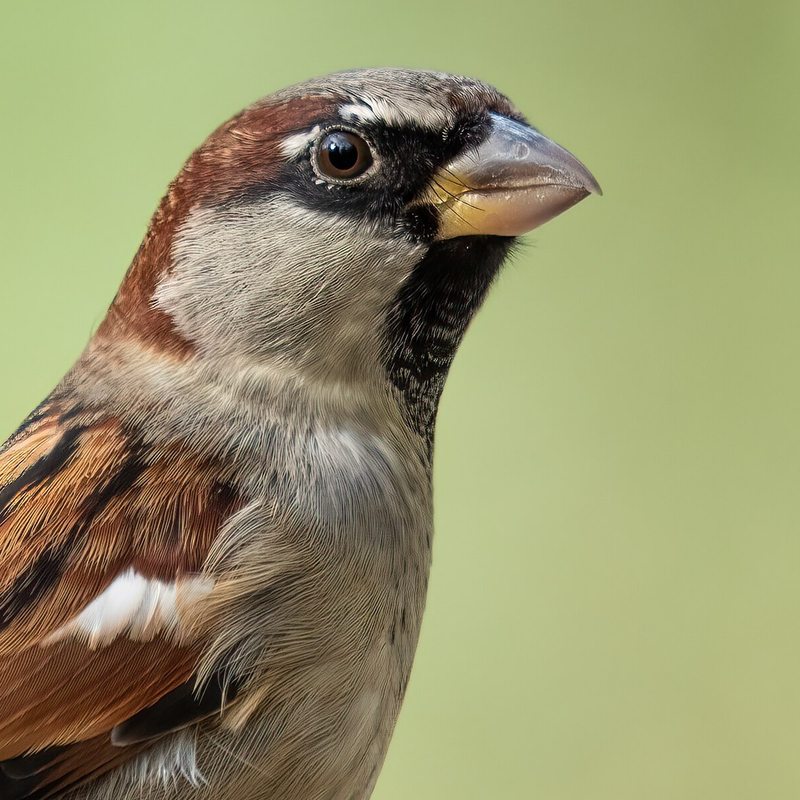
- Bill Structure & Color: A stout, conical seed bill — black on breeding males, yellowish on females, juveniles, and winter males. Legs are pinkish-brown.
- Color Pattern (Male): Gray crown, black bib and mask, clean white cheeks, a chestnut patch behind the eye, gray rump, and a back streaked chestnut, buff, and black. Fresh fall feathers dull the bib until spring wear exposes it.
- Color Pattern (Female & Juvenile): Plain buffy-brown overall, with a pale eyebrow stripe, a dingy, unstreaked breast, and a streaked tan-brown back — the classic “little brown bird” of the parking lot.
A dapper city sparrow: gray crown, bold black bib, white cheeks, and chestnut accents — he advertises his claimed nest hole with relentless cheeping from the nearest perch, and the size of his bib signals his status in the flock.
Quiet camouflage: plain buffy brown with a pale eyebrow and unstreaked underparts, easily overlooked beside her flashy mate — look for her near nest entrances under eaves, in vents, and in cavity boxes.
House Sparrow Vocalization Guide (2 Field Recordings + 1 Simulation)
The House Sparrow’s voice is famously simple: an energetic, endlessly repeated “cheep” or “chirrup”. The male’s song is nothing more than a confident string of those cheeps, fired off from a roofline or nest entrance; the everyday flock voice is a busy social chatter that can fill a hedge. The first two cards below are real field recordings shared under Creative Commons licenses; the third is a clearly labeled acoustic simulation of the cheep-series skeleton. For more wild audio, browse xeno-canto: House Sparrow.
1. Real Recording — The Male’s Cheeping Song
2. Real Recording — Everyday Flock Calls
3. Song Simulation — The Cheep Series
Habitat, Range & Life Beside People
The House Sparrow is a bird of human civilization: city sidewalks, suburban yards, strip-mall parking lots, farmyards, feedlots, and barns. It is rarely found far from buildings — away from people, it simply does not occur. Grain, crumbs, nest cavities in structures, and our shelter are its entire world.

An Introduced Neighbor, Every Month of the Year
After repeated introductions — most famously about 100 birds released in Brooklyn, New York, in 1851–1852 — the species spread with railroads and horse-drawn agriculture, reaching the Rockies by about 1900. Today it lives year-round across virtually all of the continental United States, southern Canada, and Mexico, wherever people live and farm.
It does not migrate: the flock cheeping in your hedge in January is the same colony that nested under the eaves in May. Note that despite its success, North American numbers have fallen steeply — an estimated 80% or more since 1966, per North American Breeding Bird Survey results summarized by the Cornell Lab — a decline still being studied.
Backyard Behavioral Patterns & Social Dynamics
The House Sparrow is a bold, sociable colony bird that treats your yard as part of its block. Four behaviors explain most backyard encounters:
🌾 The Flock Feeder
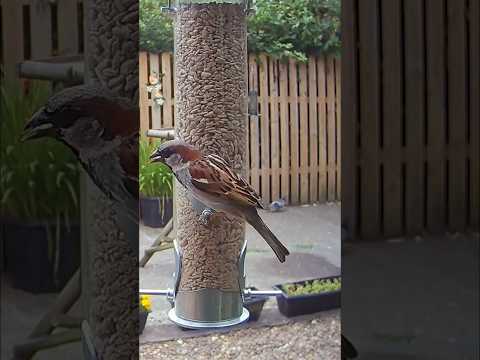
House Sparrows feed in busy, chirping flocks on the ground or at hopper feeders, hopping — never walking — over pavement and soil to vacuum up spilled grain, millet, and crumbs. One scout’s discovery becomes the whole flock’s feast within minutes.
🛁 The Dust Bather
In dry weather, watch a bare patch of soil: sparrows squat, flutter, and wallow in dust, tossing it through their feathers to clean them, then follow up with a real bath at a shallow birdbath — often several birds in line, splashing one after another.
🏠 The Born Squatter
A cavity nester that prefers our structures: crevices under roof tiles, dryer vents, traffic-light housings, store signs, and nest boxes. It stuffs the space with a bulky dome of grass and feathers — and will evict bluebirds and swallows, destroying eggs, to take a box.
📣 The Tireless Chirper
The male’s whole advertising campaign is one note, repeated with total commitment: cheep… cheep… cheep, from the roofline above his claimed hole, for hours on spring mornings. Flocks add a constant sociable chatter from hedges and dense shrubs.
Problem: “House Sparrows Have Taken Over My Feeders — and They’re in the Bluebird Box. What Can I Do?”
The three most common House Sparrow complaints all have workable answers:
First, the feeder takeover: flocks mob cheap mixed seed. Switch to foods they relish less — nyjer in a finch tube, safflower, and suet in upside-down feeders — and cut cracked corn, milo, and scattered crumbs. Second, the nest-box invasion: males stuff boxes and destroy native birds’ eggs; monitor boxes weekly, remove House Sparrow nesting material promptly, and consider hole-restricting designs for native tenants. Third, the legal question: as an introduced species, the House Sparrow is not protected by the Migratory Bird Treaty Act, so management — including humane trapping where permitted — is legal; check state and local rules. Many birders take a middle path: feed the flock cheaply on the ground away from premium stations, and guard the nest boxes for bluebirds.
Method 1: Set the Table — Cracked Corn, Millet & Crumbs, Served Low
Design for a bold, ground-feeding flock bird:
-
Use the Ground Beside Cover
A patch of open ground, gravel, or patio beside a hedge or shrub border is prime sparrow ground — scatter feed directly on it. The flock stages in the shrub, then pours out to feed.
-
Serve Cracked Corn & White Millet
Cracked corn and white millet scattered on the ground or a low platform are proven flock staples — the same cheap grains they have followed since the horse-and-buggy era. A handful at the same spot each morning builds a daily circuit.
-
Add Breadcrumbs & Sunflower Chips
Dry breadcrumbs, rolled oats, and sunflower hearts or chips disappear fast at a sparrow station — offer crumbs in moderation and keep them dry, since wet bread spoils quickly.
-
Or Offer a Hopper Feeder
House Sparrows are among the few small birds that crowd a hopper or platform feeder shoulder to shoulder — a sturdy, easy-to-clean hopper serves the whole flock at once and keeps seed off wet ground.
Method 2: Build the Habitat — Shelter, Water & Dust Baths
Feed the habitat, and the flock follows:
-
Keep a Dense Hedge or Shrub Row
Dense shrubs, hedges, and tangles near the feeding patch are the flock’s panic room and night roost — sparrows feed confidently only within a quick dash of cover, and they chatter from inside it between feeding bouts.
-
Leave a Bare Dust-Bathing Patch
A sunny corner of dry, loose soil or fine sand gives the flock a place to dust-bathe — a favorite daily ritual you can watch at close range, and a sign your yard has become colony territory.
-
Keep Water Shallow & Reliable
A shallow birdbath with gently sloped sides, scrubbed and refilled, draws the flock daily for drinking and bathing — keep it near shrub cover. On freezing winter nights a heated bird bath keeps it open.
-
Decide About Nest Sites Deliberately
Sparrows will move into vents, eaves, signs, and any open box. If you welcome them, a box with a 1.5-inch entrance mounted on a building will be claimed fast; if you are saving boxes for bluebirds, monitor and manage them instead — and seal gaps you do not want colonized.
Tool Solution: Recommended Hardware for House Sparrows
Equipment matched to a bold, flock-feeding city resident:
Hopper / Platform Feeder
A sturdy hopper or open platform feeder that several birds can work at once — the serving style a shoulder-to-shoulder flock actually uses, with a roof to keep grain dry and a tray that is easy to scrub clean.
- • Seed: Cracked corn, millet, sunflower hearts, mixed grain
- • Style: Hopper or open platform
- • Placement: Near a hedge or dense shrub cover
Ground Tray / Scatter Patch
A simple ground tray — or a designated scatter patch of bare ground — filled with cracked corn and white millet, placed beside cover. The cheapest, most natural way to serve a ground-feeding flock.
- • Food: Cracked corn, white millet, breadcrumbs
- • Build: Low, drainable, easy to sweep
- • Placement: Open ground within a dash of shrubs
Shallow Bird Bath
A shallow basin with gently sloped sides set near shrub cover — the flock drinks and queues up to bathe daily, and in dusty dry weeks the bath plus a bare dust patch become the busiest corner of the yard.
- • Depth: 1–2 in, gently sloped
- • Care: Scrub and refill regularly
- • Placement: Beside, never far from, shrubs
Frequently Asked Questions
- Species Profile: The House Sparrow (Passer domesticus) is a stocky 5.9–6.7 inch, 27–30 gram Old World sparrow (Passeridae) with a stout seed bill, a full chest, and a short tail — introduced to North America in Brooklyn in 1851–1852.
- ID in One Look: Male: gray crown, black bib, white cheeks, chestnut-streaked back. Female: plain buffy brown with a pale eyebrow and unstreaked breast. Both hop on the ground close to buildings, in flocks.
- A Year-Round Neighbor: Lives beside people across virtually the whole United States and southern Canada and does not migrate — the same local flock uses your yard in every season.
- The Sound: A simple, endlessly repeated “cheep… cheep… cheep” from the male at his nest site, plus busy social chatter from the flock — no complex melody.
- Feeder Formula: Scatter cracked corn, white millet, and breadcrumbs on open ground or a low tray beside shrubs, add a shallow birdbath and a dust-bathing patch — or serve the whole flock at a sturdy hopper feeder.
- Manage Fairly: An introduced species, unprotected by the Migratory Bird Treaty Act, that can mob feeders and evict bluebirds — switch to nyjer and safflower to reduce pressure, and monitor nest boxes for native tenants.
Bird Watching Log
Species: House Sparrow (Passer domesticus)
| House Sparrow (Black Bib Seen: Yes / No — Flock Feeding: Yes / No — Dust Bathing: Yes / No) | |