
Chipping Sparrow


Chipping Sparrow (Spizella passerina): Complete Identification, Feeder Guide & Call Library
Quick Answer: How to Attract & Identify Chipping Sparrows
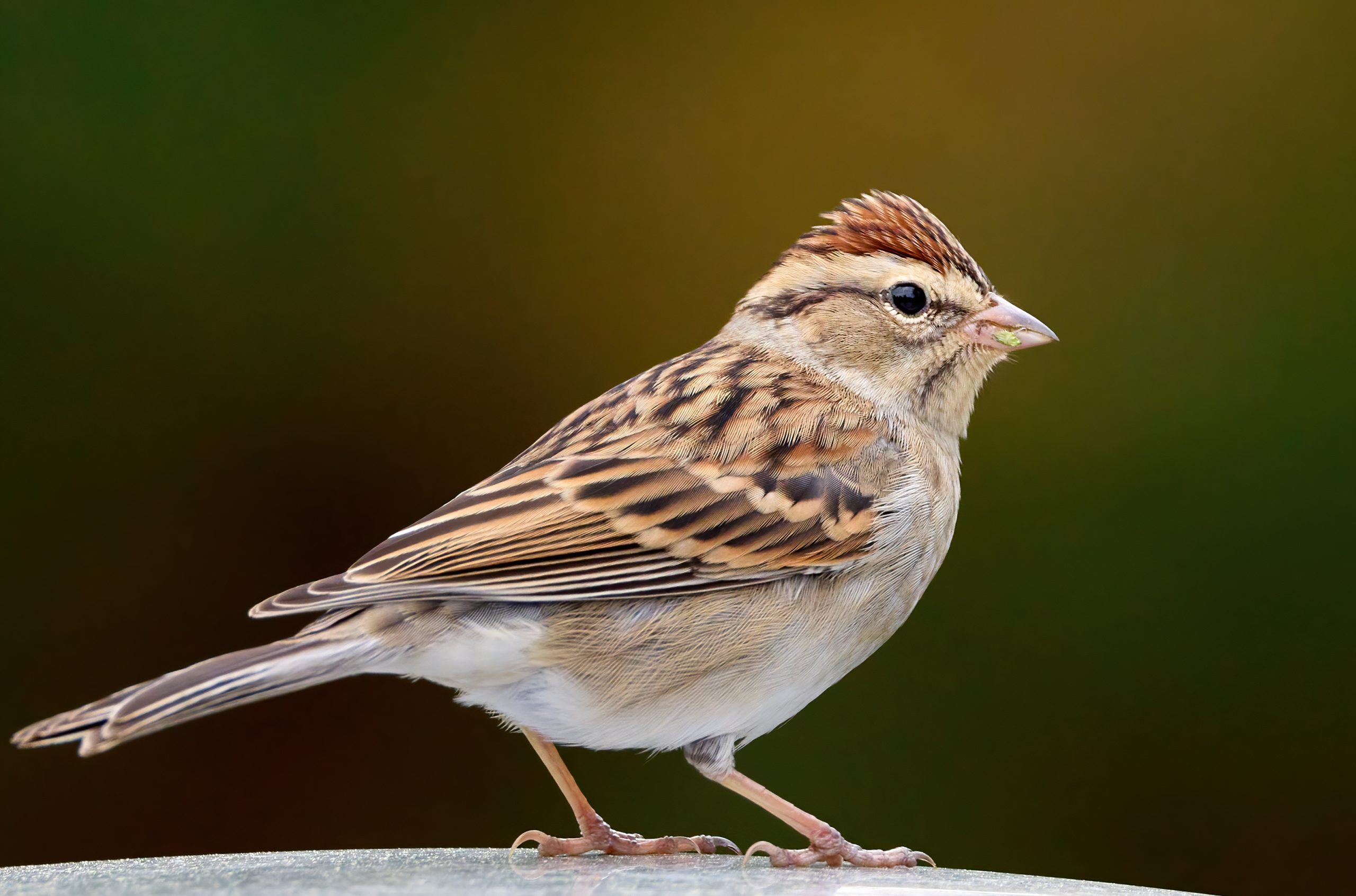
The Chipping Sparrow (Spizella passerina) is the friendly little sparrow of lawns and open yards — slim and neat, with a bright rusty cap, a bold white eyebrow, a black line through the eye, and a clean gray breast without streaks. In winter the cap dulls and the bill turns pinkish, but the slim shape and face pattern remain. They are ground feeders of open spaces: scatter white millet, cracked corn, or fine sunflower chips on the lawn or a low platform, and let a corner of grass go to seed. They breed across most of the country and winter in the South, year-round in the Southeast. Listen for the namesake sharp “chip” call and the dry, sewing-machine trill song.
Species Physical Profile & Morphometrics
The Chipping Sparrow belongs to the New World sparrow family (Passerellidae) and is one of the most widespread and confiding sparrows on the continent — a bird of lawns, parks, and open woodland edges that often nests in garden shrubs a few feet from the door.
The identification formula in summer: rusty cap + white eyebrow + black eyeline + plain gray breast. The slim build and unstreaked underparts separate it from a House Sparrow at a glance.
Essential Morphometric Field Marks:
- Body Length & Mass: 4.7 to 5.9 inches (12–15 cm) and just 0.4 to 0.6 ounces (11–16 grams) — smaller and slimmer than the White-throated Sparrow, with a proportionally long, notched tail.
- Wingspan: About 8.3 inches (21 cm), with light, bouncy flights between lawn and shrub.
- Bill Structure & Color: A tiny conical seed bill — black in the breeding season, pinkish in winter — sized for fine grass seed.
- Color Pattern: Breeding: bright rusty cap, bold white eyebrow, black line through the eye, plain gray breast, brown-streaked back, gray rump. Winter: cap duller and streaked, eyebrow buffy, breast washed brown — but slim shape and face pattern unchanged.
The crisp costume: a bright rusty-red cap, a clean white eyebrow stripe, and a sharp black line through the eye over a plain gray face and breast. The bill turns black. This is the bird that trills from the treetop outside your window.
The muted costume: the cap turns duller and finely streaked, the eyebrow fades toward buff, and the breast picks up a brownish wash, with a pinkish bill. The slim build, dark eyeline, and gray rump still settle the identification.
Chipping Sparrow Vocalization Guide (2 Field Recordings + 1 Simulation)
The song is a dry, rapid trill on one pitch — a mechanical rattle often compared to a sewing machine — and the everyday call is the sharp “chip” that names the species. The first two cards below are real field recordings shared under Creative Commons licenses; the third is a clearly labeled acoustic simulation of the trill. For more wild audio, browse xeno-canto: Chipping Sparrow.
1. Real Recording — The Dry Trill Song
2. Real Recording — The “Chip” Calls
3. Song Simulation — The Mechanical Trill
Habitat, Range & the Open-Ground Lifestyle
Chipping Sparrows live where grass meets trees: lawns, parks, orchards, open woodland edges, and suburban yards. They breed across most of the United States and Canada, winter in the southern states and Mexico, and live year-round in the Southeast and along the Gulf Coast.

A Bird of Nearly Every Yard
The orange breeding band covers almost the entire country — wherever there is open grassy ground with scattered trees, this sparrow can nest, often in a garden shrub or small ornamental tree.
The purple year-round band across the Southeast and Gulf Coast means lucky southern gardeners keep their chipping sparrows in every season; elsewhere they are mainly spring-through-fall companions that gather into loose ground-feeding flocks before migrating.
Backyard Behavioral Patterns & Social Dynamics
The Chipping Sparrow is a gentle, trusting bird of open ground with a few signature habits. Four behaviors explain most of what you will observe:
🌱 The Lawn Picker
Unlike thicket-loving sparrows, chipping sparrows feed right out in the open lawn — hopping across short grass and paths picking fine seed, then flying up to a shrub when startled.
🏡 The Doorstep Nester
This species is famously confiding at the nest — it often builds its hair-lined cup nest in a garden shrub, vine, or small ornamental tree just a few feet from windows and walkways.
🧵 The Hair Collector
Old field guides called it the “hair bird” — it lines its nest with animal hair, and will gather shed pet hair left out in spring. A brushing session for the dog on the patio doubles as nest material.
👥 The Loose Flock
In fall and winter, chipping sparrows gather into small, loose flocks on open ground, mixing with juncos and other sparrows — all in the duller winter plumage, still tipping up their rusty-streaked caps.
Problem: “A Tiny Sparrow Hops Around My Lawn All Day — But Ignores the Feeders. What Does It Want?”
The three most common Chipping Sparrow puzzles all have simple answers:
First, the “little brown bird” identity question: in winter plumage the rusty cap dulls and beginners write it off as an anonymous sparrow — but the slim build, plain unstreaked breast, dark eyeline, and gray rump still set it apart from the chunkier, streaked House Sparrow. Second, the “won’t climb the feeder” puzzle: with its tiny bill and ground-feeding build, this bird wants fine seed on open ground, not big sunflower kernels in a swinging tube — white millet scattered on short grass is exactly its wild diet. Third, the “vanishes in summer” observation: come breeding season your lawn flock disperses into pairs that nest quietly in the shrubs — they have not left, they have just settled down, and the male’s dry trill from the treetop gives their location away.
Method 1: Set the Table — Fine Seed, Served Low
Design for a small-billed, open-ground feeder:
-
Scatter Fine Seed on Open Ground
White proso millet and cracked corn scattered on short grass or bare patches are the chipping sparrow staples — fine seed matches its tiny bill. Sunflower chips (finely cracked) work too. Skip whole black-oil sunflower as the main offering.
-
Use a Low Platform Feeder
For tidier feeding, a platform set low on open ground works beautifully — chipping sparrows tolerate open, stable trays far better than swaying tubes. The feeder style comparison guide covers platform options.
-
Try a Seed Mix Labeled for Ground Birds
Millet-heavy “ground feeding” or “dove and sparrow” mixes match this species exactly. Scatter a small handful daily rather than one big pile — fine seed spoils fast when wet.
-
Keep a Shallow Water Source
A shallow birdbath on or near the ground — or a heated bird bath where winters freeze — draws chipping sparrows for drinking and bathing in every season.
Method 2: Build the Habitat — Lawns & Seed Heads
Feed the habitat, and the birds follow:
-
Let a Corner of Lawn Go to Seed
Grass seed is this bird’s wild staple. Skip one mowing on a back corner and let the grasses head out — chipping sparrows will work the patch for weeks, no feeder required.
-
Leave Flower Seed Heads Standing
Don’t deadhead everything in fall. Seed heads of coneflowers, black-eyed Susans, and garden annuals feed chipping sparrows and their flock-mates straight through winter.
-
Plant a Few Shrubs or Small Trees
Open lawn for feeding, shrubs for cover and nesting — that combination is the whole habitat recipe. A shrubby border at the lawn’s edge gives them singing perches, escape cover, and potential nest sites.
-
Offer Hair and Fine Nesting Material in Spring
The nest is lined with animal hair. Brush the dog outdoors in spring (or set out clean, untreated pet hair in a suet cage) and you may furnish the nest of the pair in your garden shrub.
Tool Solution: Recommended Hardware for Chipping Sparrows
Equipment matched to a small-billed, open-ground feeder:
Low Platform / Ground Tray
A stable tray set low on open lawn, filled with white millet — fine seed served exactly the way this ground-picking species evolved to eat it.
- • Seed: White millet, cracked corn
- • Style: Low platform or tray
- • Placement: Open ground near shrub edge
Millet-Heavy Ground Feeding Mix
A fine-seed mix built around white proso millet — sized for small bills and scattered on the ground or a tray, it serves chipping sparrows, juncos, and doves from one bag.
- • Base: White proso millet
- • Avoid: Big striped sunflower
- • Serving: Scatter a handful daily
Shallow Ground Bird Bath
A shallow bath at ground level with gently sloped sides — ground-feeding sparrows bathe daily, and open water near the lawn’s shrubby edge is a season-long magnet.
- • Depth: 1–2 in, gently sloped
- • Winter: Thermostatic heater
- • Placement: Lawn edge near cover
Frequently Asked Questions
- Species Profile: The Chipping Sparrow (Spizella passerina) is a slim 4.7–5.9 inch, 11–16 gram New World sparrow (Passerellidae) with a tiny seed bill and plain gray breast.
- ID in One Look: Breeding season — rusty cap, white eyebrow, black eyeline. Winter — same bird, duller and streakier, with a pinkish bill and the same slim shape.
- Nearly Every Yard: It breeds across most of the country, winters in the South, and lives year-round in the Southeast — a bird of lawns, parks, and open woodland edges.
- The Sound: A dry, mechanical one-pitch trill like a sewing machine, plus the sharp “chip” call that named the species.
- Feeder Formula: White millet and cracked corn scattered on open ground or a low platform, a lawn corner left to seed, plus a shallow bath — fine seed, served low.
- The Habit: A confiding doorstep nester that lines its hair-filled nest in garden shrubs — leave pet hair out in spring.

Bird Watching Log
Species: Chipping Sparrow (Spizella passerina)
| Chipping Sparrow (Plumage: Breeding / Winter — Flock Size: ____________________________) | |