
White-crowned Sparrow


White-crowned Sparrow (Zonotrichia leucophrys): Complete Identification, Feeder Guide & Call Library
Quick Answer: How to Attract & Identify White-crowned Sparrows
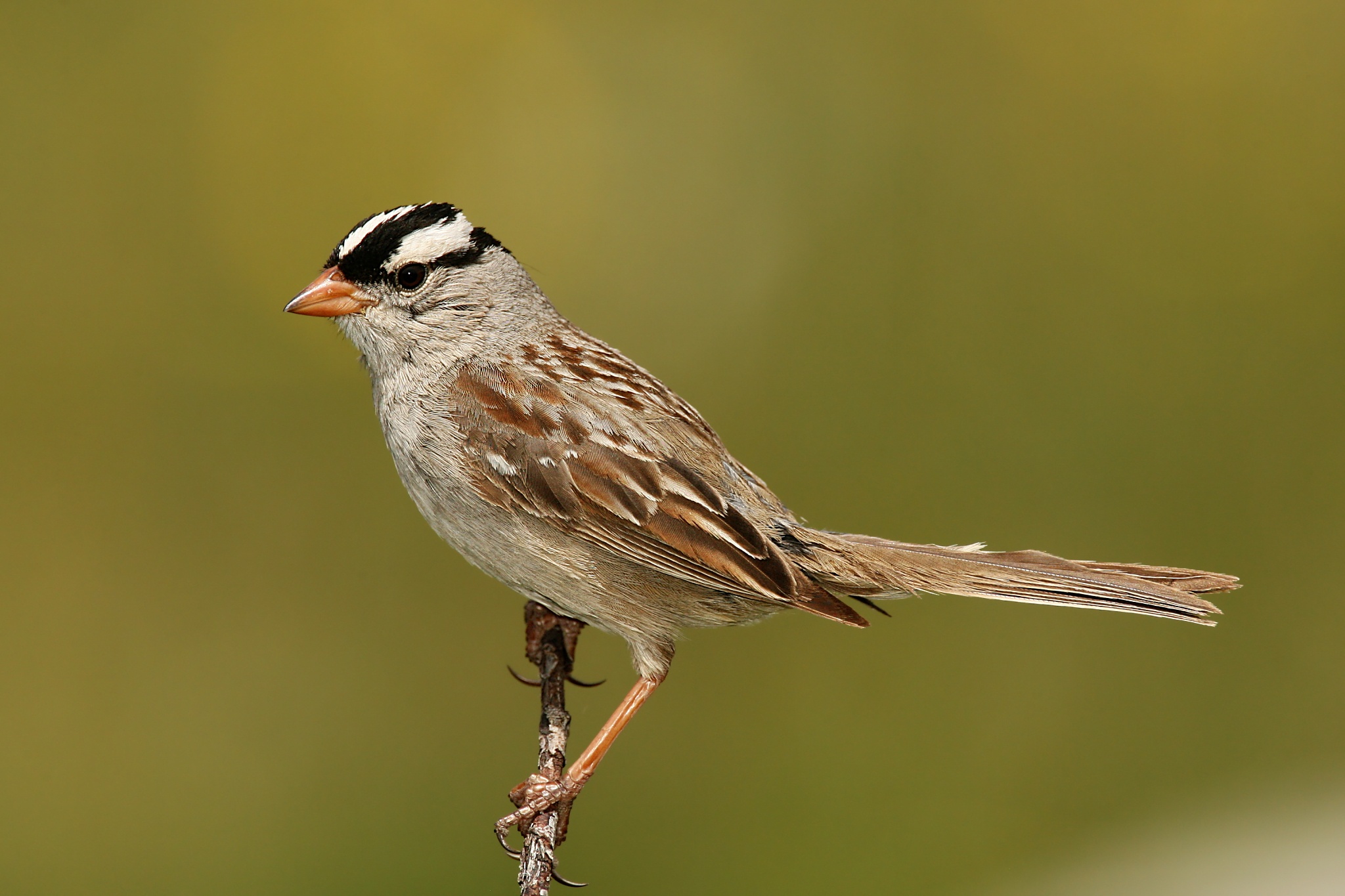
The White-crowned Sparrow (Zonotrichia leucophrys) is the dapper ground sparrow with the black-and-white striped crown — a bicycle-helmet pattern no common backyard bird can match — over a plain gray face and breast with a pink to yellowish bill. First-winter birds wear the same stripes in soft brown and buff. They are ground feeders that double-scratch through leaves: serve white millet, cracked corn, or sunflower chips scattered on the ground or a low platform, always beside a shrub or brush pile. They breed in Alaska, Canada, and the western mountains, winter across most of the country, and live year-round along the Pacific coast. Listen for the song — a thin sweet whistle sliding into a buzzy trill — and the sharp “pink” call note.
Species Physical Profile & Morphometrics
The White-crowned Sparrow belongs to the New World sparrow family (Passerellidae) and is a close cousin of the White-throated Sparrow — same genus, same ground-scratching habits, but a plainer breast and an even bolder crown.
The identification formula: striped helmet crown + plain gray face and breast + pinkish bill + ground feeding. No streaks on the underparts is the detail that separates it from most look-alike sparrows.
Essential Morphometric Field Marks:
- Body Length & Mass: 5.9 to 6.3 inches (15–16 cm) and 0.9 to 1.0 ounces (25–28 grams) — a large, long-tailed sparrow with an upright, alert posture.
- Wingspan: About 8.3 to 9.4 inches (21–24 cm), with quick low flights between the feeding patch and cover.
- Bill Structure & Color: A small conical seed bill in pink, orange-pink, or yellowish tones — bright against the gray face.
- Color Pattern: Bold black-and-white crown stripes running bill to nape over an unstreaked gray face, breast, and belly; brown-streaked back and rusty-edged wings with two pale wing bars; longish brown tail.
Crisp black-and-white crown stripes — a white central stripe flanked by black — over a clean gray face and breast. Males and females look essentially alike; the helmet is the whole field mark.
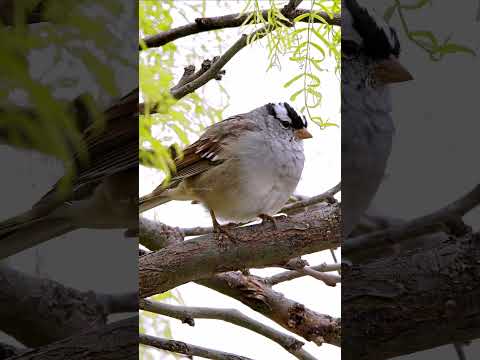
Same pattern in brown and buff — the crown stripes are soft brown instead of black, the central stripe tan instead of white. Youngsters keep this plumage through their first fall and winter, and in a winter flock they often outnumber the adults.
White-crowned Sparrow Vocalization Guide (2 Field Recordings + 1 Simulation)
The song is a thin, sweet whistle or two followed by buzzy trills — and it is famous among scientists for its regional dialects: neighborhoods just miles apart sing measurably different endings. Around the feeder, listen for the sharp, metallic “pink” call. The first two cards below are real field recordings shared under Creative Commons licenses; the third is a clearly labeled acoustic simulation of the song pattern. For more wild audio, browse xeno-canto: White-crowned Sparrow.
1. Real Recording — Whistled Song
2. Real Recording — Coastal Dialect
3. Song Simulation — Whistle Into Buzz
Habitat, Range & the Two Lifestyles
White-crowned Sparrows breed in Alaska, across northern Canada, and in the western mountains — tundra edges, willow thickets, and brushy meadows. In winter they spread across most of the United States, favoring brushy field edges, hedgerows, parks, and backyard shrub beds. Along the Pacific coast, local birds never leave: they are year-round backyard residents from British Columbia to California.

A Winter Guest for Most, a Neighbor on the Coast
The blue winter band blankets most of the country — especially the West and South — where these sparrows flock with juncos under feeders from fall through spring.
The purple strip down the Pacific coast (plus mountain pockets) is the year-round population: if you garden in coastal California, Oregon, or Washington, the same striped-crown sparrows sing in your yard in June and scratch under the feeder in January.
Backyard Behavioral Patterns & Social Dynamics
The White-crowned Sparrow is a composed, methodical ground bird with a few signature habits. Four behaviors explain most of what you will observe:
🐾 The Double-Scratch
Like its cousins the White-throated Sparrow and the Dark-eyed Junco, it feeds with a hop-forward, kick-back move — both feet scratching at once to expose seed under leaves.
🪖 The Two-Age Flock
Winter flocks mix black-helmeted adults with brown-crowned youngsters. The young birds are this year’s hatch — same species, same habits — and learning to tell the two ages apart doubles what you notice at the feeder.
🎵 The Local Accent
White-crowned Sparrows learn their song from their neighbors, so each region sings its own dialect. Coastal birds are famous for singing through much of the year — a sweet whistle drifting from the shrub line even on mild winter days.
🌿 The Brush-Pile Commuter
These sparrows feed in the open only within a quick dash of dense cover. Brush piles, hedges, and evergreen shrubs are the invisible furniture that decides whether they linger at your feeding patch or merely pass through.
Problem: “A Sparrow With a Striped Head Visits Every Winter — But It Won’t Touch My Hanging Feeders. Why?”
The three most common White-crowned Sparrow puzzles all have reassuring answers:
First, the “wrong crown” confusion: a winter flock shows both crisp black-and-white adults and soft brown-crowned birds, and beginners assume two species — it is one, and the brown-crowned birds are simply this year’s youngsters. Second, the “snubs my feeder” problem: this is a ground-scratching bird that does not trust swaying perches — seed in a hanging tube is effectively invisible to it, while the same seed scattered on the ground disappears by mid-morning. Third, the “grab and dash” frustration: your feeding spot is too exposed. Move the scattered seed to within a few feet of a shrub, hedge, or brush pile, and the same birds that dashed off will settle in as winter regulars — and on the Pacific coast, they may never leave at all.
Method 1: Set the Table — Feed Them Low
Design for a ground-feeding, cover-loving flock bird:
-
Scatter Millet and Sunflower Chips on the Ground
White proso millet, sunflower chips, and cracked corn scattered on bare ground or short grass are the white-crown staples — exactly what they scratch for in the wild. Toss a handful beside the shrubs each morning; no hanging tube will earn the same loyalty.
-
Add a Low Platform Feeder
For tidier feeding, use a platform set low to the ground near cover — white-crowns will share a stable tray with juncos and towhees all winter. The feeder style comparison guide covers platform and hopper options.
-
Use the Spill Zone
These sparrows already patrol beneath hanging feeders for dropped seed. A catch tray under each tube formalizes the arrangement and keeps seed off the lawn where it would mold.
-
Offer Water Near Cover
White-crowns drink and bathe daily. A shallow bath near shrubs — or a heated bird bath where winters freeze — will pull the flock into the open.
Method 2: Build the Habitat — Cover & Seed Heads
Feed the habitat, and the birds follow:
-
Leave Flower and Grass Seed Heads Standing
Don’t deadhead the garden in fall. White-crowns cling to the seed heads of grasses, coneflowers, and garden annuals all winter — a slightly shaggy flower bed is a self-refilling feeder.
-
Build a Brush Pile
A brush pile from fall prunings is the fastest cover you can build — these sparrows feed beside it, roost in it, and dive into it when a hawk passes. Scatter seed at its edge and watch the flock adopt it.
-
Plant Dense, Low Shrubs
Hedges, evergreen shrubs, and brushy corners supply the escape routes ground-feeding sparrows require. Every step between seed and cover costs you watching time — feed within a few feet of the thicket.
-
Keep Ground Stations Fresh
Ground seed spoils fast in wet weather. Scatter only a day or two’s worth, rotate the feeding spot if it gets soiled, and rake the main patch weekly to keep the flock healthy.
Tool Solution: Recommended Hardware for White-crowned Sparrows
Equipment matched to a ground-feeding flock bird:
Low Platform / Ground Tray
A stable tray set low beside shrub cover, filled with white millet and sunflower chips — the feeding style these sparrows evolved for, and the surest way to hold a flock all winter.
- • Seed: White millet, sunflower chips
- • Style: Low platform or tray
- • Placement: Beside shrubs or brush pile
Seed Tray Under Hanging Feeders
A wide tray mounted beneath your existing tube feeders — catches spilled seed and turns it into a sanctioned ground-feeding station for white-crowns, juncos, and towhees.
- • Seed: Catches spillage
- • Cleanup: Keeps lawn clean
- • Bonus: Serves cardinals too
Shallow Heated Bird Bath
A shallow bath with a thermostatic heater — ground sparrows drink and bathe daily through the cold months, and open water near cover is a reliable flock magnet.
- • Depth: 1–2 in, gently sloped
- • Winter: Thermostatic heater
- • Placement: Near shrub cover
Frequently Asked Questions
- Species Profile: The White-crowned Sparrow (Zonotrichia leucophrys) is a large 5.9–6.3 inch, 25–28 gram New World sparrow (Passerellidae) with a striped crown, plain gray breast, and pinkish bill.
- Two Lifestyles: It breeds in Alaska, Canada, and the western mountains and winters across most of the U.S. — but Pacific coast birds stay year-round.
- ID in One Look: Black-and-white bicycle-helmet crown over an unstreaked gray breast; first-winter birds wear the same stripes in brown and buff.
- The Sound: A thin sweet whistle sliding into a buzzy trill, with famous regional dialects; the flock call is a sharp metallic “pink.”
- Feeder Formula: White millet and sunflower chips scattered on the ground or a low platform beside shrubs, seed heads left standing, plus a shallow bath — skip the swaying tubes.
- The Habit: A double-scratching ground feeder that only lingers within a quick dash of dense cover.

Bird Watching Log
Species: White-crowned Sparrow (Zonotrichia leucophrys)
| White-crowned Sparrow (Crown: Black-White Adult / Brown Immature — Flock Size: ____________________________) | |