
Lazuli Bunting


Lazuli Bunting (Passerina amoena): Complete US Backyard Identification, Feeder Guide & Vocalization Library
Quick Answer: How to Attract & Identify Lazuli Buntings
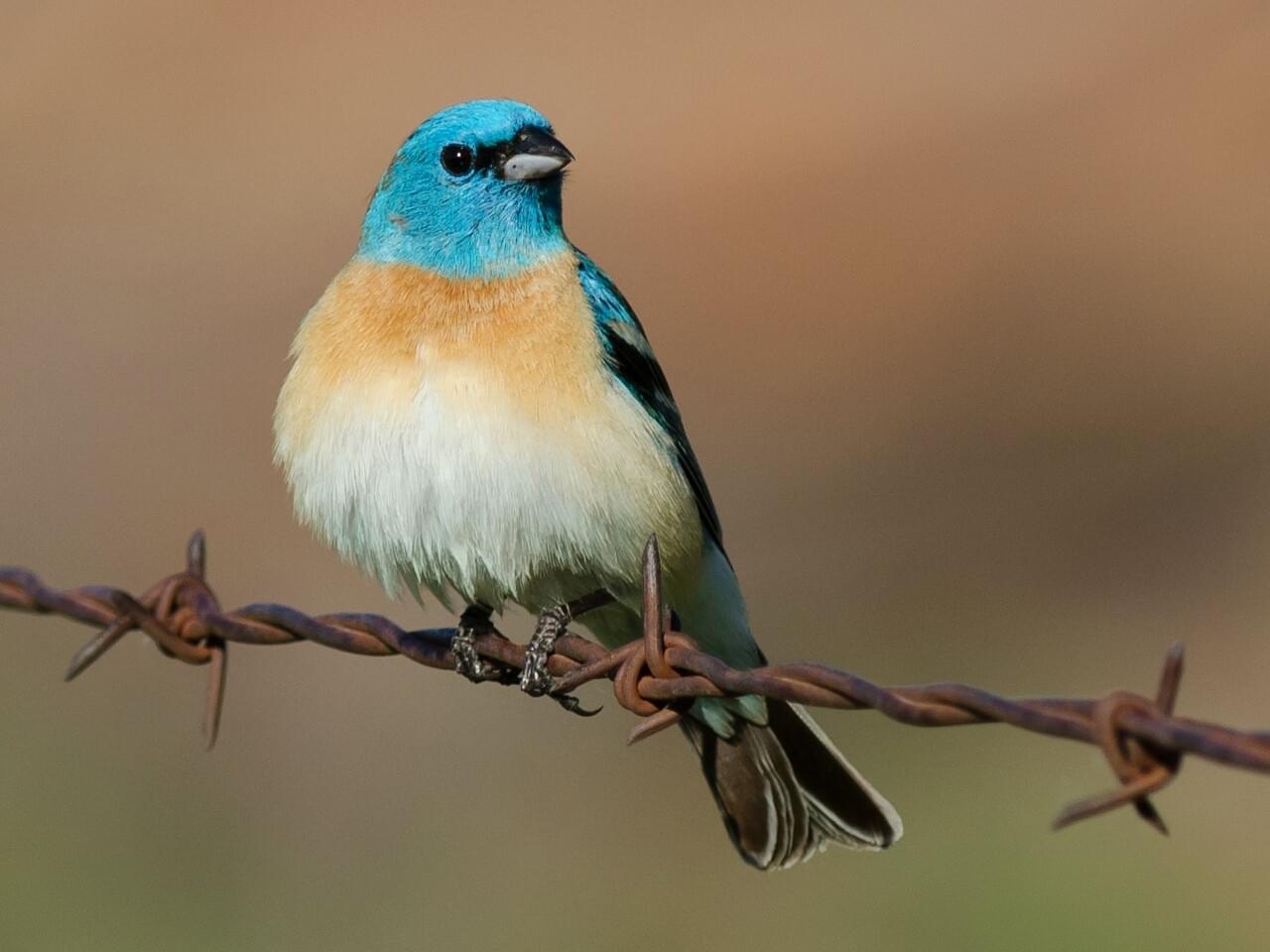
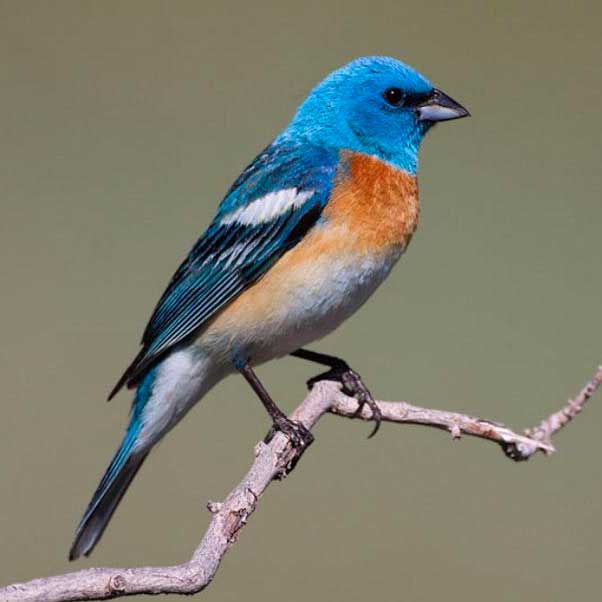
The Lazuli Bunting (Passerina amoena) is a compact, sparrow-sized Western songbird named for the gemstone lapis lazuli. Adult breeding males are celebrated for their luminous pastel cerulean-blue hood and rump, rich tawny-cinnamon chest band, snow-white belly, and dual white wing bars (females are soft grayish-brown with buffy wing bars and an unstreaked warm buff breast). They are seasonal Neotropical migrants breeding across Western US brushy foothills, sagebrush draws, and canyon edges from May through August. To attract them to your yard, hang mesh thistle socks or small-perch tube feeders loaded with fresh Nyjer (thistle) seeds and fine sunflower chips, offer white proso millet on low sheltered platform decks within 10 feet of native brush (scrub oak, chokecherry, or sage), and install a dripping water bath.
Species Physical Profile & Morphometrics
Representing the Western counterpart of the eastern Indigo Bunting, the scientific name amoena translates to “charming” or “delightful.” The Lazuli Bunting belongs to the cardinal family (Cardinalidae) and possesses a sharply conical, two-toned seed beak engineered to husk tiny wild grass grains and weed seeds with ease.
In Western field identification, beginner birders sometimes confuse the male with a Western Bluebird, but bluebirds are larger with slender black insect-eating beaks, dark wings without bold white bars, and chestnut-washed backs. In the Great Plains transition zone (Colorado, Nebraska, the Dakotas), Lazuli Buntings freely hybridize with Indigo Buntings, producing fertile offspring displaying turquoise caps and faded orange breasts.
Essential Morphometric Field Marks:
- Body Length & Mass: Measures 5.1 to 5.9 inches (13–15 cm) with an adult weight averaging 0.5 to 0.7 ounces (13–19 grams), matching the compact build of an American Goldfinch.
- Wingspan: Spans 8.7 to 9.8 inches (22–25 cm) with agile wings designed for rapid bursts through dense mountain brush and scrub oak ravines.
- Bill Structure: Short, stout, symmetrically conical beak colored dark silver-slate on top and pale bluish-gray beneath.
- Diagnostic Wing Bars: Both sexes feature two crisp wing bars: adult males possess an exceptionally wide, bright white upper wing bar and a narrower lower bar that stand out boldly against dark flight feathers.
A radiant Western pastel palette: vibrant azure-blue head, throat, and mantle, contrasted against a rich warm tawny-cinnamon chest band and flank wash, clean white lower belly, and conspicuous double white wing bars.
Soft, protective foothill camouflage: warm grayish-brown upperparts without heavy streaking, an unstreaked warm buffy-tan breast, two distinct pale buff wing bars, and an understated turquoise or pale blue wash on the rump and tail feathers.
Bunting Vocalization Library (4 Key Sounds)
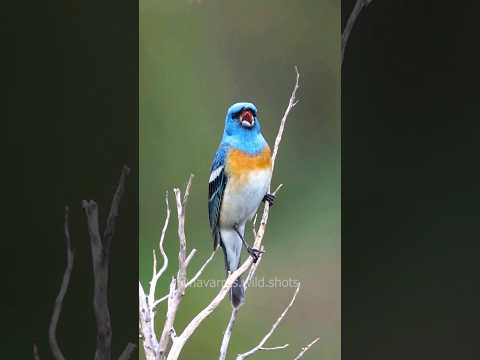
Male Lazuli Buntings are enthusiastic vocalists throughout late spring and early summer. The song is a rapid, lively, high-pitched warble that speeds up towards the finish, with phrases sung in paired or tripled syllables:
1. Accelerating Whistled Warble
2. Sharp “Spik” / “Tsik” Call
3. Foothill Dawn Song
4. Flight & Feeding Pip
Western US Range & Molt-Migration Biology
In the United States, Lazuli Buntings nest across brushy hillsides, arid sagebrush coulees, Gambel oak foothills, streamside riparian draws, post-fire regenerating chaparral, and residential canyon edges from the Rocky Mountain Front Range to the Pacific Coast.

Blue = Wintering Grounds (Western Mexico)
Green = Western US Migration Corridors.
Unique Molt-Migration in the American Southwest
Unlike most North American songbirds that complete their feather molt on breeding territories before migrating, Lazuli Buntings engage in a specialized molt-migration.
In late July and August, birds leave their breeding grounds in Colorado, Utah, Wyoming, and California to congregate in monsoonal staging areas across the Desert Southwest (southern Arizona, New Mexico, and northwestern Mexico). Here, nourished by abundant post-monsoon grass seeds and insects, they molt their flight feathers before continuing to their winter home in western Mexico.
Backyard Behavioral Patterns & Social Dynamics
Watching Lazuli Buntings in Western backyards highlights unique behavioral adaptations shaped by arid, rugged landscapes:
🎶 Individualized Song Dialects
Each yearling male Lazuli Bunting invents his own unique territorial song upon arriving at his first breeding ground! He piecemeals syllables learned from neighboring dominant males into a novel arrangement that remains his lifelong vocal signature.
🔥 Post-Wildfire Succession Specialists
Lazuli Buntings are classic early-successional pioneers. When Western wildfires burn through dense conifer stands, the resulting resprouting brush, wild grasses, and fireweed create optimal nesting and foraging territory for thriving bunting colonies.
🦗 Riparian Shrub Insect Hunting
While seeds sustain adults, summer nesting demands high-protein animal prey. Parents glean tent caterpillars, grasshoppers, leafhoppers, and spiders from native willows, wild plum bushes, and garden perennials to nourish their nestlings.
💧 Western Foothill Water Seekers
In arid Western climates, buntings rely heavily on isolated springs, irrigation ditches, and garden bird baths. They will travel hundreds of yards down dry ridges multiple times daily for quick, vigorous baths in moving water.
Problem: Why Lazuli Buntings Bypass Backyard Feeders
Homeowners throughout Western foothill neighborhoods frequently hear Lazuli Buntings singing along ridge lines, yet find that they rarely land on existing feeder poles. This absence is almost always caused by mechanical feeder mismatches:
First, Lazuli Buntings have delicate finch-sized beaks and weigh less than 0.7 ounces. They cannot easily crack large striped sunflower seeds or whole peanuts designed for jays and Black-headed Grosbeaks. Second, generic wild bird blends contain high concentrations of red milo and cracked corn that buntings ignore entirely. Third, buntings are timid, thicket-adapted birds that will not fly into wide, barren lawns to visit feeders mounted far from vegetative shelter, retreating immediately if aggressive flock birds like House Sparrows or Starlings swarm the station.
Method 1: Install Small-Port Finch Tube Feeders & Native Brush Borders
Equip your Western yard with feeding stations that match the physical stature of small buntings:
-
Deploy Mesh Thistle Socks or Miniature-Port Finch Feeders
Hang fine-mesh nylon thistle socks or dedicated finch tube feeders with small seed apertures. These prevent larger birds from gorging while allowing agile buntings to cling and feed comfortably.
-
Position Feeders Within 8 to 10 Feet of Dense Native Brush
Mount your finch station near native Gambel oak, chokecherry, sagebrush, or wild rose tangles. Buntings need immediate protective cover to duck into when Western raptors (like Cooper’s Hawks) glide overhead.
-
Install a Low-Mounted Screened Platform Deck
Mount an open wooden platform tray 4 to 5 feet high in a shaded garden border. Buntings naturally harvest seeds close to the soil and welcome an uncrowded horizontal perching ledge.
-
Provide Active Moving Water Ripples
In dry Western environments, acoustic water cues are irresistible. Install a shallow bird bath (1 to 1.5 inches deep) equipped with a solar fountain or dripping mister right beside your thicket feeders.
Method 2: Optimize Nyjer Seed, White Proso Millet & Fine Chips
Offer oil-rich micro-seeds and protein tailored to the Lazuli Bunting’s small bill:
-
Serve Fresh Nyjer (Thistle) Seeds
Nyjer seed (Guizotia abyssinica) is an energy-dense micro-seed containing 35% crude fat and 18% protein. Ensure seeds are fresh and oily, as dry thistle will be ignored by selective buntings.
-
Mix in Fine Hulled Sunflower Chips
Because buntings struggle with hard black-oil sunflower shells, supply finely diced sunflower hearts (sunflower chips). This delivers instant calories with zero waste and no ground mess.
-
Scatter Plump White Proso Millet on Low Trays
White proso millet mimics native grass seeds harvested across Western draws. Scatter handfuls across low platform trays or clean garden flagstones near scrub borders.
-
Supply Dishes of Live Mealworms in Summer
During June and July, offer small dishes of live mealworms. The succulent moisture and insect protein provide critical nutrition for breeding pairs raising hungry broods.
Tool Solution: Recommended Hardware for Lazuli Buntings
Precision backyard equipment engineered for small, seed-eating Western songbirds:
Mesh Thistle Sock & Finch Tube Feeder
Fine-weave heavy-duty mesh pouch allowing small passerines to cling 360 degrees and extract oil-rich thistle seeds with ease.
- • Capacity: 1.5 lbs Nyjer Seed
- • Target Species: Lazuli Buntings, Goldfinches, Siskins
- • Exclusion: Deters jays, grackles, and pigeons
Nyjer & Diced Sunflower Heart Blend
A specialized 50/50 mix of fresh Ethiopian Nyjer and finely chipped sunflower meats delivering rich lipids with zero shell debris.
- • Purity: 100% Edible Micro-Seeds
- • Oil Content: 36% Concentrated Fat Core
- • Pest Resistance: Squirrel & Grackle Proof
Shallow Basin with Solar Water Mister
Low-profile textured basin (1.25 inches deep) featuring a continuous dripping solar mister to draw arid foothill songbirds from cover.
- • Water Depth: 1.25 in (Safe for small songbirds)
- • Acoustics: Continuous moving water ripple
- • Placement: Shady ground or low deck post
Frequently Asked Questions
• Front Range Foothills: Red Rocks Park (around Trading Post and Morrison), Castlewood Canyon State Park, Bear Creek Lake Park, and Chatfield State Park.
• Boulder & Northern Colorado: Boulder Open Space & Mountain Parks (especially Chautauqua, Mesa Trail, and Shanahan Ridge trails), Lory State Park in Fort Collins, and Lyons foothill trails.
• Western Slope Hotspots: Colorado National Monument near Grand Junction, Ridgway State Park along the Uncompahgre River, and the Gunnison River valley.
• Backyard Settings: Suburban residential yards along the hogbacks and foothill interfaces (Golden, Boulder, Morrison, Castle Rock, and Colorado Springs) that back up to native Gambel oak, chokecherry, or willow thickets regularly host bunting pairs at thistle and millet feeders!
1. Offer Fresh Nyjer & Fine Sunflower Chips: Buntings have small bills specialized for high-oil micro-seeds. Hang fine-mesh thistle socks or dedicated finch tube feeders filled with fresh Nyjer seed and finely diced sunflower hearts.
2. Scatter White Proso Millet on Low Trays: Scatter white proso millet on a screened platform feeder 4 to 5 feet high placed near property borders, mimicking the meadow weeds they naturally forage.
3. Place Feeders Beside Native Thickets: Position your feeding station within 8 to 10 feet of dense foothill vegetation (Gambel oak, sagebrush, chokecherry, or wild plum) so these cautious birds have instant escape cover.
4. Provide an Active Moving Water Bath: In dry Western summer climates, buntings are passionately drawn to water acoustics. A shallow bird bath (1.25 inches deep) with a solar mister or dripper will pull them down from arid singing perches daily.
• Adult Male: Features an electric pastel azure-blue head, throat, and rump, a warm tawny-cinnamon chest band and flanks, a pure white belly, and two bold white wing bars (a broad upper bar and narrow lower bar) on dark wings.
• Adult Female: Dressed in soft, unstreaked warm grayish-brown plumage above with an unstreaked buffy-tan chest, whitish belly, two distinct buffy wing bars, and an understated turquoise or pale blue wash on the tail and rump.
• Bill Shape: A Western Bluebird has a slender, straight black beak built for gleaning insects, whereas a Lazuli Bunting has a stout, triangular conical seed-cracking beak.
• Wing Markings & Underparts: Western Bluebirds have deep cobalt-blue wings without white wing bars and often show blue on their throats. Lazuli Buntings have two prominent white wing bars, a pure white belly, and a pale azure-blue throat terminating sharply at a cinnamon chest band.
- Species Profile: The Lazuli Bunting (Passerina amoena) is a 5-inch Western passerine identified by the male’s pastel azure-blue hood, cinnamon breast band, white belly, and double white wing bars.
- Western US Summer Resident: Breeds abundantly across Western US brushy foothills, sagebrush draws, and riparian canyons from May through August before wintering in western Mexico.
- Colorado Hotspots: Abundant across Front Range foothills (Red Rocks, Boulder Open Space, Castlewood Canyon) between 5,000 and 8,500 ft elevation.
- Feeder Preferences: Strongly prefers fine-mesh Nyjer (thistle) socks, finely diced sunflower hearts, white proso millet on low trays, and summer live mealworms.
- Molt-Migration Adaption: Performs a unique late-summer molt-migration into the Desert Southwest monsoon belt to molt feathers before heading south to Mexico.
- Acoustic Water Draw: Providing an active dripping water mister in shady cover within 10 feet of native brush is the most dependable method to attract this foothill species.
Bird Watching Log
Species: Lazuli Bunting (Passerina amoena)
| Lazuli Bunting (Western US Foothill / Canyon Region: ________________) | |