
Blue Grosbeak


Blue Grosbeak (Passerina caerulea): Complete US Backyard Identification, Feeder Guide & Vocalization Library
Quick Answer: How to Attract & Identify Blue Grosbeaks
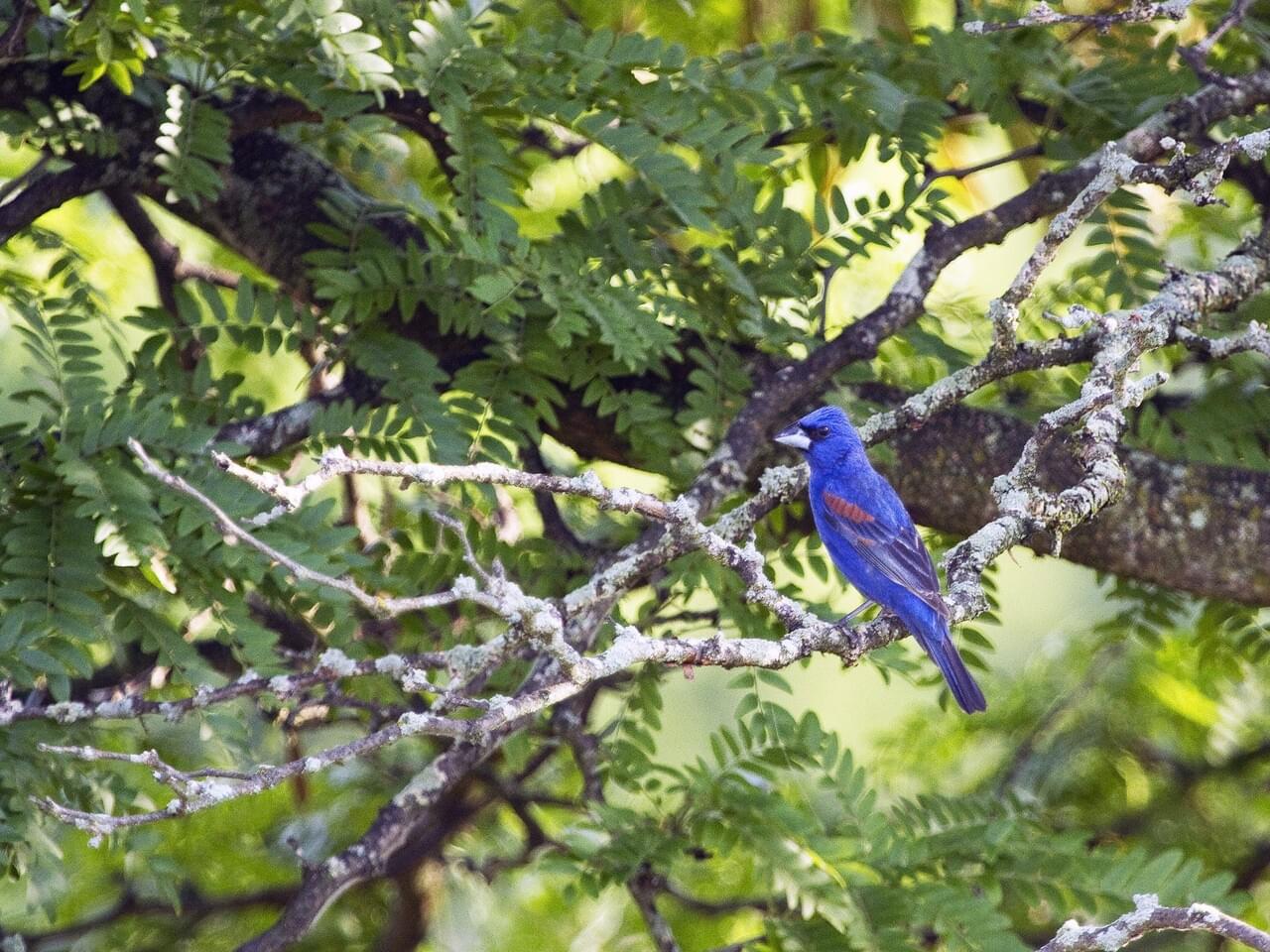
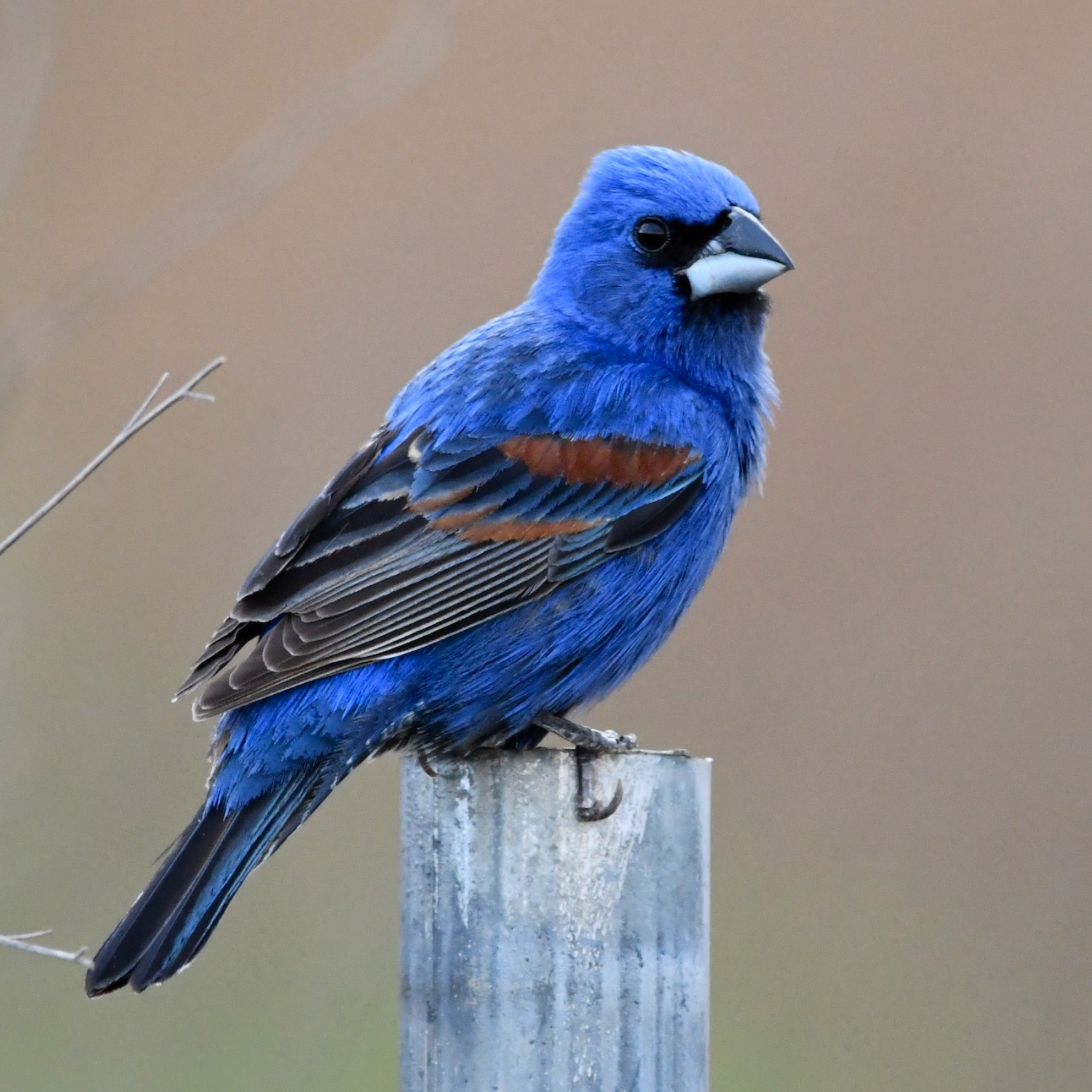
The Blue Grosbeak (Passerina caerulea) is a stocky, sparrow-to-tanager-sized songbird recognized by its massive silvery-horn conical beak, glowing deep royal blue plumage, black facial lores, and two bold chestnut-cinnamon wing bars (females are warm cinnamon-brown with buff wing bars). Blue Grosbeaks are Neotropical summer migrants that breed across the Southern, South-Central, and Southwestern United States from late April through September. Unlike treetop Rose-breasted Grosbeaks, Blue Grosbeaks are brush and edge foragers; to attract them to your yard, place a wide, low platform tray or ground feeder 3 to 5 feet high beside overgrown briars or native hedges, offering white proso millet, wild grass seeds, raw sunflower chips, and live mealworms with an active dripping water bath.
Species Physical Profile & Morphometrics
Closely related to the Indigo Bunting and Painted Bunting, the Blue Grosbeak is noticeably bulkier with an oversized, silver-gray bill that occupies almost half its facial profile. This heavy jaw structure allows it to husk wild grass grains, millet, and hard farm grains while shearing through the tough exoskeletons of summer cicadas and grasshoppers.
In field identification, backyard birders often mistake the male Blue Grosbeak for a large Indigo Bunting, but buntings are substantially smaller and completely lack the two prominent chestnut wing bars. Similarly, the Eastern Bluebird has a slender insectivorous beak and a rusty red breast, whereas the Blue Grosbeak is uniformly rich blue with an immense crushing beak.
Essential Morphometric Field Marks:
- Body Length & Mass: Measures 5.9 to 6.7 inches (15–17 cm) with an adult mass averaging 0.9 to 1.2 ounces (26–34 grams), roughly 30% larger and heavier than an Indigo Bunting.
- Wingspan: Spans 10.2 to 11.4 inches (26–29 cm), providing swift, low-altitude bounding flight across open meadows and agricultural hedge rows.
- Bill Structure: Features an extraordinarily stout, triangular conical beak colored dull metallic silver-gray or pale horn, meeting at a distinct straight gape line designed for maximum crushing leverage.
- Wing Bars: The most diagnostic visual trait in all plumages: displays two broad, warm cinnamon-to-chestnut wing bars (upper wing bar is rich chestnut; lower wing bar is narrower and buffy).
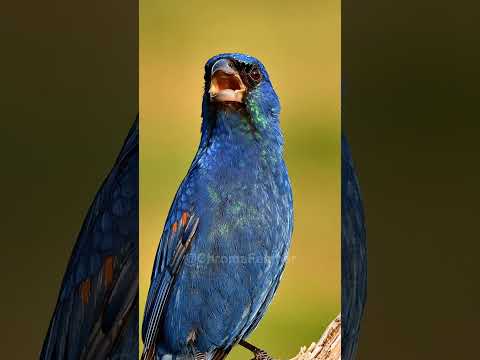
Drenched in deep royal indigo-blue feathers across the head, mantle, and breast, accented by velvety black lores surrounding the eye. The wings and tail are blackish, boldly crossed by broad, rusty chestnut wing bars, with feathers often shining cobalt in bright southern sunlight.
Clad in warm, protective grassland camouflage: rich cinnamon-brown to buffy-tan overall, paler along the throat and belly, with two warm buff-to-cinnamon wing bars and the identical massive silver-gray seed-cracking bill (occasionally showing a faint blue wash on the rump).
Grosbeak Vocalization Library (4 Key Sounds)
The Blue Grosbeak’s song is a rich, warbling musical cascade that echoes through Southern fence rows and powerline cuts. While it shares the bouncy rhythm of a Purple Finch or House Finch, its voice carries a distinct huskiness with slow, deliberate musical phrasing:
1. Rich Warbling Carol
2. Sharp “Chink” / “Pink” Call
3. Dawn Territory Caroling
4. Low Feeding Churr & Pip
Southern US Range & Neotropical Summer Migration
In the United States, Blue Grosbeaks inhabit overgrown fields, shrubby roadsides, agricultural ditch borders, transmission line cuts, mesquite scrub, and open woodland margins across the Southern states, northward through Missouri, southern Illinois, Indiana, and eastward along the Atlantic coastal plain to New Jersey.

Blue = Wintering Range (Mexico & Central America)
Green = Southern US Migration Corridor.
Southern Farmlands & Coastal Plain Migration
After wintering in the tropics of Mexico and Central America, Blue Grosbeaks make a trans-Gulf and overland flight into the United States, appearing across Texas, Florida, Georgia, and the Carolinas in mid-to-late April.
Unlike forest-dwelling grosbeaks, this species is strongly associated with early successional habitats and rural-suburban edges. They often share feeding grounds with Painted Buntings, Northern Bobwhites, and Northern Cardinals, frequently nesting in low shrubs, briar tangles, or blackberry patches just 3 to 8 feet above the ground.
Backyard Behavioral Patterns & Social Dynamics
Observing Blue Grosbeaks in a Southern backyard reveals unique physical habits and feeding mannerisms:
🌾 Distinctive Sideways Tail-Twitching
Blue Grosbeaks have a diagnostic habit of constantly twitching, spreading, and pumping their tails sideways while perched. This jerky motion helps flush camouflaged grasshoppers from dense grasses and signals readiness to flock companions.
🦗 Heavy Summer Insect Gluttony
While seeds fuel their migration, summer nesting demands animal protein. Pairs tirelessly scour garden lawns and weed patches for cicadas, armyworms, beetles, and giant grasshoppers, meticulously crushing them in their heavy beaks before feeding their chicks.
🏡 Open Low-Brush Cup Nesting
Unlike tree-top nesting songbirds, Blue Grosbeaks build sturdy open-cup nests woven from grass stems, rootlets, and snake skins nestled low inside thorny blackberry tangles, rose brambles, or small saplings only 3 to 8 feet off the turf.
⚡ Prominent Utility Wire Perching
Males love singing from exposed, elevated lookout posts. They spend hours singing from overhead telephone wires, TV antennas, or solitary fence posts bordering lawns, dropping down smoothly into grass beds whenever seed supplies are refreshed.
Problem: Why Blue Grosbeaks Avoid Backyard Feeders
Homeowners throughout the South frequently see Blue Grosbeaks singing along property lines, yet wonder why the birds never visit their feeder poles. This feeder reluctance stems from specific foraging ecology:
First, Blue Grosbeaks are low-stratum and ground foragers. They feel naturally exposed and insecure on high, swaying plastic tube feeders suspended in the open lawn. Second, standard grocery store wild bird blends often contain cheap red milo and coarse cracked corn that smaller songbirds reject, while missing the fine, high-energy grains that Blue Grosbeaks prefer. Third, without dense brush, hedgerows, or overgrown garden borders nearby, cautious grosbeaks will not risk crossing open lawns where domestic cats or Cooper’s Hawks hunt.
Method 1: Install Low-Brush Platform Trays & Native Border Corridors
Configure a feeding environment that matches the edge-dwelling instincts of Blue Grosbeaks:
-
Deploy Low-Mounted Wooden Platforms or Ground Feeding Decks
Mount an open cedar platform tray 3 to 5 feet off the ground on a sturdy post, or utilize a screened ground feeding table. This provides a wide, stable perching surface where grosbeaks can land horizontally without feeling off-balance.
-
Place Feeders Within 8 to 12 Feet of Dense Brush Cover
Do not position your feeding station in the middle of a barren, manicured lawn. Situate your platform near native hedgerows, wax myrtles, blackberry brambles, or wild shrub borders so grosbeaks have instant escape cover.
-
Provide High Staging Perches (Fence Lines or Wire Cuts)
Ensure your feeding zone has an elevated staging post (such as a split-rail fence, trellised vine, or small tree) where the male can perch, sing, and inspect the ground before leading the female down to feed.
-
Maintain Fresh Dawn Offerings
Blue Grosbeaks feed heavily in the early morning dew when insects are sluggish. Keep seed decks swept clean and replenished with fresh grains before sunrise.
Method 2: Optimize Millet Blends, Sunflower Hearts & Live Mealworms
Cater to the Blue Grosbeak’s love for small wild seeds, grains, and succulent insects:
-
Feature White Proso Millet as the Core Attraction
Unlike northern cardinals that ignore millet, Blue Grosbeaks love white proso millet (Panicum miliaceum). This small, nutrient-rich round seed mimics the native grass seeds they naturally harvest across Southern fields.
-
Mix in Black-Oil Sunflower Seeds & Coarse Sunflower Chips
Their heavy beaks easily crack thin-shelled black-oil sunflower seeds, yielding essential dietary fats (28% crude fat). Offering shelled sunflower hearts eliminates messy hull accumulation beneath your platform.
-
Deploy Live or Dried Mealworms for Summer Protein
During the peak summer breeding months (May through July), place small dishes of mealworms on your feeding deck. The rich protein directly supports growing chicks and draws adult grosbeaks on daily feeding visits.
-
Provide Ground-Level Dripping Water Baths
Southern heat demands reliable hydration. Install a shallow bird bath (1.5 inches deep) equipped with a gentle dripping mister near low brush to attract grosbeaks via the soothing sound of moving water.
Tool Solution: Recommended Hardware for Blue Grosbeaks
Backyard equipment engineered for ground-and-brush foraging Southern songbirds:
Cedar Low-Platform Feeder with Screen Floor
Heavy rot-resistant cedar platform tray featuring a stainless steel perforated mesh floor for superior water drainage.
- • Deck Size: 15 x 12 in flat perching area
- • Mount: 4-foot Post or Low Deck Ready
- • Drainage: Rustproof all-weather screen
White Proso Millet & Sunflower Heart Mix
A specialized 50/50 mix of plump white proso millet and hulled sunflower meats designed specifically for buntings and grosbeaks.
- • Purity: 100% Edible (Zero Waste Shells)
- • Target Species: Grosbeaks, Buntings, Doves
- • Protein: 18% Balanced Lipid & Grain Core
Low-Profile Bird Bath with Water Dripper
Shallow cast-stone bath featuring a gentle water dripper that mimics a natural ground spring beside garden brush.
- • Water Depth: 1.25 in (Safe for songbirds)
- • Acoustic Draw: Continuous surface drip
- • Rim: Natural textured grip surface
Frequently Asked Questions
1. Use Low Platform or Ground Feeders: Unlike arboreal cardinals, Blue Grosbeaks prefer feeding close to the ground. Install a wide wooden platform tray 3 to 5 feet high or place a clean ground feeding table near property margins.
2. Offer White Proso Millet & Sunflower Chips: Fill seed trays with high-grade white proso millet, unhulled black-oil sunflower seeds, and coarse sunflower hearts. Millet mimics the wild grass seeds they naturally seek out.
3. Provide Dense Escape Brush: Position feeders within 8 to 12 feet of overgrown hedgerows, blackberry briars, or native shrubs so these cautious birds have immediate cover when raptors appear.
4. Provide Live Mealworms & Dripping Water: Summer nesting pairs need insect protein. Dishes of mealworms and a shallow bird bath with an active dripping water mister will quickly turn your yard into a daily destination.
• The Rich Warbling Carol: A musical, undulating series of whistled phrases that rise and fall with a rhythmic, cascading tempo. It resembles the warble of a House Finch or Purple Finch, but is noticeably deeper, richer, and sung at a slightly slower, more deliberate cadence from utility wires or fence posts.
• The Metallic “Chink” Call: When moving through dense brush or alarmed, both sexes emit an explosive, high-pitched metallic note sounding like “chink” or “pink”—very similar to clinking two silver coins together or cutting thick wire with metal shears.
• Versus Indigo Bunting: The Blue Grosbeak is substantially larger (6–6.7 inches vs. 4.7–5.1 inches) and possesses an enormous silver-gray bill. Most importantly, it features two prominent warm chestnut-cinnamon wing bars, which are entirely absent on the all-blue Indigo Bunting.
• Versus Eastern Bluebird: An Eastern Bluebird has a slender, straight black beak designed for catching caterpillars, a bright reddish-orange chest, and a stark white belly, whereas a male Blue Grosbeak has a massive conical seed-cracking bill and solid royal blue underparts.
- Species Profile: The Blue Grosbeak (Passerina caerulea) is a 6–6.7 inch Southern songbird identified by its massive silvery bill, royal blue plumage, and two distinct chestnut wing bars.
- Southern US Summer Resident: Breeds across Southern, South-Central, and Southwestern US brushlands from late April through September before migrating to Central America.
- Feeder Preferences: Strongly prefers low-mounted platform trays (3–5 ft high) or clean ground decks placed within 10 feet of dense hedgerows and bramble thickets.
- Dietary Favorites: Thrives on white proso millet, wild grass seeds, raw sunflower hearts, live mealworms, and large summer insects (cicadas, crickets, and grasshoppers).
- Vocal Signature: Sings a rich, cascading musical warble and emits a sharp metallic “chink” call; frequently twitches and spreads its tail sideways when perched.
- Habitat Magnet: Retaining native hedgerows, brushy borders, and a shallow dripping bird bath dramatically increases backyard visits throughout the summer.
Bird Watching Log
Species: Blue Grosbeak (Passerina caerulea)
| Blue Grosbeak (Southern US Region / Notes: ____________________________) | |