
Northern Mockingbird


Northern Mockingbird (Mimus polyglottos): Complete Identification, Song & Mimicry Guide & Backyard Handbook
Quick Answer: How to Attract & Identify Northern Mockingbirds
The Northern Mockingbird (Mimus polyglottos) is the slender gray songbird with the big white wing patches — famous for singing borrowed songs all day (and sometimes all night) and for defending its yard against cats, crows, and you. To attract one: plant dense berry shrubs like holly or hawthorn, offer suet and fruit slices on a platform feeder, and keep a birdbath filled. It ignores seed feeders entirely. It shares the lawn and shrub layer with the American Robin and the Blue Jay.
Species Physical Profile & Morphometrics
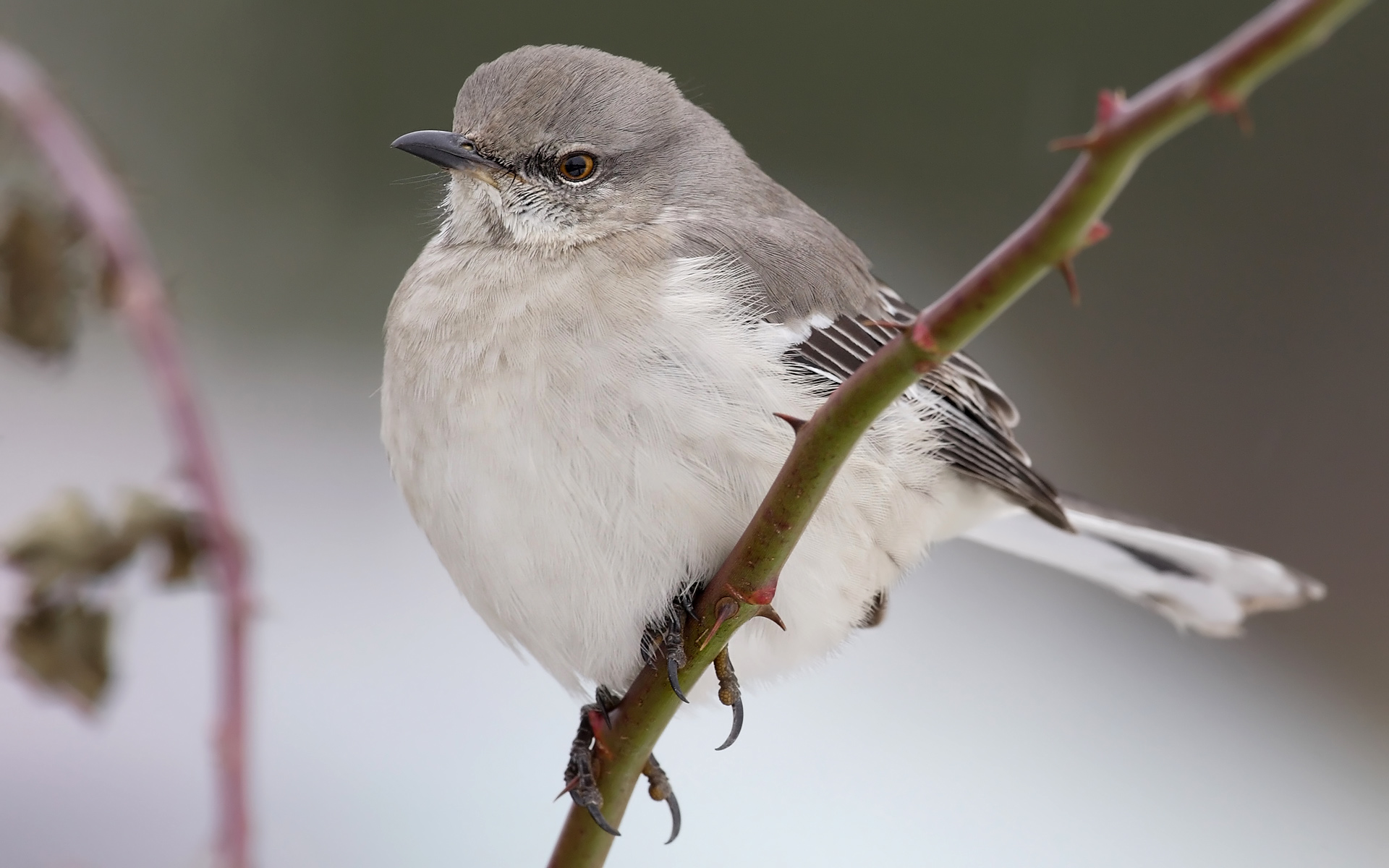
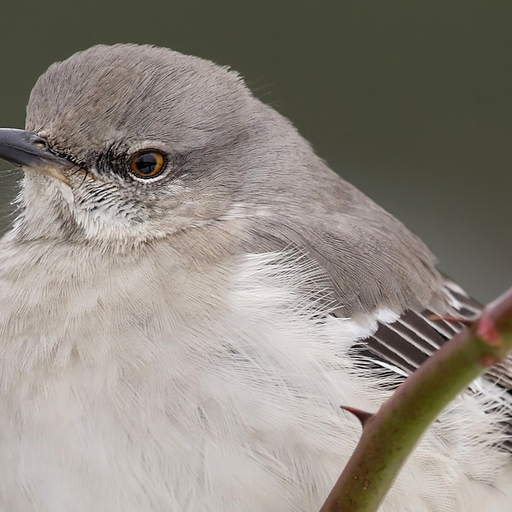
The Northern Mockingbird is a slim, long-tailed member of the mimid family (Mimidae) — the mockingbird and thrasher clan — dressed in understated gray and white, with a confidence entirely out of proportion to its size. The pattern: pale gray above, whitish-gray below, a thin slightly downcurved dark bill, pale yellow eyes, two white wing bars, and a long dark tail edged with white.
The identification formula: slim gray body + long tail + white wing flashes. Perched, it is the only plain gray songbird that sits bolt upright on the most exposed perch available. In flight it is unmistakable: the big white wing patches and white outer tail feathers flash with every wingbeat, like semaphore. The Gray Catbird is darker charcoal with a rusty undertail and a black cap; a shrike is heavier-headed with a hooked bill and black mask. The chunky brown relatives — Brown Thrasher and friends — are rufous with streaked breasts.
Essential Morphometric Field Marks:
- Body Length & Mass: about 8.3 to 10.2 inches (21–26 cm) and 1.4 to 2.0 ounces (40–58 grams) — robin-length but half a robin’s bulk, built long and lean.
- Wingspan: about 12.2 to 13.8 inches (31–38 cm); flight is direct and low between perches, always accompanied by those flashing white wing patches.
- Bill Structure & Color: A thin, dark, slightly downcurved bill — longer and finer than a thrush’s, built for plucking insects off grass and berries off stems.
- Color Pattern: Plain gray above, whitish below, with two white wing bars and the large white wing patches that blaze in flight; long tail with white outer feathers; pale yellow eye.
- The Signature Move: The wing flash — while walking on open ground the bird suddenly opens its wings in stages, flashing the white patches, then snaps them shut and keeps hunting.
- Male vs. Female: The sexes look identical. In spring the male identifies himself by singing the loudest and longest — and by singing at 2 a.m. if he has not yet found a mate.
The voice, not the plumage, marks the male: an unmated male sings day and night in spring, running through dozens of borrowed phrases from a treetop or TV antenna. Once paired, he sings mostly by day, and the midnight concerts end — to the relief of the whole neighborhood.
Same gray suit, softer voice: the female sings a quieter version, mostly in fall when both sexes defend winter berry territories. She builds the twiggy cup nest in a dense shrub and incubates 3–4 pale blue-green eggs with reddish-brown spots for about 12–13 days; both parents feed the nestlings, and pairs often raise two or three broods.
Northern Mockingbird Vocalization Guide (3 Field Recordings)
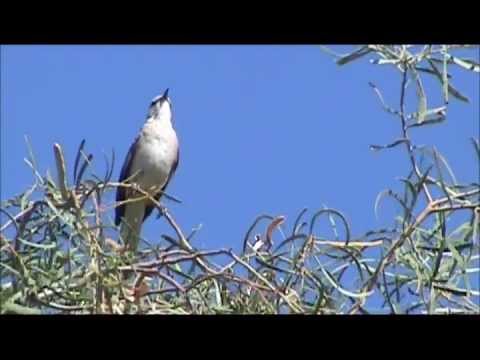
The mockingbird’s song is a long, confident string of varied phrases, each repeated three or more times before switching — many of them pitch-perfect imitations of other birds, learned throughout its life. That repeat-each-phrase pattern is how you tell a mockingbird from the birds it copies. Below are three real field recordings. For a deeper library, browse xeno-canto: Northern Mockingbird.
1. The Two-Minute Song Marathon
2. The Asheville Session
3. The California Morning
Habitat, Range & the Human Landscape
The Northern Mockingbird is the songbird of the American town and suburb: open lawns for hunting insects, dense shrubs and small trees for nesting and berries, and plenty of exposed perches for singing. It is a year-round resident across the southern two-thirds of the United States, through Mexico and the Caribbean, and has been steadily expanding northward since the early 1900s — a range expansion that tracks suburbs, ornamental berry plantings, and mild winters.
The State Bird of Five States
No bird is more officially American: the Northern Mockingbird is the state bird of Texas, Florida, Arkansas, Tennessee, and Mississippi. Northern-edge populations retreat in harsh winters, but across most of the map a pair will hold the same territory all year — singing from it in spring and defending its berry bushes all winter.
Backyards score best with a mowed lawn for ground hunting, a dense shrub or hedge for nesting, berry plants for winter food, and a birdbath. If your yard has a corner with all four, a mockingbird has probably already claimed it.
Backyard Behavioral Patterns & Social Dynamics
The Northern Mockingbird is the most conspicuous bird in the suburban yard — loud, bold, and utterly fearless. Four behaviors explain most encounters:
🎤 The Marathon Mimic
A single mockingbird can learn dozens of other birds’ songs — cardinals, wrens, jays, robins — plus frogs, sirens, and squeaky gates. The tell is the pattern: each phrase repeated three-plus times before switching. No other backyard bird runs a set list like this.
🌙 The Midnight Serenader
The bird singing outside your window at 2 a.m. in May is an unmated male, advertising at full volume — most intensely around a full moon. It is temporary: the concerts stop as soon as he pairs up. Earplugs and patience are the honest remedies.
⚡ The Dive Bomber
Mockingbirds hold territories year-round and defend them against everything: cats, crows, hawks, dogs, and people who walk too close to a nest. The swooping attacks are bluff, rarely contact — and they end for good about two weeks after the eggs hatch, when the nestlings fledge.
🤍 The Wing Flash
Out on the lawn the mockingbird walks a few steps, then opens its wings in stages to flash the big white patches, snaps them shut, and walks on. Ornithologists suspect the flash startles insects into revealing themselves — whatever the cause, it is one of the great backyard field marks.
Problem: “One Sings All Night Outside My Window, Another Attacks Everyone Near Its Nest, and It Chases Every Bird Off My Berry Bushes. Can We Coexist?”
The three classic mockingbird complaints all come from the same trait — total commitment to territory — and each has a workable answer:
First, the all-night singer: that is an unmated male, and the behavior is self-limiting — it fades the moment he attracts a mate, usually within a few weeks of peak season. Until then, earplugs or a white-noise machine beat any deterrent, and scaring him off just moves the concert one yard over. Second, the nest-attacker: a pair dive-bombing you near a shrub has eggs or nestlings inside — give the bush a ten-foot berth, keep pets indoors or leashed, and know that the aggression ends about two weeks after hatching, when the young fledge. Third, the berry bully: in winter a mockingbird will claim a holly or pyracantha and chase off every robin and waxwing. The fix is abundance, not exclusion — plant or offer fruit in two separate spots so the guard bird cannot watch both, and hang suet well away from the defended shrub. Living with a mockingbird means accepting one loud, fearless neighbor in exchange for the best free concerts in American birding.
Method 1: Serve Suet & Fruit on a Platform
Design for a soft-billed insect-and-fruit eater that ignores seed:
-
Suet Is the Gateway Food
Suet cakes or crumbles are the most reliable mockingbird offering, especially from fall through early spring when insects are scarce. A cage feeder mounted on a pole near shrubs, or crumbles scattered on a platform, gets attention within days.
-
Add Fruit to the Menu
Apple and orange slices, raisins (soaked until soft), and halved grapes match the winter berry diet. Serve on a platform or a spike feeder; refresh daily so fruit never ferments or molds.
-
Offer Mealworms in Summer
A dish of live or dried mealworms is especially valuable in the nesting season, when both parents are hauling insect protein to nestlings — an easy way to watch the pair’s comings and goings from the nest shrub.
-
Skip the Seed
Mockingbirds are not seedeaters — sunflower and millet tubes mean nothing to them. Let the seed feeders serve the finches, and budget for suet, fruit, and worms if the mimic is your target.
Method 2: Plant Berry Shrubs & Keep Water Running
With mockingbirds, territory quality is the attraction strategy:
-
Plant Food-and-Cover Shrubs
The ideal mockingbird shrub does double duty: holly, hawthorn, mulberry, blackberry, pokeweed, and elderberry all provide dense nesting structure plus a crop of berries the bird will defend all winter. Plant two fruiting spots in different parts of the yard if you want other species to get a share.
-
Keep a Birdbath Filled
Mockingbirds drink and bathe daily, and a dependable shallow bath — scrubbed and refilled — is often the fastest way to make a yard part of a bird’s daily circuit, summer and winter alike.
-
Leave a Dense Corner Wild
The nest is a twiggy cup hidden 3 to 10 feet up in a dense shrub or small tree. An unpruned hedge, a climbing rose, or a brushy corner is a potential nest site — and a nesting pair means weeks of song and fledgling-watching at close range.
-
Mow, Don’t Spray
A clean, open lawn is the mockingbird’s hunting ground — it walks the grass and wing-flashes for insects. Skip lawn insecticides: the beetles and grasshoppers in your turf are the summer menu, and a treated yard offers the bird nothing to hunt.
Tool Solution: Recommended Hardware for Northern Mockingbirds
Equipment matched to a bold, fruit-and-suet-loving territorial songbird:
Platform / Tray Feeder
An open platform near shrub cover — the natural stage for fruit slices, soaked raisins, suet crumbles, and mealworms, all served the way a ground-and-perch feeder actually eats.
- • Food: Suet crumbles, fruit slices, raisins, mealworms
- • Style: Pole-mounted tray with drainage
- • Placement: 5–8 ft high, within sight of dense shrubs
Suet Cage Feeder
A standard wire suet cage hung where the mockingbird can dominate it — suet is the cold-season staple, and in winter this bird will reliably defend a cage it has claimed.
- • Food: Suet cakes, berry or insect blends preferred
- • Mount: Pole or branch near cover
- • Season: October through March, or year-round in the north
Heated Bird Bath
A shallow bath with a winter heater — mockingbirds drink and bathe every day, and open water in a hard freeze will hold a territorial bird in your yard through the coldest weeks.
- • Depth: 1–2 in at the edge
- • Extras: Thermostat-controlled heater
- • Placement: Open sightlines near a shrub it can retreat to
Frequently Asked Questions
- Species Profile: The Northern Mockingbird (Mimus polyglottos) is an 8.3–10.2 inch, 40–58 gram mimid (Mimidae) of towns and suburbs — plain gray with white wing patches, band code NOMO, and the state bird of five states.
- ID in One Look: Slim gray body + long white-edged tail + big white wing patches that flash in flight; the song is a string of borrowed phrases, each repeated three or more times.
- The Night Singer: All-night singing in spring is an unmated male advertising — most intense near a full moon, and it stops the moment he pairs up.
- Year-Round Resident: Pairs hold the same territory all year across the southern two-thirds of the country, defending berry bushes through winter; only northern-edge birds retreat in harsh years.
- Feeder Formula: Suet, fruit slices, soaked raisins, and mealworms on a platform — never seed — plus a filled birdbath they will use daily.
- Accept the Attitude: A resident mockingbird dive-bombs cats and guards berries from other birds; the aggression peaks for the two weeks a nest has chicks, and the concert is worth it.
Bird Watching Log
Species: Northern Mockingbird (Mimus polyglottos)
| Northern Mockingbird (Single / Pair: ___ — Mimic Phrases Counted: ___ — Wing Flash Seen: Yes / No — Night Singing: Yes / No) | |