
Carolina Wren


Carolina Wren (Thryothorus ludovicianus): Complete Identification, Feeding & Song Library
Quick Answer: How to Attract & Identify Carolina Wrens
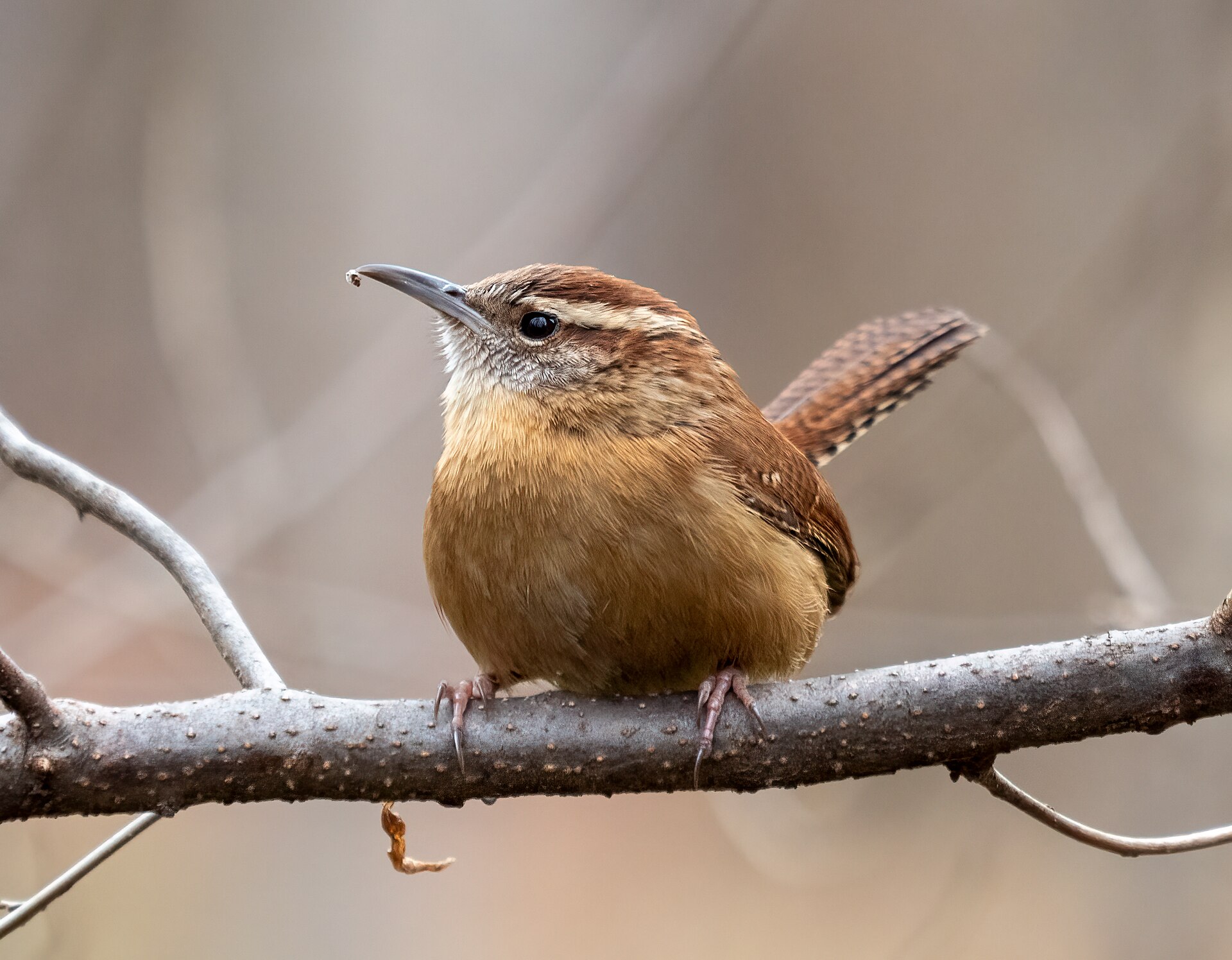
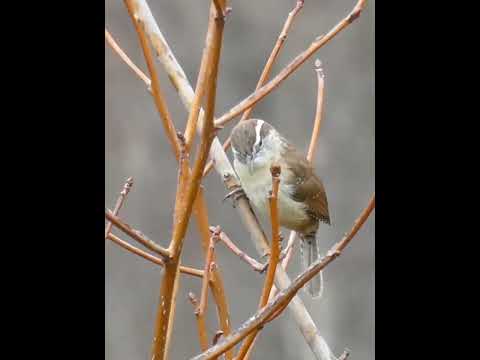
The Carolina Wren (Thryothorus ludovicianus) is the rusty little bird with the bold white eyebrow and the tea-kettle song — a year-round resident of backyards across the Southeast and the Atlantic states. Look for rufous-brown upperparts, warm buffy-orange underparts, a crisp white eyebrow, and a cocked tail. Attract a pair with suet, peanut butter, mealworms, and a low tray of sunflower chips near dense cover — plus brush piles and a birdbath. Its smaller summer cousin, the House Wren, is plainer gray-brown with only a faint eyebrow.
Species Physical Profile & Morphometrics
The Carolina Wren belongs to the wren family (Troglodytidae) and is the largest, reddest wren in most eastern yards. It overlaps with the smaller, drabber House Wren, which lacks the bold eyebrow; in the West its counterpart is the Bewick’s Wren, which is grayer below with white corners on a longer tail.
The identification formula: plump + rusty above + buffy-orange below + bold white eyebrow + cocked tail + ringing three-parted chant. If a wren is singing a loud tea-kettle in the dead of winter, the question answers itself — almost nothing else in the East is singing then.
Essential Morphometric Field Marks:
- Body Length & Mass: 4.7 to 5.5 inches (12–14 cm) and 0.6 to 0.8 ounces (18–22 grams) — noticeably chunkier than a House Wren, with a round body and a large head.
- Wingspan: about 11.4 inches (29 cm); flight is short, low, and direct between patches of cover, wings whirring.
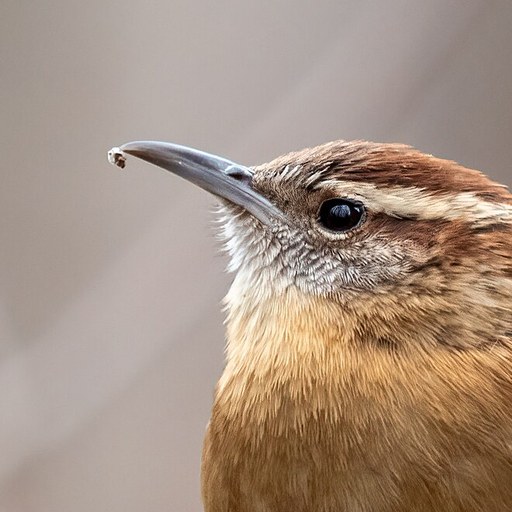
- Bill Structure & Color: A longish, thin, slightly downcurved bill, dark above and pale below — a precision probe for pulling spiders and insects out of bark crevices and leaf litter.
- Color Pattern: Rich rufous-brown above, warm buffy-orange below, with a bold white eyebrow stripe, a dark line through the eye, and fine dark barring on wings and tail. The sexes look alike — the loud singer is usually the male, but plumage will not tell you.
- Juveniles & Seasons: Juveniles are duller and shorter-tailed with a weaker eyebrow; plumage stays essentially the same all year, matching the bird’s year-round residency.
The year-round vocalist: the male does the singing — loud, ringing phrases delivered in every month, from every season’s weather, often from a fence post, woodpile, or roof edge. He may help build several nest shells before the female picks one to finish.
The quiet architect — identical in plumage, she chooses the nest site, lines the domed cup with soft material, and incubates the four to eight speckled eggs alone. Pairs typically stay together on the same territory all year, sometimes for life.
Carolina Wren Vocalization Guide (3 Field Recordings)
The Carolina Wren’s song is a loud, rolling three-parted chant — tea-kettle, tea-kettle, tea-kettle — backed up by harsh scolding chatters from inside the shrubs. All three recordings below are real field audio, shared under free licenses via Wikimedia Commons — no simulations. For a deeper library, browse xeno-canto: Carolina Wren.
1. The Tea-Kettle Chant
2. The Territorial String
3. Winter Song in New Jersey
Habitat, Range & the Backyard Life
The Carolina Wren is a bird of tangled undergrowth — brushy woodland edges, overgrown fencerows, dense shrub borders, woodpiles, and shady suburban gardens. It forages low, hopping through litter and probing trunks, and it accepts human structures readily: porches, garages, and sheds are all part of its map.

A Southern Bird Moving North
The Carolina Wren is a permanent resident across the Southeast, from Texas and Florida up the Atlantic seaboard, and it has been steadily expanding northward into the Midwest and New England over the past century. Mild winters help it spread; severe ones push it back.
For backyard birders this means loyalty: the pair you feed this winter is very likely the same pair that nests in your hanging basket next spring. Hard ice storms are the danger — after a brutal cold snap, local birds can vanish and take years to return.
Backyard Behavioral Patterns & Social Dynamics
A resident Carolina Wren pair turns a yard into a year-round theater. Four behaviors explain most of what you will observe:
🏠 The Creative Nester
Carolina Wrens nest in natural cavities — and in flowerpots, hanging baskets, mailboxes, wreaths, old boots, and open garages. The nest is a domed mass of twigs and leaves with a side entrance, lined soft. Check before you water the ferns in April.
🎤 The Twelve-Month Singer
Unlike almost every other eastern songbird, the male sings in every month of the year — snow, heat, and rain alike. The ringing chant defends a permanent territory and keeps the pair in contact; duets and call-and-answer between mates are common.
🕷️ The Crevice Prober
Watch one work a woodpile or tree trunk: it probes bark crevices, curls of peeling bark, and leaf litter for spiders, beetles, and caterpillars, hitching along with tail cocked. Brush piles and unraked beds are its hunting grounds.
🧊 The Fair-Weather Survivor
Because they do not migrate, Carolina Wrens are vulnerable to severe winters — prolonged ice can wipe out local populations. Yards with suet, dense evergreen cover, and unfrozen water act as refuges, and populations rebound northward after mild runs of years.
Problem: “A Carolina Wren Is Nesting in My Garage, Mailbox, or Flowerpot. What Should I Do?”
This is one of the most common Carolina Wren surprises, and the answer depends on timing:
If the nest is active — eggs or chicks inside — the kindest and legally correct choice is to leave it alone: Carolina Wrens are native birds protected by the Migratory Bird Treaty Act, and the disturbance window is short. From first egg to fledged young is roughly four weeks; keep the garage door usage gentle, skip that flowerpot, and enjoy the privilege. If the site is genuinely impossible, act before nesting starts next spring: close garage doors, cover mailboxes, and hang a proper wren nest box or a sheltered basket alternative nearby in February — the pair will usually accept it, since what they want is a dry, hidden cavity near cover, not your toolbox specifically. And if birds are trapped inside a garage, open the door wide, darken the interior windows, and give them a quiet hour to find the light.
Method 1: Feeder Setup — Suet, Peanut Butter & Mealworms
Carolina Wrens ignore most seed tubes; they come for protein and fat served near cover:
-
Hang Suet Beside the Shrubs
A suet cage mounted on or near a tree trunk or shrub border is the single most reliable Carolina Wren feeder — they cling and chip away like tiny woodpeckers. In warm southern weather choose no-melt suet dough; in winter, plain beef suet or peanut suet cakes.
-
Offer Peanut Butter or Peanut Suet
Wrens relish peanut butter smeared into bark crevices or a purpose-made log feeder — a trick that matches their natural crevice-probing style. Use plain peanut butter (no salt, no additives) in small smears, or peanut-based suet nuggets in a cage.
-
Put Out Mealworms in a Low Dish
A shallow dish of live or dried mealworms on a low platform near cover is the fastest way to train a pair to visit on schedule — morning is best. A dish with smooth, steep sides keeps the worms contained; a roof keeps the rain off.
-
Add a Tray of Sunflower Chips
As a supplement, hulled sunflower chips and chopped peanuts on a ground tray or stump get eaten readily — whole seeds in tubes go untouched. Keep the tray within a quick dash of dense shrubs so the birds never have to cross open lawn.
Method 2: Cover, Nest Sites & Winter Water
Habitat decides whether a pair settles; feeders only sweeten the deal:
-
Build a Brush Pile
A loose stack of branches and prunings in a quiet corner is Carolina Wren headquarters — feeding ground, escape cover, and song post in one. Stack big pieces first, small ones on top, and leave it undisturbed through winter.
-
Plant Dense, Layered Shrubs
Wrens forage from the ground to about head height — evergreen and deciduous shrubs planted in a layered border give them crevices, spiders, and shelter year-round. Native hollies, viburnums, and wax myrtle are excellent choices in their range.
-
Hang a Wren Box Before Spring
A small nest box with a 1-1/4 to 1-1/2 inch entrance, mounted 5–10 feet up under an eave or at the woodland edge, channels the nesting instinct away from mailboxes and into a site you can enjoy. Put it up by late February in the South, mid-March farther north.
-
Keep Water Open in Winter
A shallow heated birdbath near cover serves your resident pair through ice storms — the exact conditions when they need help most. One to two inches of depth and a shrub within a short hop make it wren-friendly.
Tool Solution: Recommended Hardware for Carolina Wrens
Equipment matched to a low-foraging, crevice-probing, year-round wren:
Suet Cage Feeder
A simple wire suet cage hung from a trunk or shrub-side hook — the most dependable way to feed Carolina Wrens. Holds standard suet cakes; no-melt formulas for southern summers.
- • Food: Suet & suet dough
- • Mount: Trunk or shrub edge
- • Season: All twelve months
Covered Mealworm Dish
A shallow, smooth-sided dish feeder with a small roof, set on a low platform near cover — serves mealworms dry and contained, and trains a wren pair to visit on a schedule.
- • Food: Live/dried mealworms
- • Style: Covered shallow dish
- • Placement: Low, beside shrubs
Heated Birdbath
A shallow heated bath near dense cover — a genuine survival tool for a non-migratory wren during ice storms, and a daily draw for the whole yard in every season.
- • Depth: 1–2 in, gently sloped
- • Feature: Thermostat-controlled
- • Placement: Beside cover
Frequently Asked Questions
- Species Profile: The Carolina Wren (Thryothorus ludovicianus) is a 4.7–5.5 inch, 0.6–0.8 ounce songbird (Troglodytidae), band code CARW — the big rusty wren of eastern and southeastern yards.
- ID in One Look: Rufous-brown above, buffy-orange below, bold white eyebrow, slightly decurved bill, cocked tail — and a ringing tea-kettle song that gives it away before you see it.
- The Sound: Loud three-parted phrases sung in all twelve months, plus harsh scolding chatters; three real field recordings above.
- Range & Habit: A non-migratory resident of the Southeast, expanding north — a bird of tangled undergrowth, woodpiles, porches, and shrub borders, loyal to one territory year-round.
- Attraction Formula: Suet cage and peanut butter near cover, a low dish of mealworms, sunflower chips on a stump, a brush pile, dense shrubs, and open water in winter — protein and shelter, not seed tubes.
- The Nesting Surprise: Flowerpots, mailboxes, and garages are normal nest sites; leave active nests alone (they fledge in about two weeks) and hang a proper wren box before next spring to redirect the habit.
Bird Watching Log
Species: Carolina Wren (Thryothorus ludovicianus)
| Carolina Wren (White Eyebrow Seen: Yes / No — Tea-Kettle Song Heard: Yes / No — Suet Feeder Used: Yes / No — Tail Cocked: Yes / No) | |