
Black-chinned Hummingbird vs Ruby-throated Hummingbird


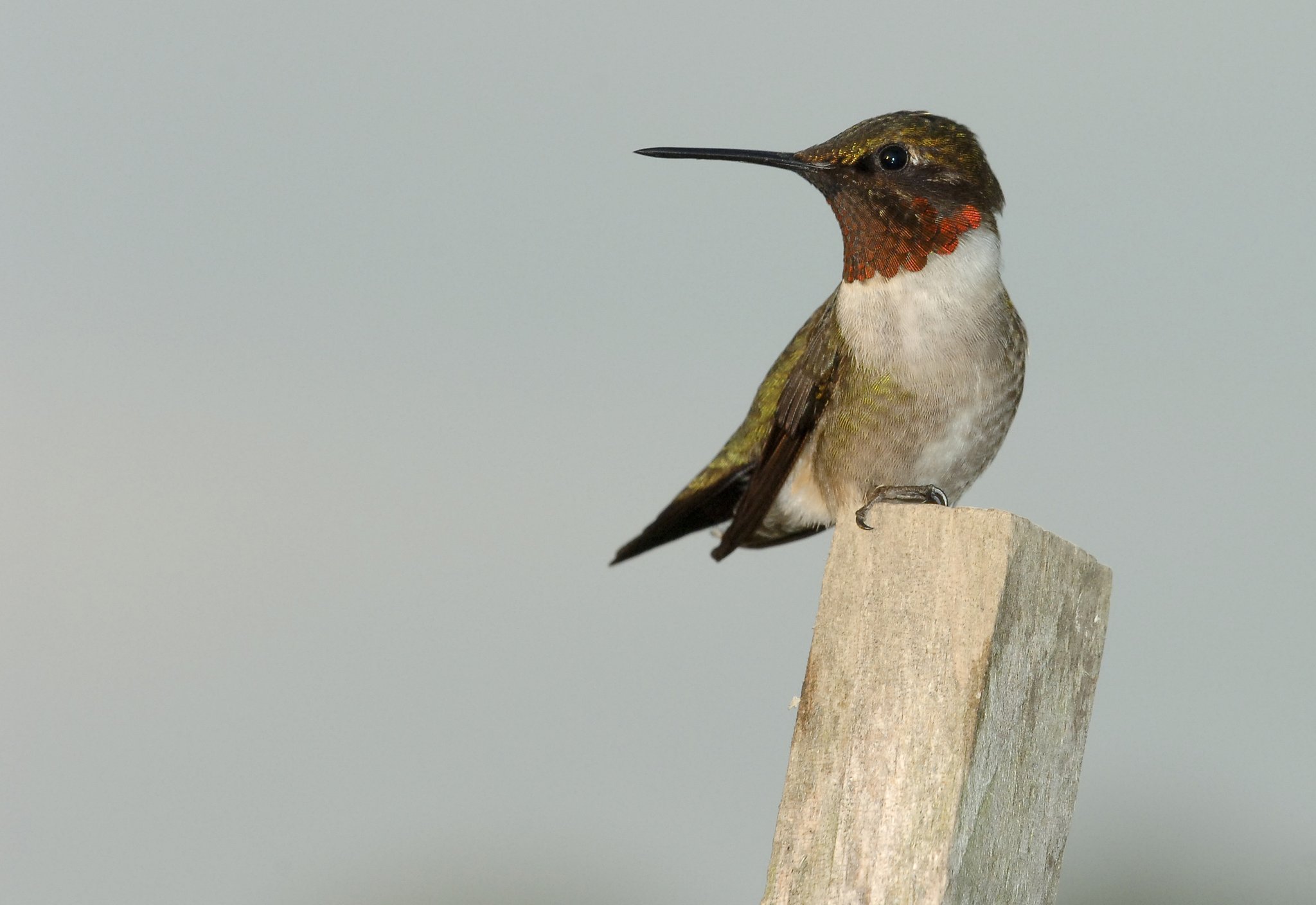


Black-chinned Hummingbird vs Ruby-throated Hummingbird (Archilochus alexandri vs Archilochus colubris): The Complete Backyard Identification Guide
Quick Answer: The Fastest Way to Tell Them Apart
The default hummers of West and East. Three rules:
- Male throat: black chin + violet band = Black-chinned; ruby-red = Ruby-throated.
- Range: West of the Plains = Black-chinned; East = Ruby-throated — geography usually settles it.
- Females: nearly identical plain green-and-white; in the overlap zone, call them “female hummingbird sp.”
At-a-Glance Comparison Table
The western and eastern standards, side by side. KEY rows separate fastest.
| Feature | Black-chinned Hummingbird | Ruby-throated Hummingbird |
|---|---|---|
| Scientific Name | Archilochus alexandri | Archilochus colubris |
| Length KEY | 3.5–3.9 in (9–10 cm) | 3.1–3.5 in (8–9 cm) |
| Wingspan | 4.3 in (11 cm) | 3.1–4.3 in (8–11 cm) |
| Weight | 0.1 oz (3 g) | 0.1 oz (2–6 g) |
| Overall Shape | Slim hummingbird with a slightly decurved bill | Small, slim hummingbird |
| Male Plumage KEY | Black chin with a band of iridescent violet below it; otherwise green and gray | Iridescent ruby-red throat (gorget) on a green body; forked tail; black mask |
| Female Plumage | Plain green above, whitish below, no throat patch | Green above, white below, no throat color; white-tipped rounded tail |
| Bill Shape | Slightly downcurved slender bill | Straight, slender black bill |
| Tail | Forked dark tail (male), white-tipped (female) | Forked (male) or rounded white-tipped (female) |
| Core Range KEY | Breeds across the interior West and Southwest along rivers; winters in Mexico | The only breeding hummingbird of the eastern US; winters in Central America |
| Migration | Long-distance migrant; absent in winter | Long-distance migrant, many crossing the Gulf of Mexico; present April–September |
| Feeder Presence | Summer sugar-water regular at western feeders | The default sugar-water hummingbird of the entire East |
| Favorite Foods | Nectar, sugar water, tiny insects | Nectar, sugar water (4:1), tiny insects and spiders |
| Song KEY | Soft warbled twitter from a perch | High squeaky chips and rapid twitters |
| Flight Call | High thin chips and chase squeaks | Quick “chip” notes; wings hum audibly |
| Population Trend | Common across the interior West | Increasing with feeder and garden planting |
Male Field Marks, Side by Side
Black-chinned Hummingbird — Male
- Black chin with a violet band that flashes only in good light.
- Green back, gray-white belly; forked tail.
- Pumps its tail constantly while hovering.
Ruby-throated Hummingbird — Male
- Ruby-red gorget — black-looking in shade, blazing in sun.
- Forked tail; black mask between eye and gorget.
- The East’s only breeding hummingbird.
Female & Juvenile Marks, Side by Side
Black-chinned Hummingbird — Female
- Plain green-and-white; no throat color.
- White-tipped tail corners.
- Slim bill slightly curved down.
Ruby-throated Hummingbird — Female
- Green and white, no throat color.
- White-tipped rounded tail.
- Aggressively defends feeders.
Part-by-Part Anatomy Breakdown
Every part offers a check:
| Body Part | Black-chinned Hummingbird | Ruby-throated Hummingbird |
|---|---|---|
| Male Throat | Black chin, violet lower band | Iridescent ruby-red |
| Male Crown | Green | Green, slightly darker |
| Male Tail | Slightly forked, dark | Forked, dark |
| Female Throat | Plain white, sometimes streaked | Plain white |
| Female Tail | White tips on outer feathers | White tips — nearly identical |
| Range | West of the Great Plains | East of the Rockies |
| Migration | To western Mexico | Many fly nonstop across the Gulf of Mexico |
Song & Call Comparison
Black-chinned Hummingbird
Voice: high thin chips; wings produce a soft hum.
Behavior: tail-pumping while feeding is a good habit clue.
Ruby-throated Hummingbird
Voice: high squeaky chips and twitters at feeders.
Behavior: males perform U-shaped dive displays in spring.
Range & Seasonal Presence
The Black-chinned Hummingbird breeds across the Southwest — river valleys and towns from Texas to California, wintering in western Mexico.
The Ruby-throated Hummingbird is the only breeding hummingbird of the East, migrating to Central America — many crossing the Gulf of Mexico nonstop. The two meet in central Texas and the southern Plains.
Feeder Behavior & Favorite Foods
- Black-chinned Hummingbird: southwestern feeders, 4:1 sugar water.
- Ruby-throated Hummingbird: eastern feeders — hang them by late April, keep them clean.
- Recipe for both: 1 part white sugar to 4 parts water; no dye, no honey.
- Flowers: trumpet vine and bee balm in the East; salvias and penstemons in the West.
Temperament & Flock Behavior
Black-chinned Hummingbirds are adaptable western town birds, calm around porch feeders.
Ruby-throated Hummingbirds are fiery — males defend feeders with chattering dive-bombs, and both sexes fearlessly face down birds ten times their size.
6-Step Backyard ID Checklist
- Range. West = Black-chinned; East = Ruby-throated.
- Male throat color. Violet band = Black-chinned; red = Ruby-throated.
- Male chin. Black = Black-chinned.
- Females. Use range; in the Plains overlap, accept an uncertain ID.
- Migration. Gulf crosser heading south along the coast = Ruby-throated.
- Winter. Any winter hummingbird is likely neither — check for Anna’s or Rufous.
Frequently Asked Questions
- Male Throat: Violet band = Black-chinned; ruby-red = Ruby-throated.
- Range: West = Black-chinned; East = Ruby-throated.
- Females: Nearly identical — use range.
- Migration: Gulf-crosser = Ruby-throated.
- Nectar: 4:1 sugar water, no dye, for both.
- Winter: Winter hummers are usually other species.