
California Thrasher
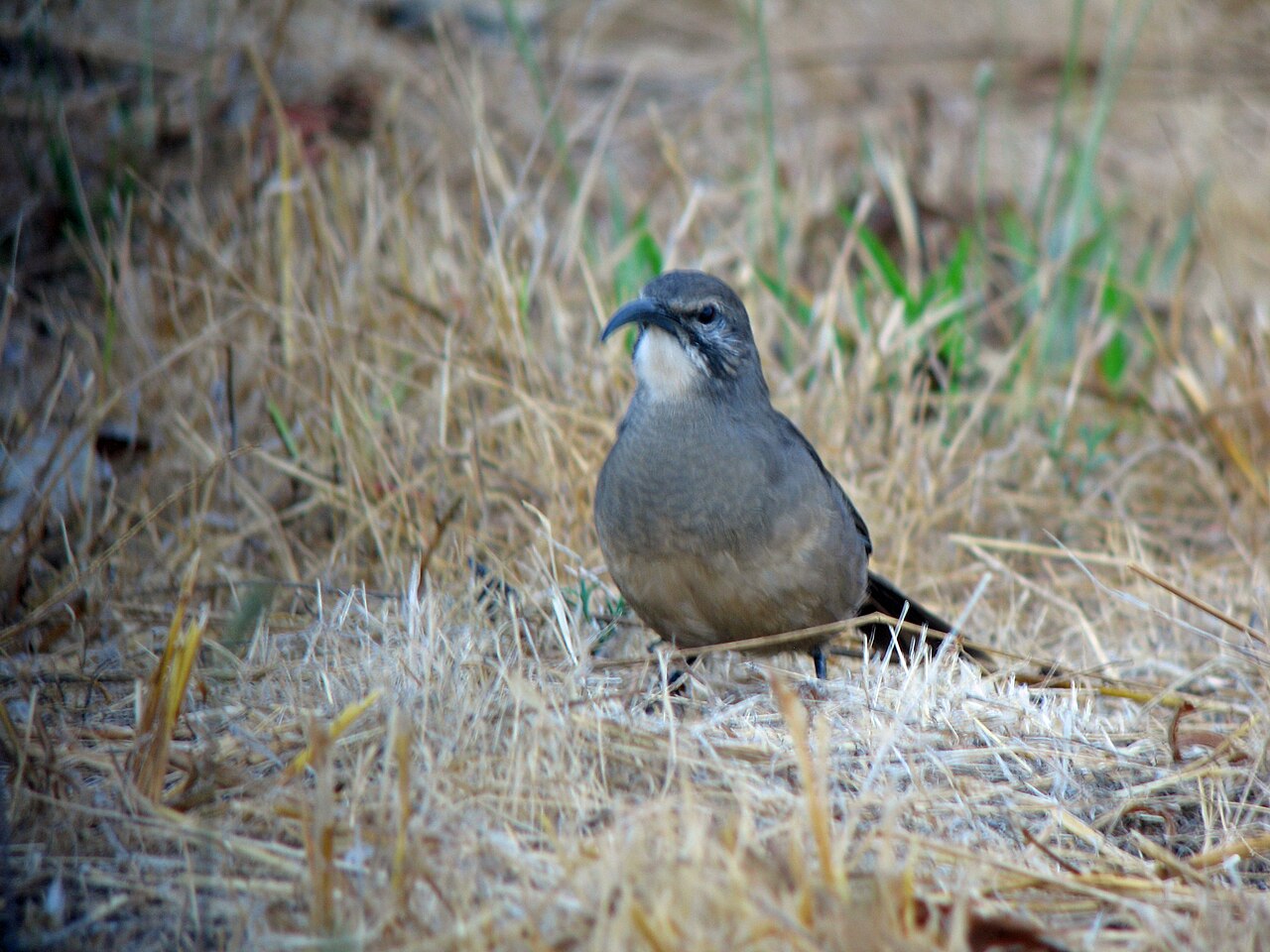


California Thrasher (Toxostoma redivivum): Complete Identification, Habitat Guide & Sound Library
Quick Answer: How to Attract & Identify the California Thrasher
The California Thrasher (Toxostoma redivivum) is the largest thrasher and a California endemic — dark sooty-brown, long-tailed, with a deeply curved bill used to dig and sweep leaf litter like a garden tiller. Its song is a rich, continuous mimic performance — phrases repeated once or twice, borrowing neighbors’ voices. It lives only in California and Baja chaparral and never migrates. Hillside yards attract them with dense native chaparral, deep leaf litter, and brushy cover. They share the scrub with the Wrentit and the California Towhee.
Species Physical Profile & Morphometrics
The California Thrasher belongs to the mockingbird family (Mimidae) and is the biggest member of the family — a year-round resident of chaparral and coastal sage, found only in California and Baja.
The identification formula: big dark body + long tail + strongly curved bill + chaparral hillside. The California Towhee is smaller, shorter-billed, and plain-faced; the Curve-billed Thrasher is desert-country with spotted breast. In coastal scrub, size and darkness settle it.
Essential Morphometric Field Marks:
- Body Length & Mass: 11 to 13.1 inches (28–33 cm) and 2.4 to 3.3 ounces (68–94 grams) — the heavyweight of the mimid family.
- Wingspan: 12.6 inches (32 cm); flight is a low, labored dash between shrubs — this bird prefers to run and hop.
- Bill Structure & Color: A long, deeply decurved dark bill — the most curved of any thrasher, built for excavating hard soil and litter.
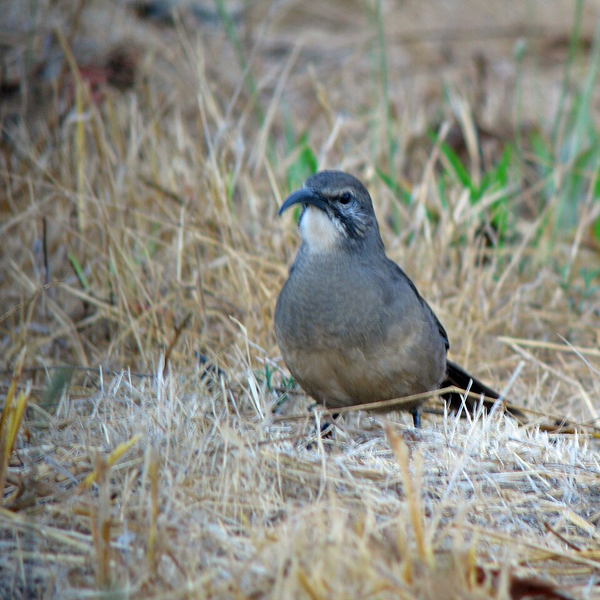
- Color Pattern: Dark sooty-brown overall, slightly warmer below, with a faint pale eyebrow and dark eye — plumage is subtle; shape is everything.
- Male vs. Female: The sexes look alike — both sing the long mimic songs and both dig the litter for the family.
The hillside mimic: perched on a chaparral crown at dawn, running a continuous medley of borrowed phrases and rich whistles.
Identical in plumage — she incubates deep in the shrub while he sings, then both dig the litter from dawn to dusk for the nestlings.
California Thrasher Vocalization Guide (3 Field Recordings)
The California Thrasher’s song is a long, continuous series of rich phrases, typically repeated once — a mimic medley of the chaparral. All recordings below are real field audio via Wikimedia Commons — no simulations. For a deeper library, browse xeno-canto: California Thrasher.
1. The Mimic Medley
2. The Dawn Concert
3. The Chak Call
Habitat, Range & the Chaparral Endemic
The California Thrasher lives in dense chaparral and coastal sage scrub — chamise, ceanothus, manzanita, and sage — on hillsides and in canyons, found nowhere outside California and Baja.

Found Nowhere Else on Earth
Range is limited to California and northern Baja — from the coast ranges to the Sierra foothills — resident all year on the same brushy slopes.
For backyard birders: hillside and canyon-edge yards with native chaparral intact can host a resident pair — the digging in the leaf litter under your ceanothus is the giveaway.
Backyard Behavioral Patterns & Social Dynamics
The California Thrasher is a ground-excavating mimic of the chaparral. Four behaviors explain most of what you will observe:
⛏️ The Litter Excavator
It forages by digging and sweeping leaf litter with the curved bill — the rustling under the shrubs is often the bird itself.
🎭 The Mimic Singer
The song borrows phrases from neighbors — jays, wrens, and finches woven into a continuous medley, each phrase repeated once or twice.
🏃 The Runner
It runs and hops rather than flies — crossing open ground in a quick scamper with the tail held high.
📍 The Homebody
It is sedentary for life — pairs hold the same chaparral slope year after year, never migrating.
Problem: “How Do I Host a California Thrasher? What Should I Do?”
The three most common California Thrasher puzzles all have proven answers:
First, the identity check: a big dark bird digging under your ceanothus is not a crow or a female blackbird — the long curved bill, long tail, and litter-sweeping behavior belong to the thrasher. Second, the unseen singer: the bird sings from shrub crowns at dawn then vanishes — listen at first light and watch shrub tops, not the ground. Third, the bare-yard problem: yards with mown banks and cleared brush never attract them — replant native chaparral, let litter accumulate, and the diggers return within a season or two.
Method 1: Set the Table — Native Shrubs & Deep Litter
Design for a ground-digging chaparral bird:
-
Keep Native Chaparral
Ceanothus, manzanita, chamise, and sage — the dense evergreen scrub this species requires.
-
Let Litter Accumulate
No leaf-blowing under the shrubs — the litter layer is the pantry and the workplace.
-
Keep Slopes Undisturbed
Unmown banks and canyon edges — prime thrasher territory needs no maintenance.
-
Connect to Wild Hillsides
Continuous brush to open chaparral — sedentary birds arrive only through connected cover.
Method 2: Build the Habitat — Ground Safety & Year-Round Cover
Keep the ground safe and the shrubs standing, and the pair stays for good:
-
Keep Cats Indoors
Ground-foragers are cat prey — the single biggest yard threat to this species.
-
Skip Spring Brush Work
No clearing March through July — nests sit low and deep in the shrubs.
-
Offer Shallow Water at Cover
A ground dish beside the brush — used daily if cover is within a dash.
-
Listen at Dawn
First light is concert time — the medley from the shrub top announces the pair.
Tool Solution: Recommended Hardware for California Thrasher
Equipment matched to a chaparral digging machine:
Native Chaparral Belt
Ceanothus, manzanita, and sage in a dense unbroken band — the complete thrasher territory.
- • Plants: Chaparral natives
- • Rule: Never clear
- • Bonus: Wrentits & towhees too
Permanent Leaf Litter
Undisturbed litter under every shrub — the digging ground that feeds the family.
- • Rule: No blowing
- • Depth: Natural accumulation
- • Bonus: Fox sparrows scratch here
Ground Water Dish
A shallow dish beside dense cover — thrashers drink where escape is one hop away.
- • Depth: 1–2 inches
- • Placement: Beside shrubs
- • Bonus: Quail & towhees too
Frequently Asked Questions
- Species Profile: The California Thrasher (Toxostoma redivivum) is an 11–13.1 inch, 2.4–3.3 ounce mimid (Mimidae), band code CATH — the chaparral’s digging machine.
- ID in One Look: Big, dark, long-tailed, deeply curved bill, digging under chaparral.
- The Sound: A continuous mimic medley, phrases repeated once or twice; real recordings above.
- Range & Habit: California and Baja only; resident for life on the same brushy slope.
- Feeder Formula: Chaparral and leaf litter — feeders are ignored completely.
- The Endemic Badge: A bird that lives nowhere else on Earth — in your hillside yard.
Bird Watching Log
Species: California Thrasher (Toxostoma redivivum)
| California Thrasher (Curved Bill Seen: Yes / No — Digging Watched: Yes / No — Medley Song Heard: Yes / No — Litter Undisturbed: Yes / No — Date & Time: ___) | |