
Barn Owl


Barn Owl (Tyto alba): Complete Identification, Habitat Guide & Sound Library
Quick Answer: How to Attract & Identify the Barn Owl
The Barn Owl (Tyto alba) is the ghost-faced owl of farms and open country — golden-buff above, white below, with an unmistakable white heart-shaped face and dark eyes. Unlike hooting owls, its voice is a raspy, drawn-out screech. It is a supremely efficient rodent hunter — a single family can take thousands of mice and voles in a breeding season. Rural and suburban yards attract them with a large nest box on a pole or in a barn, open hunting ground, and a strict no-rodenticide policy. They share the night shift with the Great Horned Owl and the Barred Owl.
Species Physical Profile & Morphometrics
The Barn Owl belongs to the barn owl family (Tytonidae) — set apart from all other North American owls (Strigidae) by its heart-shaped facial disc and long, feathered legs. It is a year-round resident of open country across most of the United States, missing only from the coldest northern tier and high mountains.
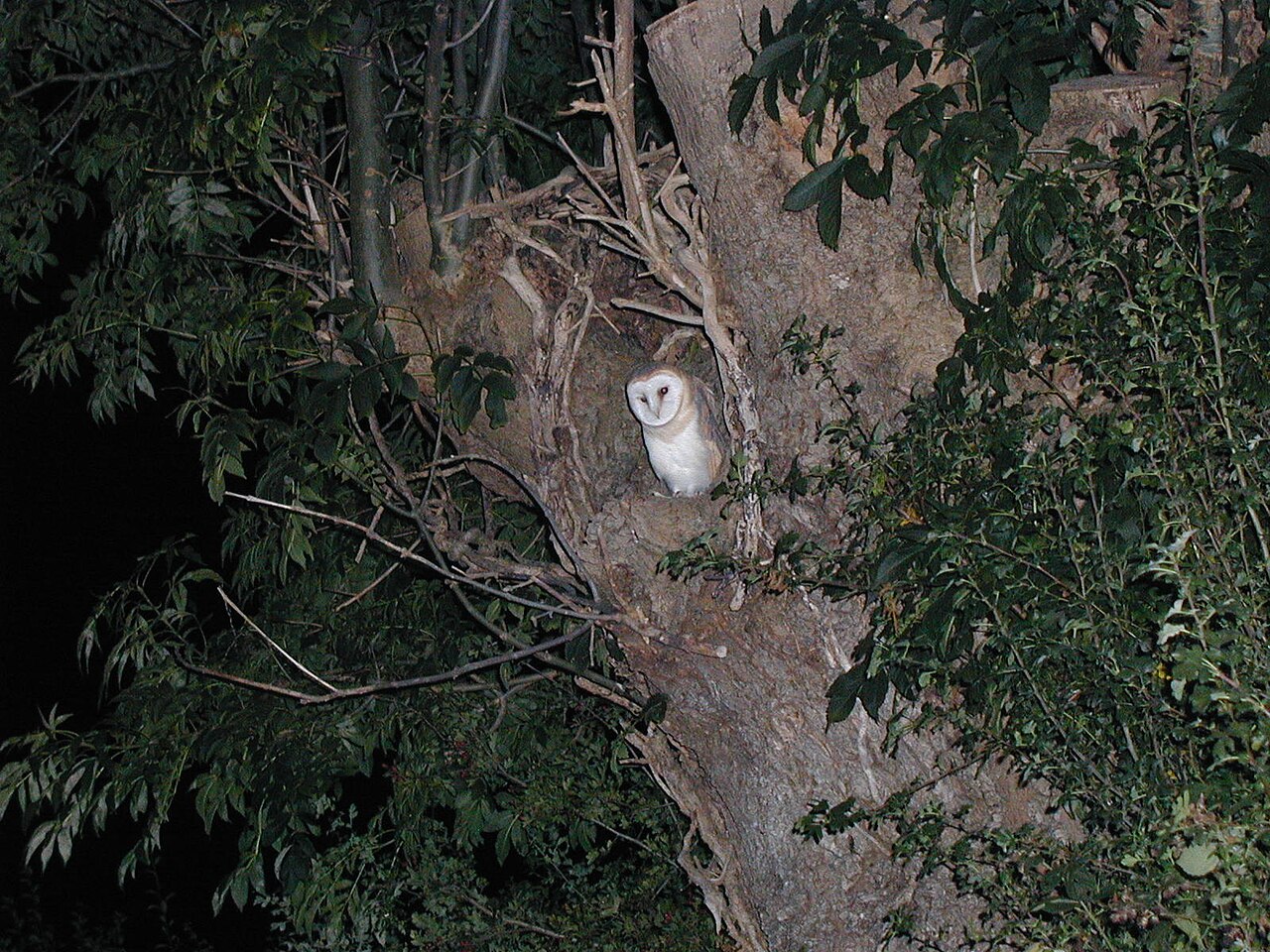
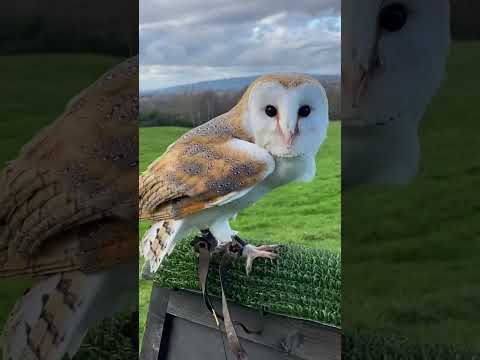
The identification formula: heart-shaped white face + golden-buff back + ghostly pale underparts. No other American owl has the heart-shaped disc. In flight at dusk it appears pale and buoyant on long wings; perched, it sways and lowers its head when disturbed. If you hear a harsh screech rather than a hoot over a barn or field at night, that is your bird.
Essential Morphometric Field Marks:
- Body Length & Mass: 12.6 to 15.8 inches (32–40 cm) and 14.1 to 24.7 ounces (400–700 grams) — a medium-large, long-legged owl, lanky rather than stocky.
- Wingspan: 39.4 to 49.2 inches (100–125 cm) — long, broad, softly fringed wings built for silent, buoyant quartering flight low over grass.
- Bill Structure & Color: A strongly hooked pale bill half-hidden in the facial ruff — designed for tearing small prey swallowed in pieces, with the bones returned as pellets.
- Color Pattern: Golden-buff and silver-gray above, white to pale cinnamon below with fine dark speckling; the facial disc is a crisp white heart with dark eyes.
- Male vs. Female: Females average slightly larger and more heavily speckled below, with a richer buff wash on the breast; males are often purer white — both share the same heart-shaped face.
The pale hunter: white-faced and clean-breasted, quartering a meadow at first dark with slow, deep wingbeats, dropping feet-first onto a vole he heard but never saw.
The speckled partner — larger, with heavier dark spotting on the breast — she incubates in the barn rafters or a nest box while the male delivers a nightly parade of rodents to the ledge.
Barn Owl Vocalization Guide (3 Field Recordings)
The Barn Owl does not hoot: its signature voice is a long, raspy, hissing screech — shreeee — plus clicks, hisses, and the food-begging snores of nestlings. All recordings below are real field audio via Wikimedia Commons — no simulations. For a deeper library, browse xeno-canto: Barn Owl.
1. The Raspy Screech
2. The Defensive Hiss
3. The Nestling Snore
Habitat, Range & the Open Country
The Barn Owl needs two things: open hunting ground — meadows, pasture, marsh edges, farmland — and a dark cavity to roost and nest in: barn lofts, silos, tree hollows, cliff ledges, or a nest box. It lives near people wherever old farm structures and rodent-rich fields remain, from coast to coast.

The Ghost of the Farmland Night
The range covers most of the Lower 48, thinning in the northern plains and mountains where winters are severe, and extending through Mexico and worldwide. Barn Owls do not migrate — a pair will hold the same barn and hunting fields for life.
For backyard birders: rural and suburban yards with open ground nearby can host a pair if you provide the one thing modern landscapes lack — a safe cavity. A properly mounted nest box and a rodenticide-free property are the whole formula.
Backyard Behavioral Patterns & Social Dynamics
The Barn Owl is a nocturnal rodent specialist that lives comfortably beside people — a yard bird of the dark hours. Four behaviors explain most of what you will observe:
🌙 The Night Shift
Barn Owls hunt almost entirely after dark — watching at dusk as a pale bird lifts silently from a barn is the classic encounter; daytime sightings are rare.
👂 Hunting by Ear
The heart-shaped disc works like a satellite dish for sound — a Barn Owl can strike a vole in total darkness, guided by hearing alone, with ears offset for pinpoint accuracy.
💀 The Pellet Trail
They swallow prey whole and cough up compact pellets of bone and fur — a pile of pellets under a rafter or box reveals a roost and records everything the owl has eaten.
💑 The Faithful Pair
Pairs mate for life and reuse the same nest site year after year — host one successful season and the same owls may raise broods in your barn for a decade.
Problem: “I Hear Screeching at Night But Never See the Owl. What Should I Do?”
The three most common Barn Owl puzzles all have proven answers:
First, the invisible screecher: Barn Owls hunt in full darkness and rest hidden by day — search roost sites instead: look for whitewash and pellets on barn beams, silo ledges, and dense tree cavities, then watch that spot at dusk. Second, the which-owl question: if the bird hoots, it is not a Barn Owl — a deep hoo-hoo-hooo is a Great Horned Owl; the Barn Owl only screeches, hisses, and clicks. Third, the empty box: a nest box can sit vacant for a season or two — check placement (12+ feet up, entrance facing open ground, far from bright lights) and give it time; occupancy often starts in year two or three.
Method 1: Build the Roost — A Proper Barn Owl Box
Design for a cavity-nesting night hunter:
-
Mount a Large Nest Box
A Barn Owl box (roughly 24 x 18 x 18 inches) on a pole, tree, or barn wall 12 to 20 feet up, entrance facing open fields — the single most effective attraction method.
-
Face the Entrance to Open Ground
The box opening should look out over meadow or pasture, not woods or a wall — owls want a clear flight path to hunting ground.
-
Keep It Dark & Quiet
Site the box away from floodlights and busy doors — Barn Owls tolerate people but abandon lit, noisy cavities.
-
Leave the Box Undisturbed
Never open or approach an occupied box — check from a distance with binoculars; disturbance during incubation causes abandonment.
Method 2: Protect the Hunt — Rodents Without Poison
Keep the food supply safe, and the owls provide free pest control:
-
Ban Rodenticide Completely
No second-generation anticoagulant poisons, ever — poisoned rodents kill the owls that eat them; snap traps in enclosed boxes are the safe alternative.
-
Keep Grass & Field Edges
A rough grass strip, meadow margin, or un-mowed fence line supports the vole and mouse populations that feed a family of owls.
-
Add a Perch Post
A tall post at the field edge gives a hunting owl a scanning platform — you will often find pellets beneath it.
-
Cover Chimneys & Vents
Barn Owls fall into open chimneys and smooth-walled vents and cannot climb out — cap openings so a roost never becomes a trap.
Tool Solution: Recommended Hardware for Barn Owl
Equipment matched to a nocturnal cavity-nester:
Barn Owl Nest Box
A large ventilated box on a pole or barn wall overlooking open ground — the proven way to host a breeding pair.
- • Size: ~24 x 18 x 18 in
- • Height: 12–20 ft
- • Facing: Open fields
Rough Grass Margin
An un-mowed strip of meadow or fence-line grass that keeps voles plentiful within silent-flight range of the box.
- • Width: 6 ft or more
- • Mowing: Once a year
- • Bonus: Harriers & kestrels too
Poison-Free Pest Control
Enclosed snap traps instead of rodenticide — the covenant that keeps your owls alive and your rodent problem solved by wings instead of chemicals.
- • Rule: No anticoagulants
- • Method: Enclosed traps
- • Payoff: Free rodent patrol
Frequently Asked Questions
- Species Profile: The Barn Owl (Tyto alba) is a 12.6–15.8 inch, 14.1–24.7 ounce owl (Tytonidae), band code BANO — the heart-faced ghost of American farmland.
- ID in One Look: White heart-shaped face, golden-buff back, ghostly pale underparts, long legs.
- The Sound: A raspy hissing screech — never a hoot; real field recordings above.
- Range & Habit: Year-round resident of open country across most of the U.S.; hunts rodents by ear in total darkness.
- Attraction Formula: A large nest box facing open ground, rough grass margins, and a strict no-rodenticide policy.
- The Farmer’s Ally: One family removes thousands of rodents a season — the best pest control money cannot buy.
Bird Watching Log
Species: Barn Owl (Tyto alba)
| Barn Owl (Seen or Heard: Seen / Heard — Roost Site Noted: ___ — Pellets Found: Yes / No — Box Occupied: Yes / No — Time After Dark: ___) | |