
American Crow vs Blue Jay


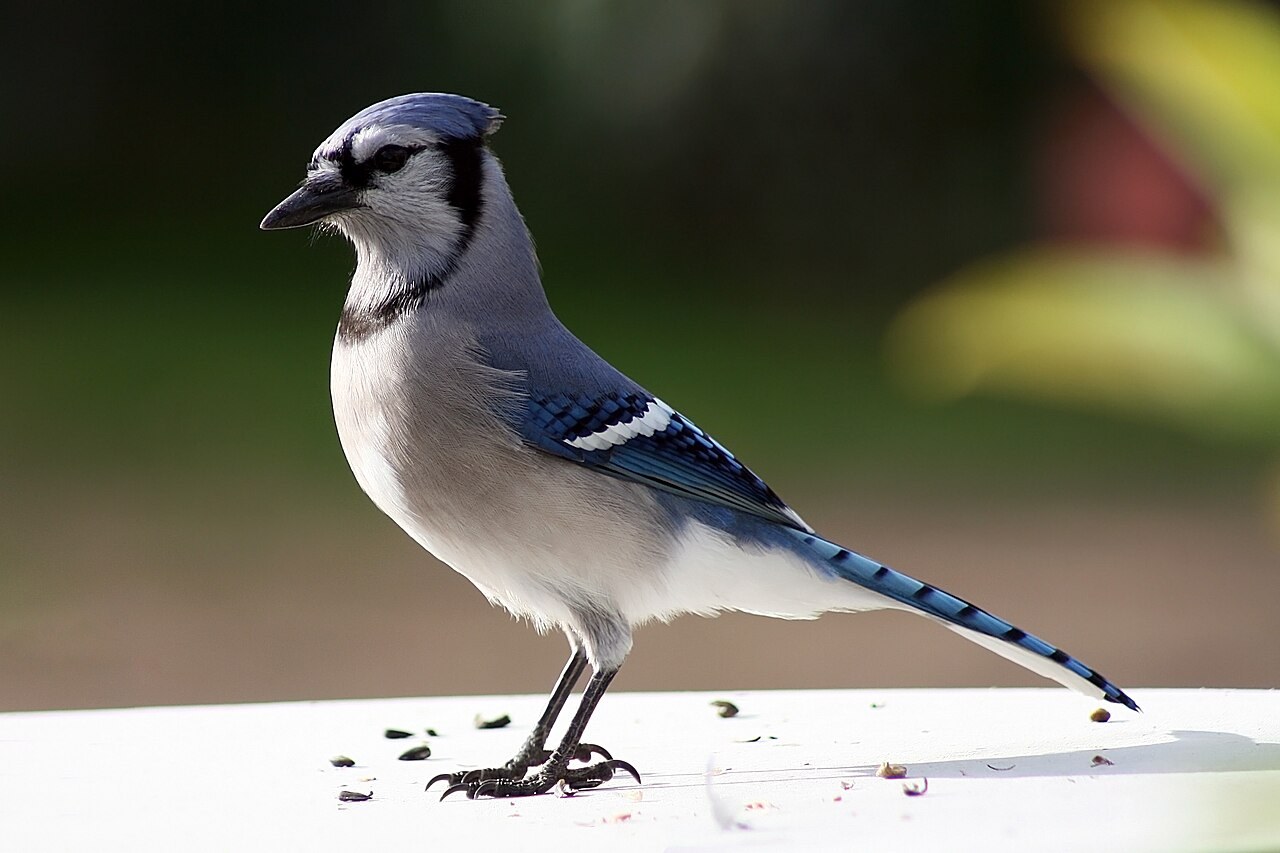

American Crow vs Blue Jay (Corvus brachyrhynchos vs Cyanocitta cristata): The Complete Backyard Identification Guide
Quick Answer: The Fastest Way to Tell Them Apart
No two common backyard birds are easier to separate — but the comparison reveals how differently the two corvids use your yard:
- Color: entirely black = American Crow; bright blue above, white below, with a black necklace = Blue Jay.
- Size: crow is hawk-sized at about 17.5 inches; a Blue Jay is a songbird at about 11 inches — barely two-thirds the crow’s bulk.
- Head: plain rounded head = crow; a prominent pointed crest that raises and lowers with mood = Blue Jay.
At-a-Glance Comparison Table
The big corvid and the blue corvid, side by side. KEY rows separate fastest.
| Feature | American Crow | Blue Jay |
|---|---|---|
| Scientific Name | Corvus brachyrhynchos | Cyanocitta cristata |
| Length KEY | 17.5 in (45 cm) | 9.8–11.8 in (25–30 cm) |
| Wingspan | 36–39 in (91–100 cm) | 13.4–16.9 in (34–43 cm) |
| Weight | 11–21 oz (320–600 g) | 2.5–3.5 oz (70–100 g) |
| Overall Shape | Large all-black songbird with a fan-shaped tail | Mid-sized crested songbird with a long tail |
| Male Plumage KEY | Entirely black with a slight gloss; stout black bill (sexes alike) | Bright blue above, white below, black necklace and crest; white wing patches (sexes alike) |
| Female Plumage | Identical to the male, averaging slightly smaller | Identical to the male |
| Bill Shape | Stout, straight, all-black bill | Strong black bill |
| Tail | Squared to slightly rounded fan tail | Long blue tail barred with black and tipped white |
| Core Range | Nearly the entire US and southern Canada; cities, farms, woods and shores | East of the Rockies; woods, suburbs and parks |
| Migration | Mostly resident; northern birds shift south in winter roosts | Partly migratory — northern birds move south in flocks some falls |
| Feeder Presence | Takes cracked corn, peanuts, eggs and table scraps from platforms | Daily visitor for whole peanuts, sunflower and suet; caches food in the yard |
| Favorite Foods | Omnivore: grain, insects, carrion, eggs, fruit, refuse | Acorns, peanuts, sunflower, insects, occasional eggs |
| Song KEY | The familiar loud “caw-caw-caw” | Loud “jay-jay” screams; also soft, musical murmurs |
| Flight Call | Varied caws; also rattles and knocks | Perfect imitations of Red-shouldered and Red-tailed Hawks |
| Population Trend | Common and adaptable; numbers fluctuate with West Nile virus cycles | Common; famous as the backyard sentinel |
Male Field Marks, Side by Side
American Crow — Male
- All black with a squared fan tail.
- Steady rowing wingbeats in flight.
- Familiar loud “caw-caw”.
Blue Jay — Male
- Bright blue crest and back; black necklace.
- White face and underparts.
- Mimics hawks — clears a feeder in seconds.
Female & Juvenile Marks, Side by Side
American Crow — Female
- Identical to the male.
- Family groups cooperatively raise young.
- Gathers in huge winter roosts.
Blue Jay — Female
- Identical to the male.
- Caches acorns and peanuts across the yard.
- Loud alarm calls guard the whole flock.
Part-by-Part Anatomy Breakdown
Every part differs — a quick tour of the two body plans:
| Body Part | American Crow | Blue Jay |
|---|---|---|
| Overall Color | Entirely black with a slight gloss | Blue above, white below, black necklace and wing bars |
| Crest | None — rounded crown | Prominent pointed crest, raised when excited |
| Size | Hawk-sized, 17.5 in | Robin-plus, 11 in |
| Bill | Stout, straight, all-black | Strong black bill, smaller and slightly hooked |
| Tail | Squared fan tail | Long rounded tail with white corners |
| Wings | Broad, fingered primaries in flight | Rounded, barred blue-and-black with white patches |
| Flight Style | Steady rowing wingbeats | Bouncy, floppy wingbeats between trees |
Song & Call Comparison
American Crow
Voice: the familiar loud caw-caw-caw, plus rattles and imitations.
Behavior: mobbing calls assemble the neighborhood against owls and hawks.
Blue Jay
Voice: loud jay-jay screams, hawk imitations, and quiet musical “whisper songs”.
Behavior: the neighborhood alarm system — jays announce every predator.
Range & Seasonal Presence
The American Crow lives nearly everywhere in the US and southern Canada — cities, farms, woodlots and shorelines — and is expanding in urban areas. Northern birds shift south into huge winter roosts.
The Blue Jay lives east of the Rockies in forests, suburbs and parks, and is the familiar crested jay of eastern feeders. Northern populations migrate in loose daytime flocks; southern jays are resident.
Feeder Behavior & Favorite Foods
- American Crow: takes cracked corn, whole peanuts, eggs and scraps from ground platforms; cautious at first, then schedules daily visits once a yard proves safe.
- Blue Jay: a grab-and-cache specialist — empties a tray of peanuts or sunflower seed one bill-load at a time and hides them across the neighborhood; will hammer open acorns on a perch.
- Best foods: crows: corn, peanuts, eggs, meat scraps on open ground. Jays: whole in-shell peanuts, sunflower, cracked corn on platform feeders.
- Conflict: jays mob crows relentlessly; expect loud aerial chases whenever a crow lands near a jay family’s nest tree.
Temperament & Flock Behavior
American Crows are wary, social and famously intelligent — they recognize individual human faces, hold grudges, and gather to mob owls and hawks.
Blue Jays are brash and noisy, screaming “jay-jay” at intruders, mimicking hawk calls to clear feeders, and quietly planting thousands of acorns that grow into oak woods.
6-Step Backyard ID Checklist
- Color. All black = crow; blue and white = Blue Jay.
- Crest. No crest = crow; pointed crest = Blue Jay.
- Size. Hawk-sized = crow; barely bigger than a robin = Blue Jay.
- Tail. Short squared fan = crow; long rounded with white corners = Blue Jay.
- Voice. Clear “caw-caw” = crow; harsh “jay-jay” (or a hawk imitation) = Blue Jay.
- Behavior. Walking the lawn in a deliberate strut = crow; bouncing between oaks with peanuts = Blue Jay.
Frequently Asked Questions
- Color: All black = crow; blue, white and black = Blue Jay.
- Crest: Only the jay wears a crest.
- Size: Crow is hawk-sized; jay is barely robin-plus.
- Voice: “Caw-caw” vs “jay-jay” — plus the jay’s hawk impressions.
- Feeder Tactics: Crow scavenges platforms; jay grabs peanuts and caches them.
- Family Tree: Both corvids — smart, social, and loud.