
Blue Grosbeak vs Eastern Bluebird


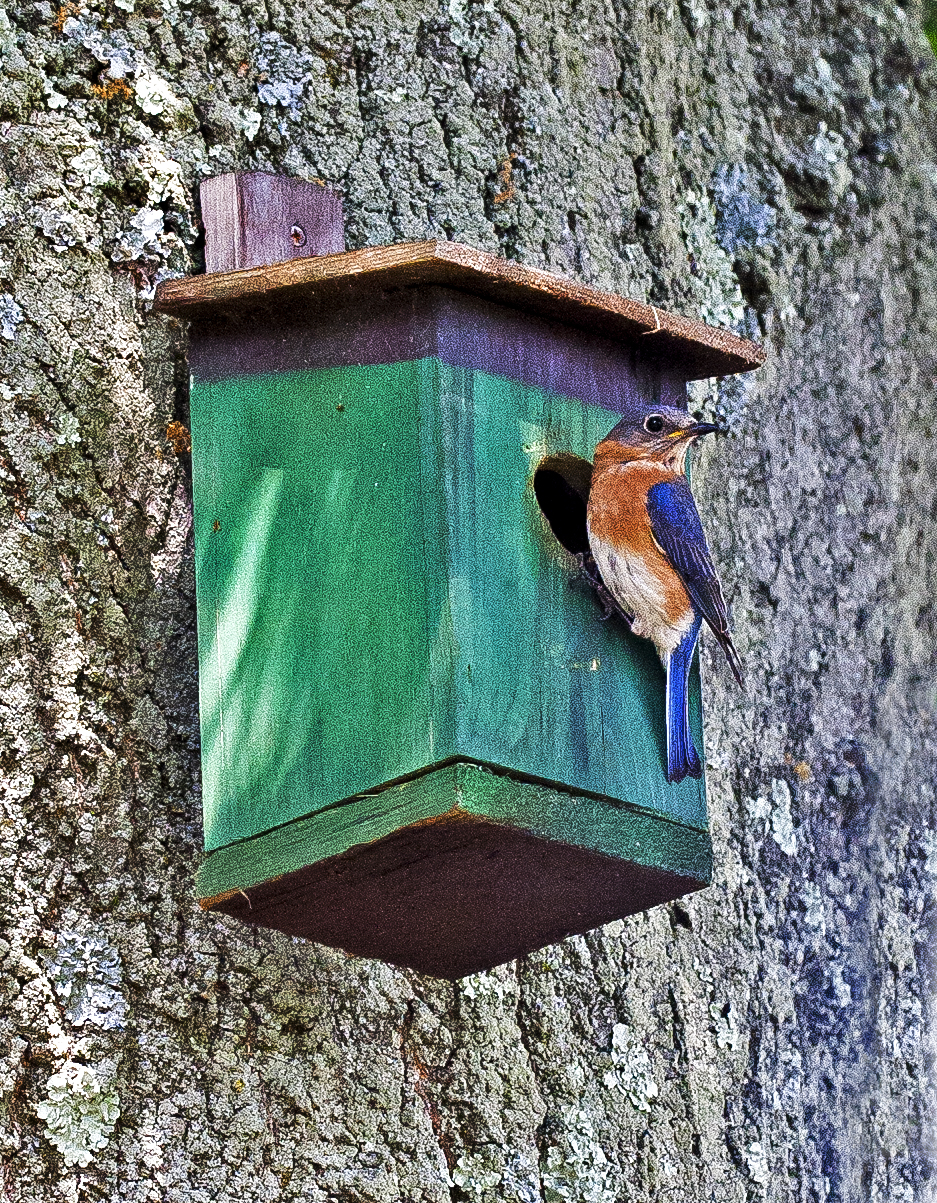


Blue Grosbeak vs Eastern Bluebird (Passerina caerulea vs Sialia sialis): The Complete Backyard Identification Guide
Quick Answer: The Fastest Way to Tell Them Apart
Two blue birds with the rust in different places. Three rules:
- Where is the rust? On the wings = Blue Grosbeak; on the breast = Eastern Bluebird.
- Bill: a huge silver triangle = grosbeak; thin and black = bluebird.
- Posture and place: dense shrubby edge, singing deep blue = grosbeak; open meadow on a box, sky blue = bluebird.
At-a-Glance Comparison Table
The indigo seed-crusher and the sky-blue thrush, side by side. KEY rows separate fastest.
| Feature | Blue Grosbeak | Eastern Bluebird |
|---|---|---|
| Scientific Name | Passerina caerulea | Sialia sialis |
| Length KEY | 6.8 in (17 cm) | 6.5 in (16.5 cm) |
| Wingspan | 11 in (28 cm) | 12.2 in (31 cm) |
| Weight | 1.0–1.1 oz (26–31 g) | 1.0–1.2 oz (28–34 g) |
| Overall Shape | Mid-sized songbird with an enormous silver bill | Small, plump thrush with a round head and short bill |
| Male Plumage KEY | Deep blue overall with two rusty wing bars and a huge silver-gray bill | Brilliant royal blue above, rusty-orange throat and breast, clean white belly |
| Female Plumage | Rich cinnamon-brown with faint wing bars; the huge bill still shows | Grayer blue above with blue wings and tail; duller rusty breast and white belly |
| Bill Shape | Massive, deep-based silver-gray bill — grosbeak proportions | Short, thin, dark |
| Tail | Medium dark tail, flicked and spread in display | Short, blue, slightly notched |
| Core Range KEY | Breeds across the Southeast and Southwest in shrubby fields; winters in Mexico and Central America | East of the Rockies — meadows, orchards, open woods and nest-box trails |
| Migration | Long-distance migrant; present roughly April–September | Partial migrant; southern birds resident, northern birds withdraw in winter |
| Feeder Presence | Occasional at sunflower feeders in brushy country during breeding season | Visits for live and dried mealworms and suet crumbles; nest boxes are the great attractant |
| Favorite Foods | Insects, grass seeds; sunflower at feeders | Insects, wild berries and fruit; mealworms at feeders |
| Song KEY | Sweet, rich warbling phrases, rising and falling | A soft, musical series of whistled phrases — “cheer-cheerful-charmer” |
| Flight Call | A loud, metallic “chink” | A soft “chur-lee” and dry chatter |
| Population Trend | Expanding northward in brushy farmland | Recovered strongly thanks to nest-box campaigns; stable to increasing |
Male Field Marks, Side by Side
Blue Grosbeak — Male
- Deep blue body with two rusty wing bars.
- Enormous silver bill — half the face.
- Larger and longer-tailed than any bunting.
Eastern Bluebird — Male
- Royal blue back and head with a rusty-orange breast.
- Clean white belly below the rust.
- Perches low and upright, scanning for insects.
Female & Juvenile Marks, Side by Side
Blue Grosbeak — Female
- Rich cinnamon-brown, warmer than any female bunting.
- Huge silver bill and faint rusty wing bars.
- Often pumps the tail while perched.
Eastern Bluebird — Female
- Gray-blue above with blue wings and tail.
- Paler rusty breast than the male.
- Accepts nest boxes readily — watch for carrying grass in spring.
Part-by-Part Anatomy Breakdown
Every part offers a check:
| Body Part | Blue Grosbeak | Eastern Bluebird |
|---|---|---|
| Blue Shade | Deep indigo overall | Sky blue above |
| Rust | Two rusty wing bars | Rusty-orange breast and sides |
| Belly | Blue to the undertail | White belly |
| Bill | Huge, silver-gray, triangular | Thin, black, thrush-like |
| Size | 6.8 in, stocky | 7.0 in, slender and upright |
| Nest | Low in dense shrubs | Cavities and nest boxes |
| Song | Rich, finch-like warble | Soft, musical “truly-truly” whistles |
Song & Call Comparison
Blue Grosbeak
Song: sweet, rich warbled phrases rising and falling, delivered from shrubs and wires.
Calls: a loud metallic chink.
Eastern Bluebird
Song: a soft, musical cheer-cheerful-charmer — gentle whistled phrases.
Calls: a soft chur-lee and dry chatter.
Range & Seasonal Presence
The Blue Grosbeak breeds across the southern half of the country in shrubby field edges and streamside thickets, migrating to Central America.
The Eastern Bluebird owns open meadows east of the Rockies — orchards, fence lines and nest-box trails — with northern birds migrating south for winter.
Feeder Behavior & Favorite Foods
- Blue Grosbeak: occasionally sunflower in migration; mostly a shrub-country forager.
- Eastern Bluebird: live mealworms and suet nuggets — the classic feeder bluebird.
- Nest boxes: bluebirds use them famously; grosbeaks never do.
- Habitat planting: native shrub borders attract grosbeaks; mowed meadow plus boxes attracts bluebirds.
Temperament & Flock Behavior
Blue Grosbeaks are retiring singers — warbling from a shrub top, then vanishing into the thicket.
Eastern Bluebirds are gentle and visible — sitting upright on boxes and wires, dropping softly to the grass for insects.
6-Step Backyard ID Checklist
- Rust location. Wing bars = grosbeak; breast = bluebird.
- Bill. Huge silver = grosbeak; thin black = bluebird.
- Belly. Blue = grosbeak; white = bluebird.
- Habitat. Shrubby edge = grosbeak; open meadow = bluebird.
- Nest box. Using one = bluebird.
- Song. Warbled = grosbeak; soft whistles = bluebird.
Frequently Asked Questions
- Rust: Wing bars = grosbeak; breast = bluebird.
- Bill: Huge silver = grosbeak; thin black = bluebird.
- Blue Shade: Indigo = grosbeak; sky = bluebird.
- Belly: Blue = grosbeak; white = bluebird.
- Boxes: Bluebird nests in boxes; grosbeak in shrubs.
- Feeders: Mealworms = bluebird; grosbeak rarely visits.