
Blue Jay vs Florida Scrub-Jay


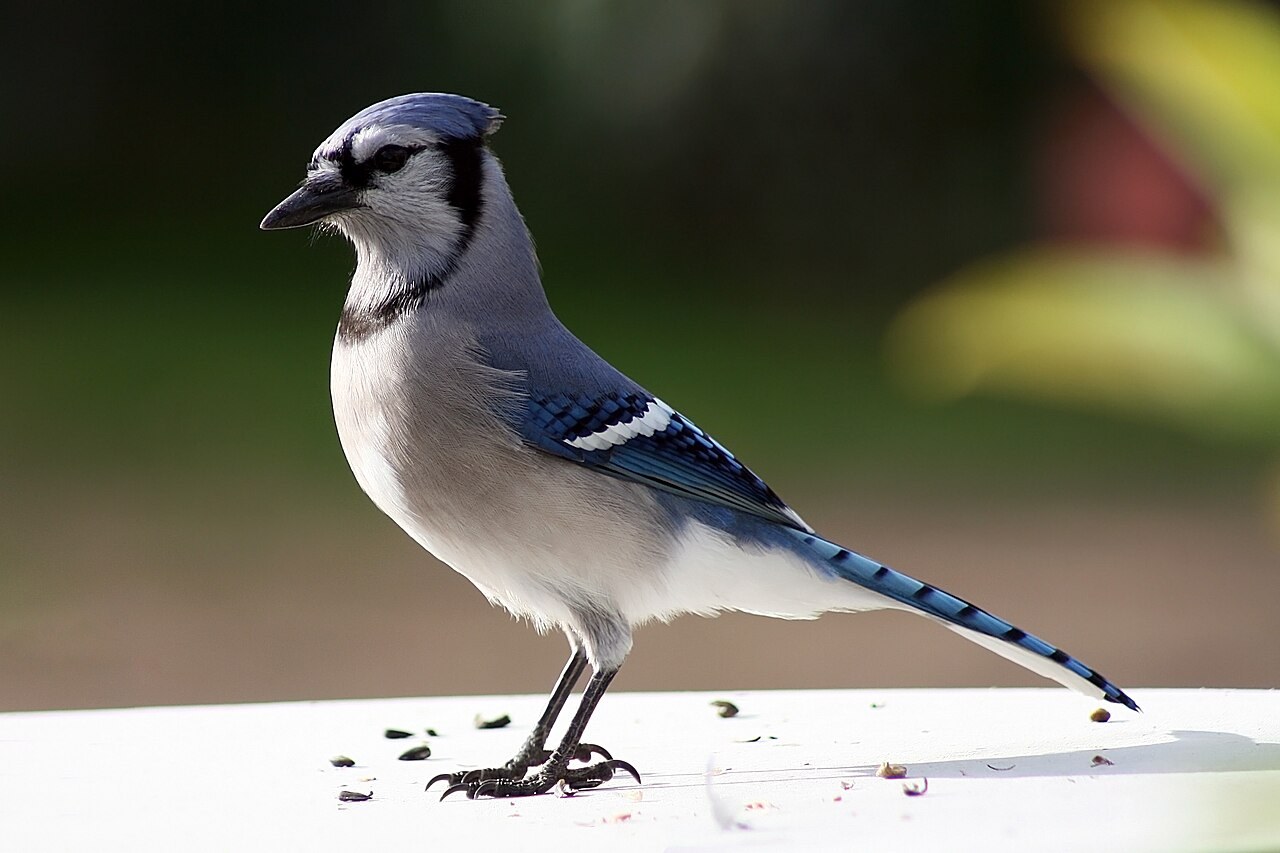


Blue Jay vs Florida Scrub-Jay (Cyanocitta cristata vs Aphelocoma coerulescens): The Complete Backyard Identification Guide
Quick Answer: The Fastest Way to Tell Them Apart
Florida’s two blue jays. Three rules:
- Crest: crested = Blue Jay; crestless = Florida Scrub-Jay.
- Back: all blue = Blue Jay; gray back and belly = scrub-jay.
- Address: any suburb = Blue Jay; ancient oak scrub = scrub-jay.
At-a-Glance Comparison Table
The common jay and Florida’s only endemic bird, side by side. KEY rows separate fastest.
| Feature | Blue Jay | Florida Scrub-Jay |
|---|---|---|
| Scientific Name | Cyanocitta cristata | Aphelocoma coerulescens |
| Length KEY | 9.8–11.8 in (25–30 cm) | 11.0 in (28 cm) |
| Wingspan | 13.4–16.9 in (34–43 cm) | 13.8 in (35 cm) |
| Weight | 2.5–3.5 oz (70–100 g) | 2.7 oz (77 g) |
| Overall Shape | Mid-sized crested songbird with a long tail | Florida’s only endemic bird — a crestless blue jay of oak scrub |
| Male Plumage KEY | Bright blue above, white below, black necklace and crest; white wing patches (sexes alike) | Blue head, wings and tail; gray back and underparts; faint necklace (sexes alike) |
| Female Plumage | Identical to the male | Identical to the male |
| Bill Shape | Strong black bill | Stout, black |
| Tail | Long blue tail barred with black and tipped white | Long, blue |
| Core Range KEY | East of the Rockies; woods, suburbs and parks | Florida oak scrub only — found nowhere else on Earth |
| Migration | Partly migratory — northern birds move south in flocks some falls | Non-migratory; families hold permanent territories |
| Feeder Presence | Daily visitor for whole peanuts, sunflower and suet; caches food in the yard | Visits scrub-adjacent yards for peanuts (offer sparingly; federally protected) |
| Favorite Foods | Acorns, peanuts, sunflower, insects, occasional eggs | Acorns, insects, small lizards; caches acorns in the sand |
| Song KEY | Loud “jay-jay” screams; also soft, musical murmurs | No true song; a range of calls |
| Flight Call | Perfect imitations of Red-shouldered and Red-tailed Hawks | A harsh, raspy “shreep” |
| Population Trend | Common; famous as the backyard sentinel | Federally threatened — habitat loss has cut numbers sharply |
Male Field Marks, Side by Side
Blue Jay — Male
- Bright blue crest and back; black necklace.
- White face and underparts.
- Mimics hawks — clears a feeder in seconds.
Florida Scrub-Jay — Male
- Crestless blue jay, gray back — found only in Florida scrub.
- Remarkably tame around people.
- Young stay to help parents raise the next brood.
Female & Juvenile Marks, Side by Side
Blue Jay — Female
- Identical to the male.
- Caches acorns and peanuts across the yard.
- Loud alarm calls guard the whole flock.
Florida Scrub-Jay — Female
- Identical to the male.
- Breeds cooperatively with grown young as helpers.
- Guards acorn caches buried in the scrub sand.
Part-by-Part Anatomy Breakdown
Every part offers a check:
| Body Part | Blue Jay | Florida Scrub-Jay |
|---|---|---|
| Crest | Prominent blue crest | None |
| Back | Blue | Gray |
| Underparts | White with black necklace | Pale gray, faint necklace |
| Face | White face, black markings | Blue head, white brow spots |
| Habitat | Woods, parks, any suburb | Oak scrub on ancient sand ridges |
| Tameness | Wary | May land on your hand |
| Status | Abundant and expanding | Federally threatened — scrub habitat keeps shrinking |
Song & Call Comparison
Blue Jay
Voice: loud jay-jay screams, hawk imitations, and quiet musical “whisper songs”.
Behavior: the neighborhood alarm system — jays announce every predator.
Florida Scrub-Jay
Calls: a harsh, raspy shreep and scolding rattles.
Behavior: family sentinels watch for hawks from exposed perches. (no open recording available)
Range & Seasonal Presence
The Blue Jay lives all over Florida — and all over the East — in any habitat with trees.
The Florida Scrub-Jay lives only in Florida’s relict oak scrub on old sand ridges — a habitat disappearing to development, which is why the bird is federally protected.
Feeder Behavior & Favorite Foods
- Blue Jay: peanuts, sunflower, corn at any Florida feeder.
- Florida Scrub-Jay: visits scrub-edge yards for peanuts — offer sparingly and enjoy responsibly.
- Feeding note: scrub-jays are protected; habitat conservation matters far more than feeders.
- Plantings: native oaks and scrub plants help scrub-jays; Blue Jays appreciate any oak too.
Temperament & Flock Behavior
Blue Jays are loud, social and watchful — screaming announcements across the neighborhood.
Florida Scrub-Jays are family-minded and tame — helpers at the nest, sentinels on duty, and famously willing to perch on a quiet visitor.
6-Step Backyard ID Checklist
- Crest. Yes = Blue Jay; no = scrub-jay.
- Back. Blue = Blue Jay; gray = scrub-jay.
- Underparts. White + black necklace = Blue Jay; gray = scrub-jay.
- Habitat. Suburb = Blue Jay; oak scrub = scrub-jay.
- Behavior. Wary = Blue Jay; confiding = scrub-jay.
- Group. Alone or loose groups = Blue Jay; family clan = scrub-jay.
Frequently Asked Questions
- Crest: Crested = Blue Jay; crestless = scrub-jay.
- Back: Blue = Blue Jay; gray = scrub-jay.
- Habitat: Anywhere = Blue Jay; oak scrub = scrub-jay.
- Tameness: Wary = Blue Jay; confiding = scrub-jay.
- Family Life: Scrub-jays breed cooperatively.
- Status: Scrub-jay = threatened Florida endemic.