
Gray Catbird
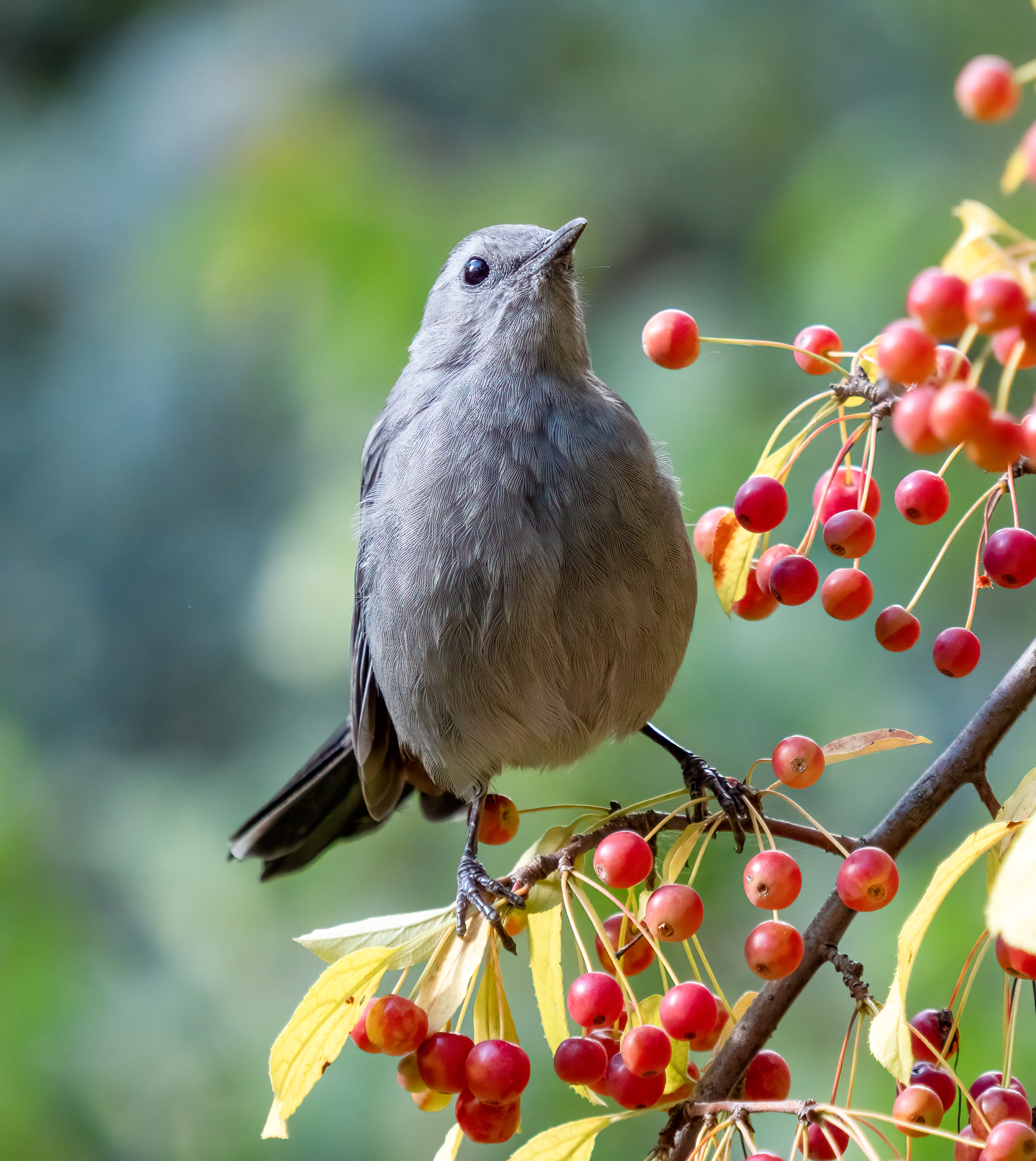
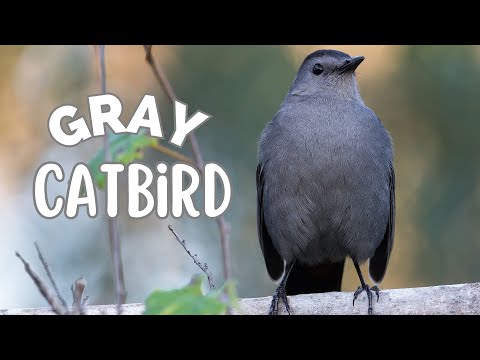


Gray Catbird (Dumetella carolinensis): Complete Identification, Mew Call Guide & Backyard Handbook
Quick Answer: How to Attract & Identify Gray Catbirds
The Gray Catbird (Dumetella carolinensis) is the slate-gray thicket bird with the black cap, rusty undertail patch, and a call that sounds exactly like a cat. A summer visitor across the East and Midwest, it answers to sweets: put out grape jelly or orange halves near dense shrubs, add soaked raisins and suet, plant berry bushes, and keep a shady birdbath filled. Its cousin the Northern Mockingbird repeats every song phrase three times — the catbird sings each phrase just once. It shares the shrub layer with the American Robin and the Hermit Thrush.
Species Physical Profile & Morphometrics
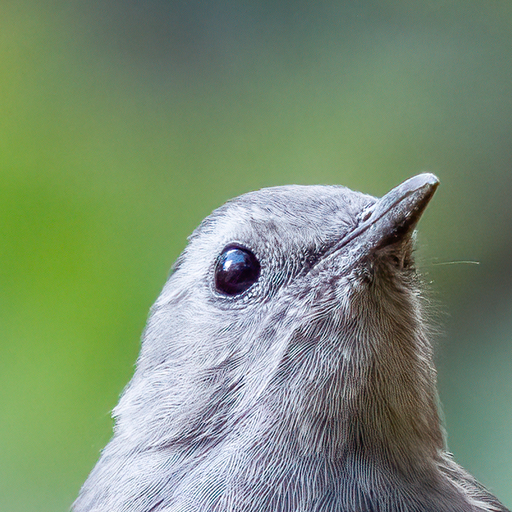
The Gray Catbird is a slim, medium-sized member of the mimid family (Mimidae) — cousin to the mockingbirds and thrashers — dressed almost entirely in one color. The pattern: plain slate-gray from crown to tail, a neat black cap, a blackish tail, dark eyes and legs, and one hidden surprise: a rich rusty-red patch of undertail coverts that shows only when the bird cocks or flicks its tail.
The identification formula: slate gray + black cap + rusty undertail + mew. The Gray Catbird is darker and cap-wearing where the Northern Mockingbird is pale with white wing patches, and far plainer than the rufous, streaked Brown Thrasher. Behavior settles most doubts: catbirds live inside dense shrubs, flick their long tails, and answer attention with a whiny feline mew.
Essential Morphometric Field Marks:
- Body Length & Mass: about 8.3 to 9.1 inches (21–24 cm) and 0.8 to 2.0 ounces (23–56 grams) — slimmer than a robin, longer-tailed than any sparrow.
- Wingspan: about 8.7 to 11.8 inches (22–30 cm); flight between thickets is low, quick, and straight, tail streaming behind.
- Bill Structure & Color: A slim, straight, all-dark bill — a gleaner’s tool for plucking insects from leaves and berries from stems.
- Color Pattern: Plain slate-gray overall with a black cap and blackish tail; the chestnut-rusty undertail patch is the secret mark, flashed when the tail is raised.
- The Signature Move: The tail flick and cock — catbirds constantly raise, dip, and flick the long tail while moving through shrubs, each gesture offering a glimpse of the rusty patch beneath.
- Male vs. Female: The sexes look identical — same gray, same cap. In spring the male sings longer and louder from higher perches; in a summer yard there is no visual way to tell them apart.
The song gives the male away: a long, improvisational stream of whistles, squeaks, and borrowed notes — each phrase sung once, never repeated like a mockingbird’s. He sings from inside shrubs and from exposed tops, sometimes for minutes without pause.
She builds deep in the tangle: a bulky twig cup lined with fine grass, hidden 3–10 feet up in the densest shrub available. She incubates 3–4 unmarked turquoise-green eggs for 12–13 days, and famously recognizes and ejects Brown-headed Cowbird eggs — one of the few hosts that refuses to raise the parasite. Two broods a season are common.
Gray Catbird Vocalization Guide (3 Field Recordings)
Two sounds own the catbird’s reputation: the nasal, downslurred mew that named it, and the long rambling song — an unhurried string of phrases, whistles, and mimicry where each phrase is sung a single time, the instant way to separate a catbird from a repeating mockingbird. Below are three real field recordings hosted on Wikimedia Commons. For a deeper library, browse xeno-canto: Gray Catbird.
1. The Campground Song Session
2. The Vermont Songster
3. The Namesake Mew
Habitat, Range & the Human Landscape
The Gray Catbird breeds anywhere the East and Midwest go dense and shrubby: thicket edges, overgrown fence lines, streamside tangles, young second-growth, and landscaping shrubs in suburban yards. It breeds from southern Canada through most of the eastern and central United States, migrates at night, and winters along the Gulf Coast, in Florida, the Caribbean, and Central America — with a hardy few lingering up the Atlantic coast in mild winters.

The Summer Thicket Bird
Catbirds arrive on northern breeding grounds in late April and May — often announced by a mew from the hedge — and slip south again in September and October, gorging on berries to fuel the night flight. A band of year-round residents along the Southeast and Gulf coasts never leaves at all.
Backyards score best with one dense, unpruned shrubby corner, fruit-bearing native plants, and a shaded birdbath. If your landscaping includes a tangle a cat can hide in, a catbird will find it too.
Backyard Behavioral Patterns & Social Dynamics
The Gray Catbird is the voice of the shrubbery — heard constantly, seen in glimpses. Four behaviors explain most backyard encounters:
🐱 The Cat in the Hedge
The nasal, downslurred mew comes from deep inside dense shrubs, and it is convincing enough to send homeowners searching the hedge for a stray kitten. It is the catbird’s all-purpose contact and complaint call — learn it and you will never walk past a catbird unnoticed again.
🎼 The Once-Only Singer
Unlike its mockingbird cousin, which repeats every phrase three-plus times, the catbird sings each phrase exactly once, stringing whistles, squeaks, and mimicry into an unbroken ramble that can run for minutes. One-and-done phrasing is the fastest audio ID in the shrub layer.
🍒 The Fruit Switch
Catbirds hunt insects through spring, then switch heavily to fruit from midsummer on — black cherry, elderberry, blackberry, dogwood, wild grape. A fruiting shrub in August can pull in a whole relay of local catbirds, each pausing between mouthfuls to flick its tail.
🥚 The Cowbird Bouncer
Catbirds are among the very few hosts that recognize Brown-headed Cowbird eggs and puncture or eject them from the nest. Where cowbirds parasitize most small songbirds unchallenged, a catbird nest almost never raises the intruder.
Problem: “There’s a Cat Crying in My Hedge Every Morning — But There Is No Cat. And Something Is Emptying the Oriole’s Jelly Cup. Same Bird?”
Yes — almost certainly the same slate-gray bird, and both mysteries have simple explanations:
First, the phantom cat: that whiny, downslurred mee-ahh from deep in the shrubs is the Gray Catbird’s signature call, and it fools nearly everyone the first May it arrives. Follow the sound slowly and look for a slim gray shape flicking a long dark tail — a flash of rusty red under the tail confirms it. Second, the vanishing jelly: catbirds share the oriole’s sweet tooth and will happily monopolize a grape jelly cup or orange half once they find it. The peaceful fix is to hang a second jelly feeder six to ten feet from the first — the dominant bird cannot guard both — and to keep a shallow dish of soaked raisins on a platform as a pressure valve. Neither behavior is a nuisance so much as a compliment: a yard with a phantom cat and a jelly thief is a yard with breeding catbirds.
Method 1: Serve Jelly, Oranges & Suet
Design for a sweet-toothed, fruit-eating mimid that ignores seed:
-
Grape Jelly Is the Magnet
A small cup of grape jelly — the same offering that draws orioles — is the fastest way to a catbird’s routine from May through August. Serve a tablespoon at a time and refresh daily; in hot weather jelly spoils quickly.
-
Halve an Orange
Orange halves impaled on a spike or nailed to a post give catbirds a slower, cleaner sweet station. Apple slices and halved grapes work too — anything soft, juicy, and sweet matches the fruit half of their natural diet.
-
Backup: Raisins and Suet
Soaked raisins, currants, and suet crumbles on a platform near cover carry birds through cold spring snaps when insects are scarce, and keep fall migrants lingering at your yard while they fuel for the night flight south.
-
Skip the Seed Tubes
Catbirds do not eat birdseed — sunflower and millet go untouched. Place jelly and fruit within a quick dash of dense shrubs, because this bird feeds where it can vanish in one wingbeat.
Method 2: Grow a Thicket, Add Berries & Water
With catbirds, the shrub layer is the attraction strategy:
-
Leave One Corner Unpruned
Catbirds nest and shelter in the densest tangle available — an unpruned hedge, a blackberry thicket, a lilac left to sprawl. One wild corner turns a tidy yard into catbird territory, and may hold a nest with turquoise eggs by June.
-
Plant Native Berry Producers
Elderberry, blackberry, black cherry, dogwood, serviceberry, and viburnum are all documented catbird staples. Stagger species so fruit ripens from July through October — the exact window when migrants need it most.
-
Water in the Shade
A shallow birdbath set near or under shrubs outdraws a sunny pedestal bath for this species — catbirds drink and bathe daily but stay within a dash of cover. Refresh every day or two in summer.
-
Go Easy on the Spray
Half the catbird’s year runs on insects gleaned from leaves and litter. Skipping insecticide on shrubs and keeping a natural leaf layer under the hedge keeps the natural buffet stocked between jelly refills.
Tool Solution: Recommended Hardware for Gray Catbirds
Equipment matched to a jelly-loving, thicket-dwelling fruit eater:
Jelly & Orange Feeder
An oriole-style feeder with a jelly cup and fruit spikes, hung near dense cover — one for the orioles, and accept that the catbirds will claim a share; better yet, hang two and let each species guard its own.
- • Food: Grape jelly, orange halves, soaked raisins
- • Style: Cup-and-spike oriole feeder
- • Placement: 5–6 ft high, one dash from the shrub line
Suet Cage Feeder
A wire suet cage near the thicket for chilly April arrivals and lingering October migrants — berry or insect-blend cakes bridge the gap when fruit is scarce and insects are dormant.
- • Food: Berry or insect-blend suet cakes
- • Mount: Pole or branch beside dense shrubs
- • Season: Early spring and fall migration
Shallow Bird Bath (Shaded)
A shallow bath placed within sight of the shrub line — catbirds bathe daily but refuse exposed water. Add a dripper if you can: moving water advertises itself to every migrant passing through in May.
- • Depth: 1–2 in at the edge
- • Extras: Dripper or mister for sound
- • Placement: Shade or dappled light near cover
Frequently Asked Questions
- Species Profile: The Gray Catbird (Dumetella carolinensis) is an 8.3–9.1 inch, 23–56 gram mimid (Mimidae) of eastern thickets — slate gray, black cap, band code GRCA.
- ID in One Look: Plain slate gray + black cap + the rusty undertail patch flashed when the tail is cocked; confirmed instantly by the catlike mew from the hedge.
- The Song Trick: Catbirds sing each phrase exactly once; mockingbirds repeat each phrase three-plus times — the fastest audio ID in the shrub layer.
- Summer Bird, Night Migrant: Breeds across the East and Midwest May through September, winters on the Gulf Coast, in Florida, and in Central America; a few linger up the Atlantic coast.
- Feeder Formula: Grape jelly, orange halves, soaked raisins, and suet near dense cover — never seed — plus a shaded birdbath.
- The Thicket Is the Nest: One unpruned shrubby corner can hold a nest of turquoise eggs — guarded by one of the only songbirds that ejects cowbird eggs on sight.
Bird Watching Log
Species: Gray Catbird (Dumetella carolinensis)
| Gray Catbird (Single / Pair: ___ — Mew Heard: Yes / No — Undertail Rust Seen: Yes / No — Jelly or Orange Taken: Yes / No) | |