
Great Horned Owl
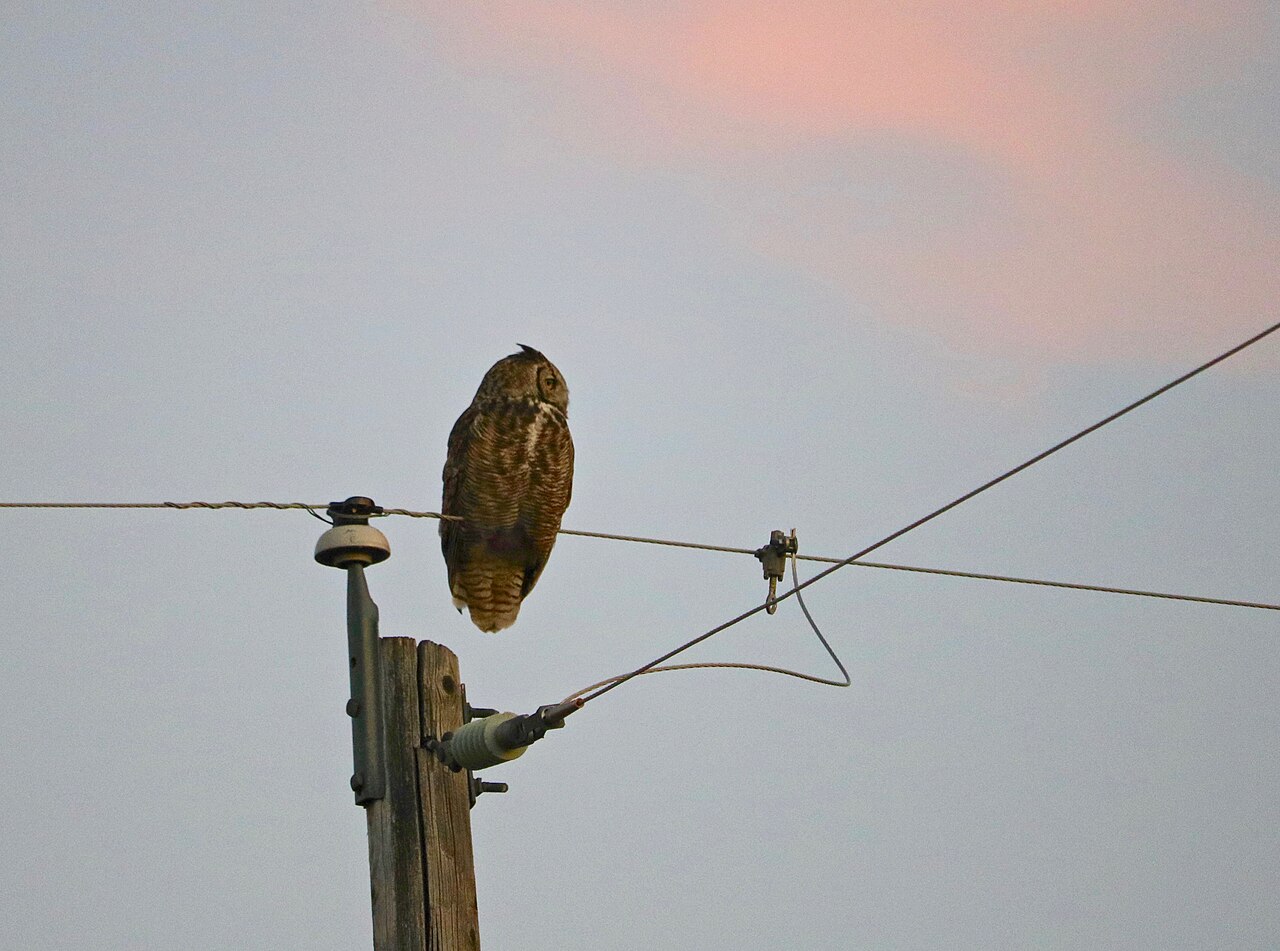
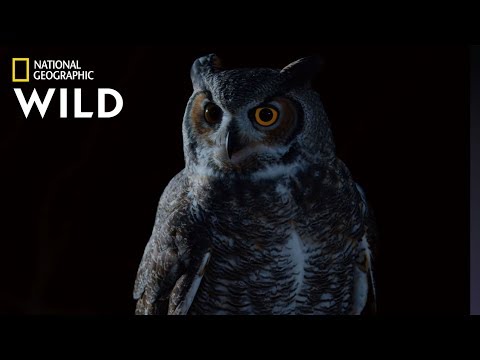


Great Horned Owl (Bubo virginianus): Complete Identification, Backyard Guide & Call Library
Quick Answer: How to Attract & Identify the Great Horned Owl
The Great Horned Owl (Bubo virginianus) is America’s most widespread and powerful owl — the big, ear-tufted, yellow-eyed tiger of the night sky found from Alaska suburbs to Florida swamps. Its deep, stuttering five-note hoot (who’s awake? me too) is the classic owl sound of film and memory. An apex hunter that takes everything from mice to skunks to other raptors, it nests in midwinter in stolen hawk nests and hunts wooded yards at dusk. You don’t feed a Great Horned Owl — you host it: mature trees, dark skies, and a rodenticide-free yard. It rules the night shift above the Barred Owl and shares the skies with the Red-tailed Hawk by day.
Species Physical Profile & Morphometrics
The Great Horned Owl belongs to the true owl family (Strigidae) and is the largest tufted owl in the Americas. It occupies the widest range of any owl on the continent — Arctic treeline to the Strait of Magellan — and adapts from deep forest to desert, farmland, and big-city parks. In the backyard hierarchy it sits at the very top of the night shift.
The identification formula: big owl + ear tufts (the horns) + piercing yellow eyes + heavily barred underparts with a white throat patch. The Barred Owl is round-headed and dark-eyed; the Long-eared Owl is slimmer and rustier with close-set tufts; the screech-owls are robin-sized. A perched Great Horned at dusk, hooting from a snag, is one of birding’s unforgettable sights.
Essential Morphometric Field Marks:
- Body Length & Mass: 18.1 to 24.8 inches (46–63 cm) and 32.1 to 88.2 ounces (910–2500 grams) — females up to a third larger than males; the heaviest owl most Americans will ever meet.
- Wingspan: 39.8 to 57.1 inches (101–145 cm); flight is powerful, direct, and completely silent — comb-like feather edges erase the sound of wingbeats.
- Bill Structure & Color: A dark, massively hooked bill backed by talons with a crushing grip measured among the strongest of any raptor — equipment for prey up to rabbit and skunk size.
- Color Pattern: Mottled gray-brown overall with heavy dark barring below and a conspicuous white throat bib that fluffs out when the bird hoots; ear tufts large and blackish; eyes piercing yellow.
- Male vs. Female: Identical plumage; the female is markedly larger and her hoot pitched slightly higher — listen to a winter duet and the bigger, higher voice is hers. She incubates alone through the worst of winter while he delivers prey.
The deeper voice of the winter duet: smaller than his mate, with the lower-pitched hoot, he begins calling in fall and courts through the holidays — then hunts nightly to feed her on the nest from January onward, through snow and sleet.
Larger, fiercer, and the anchor of the pair — she incubates from midwinter in a borrowed hawk nest, sometimes under falling snow, and defends the owlets with a ferocity that wise hikers respect with a wide detour.
Great Horned Owl Vocalization Guide (3 Field Recordings)
The Great Horned Owl’s hoot is the template for every movie owl: a deep, soft, stuttering hoo-hoo-hoooo, hoo-hoo — who’s awake? me too — plus barks, screams, and a whole midnight vocabulary. All recordings below are real field audio via Wikimedia Commons — no simulations. For a deeper library, browse xeno-canto: Great Horned Owl.
1. The Five-Note Hoot
2. The Winter Duet
3. Barks and Screams
Habitat, Range & the Whole Continent
The Great Horned Owl lives almost everywhere there are trees and prey: forest, desert canyon, farmland shelterbelt, river corridor, cemetery, golf course, and big-treed suburb. It needs a sturdy nest site (usually a borrowed hawk, heron, or crow nest) and a hunting territory with mammals. If your neighborhood has big trees and rabbits, it has, or will have, a Great Horned Owl.

From the Arctic Treeline to Your Street
The range is simply North America, top to bottom — Alaska and the Canadian treeline south through every U.S. state, Mexico, and on to South America. It is one of the most widely distributed owls on Earth, and in most of the U.S. it is the default large owl.
For backyard birders: the question is not whether a Great Horned Owl is near, but where it perches. Watch pines and big oaks at dusk in fall and winter; follow the alarm choruses of crows at midday to find a roosting bird — a stiff, upright silhouette hugging the trunk.
Backyard Behavioral Patterns & Social Dynamics
The Great Horned Owl is the apex of the backyard night — a silent, powerful, and surprisingly traditional hunter. Four behaviors explain most of what you will observe:
🌙 The Silent Apex
Great Horned Owls hunt the full mammal menu — mice and rabbits to skunks (they smell of it for weeks), opossums, other owls, and hawks. Their grip can crush the spine of prey in seconds. A yard with a resident Great Horned has an invisible fence against rodents.
🪹 The Nest Borrower
They never build their own nest: old hawk, heron, crow, and squirrel nests, broken snags, and cliff ledges serve instead. They claim them in January and February — incubating through blizzards, the earliest nesting raptor on the continent.
🎵 The Winter Duet
From late fall into winter, pairs duet at dusk and through the night — his deep hoots, hers a pitch higher — the classic who’s-awake-me-too exchange that renews the pair bond before midwinter eggs.
👑 The Tuft Language
The horns are not ears but feathered display tufts — raised in alertness and display, flattened in camouflage posture when the bird elongates against bark and becomes a broken branch. Watch a perched owl shift between the two shapes.
Problem: “A Great Horned Owl Is Working Our Neighborhood — Are Our Pets and Feeders at Risk?”
The three most common Great Horned Owl concerns all have proven answers:
First, the predator reality: a Great Horned Owl can take prey up to skunk and rabbit size — very small outdoor pets (toy kittens, tiny puppies) should be supervised at night, and backyard poultry needs a covered run; adult cats are rarely troubled but belong indoors anyway. Second, the feeder birds: owls take an occasional roosting dove or starling at dawn, but the diet is overwhelmingly mammals — the owl is controlling your mice, not your finches; feeders can simply come in at dusk if losses worry you. Third, the poison chain: the real threat runs the other way — rodenticide kills owls that eat poisoned rats; a yard with a hunting Great Horned needs zero poison, because the owl is the pest control. Most neighborhoods live with a resident owl for years without knowing; hearing the winter hoots is a privilege, not a problem.
Method 1: Set the Table — Rodents, Darkness & Big Trees
Design for a nocturnal apex hunter:
-
Run a Rodenticide-Free Yard
The cardinal rule: no second-generation anticoagulant poisons — owls eat the poisoned rodents and die slowly. Snap traps indoors only; let the owl handle the outdoors.
-
Keep the Night Dark
Shield or switch off yard lights — darkness is the owl’s hunting ground. Motion-sensor lights away from the woods edge let you keep security without erasing the night.
-
Protect Big Trees
Mature pines, oaks, and cottonwoods are roosting and nesting infrastructure. Keep veteran trees that don’t threaten structures — every big snag is potential owl furniture.
-
Provide a Ground Bath
Great Horned Owls bathe at dusk — a wide, ground-level bath in a quiet shaded corner is occasionally honored with the most dramatic bath visitor in American birding.
Method 2: Build the Territory — What Keeps a Pair for Years
Host the territory, and the hoots return every winter:
-
Leave the Old Hawk Nest
If a big stick nest sits in your woods, leave it — Great Horneds claim exactly these platforms in January. Don’t disturb a nest tree from January through May.
-
Keep a Wildlife Corridor
Owls hunt along fencerows, stream corridors, and connected tree lines — keep cover corridors intact between your lot and the larger woods, and your yard stays on the hunting route.
-
Listen at the Right Time
Cold, still nights from November through February are duet season — step out at dusk, listen for the five-note exchange, and note the direction; the pair will perform for months.
-
Give Nesting Owls Space
A nesting female Great Horned defends her owlets seriously — post the area, leash dogs, and detour wide; the family fledges by late spring and the woods return to normal.
Tool Solution: Recommended Hardware for Great Horned Owl
Equipment matched to the apex of the night shift:
8×42 Binoculars + Dusk Routine
Good low-light binoculars and a standing dusk walk in winter — the whole equipment list for finding your resident owl before it hoots.
- • Spec: 8×42, bright optics
- • Time: Dusk, Nov–Feb
- • Tip: Follow crow mobs by day
Zero-Rodenticide Policy
Snap traps indoors, exclusion work outside, and no anticoagulant baits — the policy that keeps a hunting owl alive on your block.
- • Banned: Anticoagulant baits
- • Allowed: Indoor snap traps
- • Result: Free owl pest control
Veteran Tree Preservation
Big pines, oaks, and cottonwoods — especially any holding an old stick nest — preserved as the territory’s anchor for a decade of winter hoots.
- • Keep: Mature trees & snags
- • Leave: Old hawk nests
- • Avoid: Jan–May nest disturbance
Frequently Asked Questions
- Species Profile: The Great Horned Owl (Bubo virginianus) is an 18.1–24.8 inch, 32.1–88.2 ounce apex owl (Strigidae), band code GHOW — the most widespread owl in the Americas.
- ID in One Look: Big ear tufts, yellow eyes, white throat bib, and heavy barring — confirmed at dusk by the deep five-note hoot.
- The Sound: hoo-hoo-hoooo, hoo-hoo — who’s awake? me too — with higher-pitched females dueting through winter; real field recordings above.
- Range & Habit: All of North America, Arctic treeline to Florida; strictly resident and the continent’s earliest nester, incubating by January–February.
- Yard Formula: Big trees, dark nights, zero rodenticide, and supervised small pets — the owl provides free rodent control in return.
- The Apex Rule: A resident Great Horned takes mice to skunks and even other raptors — the night shift belongs to it; enjoy the winter hoots and give spring nests space.
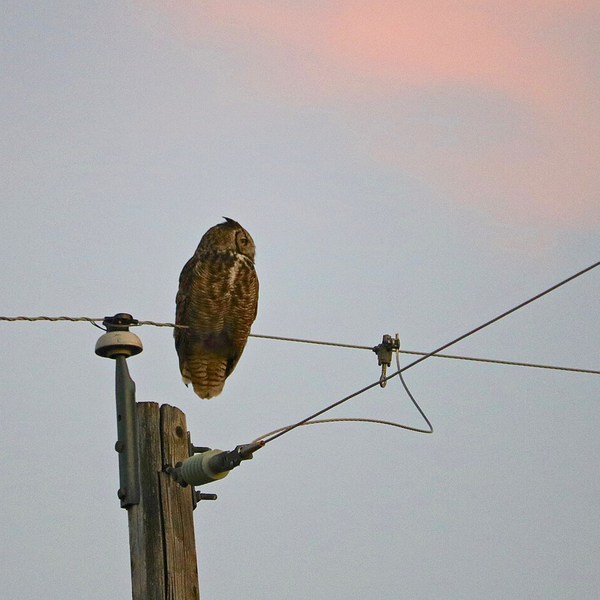
Bird Watching Log
Species: Great Horned Owl (Bubo virginianus)
| Great Horned Owl (Ear Tufts Seen: Yes / No — Hoots Heard: Yes / No — Duet: Yes / No — Old Stick Nest Present: Yes / No — Time: ___) | |