
Northern Bobwhite
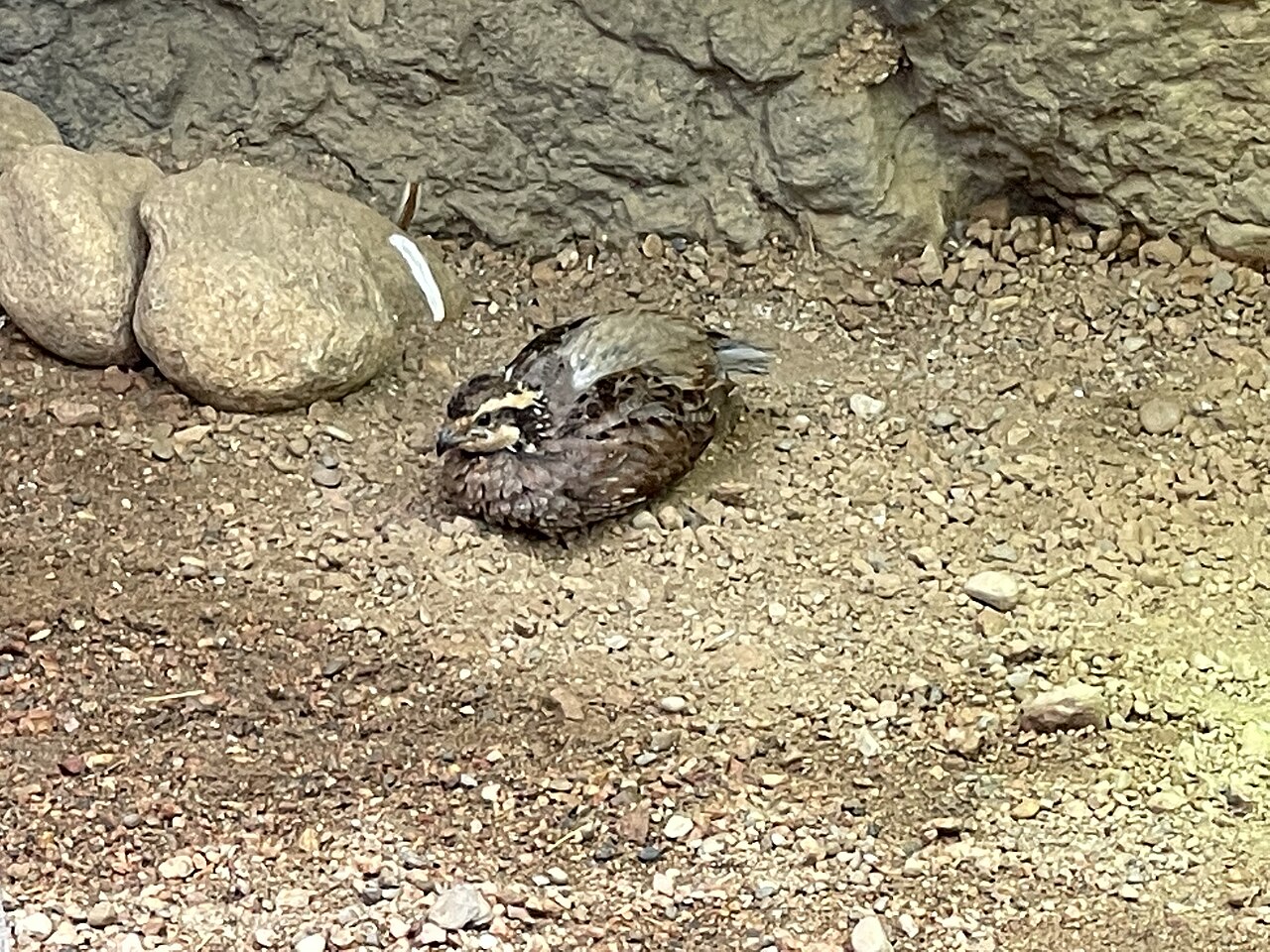


Northern Bobwhite (Colinus virginianus): Complete Identification, Habitat Guide & Call Library
Quick Answer: How to Attract & Identify the Northern Bobwhite
The Northern Bobwhite (Colinus virginianus) is the whistling quail of eastern and southern fields — a plump, chicken-footed ground bird whose ringing bob-WHITE! call once scored every farm summer. The male wears a bold white throat and eyebrow stripe; the female is buffy camouflage. They live in family coveys that roost in a circle and explode outward when flushed. Decades of tidy farming have cost them dearly — which makes rural yards with hedgerows, brush piles, and scattered millet or cracked corn genuine conservation habitat. They share the field edge with the Eastern Meadowlark and the Song Sparrow.
Species Physical Profile & Morphometrics
The Northern Bobwhite belongs to the New World quail family (Odontophoridae) — the American branch of ground game birds — and is the only native quail across most of the eastern half of the country. It is a bird of edges: fence lines, hedgerows, weedy field borders, and brushy corners between cover and open ground.
The identification formula: small, plump, short-tailed ground bird + mottled rusty-brown plumage + the male’s white throat and eyebrow (buff on the female). Usually you hear it first — the clear two-note bob-WHITE whistled from a fence post. Flushed, a covey explodes in whirring bursts and glides to cover. In the East there is nothing to confuse it with; in Texas, watch for the scaled and masked lookalikes at the range edge.
Essential Morphometric Field Marks:
- Body Length & Mass: 9.4 to 11.0 inches (24–28 cm) and 4.6 to 6.1 ounces (129–172 grams) — a plump, round little chicken with a short tail and strong scratching legs.
- Wingspan: 13.0 to 15.0 inches (33–38 cm); flight is a whirring burst into cover — explosive over a few dozen yards, never a commuter. Walking is the way of life.
- Bill Structure & Color: A short, stout dark bill — a seed-picker and bug-snatcher sized for weed seeds, waste grain, and summer insects.
- Color Pattern: Mottled rusty-brown and gray overall, intricately barred and speckled; the male wears a white throat and bold white eyebrow stripe framed in black; the female repeats the pattern in warm buff. Both carry a small peak of crown feathers, raised when alert.
- Male vs. Female: The face tells it: white throat and brow = male; buff throat and brow = female. She incubates the big ground nest of a dozen-plus eggs; he whistles his name from the fence post all summer long.
The white-faced whistler: bold black-and-white head pattern, rusty-mottled body, and the summer-long job of announcing his name from elevated posts — bob-WHITE, bob-WHITE — while the covey works the hedgerow below.
The buff-faced anchor — the male’s bold whites traded for warm buff that vanishes against dead grass. She incubates a dozen or more eggs in a grass-roofed ground scrape and leads the whistling, ball-of-fluff chicks to insect hunting within hours of hatch.
Northern Bobwhite Vocalization Guide (3 Field Recordings)
The Northern Bobwhite is named for its voice: a clear, ringing, two-note bob-WHITE! whistled from fence posts and low branches from spring through summer, plus the soft hoy-lee covey call that reassembles scattered birds. All recordings below are real field audio via Wikimedia Commons — no simulations. For a deeper library, browse xeno-canto: Northern Bobwhite.
1. The Bob-WHITE
2. The Covey Call
3. The Summer Soundtrack
Habitat, Range & the Vanishing Hedgerow
The Northern Bobwhite lives on edges: the brushy border between woods and field, the weedy fence line, the hedgerow, the overgrown corner. It needs cover within a dash of open feeding ground — grass seed and insects in the open, dense shrubs or briars to dive into. Modern clean farming erased the edges; rural and semi-rural yards that keep them are the species’ frontier.

The Farm Country Voice That Faded
The bobwhite’s range covers the eastern half of the United States from the Great Lakes to the Gulf and west to the Great Plains, plus Mexico — but the map hides the story: populations have fallen steeply for decades as hedgerows were cleared, hay mowed early, and fields consolidated.
For backyard birders the message is hopeful: bobwhites persist and rebound wherever edge habitat returns — rural yards with brushy borders, weedy corners, and scattered grain can hold a covey, and coveys near people grow remarkably confiding. Every brush pile is a vote for the bob-WHITE.
Backyard Behavioral Patterns & Social Dynamics
The Northern Bobwhite is family values with feathers — the covey is everything. Four behaviors explain most of what you will observe:
⭕ The Covey Circle
Fall and winter bobwhites live in coveys of about a dozen that roost on the ground in a circle — tails inward, heads outward — so a flush explodes in every direction at once, a living fireworks shell that confuses any hawk.
📣 The Name Caller
The male whistles his name — bob-WHITE — from elevated posts hundreds of times a day through the breeding season, one of the few birds an entire continent learned by ear before ever seeing it.
🐛 The Insect Switch
Adults eat mostly seeds and green matter, but the chicks need protein: for their first weeks the brood hunts insects — beetles, grasshoppers, caterpillars — and the hen leads them to the bug-rich edges at dawn and dusk.
❄️ The Hard-Winter Circle
Coveys survive cold by huddling beak-out in their roost circle, sharing body heat through the night; in severe winters a covey that can’t feed in snow melts away — which is why scattered grain near cover can matter so much in January.
Problem: “Bobwhites Used to Whistle Here Every Summer — Now Nothing. Can I Bring Them Back?”
The three most common Northern Bobwhite questions all have proven answers:
First, the vanished whistle: the cause is usually habitat arithmetic — clean fence lines, early-mowed hay, and wall-to-wall crops removed the edges; restoring hedgerows, weedy corners, and late mowing brings the whistle back, sometimes within two seasons. Second, the cat and mower problem: ground nests and slow chicks are vulnerable — keep cats indoors, delay mowing until August, and leave the odd corner unshorn; one safe corner can fledge a brood. Third, the winter crash: coveys in snow country starve when seed locks under ice — a little cracked corn or millet scattered beside dense cover through hard weather carries a covey to spring. Bobwhites reward habitat faster than almost any bird: build the edge and the whistle follows.
Method 1: Set the Table — Grain Within a Dash of Cover
Design for a cover-loving, edge-feeding covey:
-
Scatter Millet & Cracked Corn at Edges
White millet, cracked corn, and small grain scattered along brushy edges — never mid-field — is the classic bobwhite spread, sized for their bills and placed where one sprint reaches safety.
-
Feed the Spill Zone
Bobwhites clean up the millet and cracked grain under hanging feeders — a busy feeder station with a brushy edge nearby feeds the covey for free.
-
Time a Morning Scatter
Coveys feed early — a set handful at dawn near the same brush line teaches the covey your yard’s schedule and buys you a front-row seat within weeks.
-
Provide Ground-Level Water
A shallow dish at ground level near cover gets daily visits in dry spells — quail drink reliably where they can drink safely.
Method 2: Build the Habitat — Edges, Brush Piles & Late Mowing
Build the edge, and the whistle returns:
-
Plant or Keep a Brushy Border
Hedgerows, briar tangles, and dense shrub borders along field edges are bobwhite infrastructure — escape cover, nesting sites, and winter shelter in one strip.
-
Build a Brush Pile
Prunings stacked loosely in a corner make a five-star covey shelter — instant cover inches from the feeding zone, predator-baffling and free.
-
Delay Haying Until August
Early mowing is the silent nest-killer — mow field edges and hay strips after late July, leaving part standing through winter for seed and shelter.
-
Keep Cats Indoors
Ground birds and free-roaming cats don’t mix — indoor cats are the single biggest survival upgrade for a covey with chicks, and for the whistler on the fence post.
Tool Solution: Recommended Hardware for Northern Bobwhite
Equipment matched to an edge-loving ground bird:
Edge-Line Ground Scatter
Millet and cracked corn scattered along a brushy border at a set morning hour — no hardware required, just the right place.
- • Seed: Millet, cracked corn
- • Placement: 2–3 ft from cover
- • Timing: Early morning
The Brush Pile
Loose-stacked prunings in a corner — free, instant, and the fastest way to add quail-grade cover to any rural yard.
- • Build: Loose limbs, 4–6 ft wide
- • Location: Edge of feeding zone
- • Cost: Free
Shallow Ground Dish
A shallow ground-level water dish near cover — daily visits in dry summer, and in hard winters a scatter of grain beside it can carry the covey through.
- • Depth: 1–2 in, stable
- • Placement: Beside brush cover
- • Winter: Break ice mornings
Frequently Asked Questions
- Species Profile: The Northern Bobwhite (Colinus virginianus) is a 9.4–11.0 inch, 4.6–6.1 ounce New World quail (Odontophoridae), band code NOBO — the whistled voice of eastern field edges.
- ID in One Look: Plump rusty-mottled ground bird; male with a bold white throat and eyebrow, female in warm buff; coveys that explode outward when flushed.
- The Sound: The ringing bob-WHITE whistle plus the soft hoy-lee covey call; real field recordings above.
- Range & Habit: Eastern half of the U.S. in brushy field edges; strictly resident, with steep declines where hedgerows vanished.
- Feeder Formula: Millet and cracked corn scattered at dawn beside dense cover, ground-level water, and an unswept feeder spill zone.
- The Edge Rule: Hedgerows, brush piles, late mowing, indoor cats — build the edge and the whistle returns.
Bird Watching Log
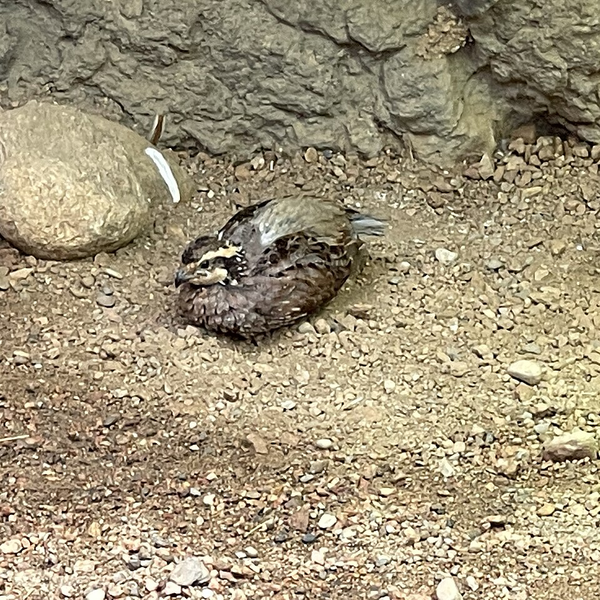
Species: Northern Bobwhite (Colinus virginianus)
| Northern Bobwhite (bob-WHITE Heard: Yes / No — Covey Size: ___ — Face: White / Buff — Flushed: Yes / No — Edge Type: Hedgerow / Brush Pile / Field) | |