
Pinyon Jay
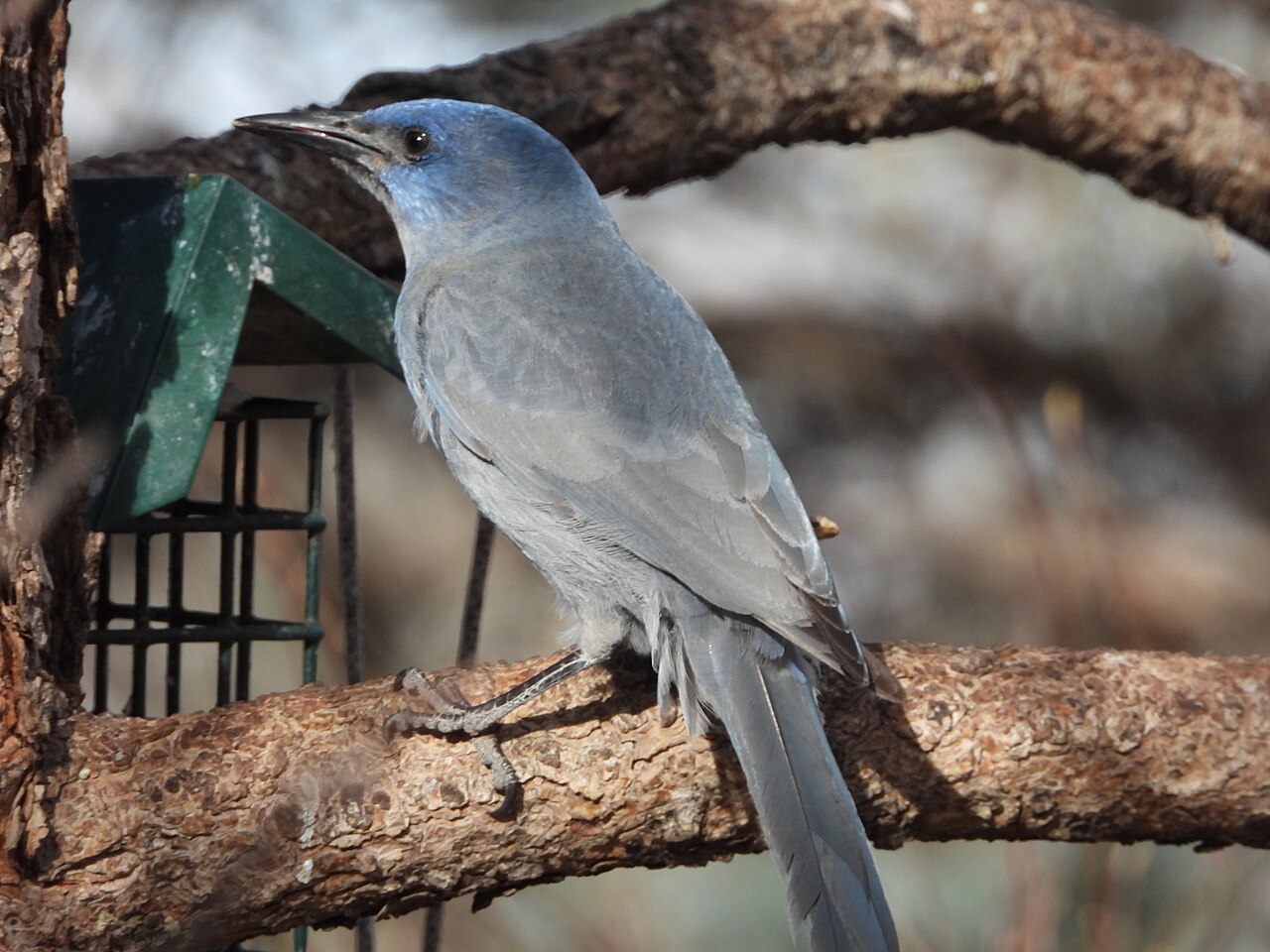
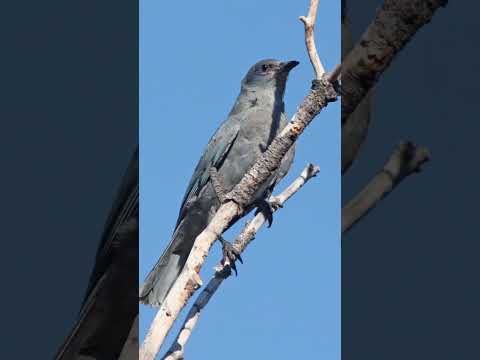


Pinyon Jay (Gymnorhinus cyanocephalus): Complete Identification, Habitat Guide & Sound Library
Quick Answer: How to Attract & Identify the Pinyon Jay
The Pinyon Jay (Gymnorhinus cyanocephalus) is the all-blue nomad of the pinyon-juniper woods — dusty blue from crown to tail with a long spike bill built for pinyon pine seeds. It lives in noisy flocks of hundreds that wander the interior West tracking cone crops, each bird caching thousands of seeds and unwittingly planting future forests. The voice is a nasal, far-carrying kraaa. Yards in pinyon country attract them with sunflower seed, whole corn, water, and native pinyon pines. They share the woodland with the Woodhouse’s Scrub-Jay and the Clark’s Nutcracker.
Species Physical Profile & Morphometrics
The Pinyon Jay belongs to the crow and jay family (Corvidae) and is permanently tied to pinyon-juniper woodland across the interior West. Highly social and nomadic, it wanders hundreds of miles between cone crops, and its population is declining as pinyon woodland shrinks.
The identification formula: uniform dusty blue + short tail + long straight spike bill + flock. A Woodhouse’s Scrub-Jay has a white belly, blue wings and tail, and a gray back patch; a Pinyon Jay is blue everywhere. If a noisy flock of blue birds pours over the ridge, it is Pinyon Jays.
Essential Morphometric Field Marks:
- Body Length & Mass: 9.0 to 10.6 inches (23–27 cm) and 2.9 to 3.5 ounces (84–99 grams) — a slim, long-winged jay built for long nomadic flights.
- Wingspan: 18.1 inches (46 cm); flocks travel in rolling streams, birds at the rear constantly leapfrogging those at the front.
- Bill Structure & Color: A long, straight, spike-like black bill — deeper than a scrub-jay’s, designed to pry into pinyon cones and husk seeds whole.
- Color Pattern: Dusty blue overall, brighter on the head and wings, paler on the throat with faint streaking; no white, no crest, no pattern — the plainest jay in the West.
- Male vs. Female: The sexes look alike — the male averages slightly deeper blue; flock membership, not plumage, defines this bird’s life.
The blue harvester: hammering a green cone with his spike bill, husking seeds at speed, and carrying a throat pouch full of pine nuts to bury across the hillside.
Identically blue — she nests colonially with the flock in spring, her nest tucked in a juniper, fed by the male while she incubates through high-country cold snaps.
Pinyon Jay Vocalization Guide (1 Field Recording)
The Pinyon Jay’s voice is a nasal, high kraaa or kaah — flock calls that roll across the woodland as the flock rolls with them. All recordings below are real field audio via Wikimedia Commons — no simulations. For a deeper library, browse xeno-canto: Pinyon Jay.
1. The Nasal Kraaa
2. The Flock Chorus
3. The Rolling Wave
Habitat, Range & the Pinyon Woodland
The Pinyon Jay lives in pinyon-juniper woodland: the vast open woodland belt of the interior West, plus adjacent sagebrush, ponderosa edges, and the rural yards and ranchlands that sit within it. Its whole life is written in pinyon pine cones.

The Pinyon Belt’s Blue Nomad
The range covers the interior West: from central Oregon and Montana’s southwest south through Nevada, Utah, and Colorado to Arizona and New Mexico — the pinyon-juniper belt. Within it, flocks wander nomadically, abandoning played-out cone crops for booming ones hundreds of miles away.
For backyard birders: yards inside the pinyon belt may host a flock of fifty at the platform feeder one autumn and none the next — cone crop years write the calendar. Water, sunflower, and native pinyons keep you on the flock’s map.
Backyard Behavioral Patterns & Social Dynamics
The Pinyon Jay is a flock-living, forest-planting nomad. Four behaviors explain most of what you will observe:
🌲 The Forest Planter
Each bird caches thousands of pinyon seeds in the soil each fall and retrieves most — the forgotten remainder germinates, making this jay the chief planter of the pinyon forest.
🌊 The Rolling Flock
Flocks move in leapfrog waves — rear birds fly over the front, calls rolling with them — a feeding method that sweeps a woodland clean in hours.
👜 The Throat Pouch
An expandable esophagus lets one bird carry dozens of seeds at once — a built-in seed sack for the commute from cone crop to caching ground.
🏘️ The Colonial Nester
Pairs nest loosely colonially within the flock’s range, timed to cached food — late winter nests are fed from fall’s buried pine nuts.
Problem: “A Huge Blue Flock Emptied My Feeders, Then Vanished. What Should I Do?”
The three most common Pinyon Jay puzzles all have proven answers:
First, the boom-and-bust visits: the flock follows cone crops, not calendars — note the year; flocks return to reliable yards each time the local pinyons crop well. Keep water constant and seed stocked in fall, and your yard stays on the circuit. Second, the identity check: a single silent blue bird is usually a scrub-jay — Pinyon Jays travel in flocks and call constantly; count birds and listen before you log. Third, the feeder drain: a hundred jays empty a tube feeder in minutes — switch to large platform trays with sunflower and whole corn, spread in two or three spots, and enjoy the spectacle rather than rationing it.
Method 1: Set the Table — Platform Seed & Dependable Water
Design for a flocking, nomadic jay:
-
Use Large Platform Trays
Big open platform feeders with black-oil sunflower and whole corn — flock-sized portions for a flock-sized guest list.
-
Provide Generous Water
A large ground-level basin or stock tank, scrubbed weekly — dry-country flocks remember water sources across seasons.
-
Feed in Fall & Winter
Peak visits come August–February when the flock commutes between cones and caches — keep trays full then.
-
Scatter Some on the Ground
Ground scattering under shrubs suits their natural foraging — they bury surplus seeds in your soil, free of charge.
Method 2: Build the Habitat — Pinyon Pines & Woodland Edge
Keep the woodland standing, and the blue waves return:
-
Plant & Protect Pinyon Pines
Native pinyon pines and junipers are the entire ecology — every mature pinyon is a future flock’s harvest.
-
Keep Woodland Edges Open
Pinyon Jays favor open woodland with scattered trees — resist the urge to clear-cut or over-thin.
-
Leave Fallen Cones
Fallen cones and seed litter in autumn are the natural table — rake the lawn, not the woodland floor.
-
Tolerate the Noise
A feeding flock is loud and brief — an hour of nasal chaos is the price of hosting the West’s most sociable jay.
Tool Solution: Recommended Hardware for Pinyon Jay
Equipment matched to a flocking woodland nomad:
Large Platform Feeder
A big sturdy tray with sunflower and whole corn — sized for the day fifty blue guests arrive at once.
- • Food: Sunflower, whole corn
- • Style: Large platform
- • Peak: August–February
Ground Water Basin
A large shallow basin kept full — in pinyon country, water is the flock’s true north.
- • Size: Large & shallow
- • Care: Weekly scrub
- • Placement: Open sightlines
Native Pinyon Pines
Pinyon pines on the lot — slow-growing, but the only investment that feeds flocks for a century.
- • Trees: Pinyon pine, juniper
- • Timeline: Generational
- • Bonus: Scrub-jays & nutcrackers
Frequently Asked Questions
- Species Profile: The Pinyon Jay (Gymnorhinus cyanocephalus) is a 9.0–10.6 inch, 2.9–3.5 ounce corvid (Corvidae), band code PIJA — the all-blue nomad of the pinyon woods.
- ID in One Look: Uniform dusty blue, short tail, long spike bill, and almost always a flock.
- The Sound: Nasal kraaa calls rolling through a moving flock; real field recordings above.
- Range & Habit: Interior West pinyon-juniper belt; nomadic with cone crops; each bird caches thousands of seeds and plants the forest.
- Feeder Formula: Large platform trays with sunflower and corn, generous water, and standing pinyons.
- The Forest Planter: Every forgotten seed cache is a future pine — hosting the flock hosts the woodland itself.
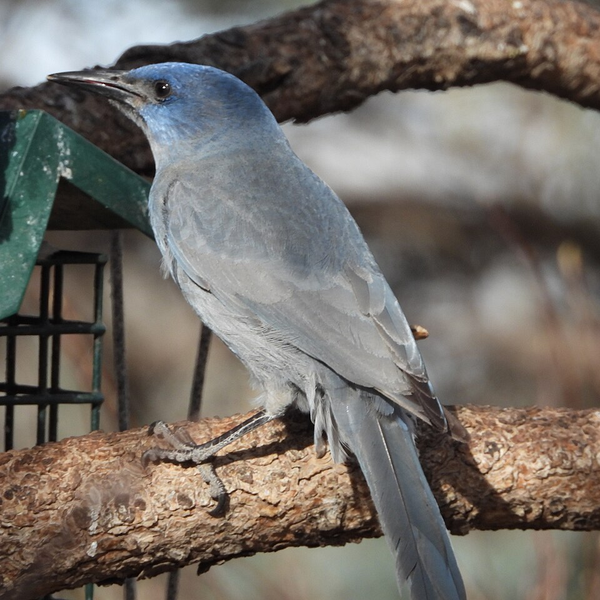
Bird Watching Log
Species: Pinyon Jay (Gymnorhinus cyanocephalus)
| Pinyon Jay (Flock Size: ___ — Spike Bill Seen: Yes / No — Caching Seen: Yes / No — At Water: Yes / No — At Platform: Yes / No — Date & Time: ___) | |