
Common Raven


Common Raven (Corvus corax): Complete Identification, Feeder Guide & Call Library
Quick Answer: How to Attract & Identify Common Ravens
The Common Raven (Corvus corax) is the hawk-sized, entirely black corvid of western wildlands, northern forests, mountains, and desert canyon country — massive bill, shaggy throat hackles, wedge-shaped tail, and a deep, echoing “kraaak”. To attract a territorial pair: serve meat scraps, eggs, whole corn, and unsalted nuts on a large, rigid ground platform at the same time each day, with a wide shallow water pan nearby — and be patient, because ravens are famously wary of anything new. It shares wild country with the Black-billed Magpie and the Steller’s Jay.
Species Physical Profile & Morphometrics
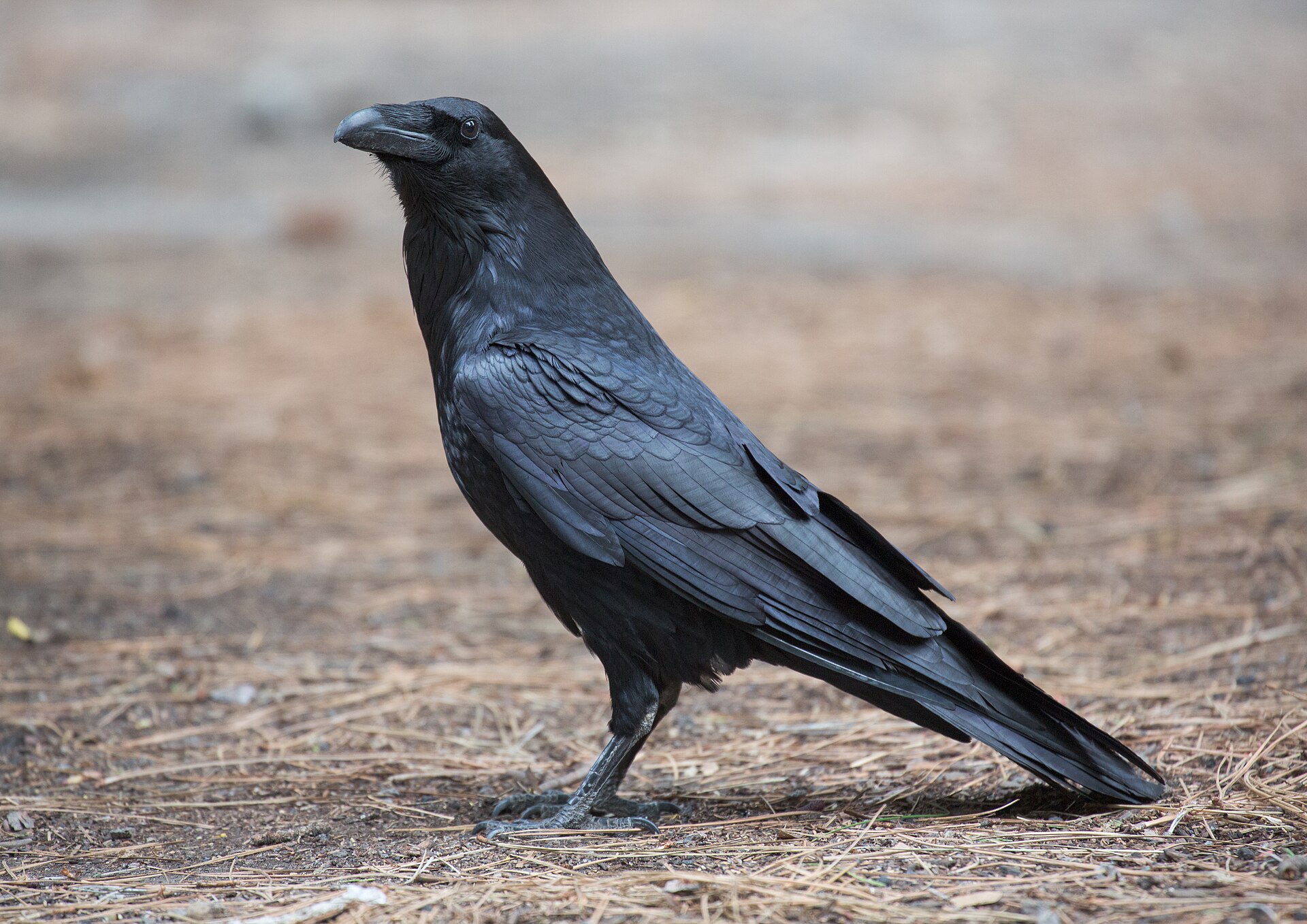
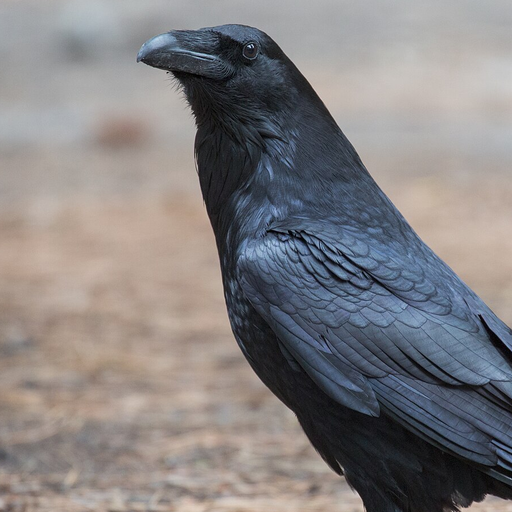
The Common Raven is the largest songbird in North America — an all-black member of the crow and jay family (Corvidae) that is genuinely the size of a Red-tailed Hawk. Everything is black: the massive bill with its brush of nasal bristles, the body, the legs, the tail. In good light the plumage flashes a blue-purple iridescence, and the throat carries a shaggy mane of elongated feathers called hackles that puff out when the bird calls.
The identification formula: huge size + massive bill + shaggy throat + wedge tail + soaring flight + deep croak. The one bird it gets confused with is the American Crow — barely half its weight, fan-tailed, and sharp-voiced. In the Southwest also check the smaller Chihuahuan Raven, best separated by range and its crow-like voice.
Essential Morphometric Field Marks:
- Body Length & Mass: about 22 to 27 inches (56–69 cm) and 24.7 to 57.3 ounces (700–1625 grams) — nearly twice the bulk of an American Crow, and unmistakably hawk-sized overhead.
- Wingspan: about 45.7 to 46.5 inches (116–118 cm); ravens soar on flat wings between slow, deep flaps — crows almost never soar.
- Bill Structure & Color: A massive, deep, all-black bill — heavier and more curved than any crow’s — with stiff nasal bristles, built to tear hide and sinew from a carcass.
- Color Pattern: Entirely black with blue-violet iridescence; throat hackles shaggy and often flared. Tail wedge-shaped in flight — the single best flight mark — with long, deeply fingered primaries.
- Male vs. Female: The sexes look identical — males average larger. Pairs mate for life and hold their territory together through every season.
Same uniform, bigger frame: plumage identical to the female, averaging larger and heavier-billed. He leads the pair’s soaring display flights over the territory — barrel rolls, dives, and dangling objects caught mid-air — and brings food to the incubating female.
Same uniform, the early nester: identical plumage. She builds the big stick nest on a cliff ledge, bridge, or tall tree and incubates the 3–7 greenish, blotched eggs for about 20–25 days — often starting in February, brooding through late-winter snow.
Common Raven Vocalization Guide (4 Field Recordings)
The raven’s voice is the sound of wild country: a deep, resonant croaking “kraaak” or “gronk-gronk” that carries across canyons, plus knocking notes, rattles, and soft gurgles exchanged between mates. All four recordings below are real field audio hosted on Wikimedia Commons — two by Jonathon Jongsma (mirrored from xeno-canto) and two from U.S. National Park Service sound libraries — no simulations. For a deeper library, browse xeno-canto: Common Raven.
1. The Flyover Croak
2. The Hidden Perch Call
3. The Geyser Basin Duet
4. The Teton Canyon Call
Habitat, Range & the Human Landscape
The Common Raven owns the wild and open North America: mountain ranges, coniferous and hardwood forests, sagebrush steppe, desert canyon country, rocky coasts, and northern tundra. Unlike the crow, it thrives away from cities — though in the West it has learned campgrounds, park picnic areas, and rural ranch yards, and pairs are steadily reclaiming parts of the eastern mountains they lost a century ago.

West, North, and Back East
The range blankets the western half of the continent, Alaska, Canada, and the Appalachians, with a strong return underway into northeastern forests. Ravens are non-migratory: adult pairs hold their cliff or tree territory through the harshest winters, incubating eggs as early as February while snow is still on the ground.
Backyards score best with big open sky, mature trees or cliffs nearby, and wild country at the edge of town. A raven pair’s territory can cover miles, but the birds patrol it daily — a yard that offers meat scraps at 8 a.m. will have two black shapes circling in by 8:05.
Backyard Behavioral Patterns & Social Dynamics
The Common Raven is widely ranked among the most intelligent birds on Earth — it plans ahead, solves multi-step problems, and plays. Four behaviors explain most backyard encounters:
🪂 The Aerial Acrobat
Ravens fly for fun: barrel rolls, somersaults, dives with wings folded, and seconds-long stretches of upside-down flight, often carrying a stick or bone and dropping it just to catch it mid-air. They also slide down snowy roofs and slopes — play behavior with no payoff but the play itself.
💞 The Lifelong Pair
Ravens mate for life and defend a permanent territory together. Watch for the pair soaring wingtip-to-wingtip, the soft gurgling duets at close range, and mutual preening on a shared perch — the two birds working your platform in April have likely been partners for years.
🦴 The Carcass Crew & the Cache
Carrion is the raven’s core trade, and surplus is cached in scattered hiding spots the bird remembers for days — while pretending to cache in fake spots when other ravens watch. If the big black visitor buries a chunk of suet under your mulch, it knows exactly where it left it.
🐺 The Wolf Partnership
In wild country ravens shadow wolves, coyotes, and eagles to carcasses — Yellowstone studies found ravens arrive within minutes of a wolf kill, and wolves tolerate dozens of them at the feast. Ravens even call loudly over carrion they cannot open themselves, recruiting bigger jaws to do the work.
Problem: “The Ravens Scare Off My Songbirds, Empty the Feeder, and Hog the Suet. Can I Fix That?”
The three most common Common Raven complaints all have workable answers:
First, the intimidation factor: a raven on the platform clears every smaller bird for a hundred feet — the fix is separate feeding zones, with the raven’s big tray at the far end of the yard and tube feeders near cover for the small birds. Second, the nest raiding worry: ravens do take eggs and nestlings, but research consistently finds habitat loss and free-roaming cats vastly outweigh corvids as causes of songbird decline — and a pair on its own territory actually drives off the wandering young ravens that do most casual raiding. Third, the emptied feeder: a bird that can weigh three pounds eats like one — serve a measured portion once a day at a set time instead of an all-day buffet, and the pair arrives on schedule, eats, and moves on. Accept that you cannot outsmart a raven; you can only negotiate with one.
Method 1: Set the Table — Platform, Protein & Corn
Design for a hawk-sized, ground-feeding, carrion-leaning omnivore:
-
Lead with Real Protein
Meat scraps, suet chunks, dry pet kibble, and hard-boiled or scrambled eggs (shell and all) are raven staples — the closest match to the carrion diet the species was built on. Keep everything plain: nothing salted, seasoned, fried, or spoiled, and only what disappears within the hour.
-
Add Whole Corn and Nuts
Whole dried corn and unsalted peanuts or walnuts give the pair something to grab, carry, and cache — watching a raven shell a peanut or stash a corn cob under a rock is half the reward of feeding one.
-
Use a Big Rigid Platform
A raven will not touch a tube feeder. A large, rigid, ground-level or post-mounted platform that can take three-plus pounds of landing force is the only serving style this species trusts — swept bare ground works too.
-
Feed on a Schedule, in Portions
Same time, same spot, measured amount — a territorial pair learns the routine within days and times its daily patrol to it. Rationing keeps visits brief, the platform clean, and the local magpies from inheriting the leftovers.
Method 2: Build the Trust — Water, Space & Patience
With ravens, respect for their wariness is the attraction strategy:
-
Offer a Wide, Shallow Water Pan
Ravens drink and bathe daily where water allows, and a big ground-level pan near the feeding spot is used on every visit. In freezing country a heated basin makes your yard the pair’s most reliable winter stop.
-
Give Them Open Sky and a Lookout
Ravens approach across open ground with a clear view, landing first on a tall snag, fence post, or roof peak to inspect the scene. A visible perch 20–40 feet from the platform is the staging post every visit starts from.
-
Respect the Neophobia
Ravens are famous for fearing new things — a fresh feeder can be ignored for days while the pair circles it. Set the platform out, leave it unchanged, and let curiosity win; once accepted, it becomes a fixture on their daily route.
-
Keep the Wild Edge Wild
Mature conifers, cliffs, and undisturbed corners supply nest and roost sites. Skip the rodent poison and lead tackle — scavengers concentrate toxins — and an untreated acreage feeds the rodents and insects that keep a pair resident year-round.
Tool Solution: Recommended Hardware for Common Ravens
Equipment matched to a heavy, wary, protein-loving corvid:
Heavy-Duty Platform / Ground Tray
A large rigid platform or reinforced ground tray — the only serving style a raven trusts, sized for meat scraps, eggs, corn, and nuts, stout enough for a three-pound landing, and easy to hose down daily.
- • Food: Meat scraps, eggs, corn, nuts, kibble
- • Style: Large rigid tray, drain holes, solid mount
- • Placement: Open ground with clear sightlines
Wide Shallow Ground Water Pan
A big shallow pan set on open ground near the platform — ravens drink and bathe on every visit; in northern winters a heated basin becomes the territorial pair’s most dependable stop.
- • Depth: 1–2 in, extra-wide diameter
- • Extras: Heater for freezing climates
- • Placement: Beside the platform, open view
Heavy-Gauge Suet Cage
A firmly mounted, heavy-gauge suet cage for plain suet blocks and fat trimmings — a winter protein draw ravens hammer between carcass runs, shared with magpies, jays, and woodpeckers.
- • Food: Plain suet blocks, fat trimmings
- • Style: Heavy gauge, solid mount
- • Ration: One block at a time, mornings
Frequently Asked Questions
- Species Profile: The Common Raven (Corvus corax) is a 22–27 inch, 700–1625 gram corvid (Corvidae) of western wildlands, northern forests, and mountain country — entirely black, massive bill, wedge-shaped tail, band code CORA.
- ID in One Look: Hawk-sized + shaggy throat + wedge tail + soaring flight + deep “kraaak”; nearly twice an American Crow’s bulk, and the tail is pointed where the crow’s is fanned.
- Year-Round Resident: Ravens do not migrate — pairs hold territories through Arctic winters and nest as early as February, brooding eggs through late-winter snow.
- The Sound: A deep, echoing croak plus knocks, rattles, and gurgles — four real field recordings above, from campsite flyovers to Yellowstone’s geyser basins.
- Feeder Formula: Meat scraps, eggs, whole corn, and unsalted nuts on a big rigid platform at the same time daily, plus a wide shallow water pan — and patience, because ravens distrust anything new.
- The Genius of the Family: Ravens play (barrel rolls, snow slides), cache food and remember it, mate for life, and shadow wolves to carcasses — among the most intelligent birds on Earth.
Bird Watching Log
Species: Common Raven (Corvus corax)
| Common Raven (Pair or Solo: ___ — Croaking: Yes / No — Soaring: Yes / No — Platform Visited: Yes / No) | |