
Dark-eyed Junco



Dark-eyed Junco (Junco hyemalis): Complete Identification, Feeder Guide & Call Library
Quick Answer: How to Attract & Identify Dark-eyed Juncos
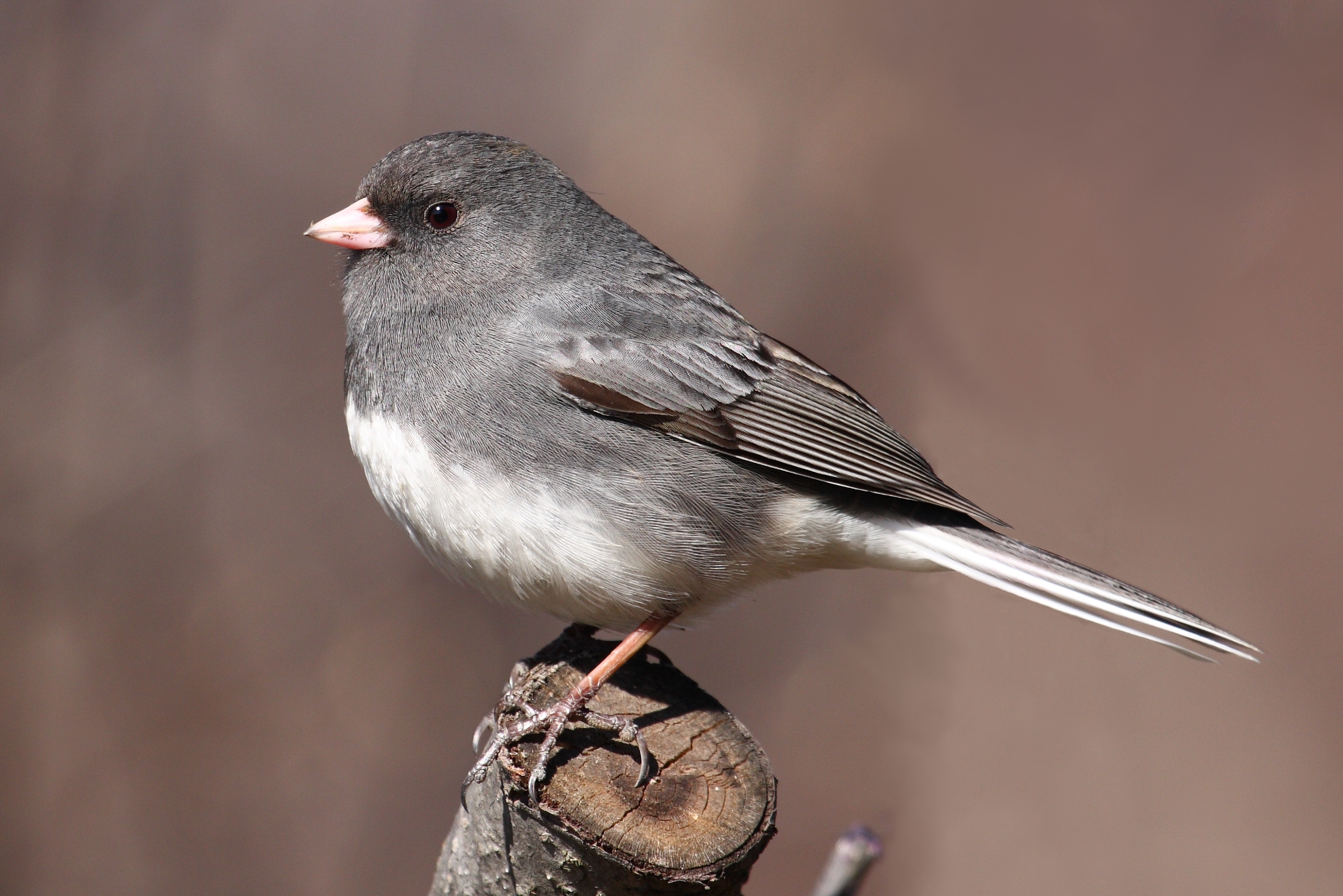
The Dark-eyed Junco (Junco hyemalis) is America’s classic “snowbird” — a plump, round-headed little sparrow with a dark hood, white belly, pink bill, and white outer tail feathers that flash when it flies. Eastern birds are slate-gray; western “Oregon” birds wear a dark hood with a rusty brown back. Juncos are ground feeders: they hop and scratch through leaf litter, and at feeders they want seed scattered on the ground or on a low platform — white proso millet is the favorite. They breed in northern and mountain forests, then pour into backyards with the first snow. Listen for the sharp “tick” calls of the flock and the musical spring trill.
Species Physical Profile & Morphometrics
The Dark-eyed Junco belongs to the New World sparrow family (Passerellidae) — not a finch at all, despite sharing the feeder with them. It is one of the most common and most studied backyard birds on the continent.
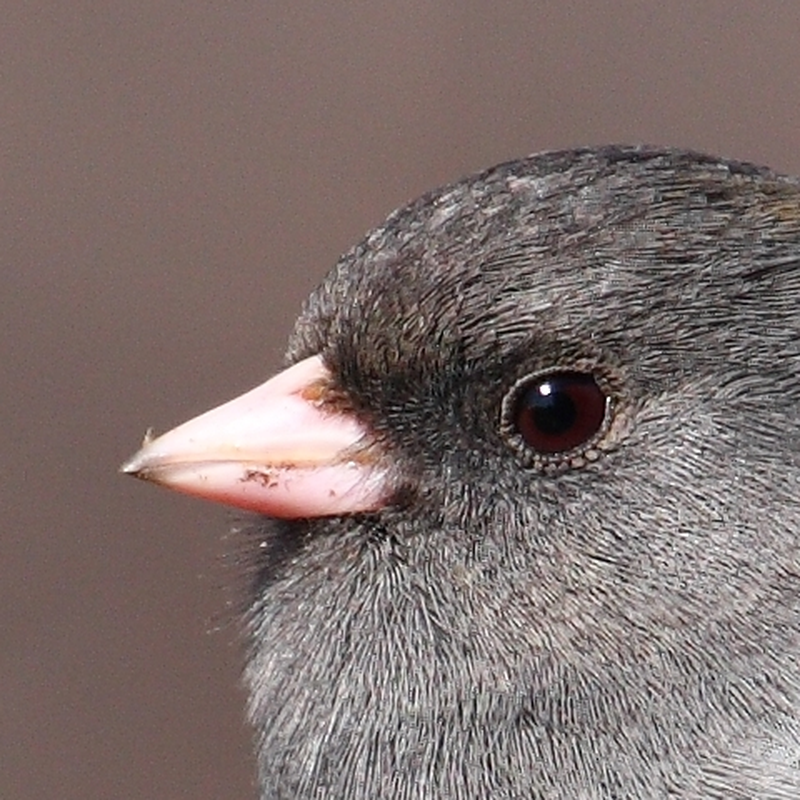
The identification formula is simple: dark hood + white belly + pink bill + white tail flashes. The hood ends abruptly at the breast like a bib, and the white outer tail feathers fan out on every takeoff — the mark that settles it from any other little gray bird.
Essential Morphometric Field Marks:
- Body Length & Mass: 5.5 to 6.3 inches (14–16 cm) and 0.6 to 1.1 ounces (18–30 grams) — plump and round-headed, bigger than a chickadee, smaller than a cardinal.
- Wingspan: About 7.1 to 9.8 inches (18–25 cm), with a low, flashing flight between ground and shrub.
- Bill Structure & Color: A small, neat conical bill in pale pink — unmistakable against the dark hood at close range.
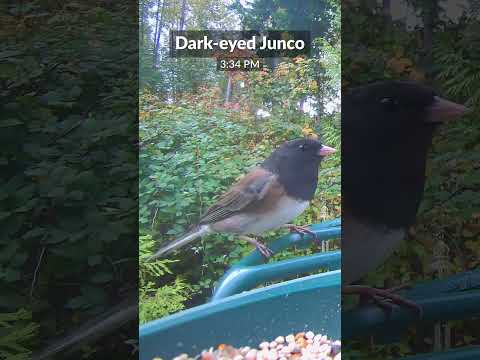
- Color Pattern: Slate-colored (East): smooth gray hood and back, clean white belly. Oregon (West): blackish hood, rusty brown back, pinkish-buff flanks. All groups flash white outer tail feathers in flight. Females are simply browner and paler than males.
Smooth charcoal-gray hood, back, and wings ending in a crisp line above a clean white belly, with a pink bill and white-edged tail. Western males of the Oregon group swap the gray for a black hood and rusty brown back.
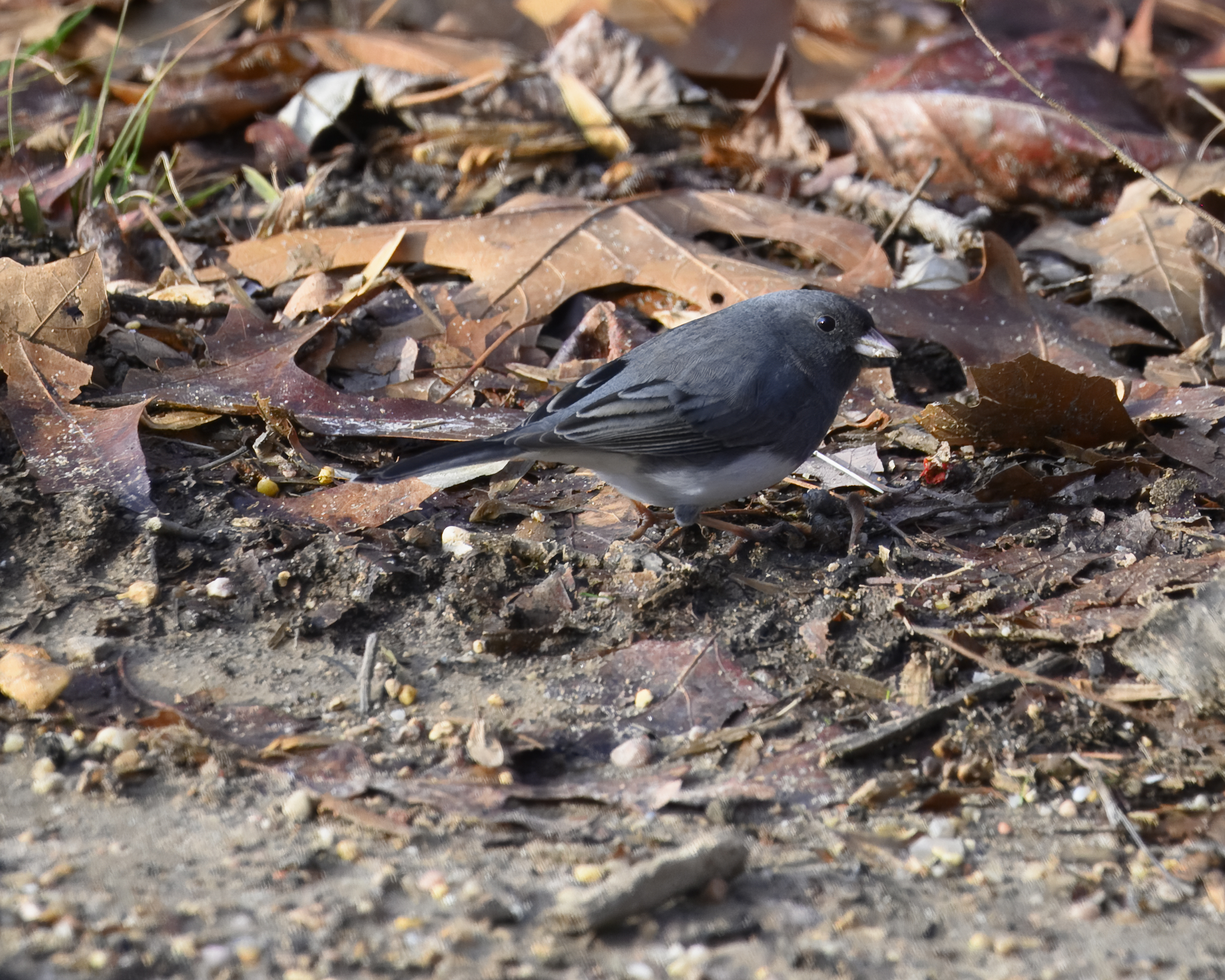
Same pattern, softer paint — the hood is brownish-gray instead of charcoal, the back browner, the contrast gentler. The pink bill and flashing white tail feathers are identical, so the identification formula never changes.
Dark-eyed Junco Vocalization Guide (2 Field Recordings + 1 Simulation)
The song is a simple, ringing trill on one pitch — a musical jingle delivered from a spring perch. Around the feeder, the everyday sound is a sharp, dry “tick” or “smack” call passed around the flock. The first two cards below are real field recordings shared under Creative Commons licenses; the third is a clearly labeled acoustic simulation of the trill song. For more wild audio, browse xeno-canto: Dark-eyed Junco.
1. Real Recording — Natural Trill Song
2. Real Recording — Flock Songs and Calls
3. Song Simulation — The Jingle-Bell Trill
Habitat, Range & the Snowbird Season
Dark-eyed Juncos breed in coniferous and mixed forests across Canada, Alaska, the western mountains, and the Appalachians — then move south and downhill in fall to spend winter in wood edges, parks, and backyards across most of the United States.

They Arrive With the Snow
The blue winter band covers nearly the whole country — that is why juncos feel like everyone’s snowbird. They flood south in October, flock under feeders all winter, and slip back to the breeding forests in April.
In the West and along the Appalachians, purple year-round pockets mean juncos may never leave at all — your winter flock and your summer singers can be neighbors, not travelers.
Backyard Behavioral Patterns & Social Dynamics
The Dark-eyed Junco is a busy, polite ground bird with a few signature habits. Four behaviors explain most of what you will observe:
❄️ The Snowbird Clock
Juncos arrive with the first cold snap and leave with the thaw — so reliably that generations of watchers used them to mark the season. First junco of fall is a date worth writing in the observation log.
🐾 The Double-Scratch
Juncos feed with a hop-forward, scratch-back move — both feet kick backward at once to flip leaves and expose seed. A flock working the leaf litter sounds like soft rainfall.
⚪ The White Tail Flash
Every takeoff fans the white outer tail feathers — a signal that keeps the flock together in dim winter woods. Learn the flash and you can count juncos without ever seeing them perch.
🎨 The Many Costumes
One species, several wardrobes: slate-gray in the East, hooded and rusty-backed in the West, plus Pink-sided, White-winged, Gray-headed, and Red-backed groups in the mountains. A “different” winter bird may just be a visiting western form.
Problem: “Little Gray Birds Are Scratching Around Under My Feeders — Are They a Problem?”
The three most common junco worries all have reassuring answers:
First, the “mess-makers” mistake: the birds hopping under your hanging feeders flipping leaves are not making the mess — they are cleaning it up, eating the seed that the finches and cardinals scatter above. Second, the identification confusion: a flock of small gray-brown birds on the ground gets lumped as “just sparrows” — look for the dark hood meeting a white belly in a crisp line, the pink bill, and the white tail flash on takeoff. Third, the “they won’t use my feeder” frustration: juncos simply do not like clinging to swaying tubes — they want seed on the ground or a low, stable platform. Scatter a handful of white millet on a cleared patch or tray, keep the ground under feeders raked but not bare, and the snowbirds will adopt your yard every winter.
Method 1: Set the Table — Feed Them Low
Design for a ground-feeding flock bird:
-
Scatter White Millet on the Ground
White proso millet scattered on a cleared patch of ground is the junco favorite — small, soft-shelled, and easy for their little pink bills. Cracked corn and sunflower hearts work too. A handful tossed under the shrubs each morning beats any hanging feeder.
-
Add a Low Platform or Ground Tray
For tidier feeding, use a platform feeder set low, or a ground tray near cover. Juncos will not cling to a swaying tube, but they will mob a stable tray. The feeder style comparison guide covers platform and hopper options.
-
Put a Tray Under the Hanging Feeders
Juncos already patrol the spill zone. A catch tray beneath each hanging feeder turns scattered waste into a sanctioned dining area and keeps seed off the lawn.
-
Offer Water at Ground Level
Juncos drink and bathe daily, even in freezing weather. A shallow bath or dish near the ground — or a heated bird bath in winter — can draw the whole flock.
Method 2: Build the Floor — Ground Cover & Leaf Litter
Feed the habit, not just the bird:
-
Leave the Leaves
A bed of leaf litter under shrubs is a stocked pantry: it shelters the weed seeds and insects juncos scratch for all winter. Rake the lawn if you must — but leave the beds.
-
Plant Dense, Low Cover
Evergreen shrubs and brushy edges give ground-feeding juncos the quick escape cover they need. Feed close to cover and the flock will settle in rather than grab-and-go.
-
Let Seed-Bearing Weeds Stand
Ragweed, grasses, and garden flowers gone to seed feed juncos naturally. A slightly shaggy corner of yard is worth more than a bag of seed.
-
Keep Ground Stations Fresh
Ground seed gets wet and moldy. Scatter only a day or two’s worth, rotate the spot if it gets soiled, and rake droppings from the main feeding patch weekly.
Tool Solution: Recommended Hardware for Dark-eyed Juncos
Equipment matched to a ground-feeding winter flock:
Low Platform / Ground Tray
A stable tray set low near shrub cover, filled with white proso millet — exactly the way juncos evolved to eat, and the fastest way to make your yard their winter base.
- • Seed: White proso millet
- • Style: Low platform or tray
- • Placement: Beside shrubs, off the lawn
Seed Tray Under Hanging Feeders
A wide tray mounted beneath your existing tube feeders — catches spilled seed and converts it into an official junco dining room, no extra refilling required.
- • Seed: Catches spillage
- • Cleanup: Keeps lawn clean
- • Bonus: Serves cardinals too
Shallow Heated Bird Bath
A shallow bath with a thermostatic heater — juncos drink and bathe daily through the coldest months, and open water in a snow-covered yard is a flock magnet.
- • Depth: 1–2 in, gently sloped
- • Winter: Thermostatic heater
- • Placement: Near ground cover
Frequently Asked Questions
- Species Profile: The Dark-eyed Junco (Junco hyemalis) is a plump 5.5–6.3 inch, 18–30 gram New World sparrow (Passerellidae) with a pink bill and white-flashing tail.
- The Snowbird: It breeds in northern and mountain forests, then arrives at feeders with the first snow and leaves in spring — a living calendar.
- ID in One Look: Dark hood meeting a white belly in a crisp line, plus white outer tail feathers fanning on every takeoff.
- Many Costumes: Slate-colored in the East, hooded-and-rusty Oregon in the West, plus several mountain groups — all one species.
- Feeder Formula: White proso millet scattered on the ground or a low platform near shrubs, plus a shallow bath — skip the swaying tubes.
- The Sound: A ringing one-pitch trill in spring; sharp dry “tick” calls from the winter flock.
Bird Watching Log
Species: Dark-eyed Junco (Junco hyemalis)
| Dark-eyed Junco (Plumage Group: Slate / Oregon / Other — Flock Size: ____________________________) | |