
Bendire’s Thrasher


Bendire’s Thrasher (Toxostoma bendirei): Complete Identification, Habitat Guide & Sound Library
Quick Answer: How to Attract & Identify the Bendire’s Thrasher
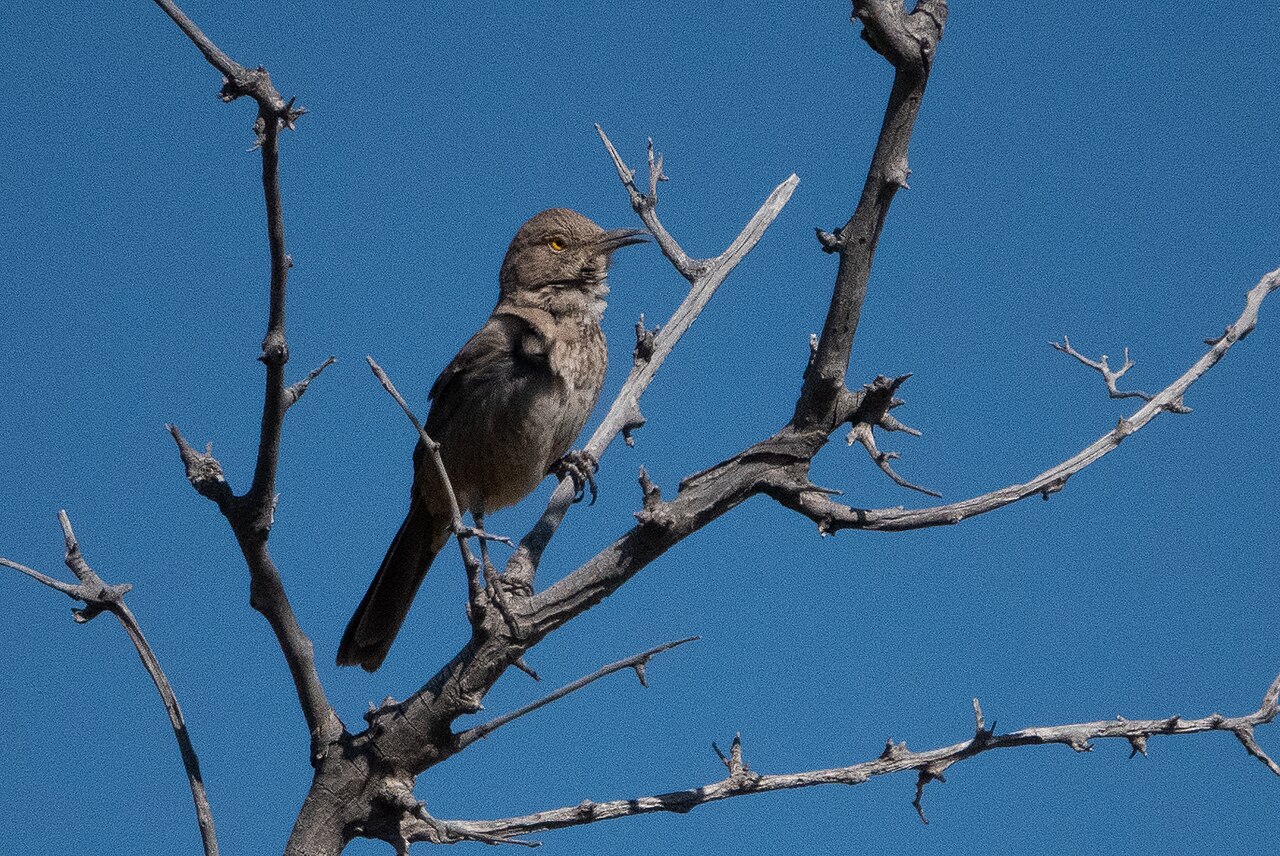
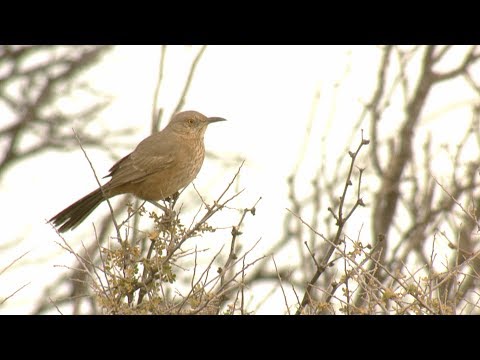
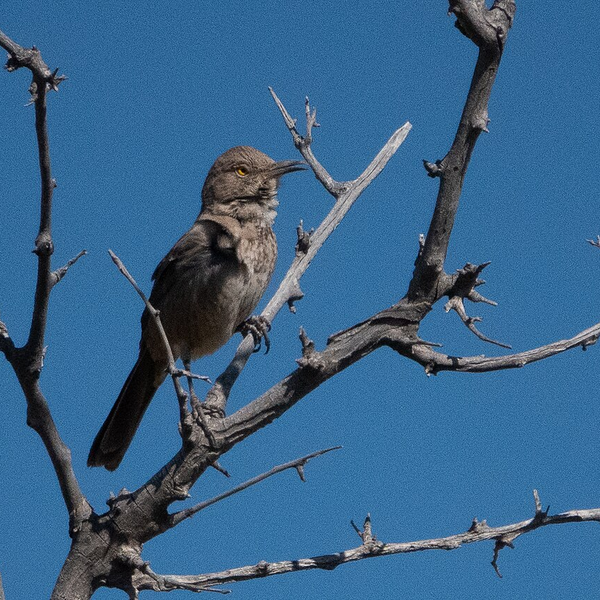
The Bendire’s Thrasher (Toxostoma bendirei) is the subtle thrasher of the upland Sonoran Desert — sandy gray-brown with fine arrowhead spots on the breast, a short, slightly curved bill with a pale base, and a bright yellow eye. Its song is a soft, continuous warble — sweeter and quieter than other thrashers. It breeds in palo verde–saguaro desert and thorn scrub, mostly in Arizona and Mexico, and many winter south. Desert yards attract them with native palo verde, mesquite, and undisturbed ground litter. They share the flats with the Curve-billed Thrasher and the Cactus Wren.
Species Physical Profile & Morphometrics
Bendire’s Thrasher belongs to the mockingbird family (Mimidae) and breeds mostly in Arizona’s upland Sonoran Desert and Mexico — the least known of the western thrashers.
The identification formula: short bill with pale base + fine arrowhead spots + yellow eye. The Curve-billed Thrasher has a longer, all-dark, more curved bill, a grayer breast with blurry spots, and an orange eye. Sage Thrasher is smaller and shorter-tailed with heavy streaks.
Essential Morphometric Field Marks:
- Body Length & Mass: 8.7 to 10.2 inches (22–26 cm) and 1.8 to 2.3 ounces (50–65 grams) — mid-sized for a thrasher.
- Wingspan: 12.6 to 13.8 inches (32–35 cm); flight is low and brief between shrubs — mostly it runs.
- Bill Structure & Color: A short, only slightly curved bill with a pale base to the lower mandible — the mark that separates it from Curve-billed.
- Color Pattern: Sandy gray-brown above, whitish below with fine dark arrowhead spots, bright yellow iris, faint pale eyebrow.
- Male vs. Female: The sexes look alike — both sing from cactus tops and both sweep the desert floor for prey.
The saguaro-top singer: perched on an arm of the big cactus at dawn, pouring out a soft continuous warble across the flats.
Identical in plumage — she incubates in a thorny shrub while he sings, then both work the litter for the nestlings.
Bendire’s Thrasher Vocalization Guide (0 Field Recordings)
Bendire’s Thrasher’s song is a soft, continuous, slightly musical warble — quieter and sweeter than other thrashers. All recordings below are real field audio via Wikimedia Commons — no simulations. For a deeper library, browse xeno-canto: Bendire’s Thrasher.
1. The Soft Warble
2. The Dawn Perch Song
3. The Chuk Call
Habitat, Range & the Upland Sonoran
Bendire’s Thrasher lives in upland Sonoran Desert — palo verde, saguaro, and thorn scrub on bajadas and flats — centered on Arizona and northern Mexico, often where the desert meets oak and grassland.

The Quiet Bird of the Bajada
Breeding range centers on southern and central Arizona with scattered populations in New Mexico, California, and Nevada; most of the population winters in Mexico.
For backyard birders: desert-edge yards with native palo verde, mesquite, and undisturbed gravel litter can host a breeding pair — one of Arizona’s least-known backyard specialties.
Backyard Behavioral Patterns & Social Dynamics
Bendire’s Thrasher is a ground-sweeping desert bird with a soft voice. Four behaviors explain most of what you will observe:
🧹 The Litter Sweeper
It forages by sweeping leaf litter with sideways bill strokes — insects and seeds from under palo verde and mesquite.
🤫 The Quiet Singer
The song is softer and more continuous than other thrashers — a desert warble rather than a shouted medley.
🌵 The Thorn Nest
The nest is a twig cup in a thorny shrub or cholla — placed low and sheltered against the desert’s many predators.
🏃 The Runner
It runs between shrubs with tail raised — flight is a last resort on the open flats.
Problem: “How Do I Tell Bendire’s from Curve-billed? What Should I Do?”
The three most common Bendire’s Thrasher puzzles all have proven answers:
First, the thrasher split: compare bill, eye, and spots — Bendire’s has a short bill with a pale base, a yellow eye, and neat arrowhead spots; Curve-billed has a long dark curved bill, an orange eye, and blurry gray spotting. Second, the quiet bird: Bendire’s sings softly and briefly, mostly at dawn in spring — tape the song in your memory and check saguaro tops at first light. Third, the seasonal disappearance: most birds leave for Mexico in fall — a summer yard pair vanishing in September is normal migration, not loss.
Method 1: Set the Table — Palo Verde, Mesquite & Litter
Design for a ground-foraging desert thrasher:
-
Plant Palo Verde & Mesquite
Native legume trees with litter underneath — foraging floor and song perch in one.
-
Keep Thorn Scrub
Cholla, catclaw, and wolfberry — the nest fortresses of a desert thrasher.
-
Leave the Gravel & Litter
No raking under desert trees — the sweep-foraging grounds need their debris.
-
Skip Insecticide
Ground insects are the protein crop — sprayed desert yards hold no thrashers.
Method 2: Build the Habitat — Drink & Undisturbed Ground
Keep water available and the ground wild, and the pair returns each spring:
-
Provide Ground Water
A shallow dish near cover — used daily in the hot months, especially during nesting.
-
Keep Cats Indoors
Ground-foragers are cat prey — desert suburbs with indoor cats keep their thrashers.
-
Delay Shrub Trimming
No thorn scrub work March through June — nests sit low in the spines.
-
Listen at Dawn in Spring
March through May is song season — the soft warble announces a breeding pair.
Tool Solution: Recommended Hardware for Bendire’s Thrasher
Equipment matched to a desert litter-sweeper:
Native Palo Verde & Mesquite
Legume trees with litter underneath and thorn scrub nearby — the complete Bendire’s territory.
- • Plants: Desert natives
- • Feature: Litter layer
- • Bonus: Verdins & wrens too
Shallow Ground Dish
Shallow water near cover — daily use in the hot months when natural water is miles away.
- • Depth: 1–2 inches
- • Placement: Beside shrubs
- • Bonus: Quail & doves too
Cholla & Thorn Shrub
Spiny native shrubs — the guarded nest sites every desert thrasher seeks.
- • Plants: Cholla, catclaw
- • Rule: No spring trimming
- • Bonus: Cactus wrens share them
Frequently Asked Questions
- Species Profile: Bendire’s Thrasher (Toxostoma bendirei) is an 8.7–10.2 inch, 1.8–2.3 ounce mimid (Mimidae), band code BETH — the desert’s quiet mimic.
- ID in One Look: Short pale-based bill, yellow eye, fine arrowhead spots.
- The Sound: A soft continuous warble from the saguaro top; real field recordings above.
- Range & Habit: Arizona-centered breeder; winters mostly in Mexico; nests in thorn scrub.
- Feeder Formula: Desert natives and undisturbed litter — feeders do not apply.
- The Overlooked Specialty: The least-known thrasher, hiding in plain sight on the bajada.
Bird Watching Log
Species: Bendire’s Thrasher (Toxostoma bendirei)
| Bendire’s Thrasher (Pale Bill Base Seen: Yes / No — Arrowhead Spots Seen: Yes / No — Soft Warble Heard: Yes / No — Litter Sweeping Watched: Yes / No — Date & Time: ___) | |