
Brown Thrasher
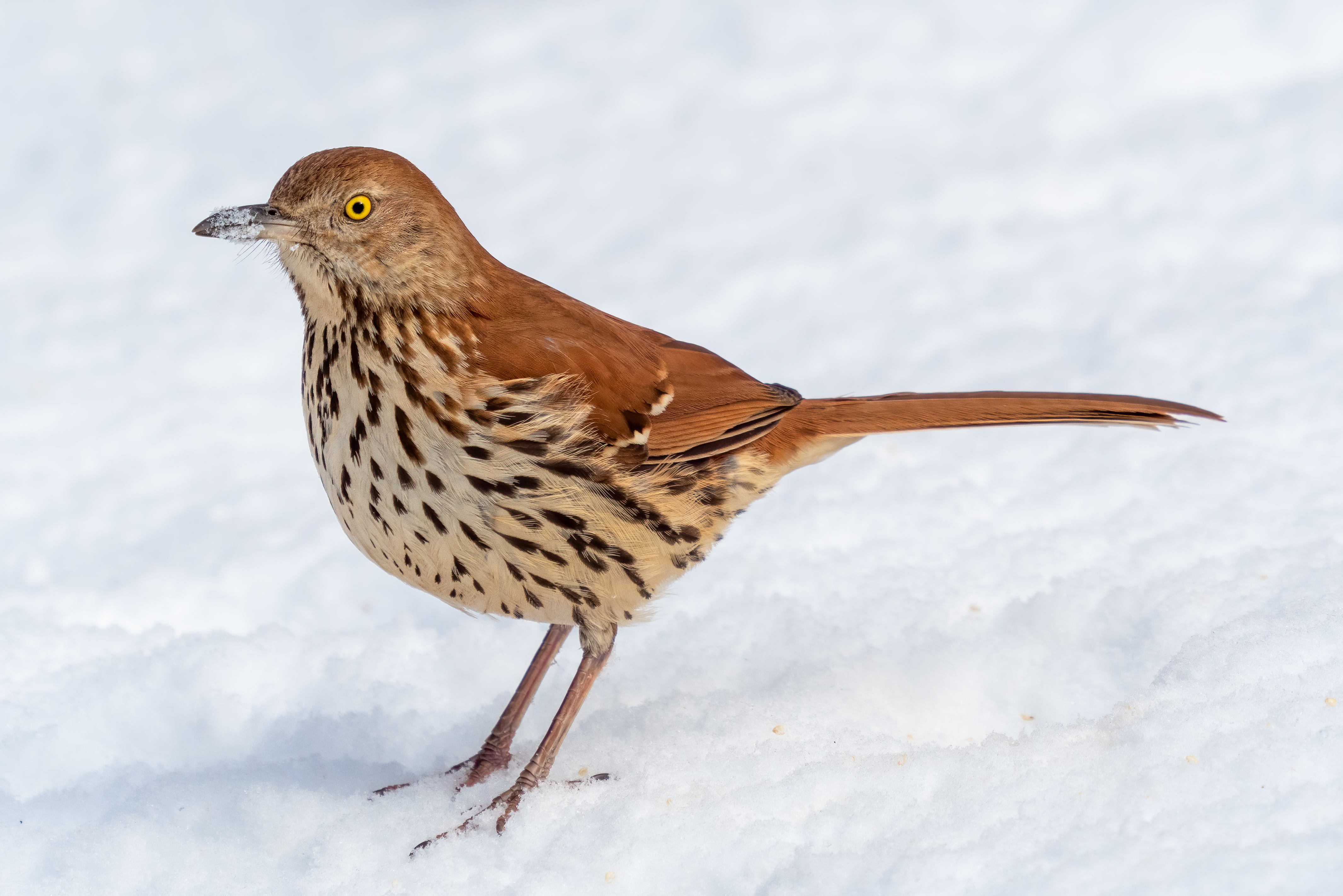
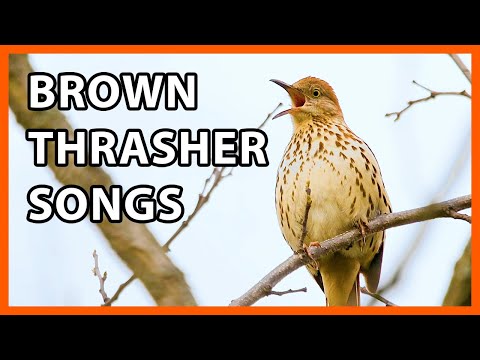


Brown Thrasher (Toxostoma rufum): Complete Identification, Paired-Song Guide & Backyard Handbook
Quick Answer: How to Attract & Identify Brown Thrashers
The Brown Thrasher (Toxostoma rufum) is the big rufous ground bird with the heavily streaked breast, long tail, and blazing yellow eye — a mimic that sings every phrase exactly twice and owns a repertoire of over 1,100 song types. To attract one: keep a dense shrubby corner, leave the leaf litter, and scatter cracked corn, peanuts, or suet on the ground at the edge of cover. It is the rufous answer to its gray cousins, the Northern Mockingbird and the Gray Catbird.
Species Physical Profile & Morphometrics
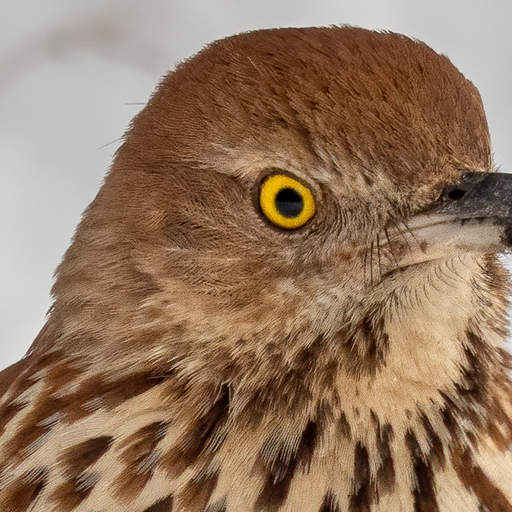
The Brown Thrasher is a large, long-tailed member of the mimid family (Mimidae) — bigger and longer than a robin, built for powerful work on the ground. The pattern: bright rufous-brown above from crown to tail tip, whitish below with bold dark streaks carpeting the breast and flanks, a long slightly downcurved dark bill, faint whitish wing bars, and a fierce yellow to amber eye.
The identification formula: rufous above + streaked below + yellow eye + ground-thrashing. The Wood Thrush shares the rusty tones but is smaller, round-headed, and spotted rather than streaked, with a short tail and dark eye. The mockingbird is gray and unstreaked; the catbird is slate with a black cap. Only the Brown Thrasher sweeps leaf litter side to side with that long curved bill — the behavior that earned the name.
Essential Morphometric Field Marks:
- Body Length & Mass: about 9.1 to 11.8 inches (23–30 cm) and 2.1 to 3.1 ounces (61–89 grams) — the tail alone is roughly half the total length.
- Wingspan: about 11.4 to 12.6 inches (29–32 cm); flight between cover is low, heavy, and direct, with the long rufous tail streaming behind.
- Bill Structure & Color: A long, dark, slightly downcurved bill — the leaf-sweeping plow that flips litter aside in search of beetles and grubs.
- Color Pattern: Bright rufous above, whitish below with heavy dark streaks (not spots) across breast and flanks; faint pale wing bars; yellow to amber eyes at all ages past the juvenile stage.
- The Signature Move: The leaf sweep — the bird plants itself in the litter and swings its bill side to side, flinging leaves aside with audible force to expose prey hiding beneath.
- Male vs. Female: The sexes look alike — same rufous, same streaks, same yellow stare. In spring the male identifies himself by singing from the highest, most exposed perch in the shrubland.
For a few spring weeks the skulker becomes a showman: the male mounts the tallest treetop or wire on his territory and pours out paired phrases — each sung twice — drawn from a personal library of more than 1,100 song types, one of the largest repertoires of any North American bird.
She nests where the tangles are thickest — a bulky twig cup low in a dense shrub, sometimes right on the ground. The 3–4 pale blue-green eggs, finely speckled with reddish brown, are incubated by both parents for 11–14 days, and both feed the nestlings. Two broods a season are common, and like the catbird, thrashers recognize and eject cowbird eggs.
Brown Thrasher Vocalization Guide (3 Field Recordings)
The Brown Thrasher sings in couplets: every phrase delivered exactly twice before switching — the instant audio separator from the mockingbird (three-plus repeats) and the catbird (once each). Thoreau heard the paired pattern as farming advice: drop it, drop it — cover it up, cover it up. Below are three real field recordings hosted on Wikimedia Commons, all by recordist Jonathon Jongsma. For a deeper library, browse xeno-canto: Brown Thrasher.
1. The Prairie-Edge Morning Song
2. The Prairie Thicket Song
3. The Thunderstorm Singer
Habitat, Range & the Human Landscape
The Brown Thrasher is a bird of dense, brushy cover east of the Rockies: thickets, hedgerows, overgrown field edges, shrubby streambanks, and woodland borders — anywhere with a deep leaf layer for foraging and a tangle to dive into. It breeds across the eastern and central United States and into southern Canada, and it is the state bird of Georgia, where it is a year-round presence.

A Partial Migrant of the Brush
Northern breeders withdraw in fall to winter in the Southeast and Gulf states, while birds across the deep South stay on territory year-round. Winter is prime backyard season in the South: the birds shift to acorns, corn, and fruit, and a ground-scattered offering beside a hedgerow can draw daily visits from a bird you rarely see in summer.
Backyards score best with one dense shrubby corner or hedgerow, intact leaf litter beneath it, and open ground at its edge for the thrasher’s sweep-and-grab feeding style.
Backyard Behavioral Patterns & Social Dynamics
The Brown Thrasher is the most secretive regular in the shrubby yard — a bird you usually hear long before you see it. Four behaviors explain most backyard encounters:
🍂 The Leaf Sweeper
The thrasher feeds by planting both feet and swinging its long bill side to side through leaf litter, flinging leaves aside with enough force to hear across the yard. That sweeping motion — “thrashing” the leaves — is where the name comes from, and a rustling shrub edge on a quiet morning is often your first clue one is home.
🎵 The Paired-Phrase Singer
Every phrase is delivered exactly twice before the bird switches to the next — the instant separator from the Northern Mockingbird (three or more repeats) and the Gray Catbird (once each). With more than 1,100 documented song types, it owns one of the largest repertoires of any North American bird.
⚔️ The Fierce Nest Guard
Around the nest, the shy skulker turns bold: Brown Thrashers defend their nests ferociously, striking at snakes, dogs, cats — and people who venture too close, sometimes hard enough to draw blood. Give a chattering, agitated pair a wide berth in June and July.
❄️ The Quiet Winter Guest
From fall into winter the diet shifts to acorns, nuts, corn, and fruit, and thrashers begin slipping into yards to feed on the ground. Southern backyard birders often see more of them in January than in June — silent, low, and gone into the tangle at the first footstep.
Problem: “I Hear It Singing Every Morning, but I Never Actually See the Bird — and It Ignores My Feeders. What Am I Doing Wrong?”
Nothing is wrong — you are feeding a ground bird from the air. The two classic Brown Thrasher frustrations share one root cause:
First, “heard but never seen”: outside the spring singing season, thrashers forage inside and beneath dense cover, and they retreat into the tangle at the slightest movement. The fix is patience and position — watch from a window rather than the patio, and scan the ground along the shrub line at dawn, when the leaf sweeping is most active. Second, feeder rejection: hanging tube and hopper feeders are simply outside this species’ comfort zone. Move the food to ground level at the edge of cover — a scatter of cracked corn, peanuts, or suet crumbles two feet from the shrub line — and the same invisible bird starts appearing daily. Thrashers are loyal to good feeding spots; the first visit is the hard part.
Method 1: Feed on the Ground at the Edge of Cover
Design for a big, wary ground forager that will not use hanging feeders:
-
Scatter the Right Menu Low
Offer cracked corn, chopped or shelled peanuts, and suet crumbles — the cold-season staples thrashers take most readily — directly on the ground or on a low platform feeder. They occasionally visit a low suet cage, but ground presentation matches how the bird actually hunts.
-
Put It Beside the Tangle
Placement beats quantity: feed within a few feet of dense shrubs, a hedgerow, or a brush pile so the bird can grab a billful and dive back into cover in one motion. Food scattered in open lawn may sit untouched for days.
-
Feed Early, Watch Quietly
Thrashers feed hardest in the first hours of daylight. Put food out at dawn and observe from indoors — a backyard thrasher that learns your yard is calm becomes a reliable daily visitor, especially in winter.
-
Skip the Hanging Hardware
Do not wait for a thrasher at your tube or hopper feeder — it will almost never happen. Save the seed budget for ground-level offerings, and let the finches and cardinals have the poles.
Method 2: Build the Thicket, Keep the Litter, Add Water
Habitat is the real attractant — a thrasher yard is a brushy yard:
-
Keep One Dense, Brushy Corner
The single best thing you can do is not tidy up: leave a corner of the yard to grow thick, or plant a dense hedgerow of native shrubs. Thrashers nest low in exactly this kind of tangle — sometimes right on the ground beneath it — and a yard without cover is a yard they only pass through.
-
Leave the Leaves
Leaf litter is the thrasher’s dining table. Rake beds sparingly and let leaves collect beneath shrubs — the beetle-and-grub layer underneath feeds the bird all season, and the sound of it working your leaf pile is half the pleasure of hosting one.
-
Offer Ground-Level Water
A shallow dish or ground-level bath near cover gets used daily, especially in the hot months. Moving water helps, but depth matters more: keep it to an inch or two at the edge so a wary ground bird will wade in.
-
Go Easy on the Chemicals
Thrashers are primarily insect eaters from spring through fall. Lawn and garden insecticides strip out the very beetles, grasshoppers, and caterpillars they are sweeping the leaves to find — an organic yard feeds a thrasher; a treated one does not.
Tool Solution: Recommended Hardware for Brown Thrashers
Equipment matched to a large, ground-feeding, cover-loving mimic:
Ground Platform / Tray Feeder
A low, open tray set on the ground or inches above it, placed right at the shrub line — the natural presentation for a bird that feeds with its feet in the leaf litter and will not climb to a hanging feeder.
- • Food: Cracked corn, peanuts, suet crumbles
- • Style: Ground-level open platform
- • Placement: Within 2–3 ft of dense cover
Low-Mounted Suet Cage
A standard suet cage hung or mounted low — near the ground and beside cover — is the one piece of hanging hardware a thrasher will occasionally use, especially in the cold months when suet replaces insects.
- • Food: Suet cakes and crumbles
- • Mount: Low, adjacent to shrubs
- • Season: Peak value October–March
Ground-Level Bird Bath
A shallow bath set directly on the ground near the brushy corner — thrashers drink and bathe at ground level, and a heated model keeps the water open through the southern winters when these birds visit yards most.
- • Depth: 1–2 in at the edge
- • Extras: Heated option for winter
- • Placement: Open ground beside cover
Frequently Asked Questions
- Species Profile: The Brown Thrasher (Toxostoma rufum) is a 9.1–11.8 inch, 61–89 gram mimic (Mimidae) of eastern thickets and hedgerows — bright rufous above, heavily streaked below, band code BRTH, and the state bird of Georgia.
- ID in One Look: Rufous above + streaked (not spotted) breast + yellow eye + long curved bill — and the giveaway behavior of sweeping leaf litter side to side on the ground.
- The Sound: Every phrase sung exactly twice — the instant separator from the mockingbird (three-plus) and catbird (once) — from a repertoire of more than 1,100 song types, one of the largest in North America.
- Partial Migrant: Northern breeders withdraw to the Southeast and Gulf states in fall; deep-South birds stay year-round, and winter is prime backyard season as the diet shifts to acorns, corn, and fruit.
- Feeder Formula: Cracked corn, peanuts, and suet crumbles scattered on the ground or a low platform right at the shrub line — hanging feeders are a lost cause with this species.
- Habitat First: One dense brushy corner, intact leaf litter, ground-level water, and no insecticides — that combination turns a passing thrasher into a resident, and a singing male into your loudest spring morning.
Bird Watching Log
Species: Brown Thrasher (Toxostoma rufum)
| Brown Thrasher (Single / Pair: ___ — Paired Phrases Heard: Yes / No — Leaf Sweeping Seen: Yes / No — Ground Feeding: Yes / No) | |