
Mourning Dove


Mourning Dove (Zenaida macroura): Complete Identification, Feeder Guide & Call Library
Quick Answer: How to Attract & Identify Mourning Doves
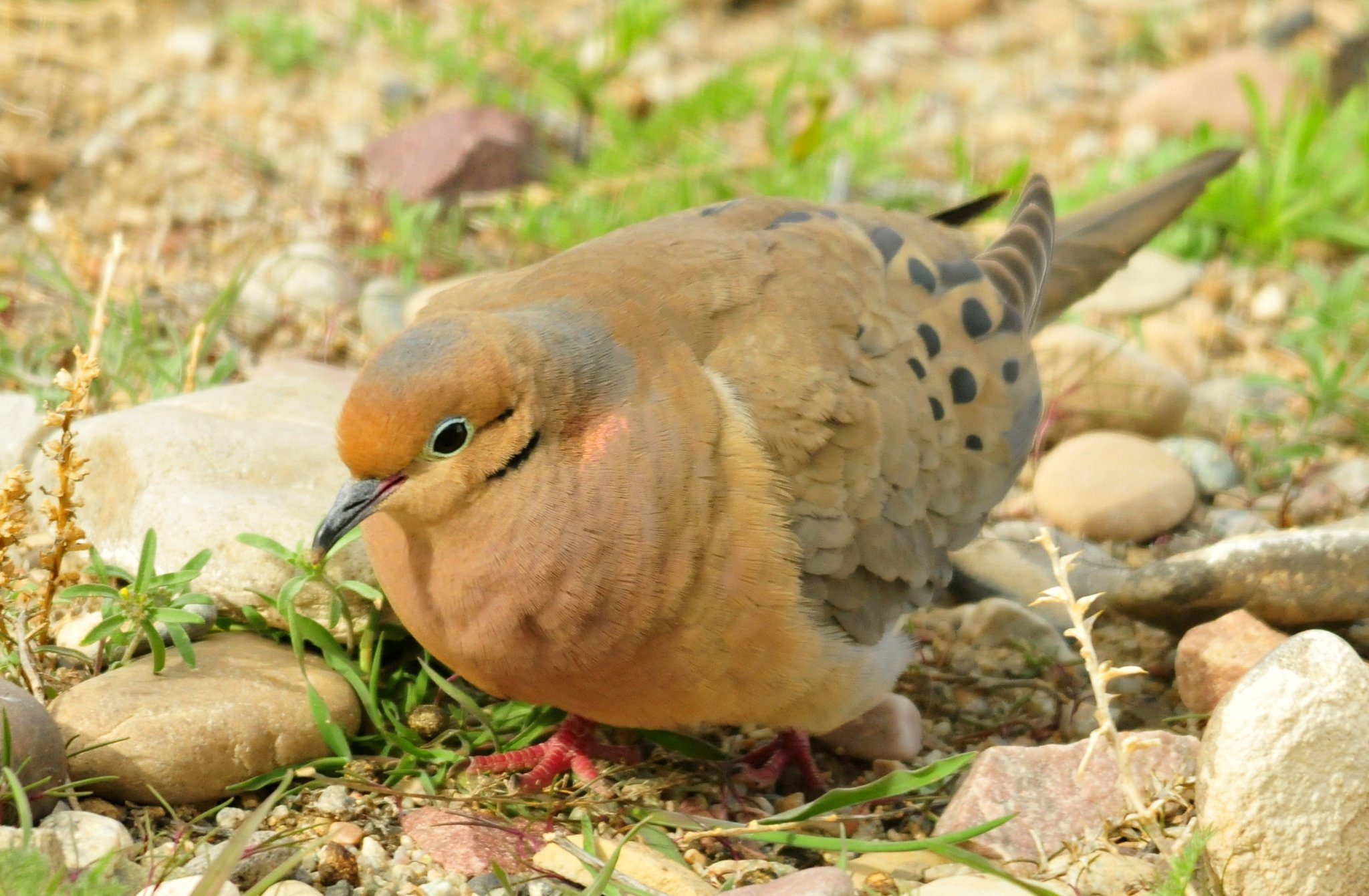
The Mourning Dove (Zenaida macroura) is the gentle gray-tan dove of nearly every American backyard — slim-bodied, small-headed, with a long pointed tail, a black spot on the cheek, and a soft pink blush on the breast. Its soft “coo-ah, coo, coo, coo” is one of the most familiar sounds in North America, and its wings whistle on every takeoff. Mourning Doves are ground feeders: they walk — never scratch — picking up seeds one at a time, so serve white millet, cracked corn, or safflower scattered on the ground, on a low platform, or in a wide-tray hopper, with a shallow water dish nearby. It shares the ground patch with the Dark-eyed Junco and the White-throated Sparrow.
Species Physical Profile & Morphometrics
The Mourning Dove belongs to the pigeon and dove family (Columbidae) — a smaller, sleeker cousin of the city pigeon, built slim and aerodynamic for some of the fastest, most direct flight of any backyard bird. It is one of the most widespread and abundant birds on the continent.
The identification formula: slim gray-tan dove + small head + long pointed tail with white edges + a black cheek spot + red feet. Two birds are most often confused with it: the Eurasian Collared-Dove, which is bulkier and paler with a squared tail and a black collar on the nape; and, in the Southwest, the White-winged Dove, which is bigger and flashes huge white wing patches in flight. Neither shares the Mourning Dove’s long, tapering white-edged tail.
Essential Morphometric Field Marks:
- Body Length & Mass: 9.1 to 13.4 inches (23–34 cm) — much of it tail — and 3.4 to 6.0 ounces (96–170 grams); a mid-sized dove, slim and streamlined.
- Wingspan: About 17.7 inches (45 cm); flight is fast, direct, and bullet-straight, capable of speeds around 55 miles per hour, with a whistling flutter on takeoff.
- Bill Structure & Color: A small, slender dark bill with a fleshy cere at the base — built for picking up seeds whole, not cracking them like a finch.
- Color Pattern: Soft grayish-tan overall with a pinkish-buff breast; black spots on the wings, one neat black spot on the cheek below the eye, light blue bare skin around the eye, and red legs and feet. The long tail is edged and tipped with white.
- Male vs. Female: The male wears a rosy-pink blush on the breast, a bluish-gray crown, and an iridescent pink-and-bronze patch on the side of the neck. The female is browner and duller overall. Juveniles look scaly, with pale buffy edges on the wing feathers.
The rosy tenor: pink-blushed breast, blue-gray crown, and that iridescent neck patch that flashes bronze and pink when he turns in the sun. He alone gives the famous coo — from a wire or bare branch — and he performs a clapping, gliding courtship flight above the neighborhood each spring.
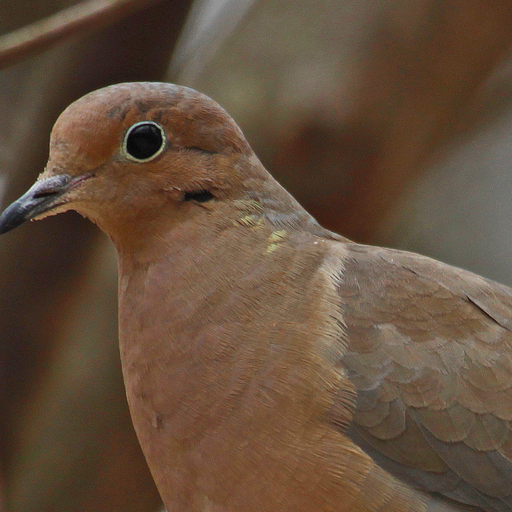
Same graceful shape, softer paint — browner overall, with less pink and little iridescence. She builds the nest from twigs her mate delivers, lays 2 white eggs, incubates through the night (he takes the day shift), and shares the feeding of the squabs on crop milk.
Mourning Dove Vocalization Guide (3 Field Recordings)
The Mourning Dove’s soundtrack is two things: the male’s soft, mournful “coo-ah, coo, coo, coo” — the sound the species is named for — and the sharp wing whistle on every takeoff and landing. All three recordings below are real field audio, shared under commercial-use licenses via Wikimedia Commons and iNaturalist — no simulations. For a deeper library, browse xeno-canto: Mourning Dove.
1. The Up-Close Coo
2. The Winter Voice
3. The Spring Chorus
Habitat, Range & the Human Landscape
The Mourning Dove is one of the most widespread birds in North America — at home in open woods, farmland, desert edges, suburbs, and city parks from coast to coast. If a yard has open ground, a few trees or wires to perch on, and seed, it can hold doves.

Everywhere, All Year — Almost
The dark green tells the story: Mourning Doves live year-round across nearly the entire continental United States and deep into Mexico. Only the northern Great Plains and southern Canada (light green) are breeding-season-only country, and the winter range (blue) extends down through Central America for the migrants that leave the far north.
For backyard birders this means there is no off-season: the doves at your tray in a July heat wave and the ones puffing against a January wind may both be locals — joined in winter by northern birds drifting south.
Backyard Behavioral Patterns & Social Dynamics
The Mourning Dove is a calm, deliberate presence at the feeder — a walker, not a scratcher. Four behaviors explain most of what you will observe:
🕊️ The Devoted Pair
Mourning Doves form strong pair bonds and are usually seen in twos — feeding side by side, preening each other’s head feathers, sharing incubation shifts (he takes the day, she takes the night). A lone dove at your feeder is often just one half of a nearby pair.
🍼 The Crop Milk Trick
Doves and pigeons are among the very few birds that produce “milk”: both parents secrete a rich, curd-like crop milk from the lining of the crop and regurgitate it to the squabs for their first days, tapering onto seeds as the chicks grow. It is why dove parents can raise brood after brood on a seed-only diet.
💨 The Whistling Wings
Every takeoff and landing comes with a sharp whistling from the wings — a built-in alarm that ripples through the flock. The flight itself is remarkable: fast, direct, and powerful, with doves capable of speeds around 55 miles per hour between your yard and their roost.
🌾 The Crop Stuffer
A feeding dove swallows seeds whole and stores them in its crop, then flies to a safe perch to digest. One bird can pack away a surprising share of your tray in a single visit — which is why doves feed in calm, methodical bursts and then sit quietly for an hour.
Problem: “Doves Empty My Tray Every Morning — and Now a Hawk Is Watching. What Should I Do?”
The three most common Mourning Dove worries all have proven answers:
First, the empty tray: a group of crop-stuffing doves can clear a platform fast — but the fix is portioning, not banishment: put out a measured amount once or twice a day rather than keeping the tray topped up, and switch part of the mix to safflower, which doves eat but squirrels and grackles largely refuse. Second, the watching hawk: a Cooper’s Hawk visiting a busy feeding station is a sign of a healthy backyard ecosystem, not a failure — place the feeding area within a quick dash of dense shrubs or evergreens so doves have instant cover, and accept that the hawk takes its occasional share. Third, the window strikes: fast, direct fliers like doves hit glass more than most birds — apply decals or external screens to problem windows and keep feeders either within 3 feet of the glass or more than 30 feet away. Solve these three and a dove flock becomes the calmest, most reliable clientele in the yard.
Method 1: Set the Table — Feed Them Low & Open
Design for a walking, seed-swallowing ground bird:
-
Scatter Millet & Cracked Corn on the Ground
White proso millet and cracked corn scattered on open ground is the classic dove spread — easy to spot, easy to swallow whole. Add black oil sunflower for variety. Scatter a measured amount on a cleared patch each morning rather than maintaining a permanent pile.
-
Offer a Low Platform or Wide-Tray Hopper
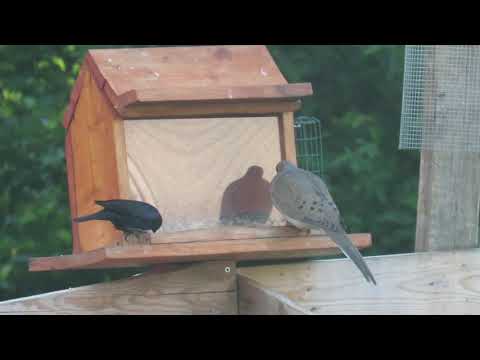
Doves cannot cling to tube ports, but they will happily work a low platform feeder or a hopper with a wide perching tray. The feeder style comparison guide covers platform and hopper options sized for bigger birds.
-
Try Safflower to Quiet the Competition
Safflower is the diplomat’s seed: Mourning Doves, cardinals, and grosbeaks eat it readily, while squirrels, grackles, and starlings usually leave it alone. If your tray is getting raided, safflower rebalances the guest list.
-
Keep Water at Ground Level
Doves drink by sucking water up in a continuous draft — no head-tipping like other birds — and they visit water daily, morning and evening. A shallow ground-level bath near the feeding area, or a heated bath in winter, keeps them in the yard all day.
Method 2: Build the Habitat — Seed Plants & Roosting Cover
Feed the habit, not just the bird:
-
Let Sunflowers and Grasses Go to Seed
Sunflowers, native grasses, coneflowers, and garden flowers left standing drop seed doves forage naturally all fall and winter. A slightly shaggy corner of yard is a stocked pantry that refills itself.
-
Plant or Protect Evergreens
Dense conifers and evergreen shrubs are dove infrastructure: nighttime roosts in winter, and favored nesting sites in spring. A spruce or arborvitae row near the feeding area can hold a communal winter roost of dozens of birds.
-
Put Up a Nesting Cone or Platform
Mourning Doves famously build flimsy twig platforms — and they readily adopt sturdier real estate: a simple wire nesting cone or open platform fixed in a fork of a tree gives the pair a foundation that survives wind and rain, brood after brood.
-
Offer Grit & Keep Cats Indoors
Doves swallow small gravel to grind seeds in the gizzard — a patch of coarse sand or fine gravel near the feeding area gets regular visits. And because doves feed on the ground and are slow to flush, keeping pet cats indoors is the single biggest safety upgrade you can give them.
Tool Solution: Recommended Hardware for Mourning Doves
Equipment matched to a ground-feeding, seed-swallowing flock bird:
Low Platform / Ground Tray
A wide, stable tray set low near shrub cover, filled with white millet and cracked corn — exactly the way doves evolved to eat, and the fastest way to make your yard their daily base.
- • Seed: White millet, cracked corn, safflower
- • Style: Low platform or ground tray
- • Placement: Open, within a dash of cover
Hopper Feeder with Wide Tray
A hopper with a generous perching tray lets doves feed at a raised station alongside the cardinals — self-refilling, weather-protected seed for the days you are not home to scatter.
- • Seed: Sunflower, safflower, mixed
- • Style: Wide-tray hopper
- • Bonus: Serves cardinals & grosbeaks too
Shallow Ground-Level Bird Bath
A shallow bath near the ground — heated in winter — serves the doves’ twice-daily drinking flights and turns your yard into a complete station: food, water, and cover in one stop.
- • Depth: 1–2 in, gently sloped
- • Winter: Thermostatic heater
- • Placement: Near the ground feeding patch
Frequently Asked Questions
- Species Profile: The Mourning Dove (Zenaida macroura) is a slim 9–13 inch, 3.4–6 ounce dove (Columbidae) with a long pointed tail, band code MODO — one of the most widespread and abundant birds in North America.
- ID in One Look: Gray-tan with a pink-blushed breast, a black cheek spot, black wing spots, blue eye-ring, and red feet; the long tail flashes white edges in flight.
- The Sound: The male’s mournful “coo-ah, coo, coo, coo” — plus the sharp wing whistle on every takeoff; three real field recordings above.
- Range & Migration: Year-round across nearly all of the continental United States; only the far-northern breeders migrate, some reaching Central America.
- Feeder Formula: White millet, cracked corn, and safflower on the ground or a low platform, a wide-tray hopper, and a shallow ground-level bath — never a swaying tube.
- The Pair Bond: Devoted pairs share day-and-night incubation shifts and both feed squabs on crop milk, raising up to five or six broods a year in warm regions.
Bird Watching Log
Species: Mourning Dove (Zenaida macroura)
| Mourning Dove (Pair Seen: Yes / No — Ground Feeding: Yes / No — Cooing Heard: Yes / No — Flock Size: ___) | |