
Nuttall’s Woodpecker
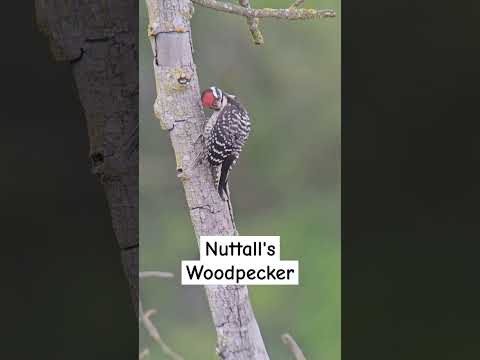


Nuttall’s Woodpecker (Dryobates nuttallii): Complete Identification, Habitat Guide & Sound Library
Quick Answer: How to Attract & Identify the Nuttall’s Woodpecker
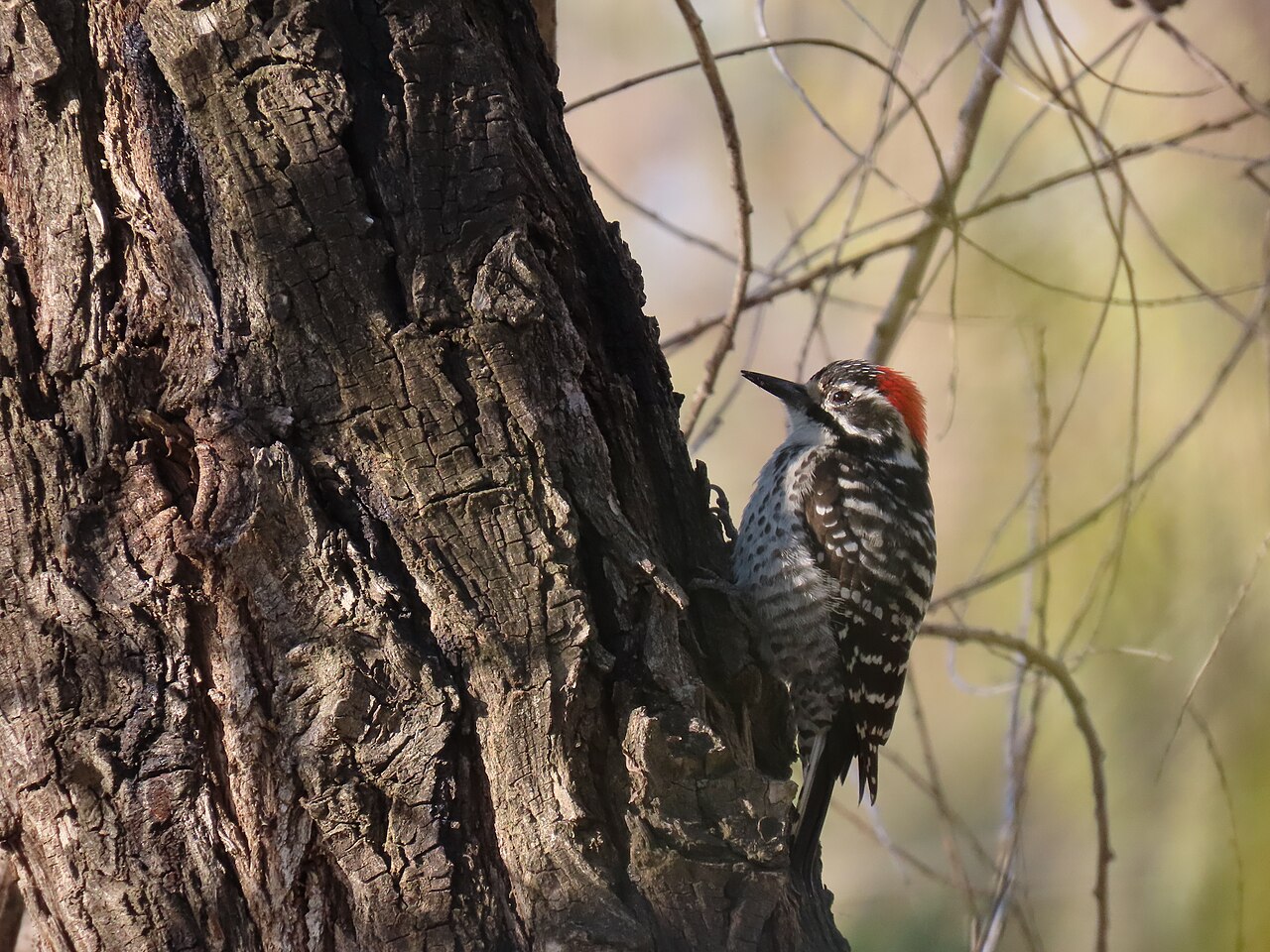
Nuttall’s Woodpecker (Dryobates nuttallii) is California’s own woodpecker — found almost nowhere else on Earth — a small black-and-white barred-back woodpecker of oak country, the male flashing a red patch on the back of the crown. The voice is a sharp peek and a rolling rattle. California yards with oaks attract them with suet cakes, peanut feeders, and standing dead limbs. They share the woodland with the Acorn Woodpecker and the Downy Woodpecker.
Species Physical Profile & Morphometrics
Nuttall’s Woodpecker belongs to the woodpecker family (Picidae) and is a permanent resident of California’s oak woodlands and riverside groves, barely spilling into northern Baja and southern Oregon. No other U.S. woodpecker has so restricted a range.
The identification formula: barred (not striped) back + striped face + red confined to the rear crown (male). The similar Ladder-backed Woodpecker is a desert bird whose range barely overlaps; the Downy Woodpecker has a plain white back stripe without barring. Within California oak country, a small barred-back woodpecker is a Nuttall’s.
Essential Morphometric Field Marks:
- Body Length & Mass: 6.3 to 7.1 inches (16–18 cm) and 1.1 to 1.6 ounces (30–45 grams) — just larger than a Downy Woodpecker, slim and agile on small branches.
- Wingspan: 13.0 inches (33 cm); flight is the typical woodpecker undulation — a burst of wingbeats, then a dip with wings folded.
- Bill Structure & Color: A straight, dark, chisel-tipped bill — proportionally finer than a Downy’s stout spike, built for gleaning insects from bark crevices rather than deep excavation.
- Color Pattern: Black and white throughout: barred back and wings, striped face with black mustache, unmarked whitish underparts; the male’s red sits on the back of the crown only.
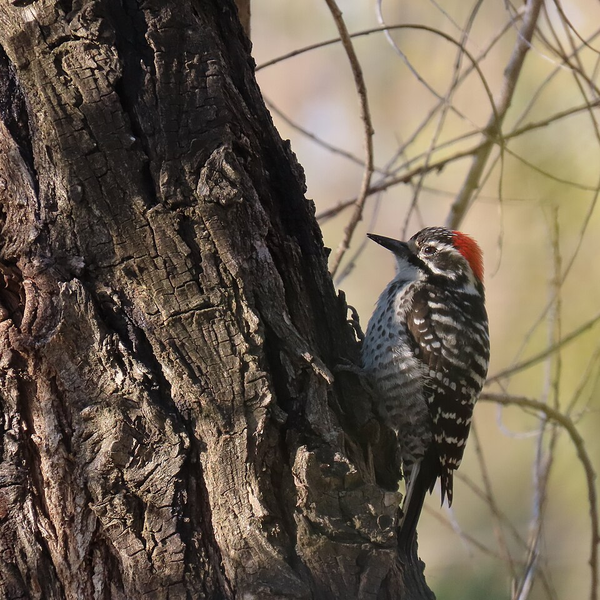
- Male vs. Female: The male wears red on the rear crown; the female’s crown is entirely black — side by side at a suet feeder, the pair is easy to tell apart.
The red-capped gleaner: hitching up an oak trunk, red patch flashing, pausing to deliver a sharp peek — then working the bark crevice like a man picking a lock.
The black-crowned partner — same barred back and striped face without the red — she excavates her own nest cavity in soft deadwood, and the pair takes turns brooding the white eggs.
Nuttall’s Woodpecker Vocalization Guide (3 Field Recordings)
Nuttall’s Woodpecker’s voice is a sharp peek or pit and a rolling rattle, plus spring drumming on resonant deadwood. All recordings below are real field audio via Wikimedia Commons — no simulations. For a deeper library, browse xeno-canto: Nuttall’s Woodpecker.
1. The Sharp Peek
2. The Rolling Rattle
3. Spring Drumming
Habitat, Range & the California Oaks
Nuttall’s Woodpecker lives in California’s oak woodlands and riverside groves: valley oak savanna, coast live oak hills, riparian cottonwood-willow corridors, and the suburban yards and orchards that inherit those trees. If your California yard has mature oaks, you are in Nuttall’s country.

Found Almost Nowhere But California
The range is one of the tightest of any North American bird: California’s valleys and foothills from the Oregon line to northern Baja, with small extensions into southern Oregon. It does not migrate — the bird in your oak in January raised its young in the same tree line in May.
For backyard birders: any California yard with mature oaks, old orchards, or riverside trees can host a resident pair year-round — suet and a standing dead limb are usually all it takes to make them daily visitors.
Backyard Behavioral Patterns & Social Dynamics
Nuttall’s Woodpecker is a bark-gleaning oak specialist — a year-round neighbor with feeder habits. Four behaviors explain most of what you will observe:
🔍 The Bark Gleaner
It feeds by gleaning insects from bark surfaces and crevices rather than deep drilling — watch it work a trunk methodically, peering into cracks like a detective.
🍰 The Suet Regular
One of the most feeder-loyal western woodpeckers — a suet cake near oaks brings daily visits, often from the resident pair taking turns.
🥁 The Spring Drummer
In late winter it drums on resonant dead limbs — and occasionally gutters — to declare territory; the drummer is advertising, not damaging.
🌳 The Oak Loyalist
Its whole life is tied to oaks and their insect life — territories center on mature oaks, and yards with veteran trees hold pairs for decades.
Problem: “I Can’t Tell If This Is a Nuttall’s, Downy, or Ladder-backed. What Should I Do?”
The three most common Nuttall’s Woodpecker puzzles all have proven answers:
First, the barred-back test: Nuttall’s has black-and-white barring across the entire back — a Downy Woodpecker shows a clean white stripe down an unbarred back. That single look settles most cases. Second, the Ladder-backed question: the two are nearly identical, but Ladder-backed is a desert bird — in oak woodland or suburbia it is a Nuttall’s; only in the southeastern California desert do you need finer marks. Third, the feeder no-show: a pair that ignores suet usually has a better natural supply nearby — hang suet near the oak trunk they already work, at trunk height, and patience will be rewarded within a week or two.
Method 1: Set the Table — Suet, Peanuts & Deadwood
Design for a bark-gleaning oak woodpecker:
-
Hang Suet Near Oaks
A suet cake in a wire cage at trunk height on or near an oak — the most reliable daily draw for the resident pair.
-
Offer Peanut Feeders
Chopped peanuts in a mesh feeder — woodpeckers work them like bark crevices, and Nuttall’s is no exception.
-
Leave Dead Limbs Standing
Safe dead limbs and snags are foraging boards and nest sites — the single best long-term woodpecker habitat feature.
-
Skip Tree Sprays
Avoid insecticides on oaks — the bark’s insect life is the bird’s natural pantry; a sprayed tree is a closed restaurant.
Method 2: Build the Habitat — Mature Oaks & Woodland Edge
Keep the oaks, and the woodpeckers stay for decades:
-
Preserve Veteran Oaks
Mature valley and coast live oaks anchor every Nuttall’s territory — protect them from unnecessary pruning during nesting season.
-
Keep a Snag or Two
One safe standing snag per large lot gives the pair excavation options — cavities take a week of work and serve for years.
-
Provide a Shallow Bath
A shallow birdbath near cover draws woodpeckers down to drink, especially in California’s long dry season.
-
Plant Native Understory
Toyon, coffeeberry, and ceanothus under the oaks build the insect-rich edge that keeps the whole food web, woodpeckers included, thriving.
Tool Solution: Recommended Hardware for Nuttall’s Woodpecker
Equipment matched to a small oak-country woodpecker:
Suet Cage Feeder
A wire suet cage at trunk height near oaks — the everyday magnet for the resident pair.
- • Food: Suet cakes, no-melt in summer
- • Placement: Trunk height, near oaks
- • Bonus: Chickadees & nuthatches too
Mesh Peanut Feeder
Chopped peanuts in a wire-mesh tube — worked like a bark crevice and emptied with enthusiasm.
- • Food: Chopped peanuts
- • Style: Wire mesh tube
- • Placement: Near trunk or post
Shallow Birdbath
A shallow bath near shrub cover — in California’s rainless months, water brings woodpeckers down from the canopy.
- • Depth: One to two inches
- • Placement: Near shrub edge
- • Season: Critical May–October
Frequently Asked Questions
- Species Profile: Nuttall’s Woodpecker (Dryobates nuttallii) is a 6.3–7.1 inch, 1.1–1.6 ounce woodpecker (Picidae), band code NUWO — found almost entirely within California.
- ID in One Look: Barred black-and-white back, striped face, red on the male’s rear crown only.
- The Sound: Sharp peek calls, rolling rattles, and spring drumming; real field recordings above.
- Range & Habit: Permanent resident of California oak woodlands; gleans bark crevices; loyal to suet feeders near oaks.
- Feeder Formula: Suet cage at trunk height, mesh peanut feeder, standing dead limbs, and unsprayed oaks.
- The California Exclusive: Hosting this woodpecker is a privilege few states share — protect the oaks and it stays for decades.
Bird Watching Log
Species: Nuttall’s Woodpecker (Dryobates nuttallii)
| Nuttall’s Woodpecker (Male Red / Female Black Crown — Drumming Heard: Yes / No — At Suet: Yes / No — On Oak: Yes / No — Date & Time: ___) | |