
Winter Wren


Winter Wren (Troglodytes hiemalis): Complete Identification, Habitat Guide & Sound Library
Quick Answer: How to Attract & Identify the Winter Wren
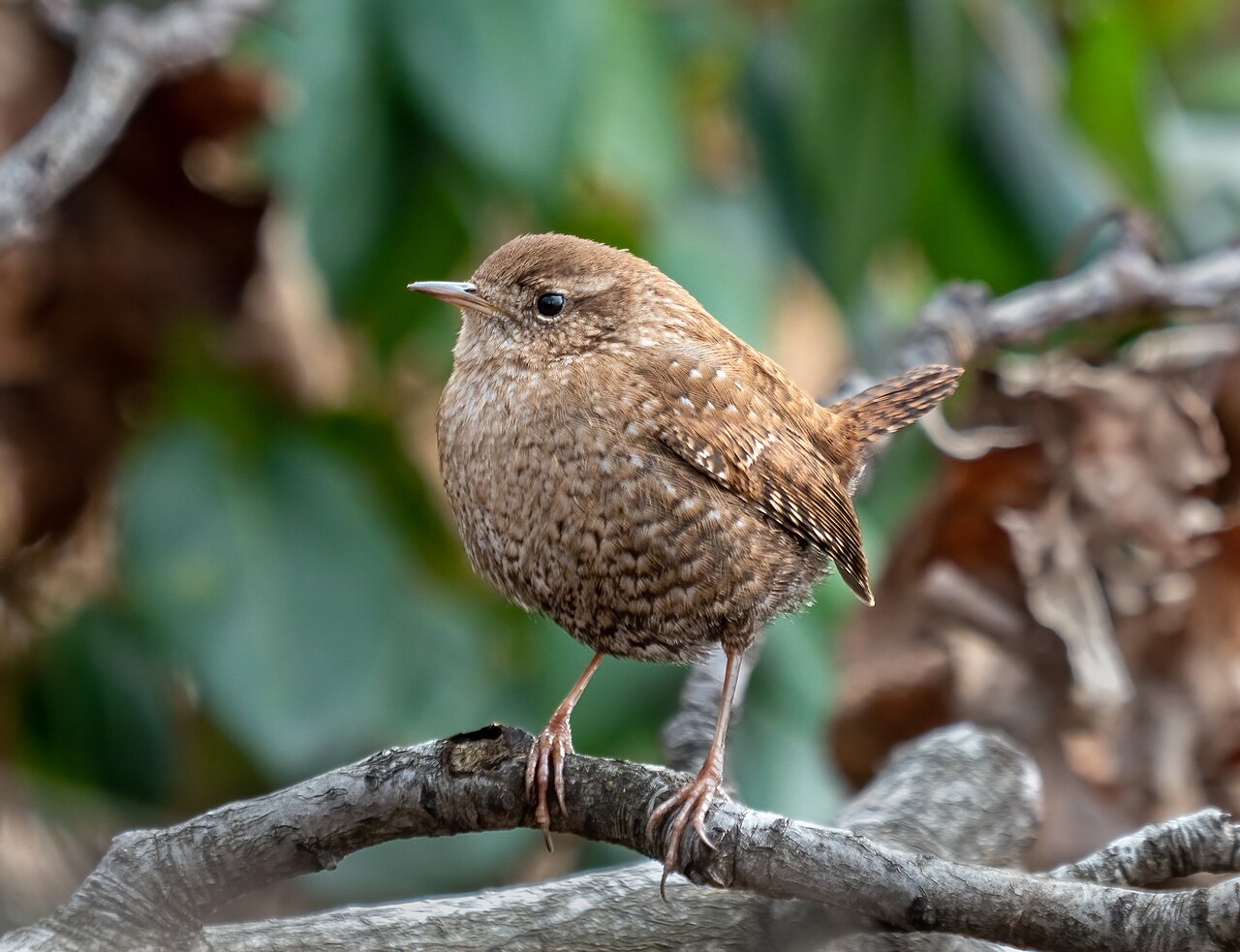
The Winter Wren (Troglodytes hiemalis) is the tiny dark wren of eastern and boreal forest floors — deep brown, finely barred, with a stub tail cocked upright and a song that is a long, tumbling waterfall of trills, absurdly loud for three-tenths of an ounce. It breeds in mossy conifer ravines and winters in tangled understory across the eastern states, where brush piles and ravine gardens host it. It eats spiders and insects gleaned from roots and logs. They share the understory with the Hermit Thrush and the Golden-crowned Kinglet.
Species Physical Profile & Morphometrics
The Winter Wren belongs to the wren family (Troglodytidae) and breeds across boreal and northeastern conifer forest, wintering through the eastern states — split from the Pacific Wren in 2010 on voice and genetics.
The identification formula: tiny dark ball + stub barred tail + dense ground cover. The House Wren is larger, paler, and plain-tailed with a bubbly song; the Carolina Wren is twice the size with a bold white eyebrow and rusty wash. Nothing this small and dark sings this long.
Essential Morphometric Field Marks:
- Body Length & Mass: 3.1 to 4.7 inches (8–12 cm) and 0.3 to 0.4 ounces (9–12 grams) — lighter than three pennies.
- Wingspan: 4.7 to 6.3 inches (12–16 cm); flight is a low whirring dash between cover, rarely crossing open ground.
- Bill Structure & Color: A thin, slightly decurved dark bill — precision tweezers for spiders in root crevices.
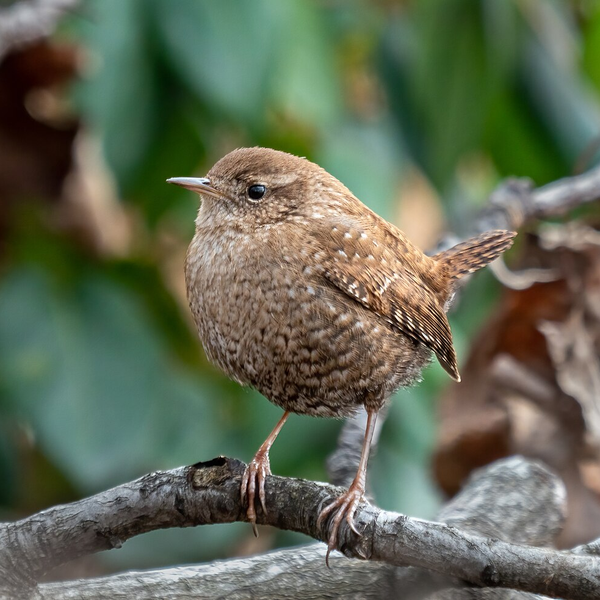
- Color Pattern: Dark chocolate-brown overall with dense black barring on wings, tail, flanks, and belly; a faint pale eyebrow.
- Male vs. Female: The sexes look alike — he sings the waterfalls and may build several dummy nests; she picks one and lines it.
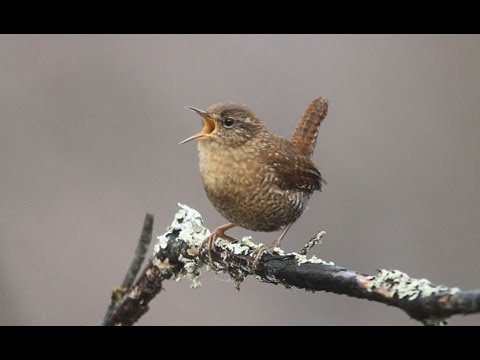
The waterfall singer: a mouse-sized bird delivering a seven-second aria of trills from a root wad, tail bobbing with the effort.
Identical in plumage — she inspects his dummy nests, lines the chosen one with feathers, and incubates in the dark of the tangle.
Winter Wren Vocalization Guide (3 Field Recordings)
The Winter Wren’s song is a long, rapid cascade of trills — one of the most complex bird songs on the continent. All recordings below are real field audio via Wikimedia Commons — no simulations. For a deeper library, browse xeno-canto: Winter Wren.
1. The Waterfall Song
2. The Chimp Call
3. The Dawn Cascade
Habitat, Range & the Tangled Understory
The Winter Wren lives in mossy, tangled understory — boreal and mountain conifer ravines for breeding, and brushy ravines, rhododendron thickets, and brush piles across the East in winter. It is a bird of structure, not openness.

The Ravine’s Winter Tenant
Breeding range spans Alaska, Canada, and the northeastern states down the Appalachians; winter brings birds south through the eastern half of the country, where any dense tangle can host one.
For backyard birders: eastern yards with a brush pile, a shaded ravine edge, or a rhododendron thicket can host a Winter Wren from October to April — listen for the double-tick call at ground level.
Backyard Behavioral Patterns & Social Dynamics
The Winter Wren is a crevice-foraging mouse-bird with an opera singer’s voice. Four behaviors explain most of what you will observe:
🐭 The Crevice Mouse
It forages through root tangles, log piles, and stream banks — disappearing into cavities and reappearing on the far side.
🎶 The Giant Aria
The male’s song runs five to seven seconds of continuous trills — among the longest, loudest songs per ounce of any bird alive.
🏗️ The Dummy Nests
Males build several starter nests; the female chooses one and finishes it — wren real estate development.
❄️ The Winter Shift
In winter it leaves the spruce ravines for lowland tangles and brush piles — closer to backyards than most birders realize.
Problem: “How Do I Spot a Winter Wren? What Should I Do?”
The three most common Winter Wren puzzles all have proven answers:
First, the ventriloquist song: the aria carries far and the bird hides low — track the sound to knee height in the tangle, then watch for a dark ball bobbing on a root. Second, the wren lineup: compare size and tail — Winter Wren is tiny and dark with a stub tail; House Wren is larger, pale gray-brown, plain; Carolina is big, rusty, white-eyebrowed; Bewick’s is long-tailed. Third, the winter silence: wrens rarely sing in winter — learn the hard chimp-chimp call and check brush piles on cold mornings, when the bird works the tangles all day.
Method 1: Set the Table — Brush Piles & Root Structure
Design for a crevice-foraging winter guest:
-
Build a Brush Pile
A loose layered stack near shrubs — foraging floor and storm shelter for a wintering wren.
-
Keep a Wild Corner
One untended tangle of native shrubs — rhododendron, viburnum, and vine are wren country.
-
Leave Root Wads & Logs
Upturned roots and fallen logs stay put — the crevice pantry this species harvests.
-
Keep Cats Indoors
Ground-foragers are cat prey — winter wrens in the yard and outdoor cats do not mix.
Method 2: Build the Habitat — Cold-Season Cover & Crumbs
Keep cover dense and food near the ground, and the wren stays all winter:
-
Scatter Suet Crumbs at Cover
Fine suet crumbs at the brush pile edge — hard-freeze emergency rations within dash distance.
-
Maintain Leaf Litter
No fall cleanup in the wild corner — the litter layer holds the spiders and overwintering insects.
-
Protect Ravine Shade
Shaded stream banks and north slopes are the premium wintering microclimate.
-
Learn the Call
The chimp-chimp is the winter giveaway — ears find this bird; eyes confirm it.
Tool Solution: Recommended Hardware for Winter Wren
Equipment matched to a winter-understory wren:
Layered Brush Pile
A loose stack of limbs and twigs beside shrubs — the winter residence and foraging floor combined.
- • Structure: Loose & layered
- • Placement: Shade & cover
- • Bonus: Sparrows & towhees too
Ground Suet Crumbs
Fine suet crumbs scattered at cover edges in hard freezes — the only feeder offering a wren will take.
- • Form: Fine crumbs
- • Placement: At cover edge
- • When: Hard freezes
Native Tangle Planting
Rhododendron, viburnum, and native vine — the living structure a Winter Wren calls habitat.
- • Plants: Dense natives
- • Rule: Never tidy
- • Bonus: Hermit thrushes winter here
Frequently Asked Questions
- Species Profile: The Winter Wren (Troglodytes hiemalis) is a 3.1–4.7 inch, 0.3–0.4 ounce wren (Troglodytidae), band code WIWR — the forest floor’s loudest ounce.
- ID in One Look: Tiny dark ball, barred stub tail cocked up, deep tangles.
- The Sound: A seven-second waterfall of trills; hard chimp-chimp in winter; real recordings above.
- Range & Habit: Boreal and Appalachian breeder; winters in eastern tangles and brush piles.
- Feeder Formula: Brush piles, litter, and suet crumbs at cover — never an open feeder.
- The Dummy Nest Quirk: Males build several nests; the female picks and finishes one.
Bird Watching Log
Species: Winter Wren (Troglodytes hiemalis)
| Winter Wren (Stub Tail Seen: Yes / No — Waterfall Song Heard: Yes / No — Chimp Call Heard: Yes / No — Brush Pile Used: Yes / No — Date & Time: ___) | |