
Blue Jay vs Canada Jay


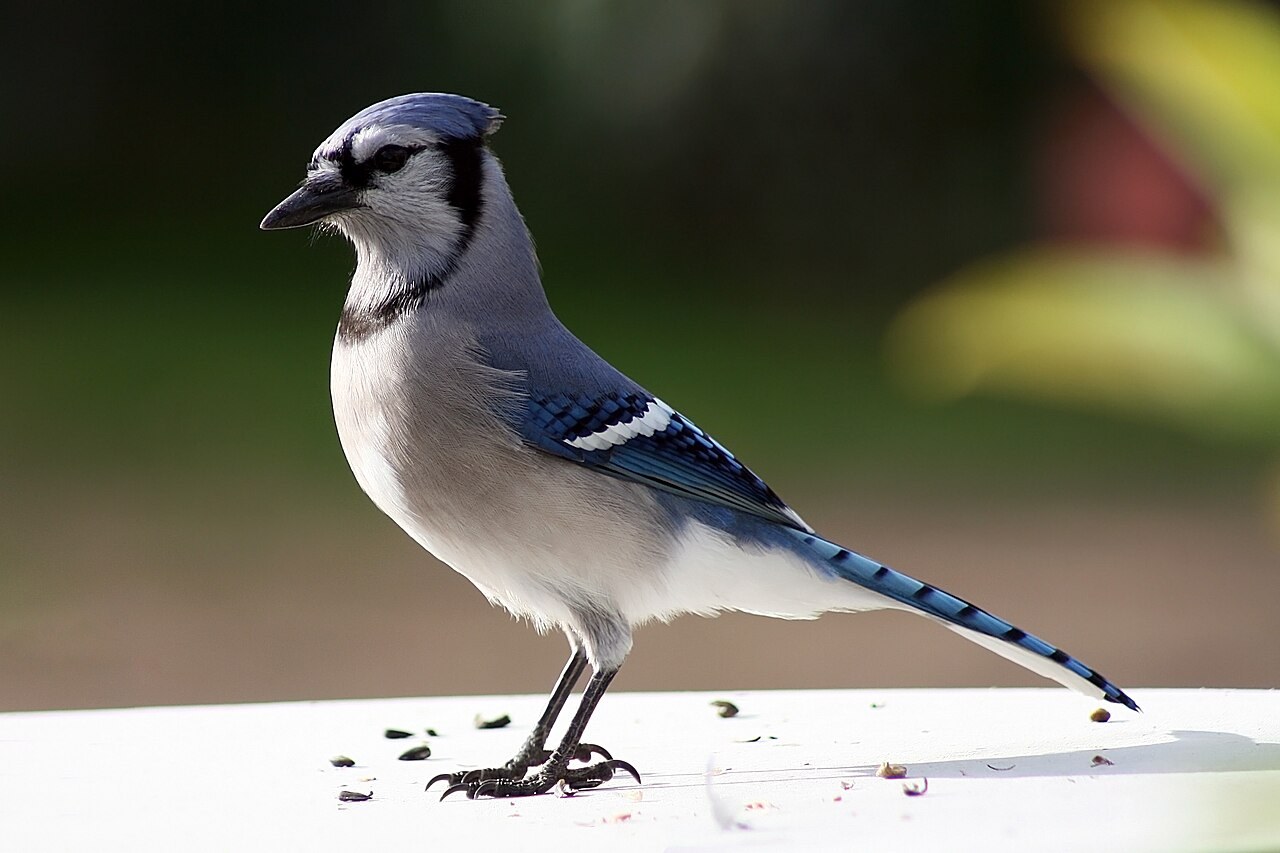


Blue Jay vs Canada Jay (Cyanocitta cristata vs Perisoreus canadensis): The Complete Backyard Identification Guide
Quick Answer: The Fastest Way to Tell Them Apart
The loud blue jay and the quiet gray ghost of the north. Three rules:
- Color: bright blue = Blue Jay; soft gray and white = Canada Jay.
- Crest: crested = Blue Jay; round fluffy head = Canada Jay.
- Behavior: screams at you from a tree = Blue Jay; lands on your hand = Canada Jay.
At-a-Glance Comparison Table
The suburban show-off and the boreal camp robber, side by side. KEY rows separate fastest.
| Feature | Blue Jay | Canada Jay |
|---|---|---|
| Scientific Name | Cyanocitta cristata | Perisoreus canadensis |
| Length KEY | 9.8–11.8 in (25–30 cm) | 11.5 in (29 cm) |
| Wingspan | 13.4–16.9 in (34–43 cm) | 18 in (46 cm) |
| Weight | 2.5–3.5 oz (70–100 g) | 2.3–2.9 oz (65–82 g) |
| Overall Shape | Mid-sized crested songbird with a long tail | A fluffy, gray-and-white jay with a short bill and no crest — the “camp robber” |
| Male Plumage KEY | Bright blue above, white below, black necklace and crest; white wing patches (sexes alike) | Soft gray above, white face and forehead, dark cap on the nape; fluffy plumage (sexes alike) |
| Female Plumage | Identical to the male | Identical to the male |
| Bill Shape | Strong black bill | Short, black |
| Tail | Long blue tail barred with black and tipped white | Long, gray |
| Core Range KEY | East of the Rockies; woods, suburbs and parks | Boreal and northern mountain forests — Canada, Alaska, and high Rockies |
| Migration | Partly migratory — northern birds move south in flocks some falls | Non-migratory; survives winter on cached food glued with saliva |
| Feeder Presence | Daily visitor for whole peanuts, sunflower and suet; caches food in the yard | Bold at northern cabins and campgrounds; takes suet, bread and anything carried |
| Favorite Foods | Acorns, peanuts, sunflower, insects, occasional eggs | Insects, carrion, berries, cached camp food |
| Song KEY | Loud “jay-jay” screams; also soft, musical murmurs | Soft whistles and whispered mimicry |
| Flight Call | Perfect imitations of Red-shouldered and Red-tailed Hawks | A soft “wheek” and harsh scolds |
| Population Trend | Common; famous as the backyard sentinel | Stable but retreating with southern-edge warming |
Male Field Marks, Side by Side
Blue Jay — Male
- Bright blue crest and back; black necklace.
- White face and underparts.
- Mimics hawks — clears a feeder in seconds.
Canada Jay — Male
- Fluffy gray, white forehead, dark nape cap.
- Fearless — lands on hands at campsites.
- Nests in late winter, incubating in snow.
Female & Juvenile Marks, Side by Side
Blue Jay — Female
- Identical to the male.
- Caches acorns and peanuts across the yard.
- Loud alarm calls guard the whole flock.
Canada Jay — Female
- Identical to the male.
- Sits on eggs through February blizzards.
- Family groups stay together into summer.
Part-by-Part Anatomy Breakdown
Every part offers a check:
| Body Part | Blue Jay | Canada Jay |
|---|---|---|
| Color | Blue, white, black necklace | Gray above, white below and on the face |
| Crest | Prominent | None |
| Cap | Blue head | Dark cap only on the nape |
| Bill | Long, stout | Short and small |
| Plumage Texture | Sleek | Fluffy — dense insulation |
| Habitat | Woods, parks, suburbs | Boreal spruce and high mountain forest |
| Voice | Loud “jay-jay” screams | Soft “wheek” whistles and whisper songs |
Song & Call Comparison
Blue Jay
Voice: loud jay-jay screams, hawk imitations, and quiet musical “whisper songs”.
Behavior: the neighborhood alarm system — jays announce every predator.
Canada Jay
Calls: soft wheek whistles, harsh scolds and whisper-song mimicry.
Behavior: caches food on trees with sticky saliva.
Range & Seasonal Presence
The Blue Jay lives in eastern woodlands and suburbs — the jay of oak neighborhoods and feeders.
The Canada Jay lives in boreal and high-mountain conifer forest — Canada, Alaska, the northern border states and the Rockies. It nests in late winter, incubating through blizzards.
Feeder Behavior & Favorite Foods
- Blue Jay: peanuts, sunflower and corn at eastern feeders.
- Canada Jay: anything at northern cabins and campgrounds — suet, bread, bacon grease.
- Feeder style: Blue Jays haul and cache; Canada Jays glue food to trees with sticky saliva.
- Winter: both survive the cold on cached food — the Canada Jay in places far colder.
Temperament & Flock Behavior
Blue Jays are brash but wary — loud, watchful, quick to flush from a window feeder.
Canada Jays are astonishingly tame — gliding silently into camp and landing on hands, hats and open coolers.
6-Step Backyard ID Checklist
- Color. Blue = Blue Jay; gray-white = Canada Jay.
- Crest. Yes = Blue Jay; no = Canada Jay.
- Habitat. Suburbs = Blue Jay; spruce forest = Canada Jay.
- Tameness. Keeps distance = Blue Jay; begs at camp = Canada Jay.
- Bill. Long and stout = Blue Jay; short = Canada Jay.
- Voice. Screaming = Blue Jay; soft whistles = Canada Jay.
Frequently Asked Questions
- Color: Blue = Blue Jay; gray-white = Canada Jay.
- Crest: Crested = Blue Jay; fluffy round = Canada Jay.
- Habitat: Suburbs = Blue Jay; boreal forest = Canada Jay.
- Tameness: Wary = Blue Jay; camp robber = Canada Jay.
- Winter: Acorn caches = Blue Jay; saliva-glued larder = Canada Jay.
- Voice: Screams = Blue Jay; soft whistles = Canada Jay.