
Blue Jay vs Eastern Bluebird


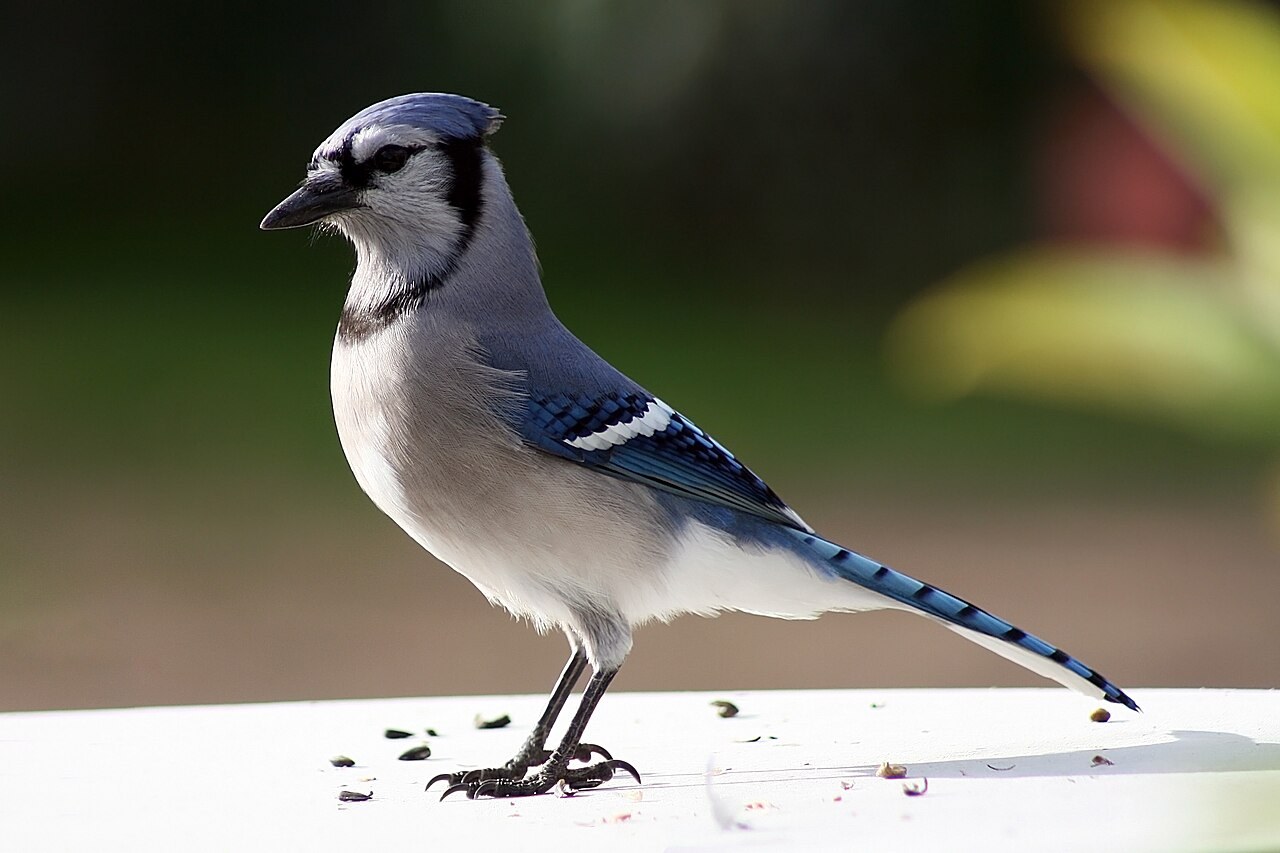


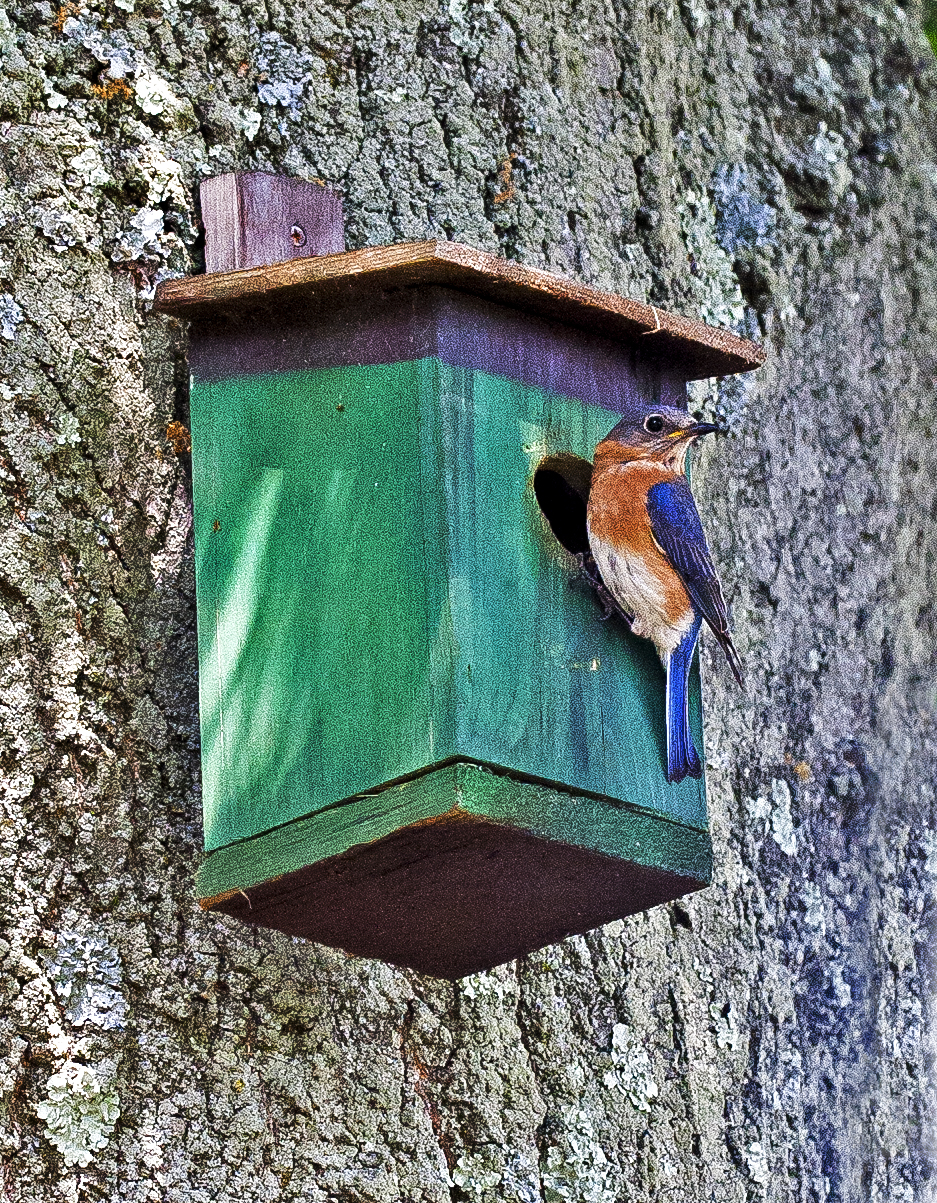


Blue Jay vs Eastern Bluebird (Cyanocitta cristata vs Sialia sialis): The Complete Backyard Identification Guide
Quick Answer: The Fastest Way to Tell Them Apart
The two birds people mean by “bluebird.” Three rules:
- Size: robin-sized or bigger = Blue Jay; sparrow-plus = bluebird.
- Pattern: blue-and-white with a black necklace and crest = Blue Jay; blue back with a rusty-orange breast = bluebird.
- Manner: loud and bossy = Blue Jay; quiet and gentle = bluebird.
At-a-Glance Comparison Table
The big loud jay and the small gentle thrush, side by side. KEY rows separate fastest.
| Feature | Blue Jay | Eastern Bluebird |
|---|---|---|
| Scientific Name | Cyanocitta cristata | Sialia sialis |
| Length KEY | 9.8–11.8 in (25–30 cm) | 6.5 in (16.5 cm) |
| Wingspan | 13.4–16.9 in (34–43 cm) | 12.2 in (31 cm) |
| Weight | 2.5–3.5 oz (70–100 g) | 1.0–1.2 oz (28–34 g) |
| Overall Shape | Mid-sized crested songbird with a long tail | Small, plump thrush with a round head and short bill |
| Male Plumage KEY | Bright blue above, white below, black necklace and crest; white wing patches (sexes alike) | Brilliant royal blue above, rusty-orange throat and breast, clean white belly |
| Female Plumage | Identical to the male | Grayer blue above with blue wings and tail; duller rusty breast and white belly |
| Bill Shape | Strong black bill | Short, thin, dark |
| Tail | Long blue tail barred with black and tipped white | Short, blue, slightly notched |
| Core Range KEY | East of the Rockies; woods, suburbs and parks | East of the Rockies — meadows, orchards, open woods and nest-box trails |
| Migration | Partly migratory — northern birds move south in flocks some falls | Partial migrant; southern birds resident, northern birds withdraw in winter |
| Feeder Presence | Daily visitor for whole peanuts, sunflower and suet; caches food in the yard | Visits for live and dried mealworms and suet crumbles; nest boxes are the great attractant |
| Favorite Foods | Acorns, peanuts, sunflower, insects, occasional eggs | Insects, wild berries and fruit; mealworms at feeders |
| Song KEY | Loud “jay-jay” screams; also soft, musical murmurs | A soft, musical series of whistled phrases — “cheer-cheerful-charmer” |
| Flight Call | Perfect imitations of Red-shouldered and Red-tailed Hawks | A soft “chur-lee” and dry chatter |
| Population Trend | Common; famous as the backyard sentinel | Recovered strongly thanks to nest-box campaigns; stable to increasing |
Male Field Marks, Side by Side
Blue Jay — Male
- Bright blue crest and back; black necklace.
- White face and underparts.
- Mimics hawks — clears a feeder in seconds.
Eastern Bluebird — Male
- Royal blue back and head with a rusty-orange breast.
- Clean white belly below the rust.
- Perches low and upright, scanning for insects.
Female & Juvenile Marks, Side by Side
Blue Jay — Female
- Identical to the male.
- Caches acorns and peanuts across the yard.
- Loud alarm calls guard the whole flock.
Eastern Bluebird — Female
- Gray-blue above with blue wings and tail.
- Paler rusty breast than the male.
- Accepts nest boxes readily — watch for carrying grass in spring.
Part-by-Part Anatomy Breakdown
Every part offers a check:
| Body Part | Blue Jay | Eastern Bluebird |
|---|---|---|
| Size | 11 in, robust | 7 in, slim and upright |
| Crest | Prominent blue crest | None — round head |
| Pattern | Blue above, white below, black necklace | Blue above, rusty breast, white belly |
| Bill | Long, stout, black | Thin, short, black |
| Family | Corvidae — crow family | Turdidae — thrush family |
| Nest | Open stick cup | Cavities and nest boxes |
| Voice | Loud “jay-jay” screams | Soft, musical “truly-truly” |
Song & Call Comparison
Blue Jay
Voice: loud jay-jay screams, hawk imitations, and quiet musical “whisper songs”.
Behavior: the neighborhood alarm system — jays announce every predator.
Eastern Bluebird
Song: a soft, musical cheer-cheerful-charmer — gentle whistled phrases.
Calls: a soft chur-lee and dry chatter.
Range & Seasonal Presence
The Blue Jay is everywhere east of the Rockies — woods, parks and suburbs all year.
The Eastern Bluebird wants open country — meadows, orchards, golf courses and nest-box trails, with northern birds wintering in the Southeast.
Feeder Behavior & Favorite Foods
- Blue Jay: peanuts, sunflower, corn — loud visits, food cached for later.
- Eastern Bluebird: mealworms and suet nuggets — quiet, delicate feeder visits.
- Nest boxes: bluebirds use them; jays never do.
- Feeder politics: a Blue Jay arrival empties the feeder of smaller birds; bluebirds wait it out on a wire.
Temperament & Flock Behavior
Blue Jays are intelligent, loud and assertive — the self-appointed sheriffs of the backyard.
Eastern Bluebirds are mild — pairs sitting softly side by side, warbling quiet notes on spring mornings.
6-Step Backyard ID Checklist
- Size. Big = Blue Jay; small = bluebird.
- Crest. Present = Blue Jay; absent = bluebird.
- Breast. White + black necklace = Blue Jay; rusty = bluebird.
- Voice. Screaming = Blue Jay; soft whistles = bluebird.
- Nest. Stick nest = Blue Jay; nest box = bluebird.
- Feeder food. Peanuts = Blue Jay; mealworms = bluebird.
Frequently Asked Questions
- Size: Big = Blue Jay; small = bluebird.
- Crest: Yes = Blue Jay; no = bluebird.
- Breast: White + necklace = Blue Jay; rusty = bluebird.
- Family: Crow family = Blue Jay; thrush = bluebird.
- Boxes: Bluebird nests in boxes.
- Voice: Loud = Blue Jay; soft = bluebird.