
Orange-crowned Warbler


Orange-crowned Warbler (Leiothlypis celata): Complete Identification, Winter Feeding & Song Library
Quick Answer: How to Attract & Identify Orange-crowned Warblers
The Orange-crowned Warbler (Leiothlypis celata) is the plainest warbler in North America — olive-gray above, soft yellow below, with no wing bars and no bold pattern, just a thin pointed bill, a broken eye-ring, and an orange crown you will almost never see. In winter it becomes one of the few warblers you can actually attract: across the South and both coasts it visits suet crumbs, peanut butter smears, orange halves, and hummingbird nectar feeders, and it loves a shallow birdbath. Learn its fast trill that drops in pitch at the end. Compare the bolder Yellow-rumped Warbler, the other warbler at winter feeders — that one always shows a yellow rump.
Species Physical Profile & Morphometrics
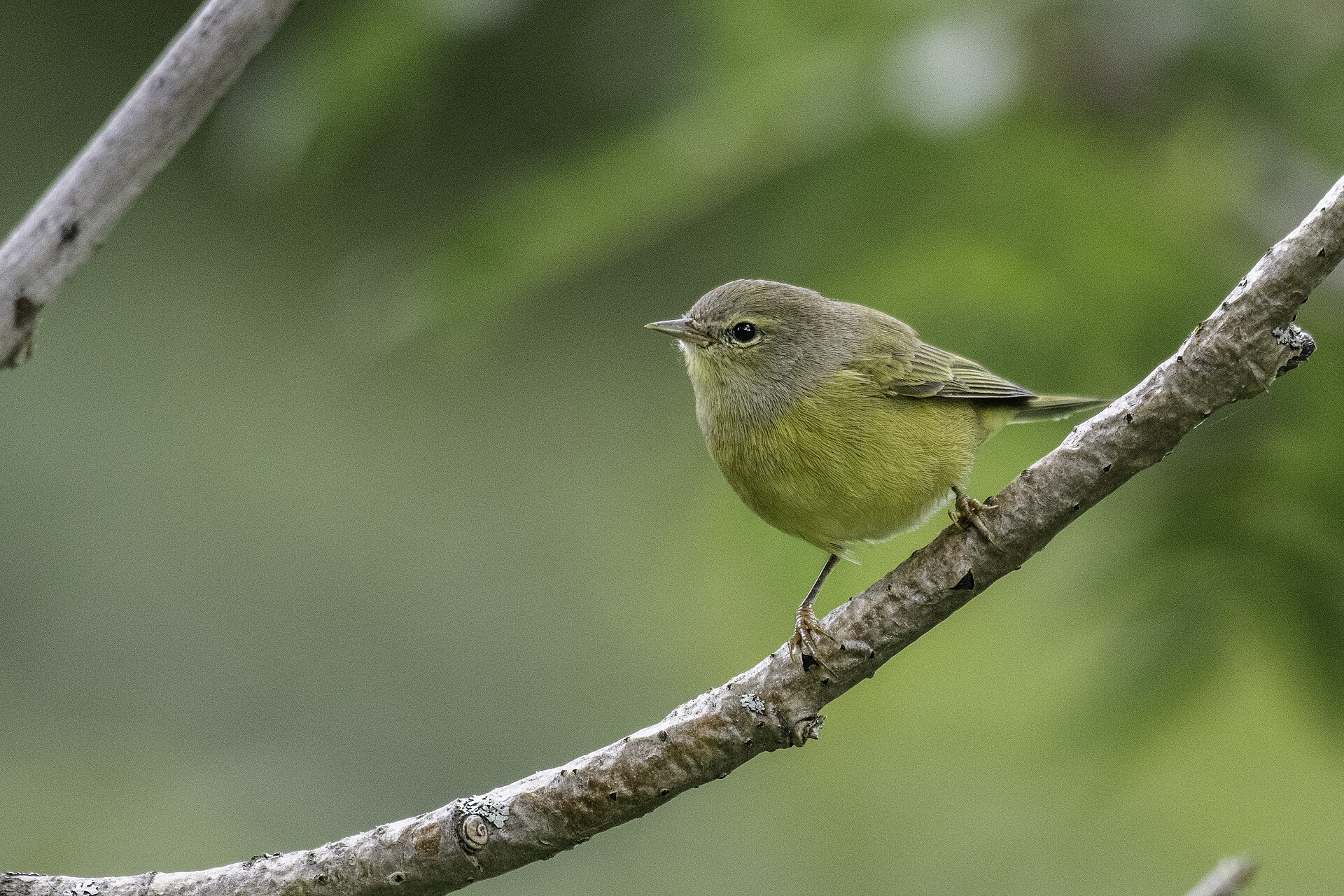
The Orange-crowned Warbler belongs to the wood-warbler family (Parulidae), and its identification rests on a paradox: it is the warbler with almost no field marks. What you look for is a slim, plain olive-yellow bird with a very thin bill — and then you confirm the small details.
The identification formula: plain olive-yellow plumage + thin pointed bill + dark eye-line with a broken eye-ring + yellow undertail coverts + falling trill. The orange crown patch exists but is concealed in the crown feathers and only flashes when the bird is agitated, singing hard, or soaked in the bath.
Essential Morphometric Field Marks:
- Body Length & Mass: 4.3 to 5.5 inches (11–14 cm) and 0.3 to 0.4 ounces (8–11 grams) — a small, slim warbler, noticeably lighter and finer than a Yellow-rumped Warbler.
- Wingspan: about 7.25 inches (18.4 cm); flight is quick and fluttery, usually in short dashes between shrubs rather than long sallies.
- Bill Structure & Color: A very thin, sharply pointed, slightly drooping bill — one of the finest bills of any U.S. warbler, built for gleaning tiny insects and sipping nectar.
- Color Pattern: Olive-gray above, drab yellow below with blurry streaking on the breast, a thin dark line through the eye, a broken whitish eye-ring, no wing bars, and bright yellow undertail coverts. The hidden crown patch is orange-rufous.
- Subspecies & Seasons: Four subspecies span the continent; Pacific slope lutescens birds are distinctly brighter and more yellow than the grayest eastern celata. Plumage is dullest in fall and freshest by spring. Sexes look nearly alike.
The slightly brighter half: males average a touch brighter yellow below with a slightly larger orange crown patch, but the difference is so subtle that sexing in the field is mostly guesswork. In spring, watch behavior instead — the singing bird delivering the falling trill from inside a shrub is the male.
The even plainer half — females average drabber and grayer, and fall juveniles can look almost gray-green with barely a hint of yellow below. On the dullest birds, rely on structure: the needle-fine bill, the broken eye-ring, and those yellow feathers under the tail.
Orange-crowned Warbler Vocalization Guide (3 Field Recordings)
The song is a rapid, high trill that drops in pitch at the end — the falling finish is the whole trick — and the call is a sharp, clean tsip. All three recordings below are real field audio, shared under free licenses via Wikimedia Commons — no simulations. For a deeper library, browse xeno-canto: Orange-crowned Warbler.
1. The Falling Trill
2. Trill with Calls
3. The Trill Up Close
Habitat, Range & the Backyard Life
The Orange-crowned Warbler breeds in shrubby forest edges, willow thickets, and chaparral from Alaska across Canada and south through the western mountains — but backyard birders meet it mostly in winter, when it spreads across the southern United States and into Mexico and Central America.

The Winter Yard Warbler
In winter the species shifts to yard habitat: hedges, brush piles, fruiting shrubs, and feeders. Wintering birds are found from the Atlantic coast of the Carolinas and Florida, along the Gulf, through Texas and the Southwest, and up the Pacific coast — with western lutescens birds especially faithful to gardens.
The winter diet is flexible: insects and spiders gleaned from bark and leaves, plus berries, suet, peanut butter, fruit, and nectar — an unusual menu that makes this the second-most-likely warbler at a U.S. feeder after the Yellow-rumped Warbler.
Backyard Behavioral Patterns & Social Dynamics
Shy by warbler standards, the Orange-crowned still shows four reliable backyard behaviors once you know where to look:
🧈 The Suet Crumbler
Winter birds work suet cages and suet crumbs on trays, picking tiny bits rather than hammering like a woodpecker. They often wait for a woodpecker to loosen the cake, then slip in for the crumbs — watch the cage after a Downy leaves.
🌺 The Nectar Sneak
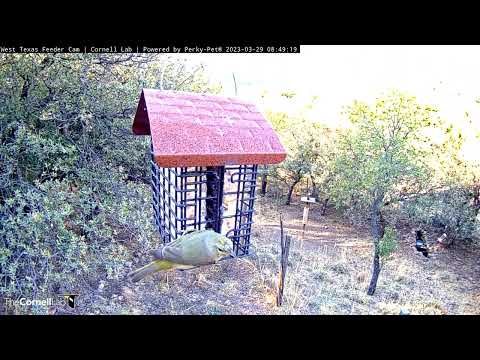
Few backyard moments surprise people more: this warbler sips from hummingbird and oriole nectar feeders, clinging to the ports and licking up sugar water between insect hunts. Halved oranges and grape jelly put out for orioles attract the same visits.
🛁 The Bath Lover
Orange-crowned Warblers are enthusiastic, daily bathers — a shallow basin, dripper, or mister near shrub cover is one of the most dependable ways to bring this skulker into the open, often several times a day in winter.
🌿 The Low Forager
Unlike treetop warblers, this species hunts low in shrubs, vines, and weedy edges, gleaning insects and spiders methodically from leaf undersides and bark. It flicks its wings and tail as it works, and a patient watcher can follow one around a single hedge for ten minutes.
Problem: “A Plain Little Yellowish Bird Is Drinking from My Hummingbird Feeder in Winter — What Is It?”
Almost certainly an Orange-crowned Warbler — and you are seeing one of the least-known backyard behaviors of any warbler:
The puzzle usually starts in winter across the southern states, when a small, completely unmarked olive-yellow bird appears at a nectar feeder, an orange half, or a suet cage. Nothing in a field guide’s warbler pages seems to match, because the bird has no bold pattern — and that is the answer. Confirm it with the thin pointed bill, the broken eye-ring, and the yellow under the tail; if you are lucky the bird will get agitated or wet at the bath and flash its hidden orange crown. The main lookalike at winter feeders is the Yellow-rumped Warbler, which always shows a yellow rump and yellow shoulder patches — if your bird is plain everywhere, it is an Orange-crowned. To keep it around, leave a nectar feeder up through winter, offer suet crumbs and orange halves, keep a shallow bath filled, and let a hedge or brushy corner grow a little wild.
Method 1: Winter Feeding — Suet, Fruit & Nectar
Winter is the season when a yard can genuinely attract this warbler:
-
Put Out Suet Crumbs, Not Just Cakes
This bird is a crumb picker, not a clinger — scrape suet into crumbs on a small tray or stump, or hang a cage where falling crumbs collect on a platform below. Position it within a few feet of shrub cover; the bird will dart out, grab, and retreat.
-
Smear Peanut Butter on Bark
Plain peanut butter pressed into bark crevices or a drilled log matches the species’ gleaning style exactly. Use unsalted, unflavored peanut butter, offer thin smears rather than globs, and refresh every few days in winter.
-
Offer Orange Halves and Jelly
The same setup that draws orioles — halved oranges and a small dish of grape jelly — pulls in wintering Orange-crowned Warblers. Spike an orange half on a branch or feeder peg near cover and replace it when it dries out.
-
Leave a Nectar Feeder Up
In the South and on the Pacific coast, keep one hummingbird feeder filled through winter (standard 4:1 water-to-sugar, no dye) — Orange-crowned Warblers use it freely, and in a cold snap the sugar water can be a genuine lifeline. Bring it in overnight if it might freeze.
Method 2: Water, Cover & Insect Habitat
The habitat half of the equation is what turns a one-day visitor into a winter regular:
-
Run a Shallow Bath or Dripper
For this species, water outpulls food. A shallow bath one to two inches deep with a dripper or mister, placed beside dense shrubs, gets daily visits in winter — the sound of dripping is the attraction. Scrub weekly and keep it ice-free.
-
Keep a Wild, Shrubby Corner
Orange-crowned Warblers live at hedge level: dense native shrubs, vines, and a brush pile give them foraging substrate and escape cover from the Cooper’s Hawks that patrol feeders. The neater the yard, the shorter the visit.
-
Plant Native Berry Shrubs
Elderberry, serviceberry, dogwood, and native honeysuckles provide the small fruits winter birds mix into their insect diet — and the flower and leaf growth feeds the insects themselves the rest of the year. A mixed planting beats a single shrub.
-
Skip Insecticides
Insects and spiders are still the core diet, even in winter. A yard without broad-spectrum sprays holds the gnats, caterpillars, and spiders that keep a warbler foraging in your hedge instead of the neighbor’s.
Tool Solution: Recommended Hardware for Orange-crowned Warblers
Equipment matched to a crumb-picking, nectar-sipping, bath-loving winter warbler:
Suet Cage with Crumb Tray
A wire suet cage mounted over a small platform or tray so loose crumbs collect below — exactly how this species prefers to feed. Choose plain or insect-blend cakes; in the Deep South use no-melt formulas.
- • Food: Suet cake + crumbs
- • Style: Cage over tray
- • Placement: Beside shrub cover
Hummingbird / Oriole Nectar Feeder
A standard nectar feeder left up through winter doubles as a warbler feeder — Orange-crowned Warblers cling to the ports and sip freely. Saucer styles with perches are easiest for them to use. Standard 4:1 sugar water, no dyes.
- • Food: 4:1 sugar water
- • Style: Saucer with perches
- • Season: Year-round in the South
Birdbath with Dripper
A shallow basin with a dripper or mister — the single most reliable Orange-crowned magnet. Moving sound draws them from cover, and the species bathes daily even in cold weather. Add a heater where nights freeze.
- • Depth: 1–2 in, gently sloped
- • Feature: Dripper or mister
- • Placement: Next to dense shrubs
Frequently Asked Questions
- Species Profile: The Orange-crowned Warbler (Leiothlypis celata) is a 4.3–5.5 inch, 0.3–0.4-ounce songbird (Parulidae), band code OCWA — the plainest warbler in North America, and one of the few that visits winter feeders.
- ID in One Look: Plain olive-gray above and yellowish below, no wing bars, a thin pointed bill, a dark eye-line with a broken eye-ring, and yellow under the tail; the orange crown is almost always hidden. Western lutescens birds are brighter yellow.
- The Sound: A fast, high trill that drops in pitch at the very end, plus a sharp tsip call — three real field recordings above.
- Range & Habit: Breeds from Alaska across Canada and the western mountains; winters across the southern U.S. from the Carolinas to California — a low-foraging bird of hedges, thickets, and shrubby yards.
- Attraction Formula: Suet crumbs on a tray, peanut butter smears, orange halves, a nectar feeder left up through winter, and a shallow bath with a dripper beside dense shrub cover.
- The Surprise: That plain yellowish bird drinking from your hummingbird feeder in January is this species — its flexible winter diet of suet, fruit, and nectar makes it the second-most-likely warbler at a U.S. feeder.

Bird Watching Log
Species: Orange-crowned Warbler (Leiothlypis celata)
| Orange-crowned Warbler (Broken Eye-ring Seen: Yes / No — Orange Crown Flashed: Yes / No — Suet/Nectar Feeder Used: Yes / No — Trill Heard: Yes / No) | |