
Scaled Quail


Scaled Quail (Callipepla squamata): Complete Identification, Habitat Guide & Sound Library
Quick Answer: How to Attract & Identify the Scaled Quail
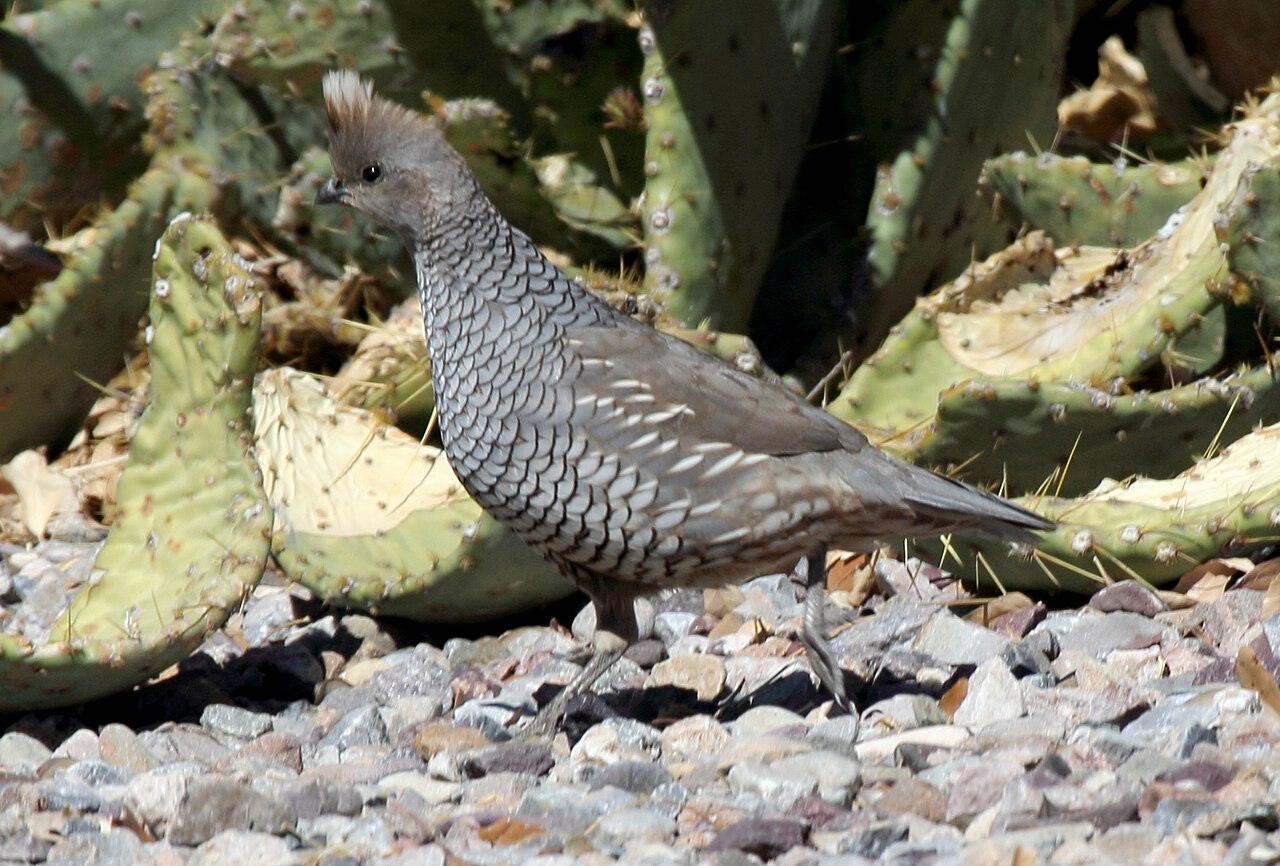
The Scaled Quail (Callipepla squamata) is the cottontop of the desert Southwest — a blue-gray quail with a white-tipped crest and breast feathers edged into neat overlapping scales. It lives in coveys that run rather than fly across mesquite flats and desert grassland. The voice is a loud, nasal two-syllable whistle and soft chucking covey calls. Southwestern yards attract them with millet scattered on bare ground, low water dishes, and dense thorny cover. They share the desert edge with the Gambel’s Quail and the Greater Roadrunner.
Species Physical Profile & Morphometrics
The Scaled Quail belongs to the New World quail family (Odontophoridae) and is a permanent resident of the arid Southwest — desert grassland and mesquite flats from Kansas and Colorado to Mexico. It is the drier-country cousin of the Gambel’s and California quail.
The identification formula: blue-gray body + scaly breast + white-tipped crest. A Gambel’s Quail has a black face, chestnut crown, and forward-curling black plume; the Scaled Quail’s crest is a short white-tipped tuft. Coveys on the run, crests bobbing, are the classic sighting.
Essential Morphometric Field Marks:
- Body Length & Mass: 10.0 to 12.0 inches (25–30 cm) and 5.4 to 6.9 ounces (151–196 grams) — plump, chicken-like, and ground-built with strong scratching legs.
- Wingspan: Wings are short and rounded, built for a single explosive flush rather than distance — a covey’s escape is usually a sprint, not a flight.
- Bill Structure & Color: A short, stout, dark seed-cracking bill, typical of quail — made for husking grass and weed seeds on the ground.
- Color Pattern: Blue-gray overall, the breast and back feathers dark-edged into overlapping scales; the crest ends in a conspicuous white cotton-ball tip; males show a chestnut-streaked flank and bolder face.
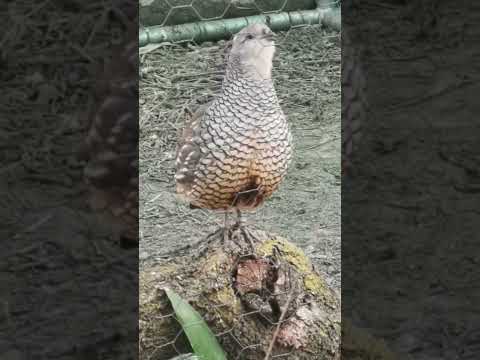
- Male vs. Female: The male’s face and throat are cleaner blue-gray with a bolder white crest tip; the female is browner with a duller crest — pairs stay close, and coveys merge into big winter groups.
The blue cottontop: clean blue-gray with crisp scales and a bright white crest tip, standing sentinel on a fence post while the covey feeds below, ready to sound the alarm.
The browner partner — same scaled pattern in warmer tones — she scratches a ground nest under a thorn shrub and leads a dozen downy chicks to the seed patch within a day of hatching.
Scaled Quail Vocalization Guide (0 Field Recordings)
The Scaled Quail’s voice is a loud, nasal two-syllable whistle — pay-COS or chi-COS-go — plus the soft chuck-chuck chatter that knits a feeding covey together. All recordings below are real field audio via Wikimedia Commons — no simulations. For a deeper library, browse xeno-canto: Scaled Quail.
1. The Nasal Whistle
2. The Covey Chatter
3. The Alarm Flush
Habitat, Range & the Desert Grassland
The Scaled Quail lives in arid grassland and desert scrub: mesquite flats, yucca grassland, cholla and cactus country, and ranch edges across the Southwest. It favors yards that border open desert with scattered thorny cover — a water dish and scattered seed can turn a desert-edge lot into covey territory.

The Southwest’s Blue Cottontop
The range covers the arid Southwest: southern Kansas and Colorado, most of New Mexico and Arizona, western Texas, and deep into Mexico. It does not migrate — coveys hold the same home range all year, shifting only toward water in drought.
For backyard birders: desert-edge yards anywhere in that range can host a resident covey — water is the key. In dry country a dependable shallow water dish and a daily scatter of millet make your yard the center of a covey’s world.
Backyard Behavioral Patterns & Social Dynamics
The Scaled Quail is a running, covey-living desert seed-eater — a yard bird of the arid edge. Four behaviors explain most of what you will observe:
🏃 The Runner
Given a choice, a Scaled Quail runs rather than flies — coveys sprint across open ground with crests bobbing, melting into thorn cover; the explosive flush is a last resort.
👨👩👧👦 The Covey Life
Outside breeding season they live in coveys of 10–40 birds — feeding, dust-bathing, and roosting in tight circles, tails out and heads out, for warmth and safety.
⏰ The Clockwork Schedule
Coveys feed early morning and late afternoon, resting through midday heat in shade — a yard with water learns its covey’s schedule within a week.
💧 The Water Dependence
In desert country, water rules everything: coveys center their range on dependable sources, and a reliable dish can hold a covey to your yard through the driest year.
Problem: “A Covey Visited for a Week, Then Disappeared. What Should I Do?”
The three most common Scaled Quail puzzles all have proven answers:
First, the wandering covey: coveys rotate among feeding spots and water — if your water dish ran dry or seed stopped, they moved on. Keep water constant; in desert country, reliability is everything, and the covey will return to the dependable yard. Second, the which-quail question: Gambel’s Quail overlaps in Arizona and New Mexico — check the crest; a white cotton tip on a blue-gray bird is Scaled, a black forward-curling plume on a rusty-capped bird is Gambel’s. Third, the vanishing act: quail rest motionless in shade through midday — watch at dawn and dusk, the covey’s feeding hours, and scan the edges of thorn cover rather than the open.
Method 1: Set the Table — Millet, Corn & Dependable Water
Design for a desert ground-feeder:
-
Scatter Millet & Cracked Corn
Millet and cracked corn on bare ground or low trays, refreshed daily at the same hour — coveys learn a schedule and arrive on it.
-
Provide Low Shallow Water
A ground-level shallow dish or pan, never dry — in arid country this is the single strongest attractant, drawing the whole covey morning and evening.
-
Feed Near Thorny Cover
Place seed within a sprint of mesquite, cholla, or dense brush — quail will not cross long open ground to feed with hawks overhead.
-
Keep a Dust Bath Patch
A bare patch of fine dry soil serves as the covey’s dust bath — dust bathing controls feather parasites and keeps the covey lingering.
Method 2: Build the Habitat — Thorny Refuge & Quiet Hours
Protect the cover, and the covey stays year-round:
-
Plant Dense Thorny Shrubs
Mesquite, acacia, agarita, and cholla — the escape cover every covey needs; a yard without it is a yard quail only pass through.
-
Keep a Brush Pile
A stacked brush pile near the feeding patch is instant quail architecture — shelter from hawks, shade at midday, and a night roost option.
-
Leave Seed Heads Standing
Unmowed grass and weed seed heads are the natural pantry — a neatly raked desert yard offers nothing to scratch for.
-
Control Cats & Loose Dogs
Ground birds cannot survive stalking pets — indoor cats and leashed dogs are the covenant of hosting a covey.
Tool Solution: Recommended Hardware for Scaled Quail
Equipment matched to a desert covey bird:
Ground Tray with Millet
A low tray of white millet and cracked corn beside thorny cover — the daily station that anchors a covey to your yard.
- • Food: Millet, cracked corn
- • Style: Ground or low tray
- • Timing: Same hour daily
Ground Water Station
A shallow ground-level pan kept full through every dry spell — in the Southwest, water outdraws any seed.
- • Depth: One to two inches
- • Placement: Near cover
- • Rule: Never let it run dry
Brush Pile & Thorn Cover
A maintained brush pile beside native thorny shrubs — the shelter that turns visiting quail into residents.
- • Structure: Stacked branches
- • Location: Near feeding patch
- • Bonus: Towhees & thrashers too
Frequently Asked Questions
- Species Profile: The Scaled Quail (Callipepla squamata) is a 10.0–12.0 inch, 5.4–6.9 ounce New World quail (Odontophoridae), band code SCQU — the blue-gray cottontop of the desert Southwest.
- ID in One Look: Blue-gray scaled breast, white-tipped crest, coveys running across open ground.
- The Sound: Loud nasal pay-COS whistle plus soft covey chucking; real field recordings above.
- Range & Habit: Permanent resident of southwestern desert grassland; runs rather than flies; centered on water in dry country.
- Feeder Formula: Millet and cracked corn on the ground at a set hour, a never-dry shallow water dish, thorny cover within a sprint.
- The Desert Covenant: Dependable water in drought is the promise that keeps a covey loyal to your yard.
Bird Watching Log
Species: Scaled Quail (Callipepla squamata)
| Scaled Quail (Covey Size: ___ — Crest Tip Seen: Yes / No — At Water: Yes / No — At Seed: Yes / No — Flush or Run: Flush / Run — Date & Time: ___) | |