
Gilded Flicker


Gilded Flicker (Colaptes chrysoides): Complete Identification, Habitat Guide & Sound Library
Quick Answer: How to Attract & Identify the Gilded Flicker
The Gilded Flicker (Colaptes chrysoides) is the golden-winged woodpecker of the Sonoran Desert — a large ground-feeding flicker whose underwings flash rich golden-yellow in flight, with a black crescent bib, spotted breast, cinnamon crown, and a red mustache on the male. It nests in holes excavated in saguaro cacti and hunts ants on the desert floor. The voice is a loud wik-wik-wik and a piercing kleer. Desert yards attract them with ground feeding areas, suet, and mature saguaros. They share the desert with the Gila Woodpecker and the Cactus Wren.
Species Physical Profile & Morphometrics
The Gilded Flicker belongs to the woodpecker family (Picidae) and is a permanent resident of the Sonoran Desert — Arizona’s low desert, southeastern California, and northwestern Mexico. It is the desert counterpart of the widespread Northern Flicker, and the two hybridize where their ranges meet.
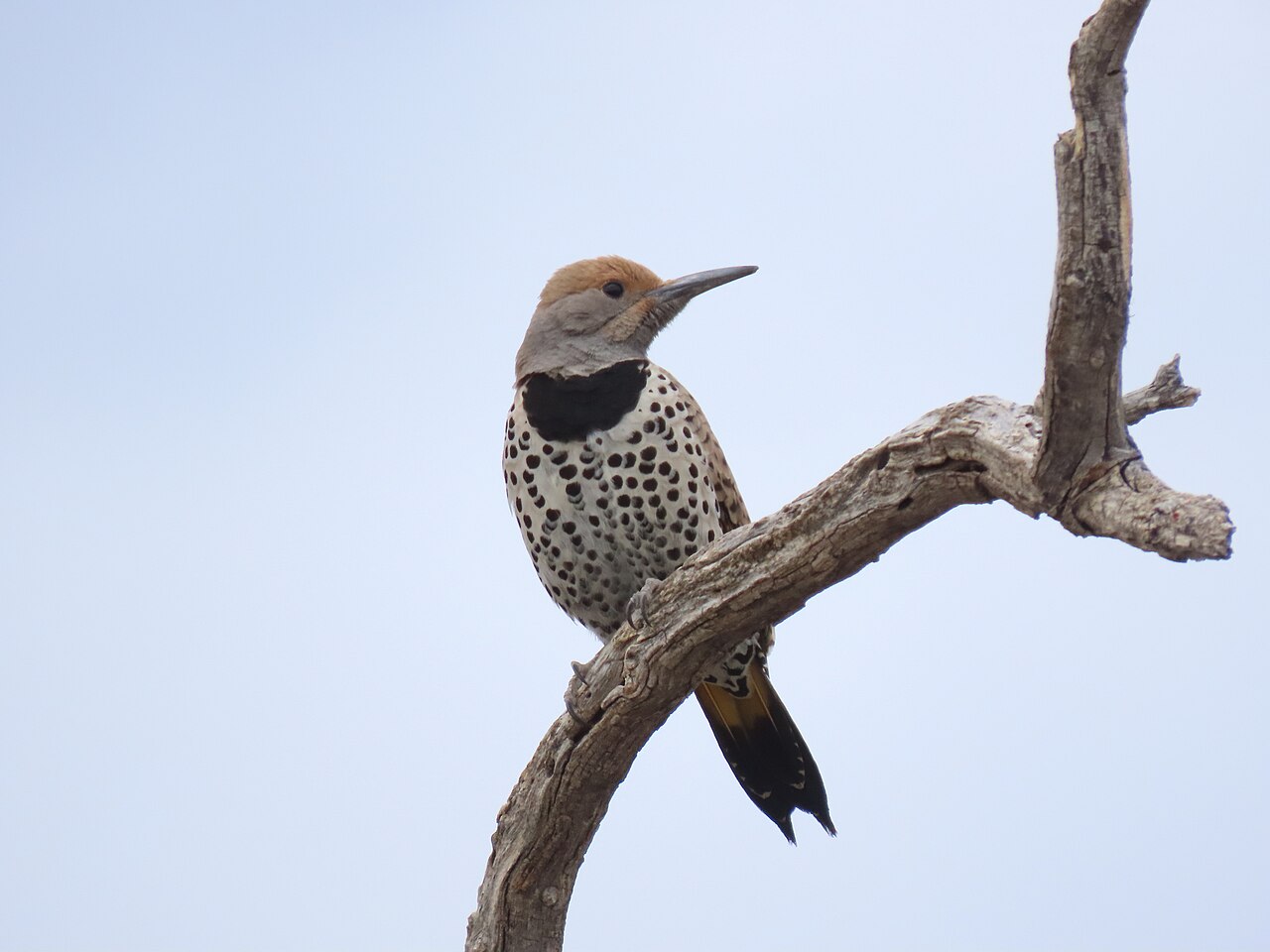
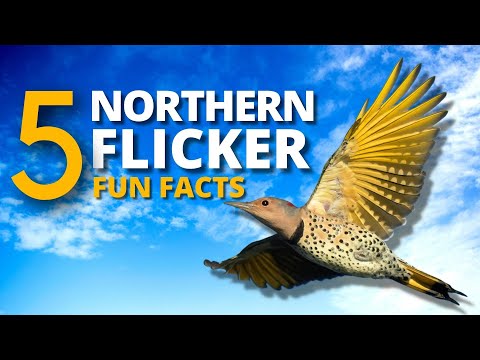
The identification formula: golden-yellow underwings + cinnamon crown + gray face. A yellow-shafted Northern Flicker also flashes yellow, but shows a tan face with gray crown — the Gilded reverses that pattern. The male Gilded’s mustache is red, and the rump is white in flight like all flickers.
Essential Morphometric Field Marks:
- Body Length & Mass: 11.0 to 12.6 inches (28–32 cm) and 3.5 to 4.2 ounces (100–119 grams) — a big, long-tailed ground woodpecker, jay-sized and then some.
- Wingspan: Wings are long and pointed for a woodpecker — strong level flight between saguaros, flashing golden underneath with every stroke.
- Bill Structure & Color: A long, slightly downcurved gray bill — ant-probing equipment, hammered into soil and cactus alike.
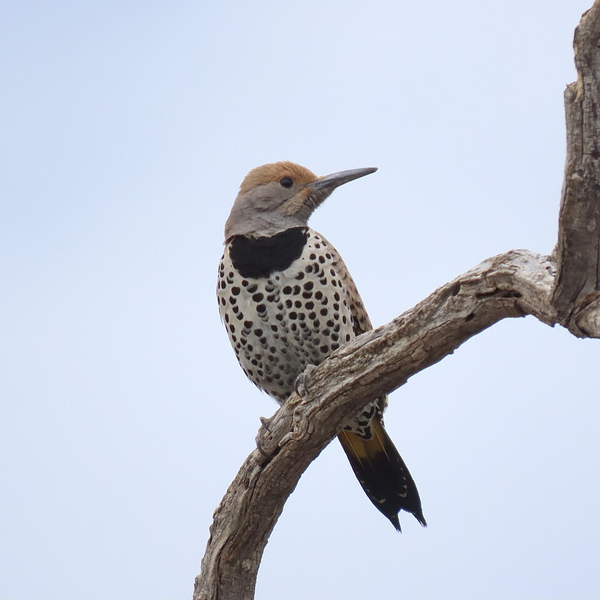
- Color Pattern: Barred brown back, spotted breast with black crescent bib, cinnamon crown, gray face, white rump; the underwings and undertail glow golden-yellow.
- Male vs. Female: The male wears a red mustache stripe; the female’s face is unmarked gray — at the saguaro nest hole, the mustache tells you who is on duty.
The red-mustached tenant: clinging to a saguaro rib at the nest hole, golden wings flickering as he arrives with a beakful of ants for the chicks.
The plain-faced partner — no mustache, same golden wings — she shares excavation and incubation in the cool cactus cavity, safe from the desert sun.
Gilded Flicker Vocalization Guide (0 Field Recordings)
The Gilded Flicker’s voice is a loud wik-wik-wik series and a piercing kleer — the classic flicker vocabulary in a desert accent. All recordings below are real field audio via Wikimedia Commons — no simulations. For a deeper library, browse xeno-canto: Gilded Flicker.
1. The Wik-Wik-Wik
2. The Piercing Kleer
3. Saguaro Drumming
Habitat, Range & the Saguaro Desert
The Gilded Flicker lives in the saguaro deserts of the Sonoran basin: cactus-studded slopes, mesquite bosques, desert washes, and the desert-edge suburbs of Arizona. Wherever giant saguaros stand, this woodpecker has nest holes; wherever bare desert soil lies open, it has an ant buffet.

The Desert’s Golden Wings
The range is compact: southern Arizona, southeastern California’s Colorado River valley, and northwestern Mexico — the saguaro belt. It does not migrate; desert yards host the same residents all year.
For backyard birders: desert-edge yards in Phoenix, Tucson, and Yuma country can host a pair — water, open ground, and a standing saguaro (or an accepted nest box) are the three ingredients.
Backyard Behavioral Patterns & Social Dynamics
The Gilded Flicker is a ground-hunting, cactus-nesting desert original. Four behaviors explain most of what you will observe:
🐜 The Ant Harvester
Like all flickers it feeds mostly on the ground, hammering into soil and ant nests and licking up ants with a two-inch sticky tongue — watch bare desert floor, not tree trunks.
🌵 The Saguaro Excavator
It chisels nest cavities into living saguaro cacti — the cactus walls the wound into a hard boot, and the hole serves desert wildlife for decades.
💛 The Golden Flash
The golden underwing flash in flight is the quickest field mark in the desert — a yellow-winged flicker here is either Gilded or its hybrid; the face pattern settles it.
💧 The Water Visitor
In the hottest months it visits ground water daily — a shallow desert-edge basin is a front-row seat to golden wings at dawn.
Problem: “I Saw a Yellow-Winged Flicker in Arizona — Gilded or Northern? What Should I Check?”
The three most common Gilded Flicker puzzles all have proven answers:
First, the face pattern: a Gilded Flicker has a cinnamon crown and gray face; a yellow-shafted Northern Flicker has the reverse — gray crown, tan face. Hybrids occur along the contact zone and can mix both. Second, the missing bird: Gilded Flickers are quiet and dispersed in winter, often foraging alone on open ground at dawn — walk the bare desert edges early rather than watching the feeder. Third, the saguaro question: if a pair investigates a saguaro in your yard, let them excavate — the cavity is harmless to a healthy cactus, legally protected, and shelters desert wildlife for decades after.
Method 1: Set the Table — Open Ground, Suet & Water
Design for a ground-feeding desert flicker:
-
Keep Bare Ground Open
Open patches of bare desert soil near cover — flickers hunt ants on the ground; gravel and lawn both shut the kitchen.
-
Offer Suet on a Post
A suet cage on a post or dead snag — desert flickers take suet readily, especially in the cool season.
-
Provide Ground Water
A shallow ground-level basin — the strongest draw in the hot months; expect dawn and dusk visits.
-
Skip Ant Poisons
Never broadcast ant killer where flickers forage — the ants are the food, and the poison moves straight up the food chain.
Method 2: Build the Habitat — Cacti, Snags & Desert Cover
Keep the giants standing, and the golden wings return:
-
Protect Every Saguaro
Mature saguaros are irreplaceable nest towers — they take 50+ years to reach cavitiy-worthy size; protect them all.
-
Leave Dead Snags & Posts
Dead mesquite snags and old posts serve as drumming posts, lookouts, and suet stations.
-
Plant Native Mesquite & Palo Verde
Mesquite and palo verde edges build the insect-rich cover that supports the ants and beetles flickers eat.
-
Respect the Quiet Hours
Watch at dawn and dusk from a seated spot — desert flickers are shyest at midday and boldest in the golden hours.
Tool Solution: Recommended Hardware for Gilded Flicker
Equipment matched to a desert ground woodpecker:
Post-Mounted Suet Cage
A suet cage on a post or snag near open ground — the cool-season staple for desert flickers.
- • Food: Suet cakes
- • Placement: Post near open ground
- • Season: Best October–April
Ground Water Basin
A shallow basin at ground level — in saguaro country, water is worth more than any seed.
- • Depth: One to two inches
- • Placement: Open sightlines
- • Rule: Never dry in summer
Saguaro & Native Plantings
Saguaro, mesquite, and palo verde — decades to maturity, but they build the only habitat this bird truly needs.
- • Plants: Saguaro, mesquite
- • Timeline: Generational
- • Bonus: Gila woodpeckers & elf owls
Frequently Asked Questions
- Species Profile: The Gilded Flicker (Colaptes chrysoides) is an 11.0–12.6 inch, 3.5–4.2 ounce woodpecker (Picidae), band code GIFL — the golden-winged tenant of the saguaro desert.
- ID in One Look: Golden underwings, cinnamon crown, gray face, red mustache on the male, white rump in flight.
- The Sound: Loud wik-wik-wik series and piercing kleer calls; real field recordings above.
- Range & Habit: Permanent Sonoran Desert resident; hunts ants on the ground; nests in living saguaros.
- Feeder Formula: Open bare ground, post-mounted suet, never-dry ground water, and zero ant poison.
- The Legacy Holes: Its saguaro cavities house elf owls and wrens for decades — protect every giant cactus.
Bird Watching Log
Species: Gilded Flicker (Colaptes chrysoides)
| Gilded Flicker (Male Red Mustache / Female Plain — Golden Wings Seen: Yes / No — Ground Feeding: Yes / No — At Water: Yes / No — Date & Time: ___) | |