
Black Phoebe


Black Phoebe (Sayornis nigricans): Complete Identification, Habitat Guide & Sound Library
Quick Answer: How to Attract & Identify the Black Phoebe
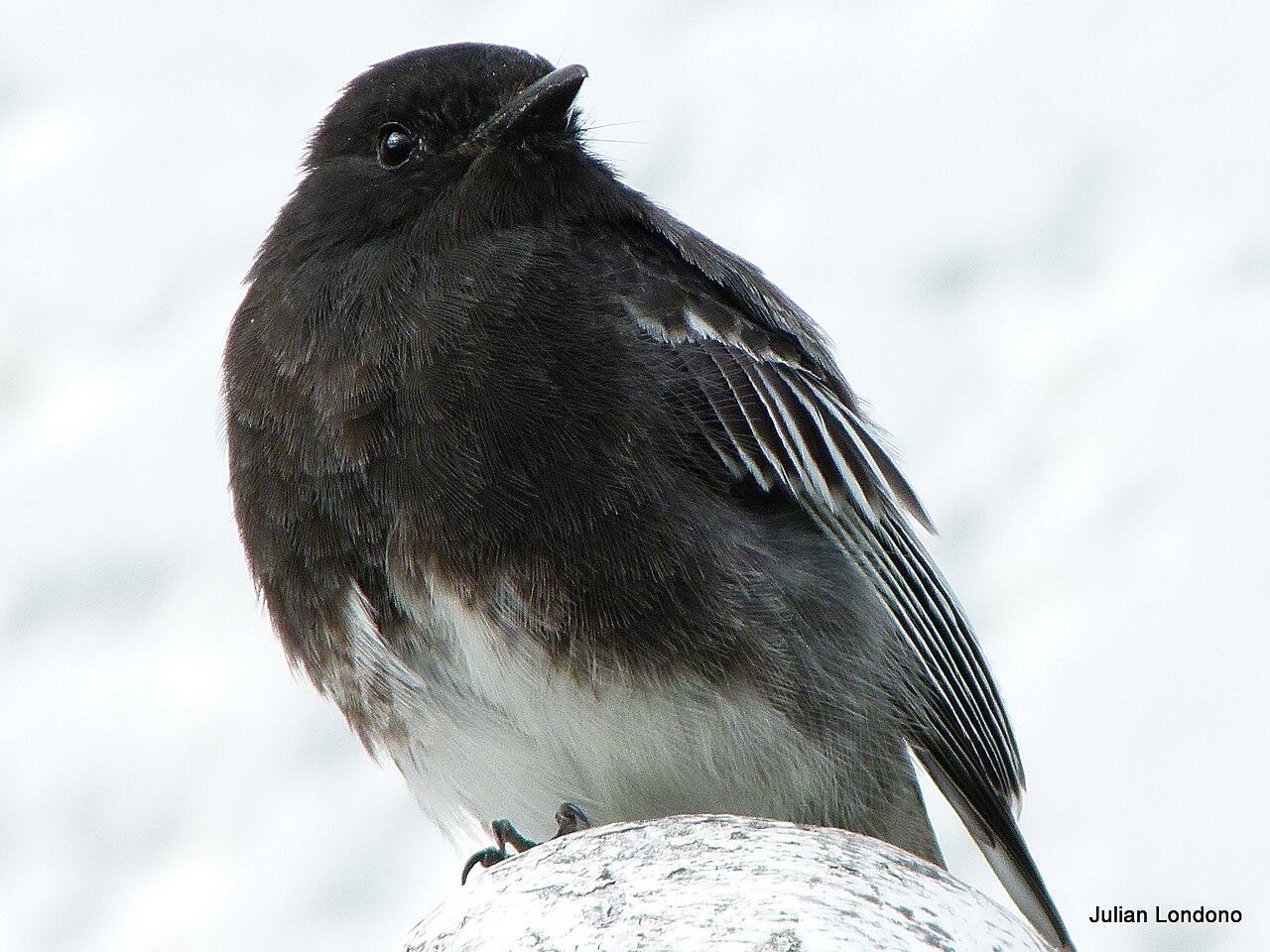
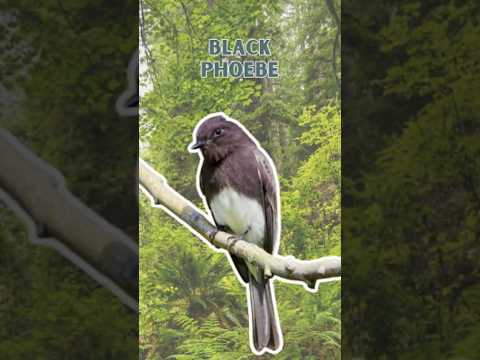
The Black Phoebe (Sayornis nigricans) is the flycatcher of western water — sooty black above and on the chest, clean white on the belly, a tuxedo worn low over streams and ponds. It hawks insects from waterside perches, dipping its tail between sallies, and plasters a mud-cup nest under bridges, culverts, and eaves. The song is a bright, squeaky tee-hee, tee-hoo. Western yards attract them with moving water, low waterside perches, and sheltered nest sites. They share the stream bank with the American Dipper and the Barn Swallow.
Species Physical Profile & Morphometrics
The Black Phoebe belongs to the tyrant flycatcher family (Tyrannidae) and is the water-loving phoebe of the West — streams, rivers, ponds, canals, and backyard fountains from Oregon and Colorado south through Mexico, year-round.
The identification formula: black hood and breast + clean white belly + waterside perch. Say’s Phoebe is cinnamon-bellied in dry country; Eastern Phoebe is gray-brown and eastern. Nothing else in the West wears this sharp a tuxedo this close to water.
Essential Morphometric Field Marks:
- Body Length & Mass: 6.3 inches (16 cm) and 0.5 to 0.7 ounces (14–20 grams) — the compact middle phoebe, all business at the water’s edge.
- Wingspan: 10.6 to 11 inches (27–28 cm); flight is low and darting over water, with quick returns to the same perch.
- Bill Structure & Color: A slim all-black bill, broad at the base — built for snatching insects off the water’s surface film.
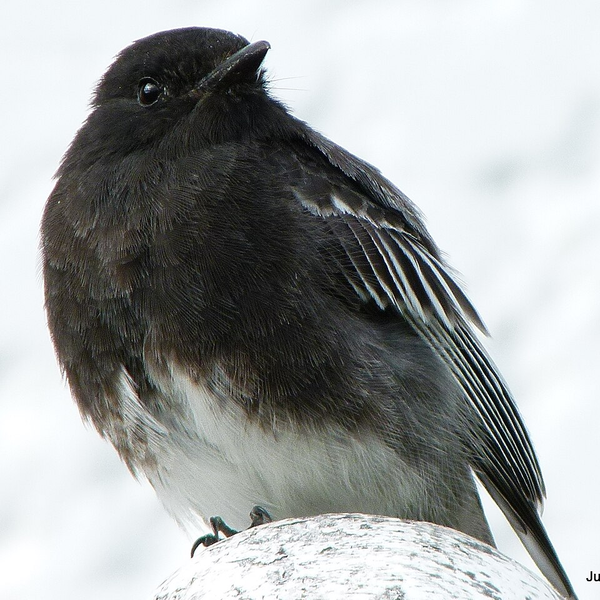
- Color Pattern: Sooty black head, breast, back, wings, and tail; crisp white belly — the cleanest pattern break of any western flycatcher.
- Male vs. Female: The sexes look alike — both wear the tuxedo, both sing, and both take turns at the mud nest and the hunting perch.
The fountain sentinel: perched on the rim of your pond pump, tail dipping, launching out to pick gnats off the surface like stones skipping in reverse.
Identical in dress — she molds the mud-cup nest pellet by pellet under a sheltered ledge and lines it with grass and hair.
Black Phoebe Vocalization Guide (3 Field Recordings)
The Black Phoebe’s song is a bright, squeaky tee-hee, tee-hoo with a rising-then-falling pattern, plus a sharp chip. All recordings below are real field audio via Wikimedia Commons — no simulations. For a deeper library, browse xeno-canto: Black Phoebe.
1. The Tee-Hee Song
2. The Sharp Chip
3. The Dawn Bout
Habitat, Range & the Western Waterside
The Black Phoebe lives where water meets a perch: streams, rivers, ponds, canals, fountains, and even backyard pools. It needs open water to hunt over, low perches to hunt from, and a sheltered vertical face to plaster its mud nest on.

The Resident of Running Water
The Black Phoebe is a year-round resident from Oregon and the Southwest south deep into Mexico — largely non-migratory, shifting only locally when shallow water freezes or dries.
For backyard birders: any western yard with moving water — a fountain, pond, or stream — plus a low perch and a sheltered overhang can hold a resident pair that works the water every daylight hour.
Backyard Behavioral Patterns & Social Dynamics
The Black Phoebe is a water-surface specialist with an architectural streak. Four behaviors explain most of what you will observe:
🎯 The Surface Snapper
It picks insects off the water’s surface in quick sallies — midges, mayflies, and mosquitoes lifted from the film an inch above the stream.
🏠 The Mud Architect
The nest is a mud cup plastered to a vertical face under shelter — bridges, culverts, eaves — built pellet by pellet like a swallow’s.
📍 The Same-Perch Habit
It hunts from favorite perches used for hours — learn the perch and you have found the bird for the season.
🦟 The Mosquito Tax
A waterside pair harvests enormous numbers of midges and mosquitoes — the most welcome tenant a pond can have.
Problem: “How Do I Keep a Black Phoebe Around? What Should I Do?”
The three most common Black Phoebe puzzles all have proven answers:
First, the disappearing phoebe: the birds leave when water stops moving or perches vanish — restore the fountain flow and a low rim perch, and the hunter returns within days. Second, the mud nest on the house: a nest over a doorway runs its course in about six weeks; protect the walk with a drop cloth, wait for fledging, then wash the site and add a shelf nearby if you want them back. Third, the chlorine question: phoebes hunt over pools safely, but provide a shallow fresh dish for drinking — birds should not drink heavily chlorinated water.
Method 1: Set the Table — Moving Water & Low Perches
Design for a surface-hunting flycatcher:
-
Keep Water Moving
A fountain, dripper, or pond pump — moving water draws the flying insects a phoebe hunts and catches the bird’s eye from a distance.
-
Provide Rim Perches
Low rocks, pump housings, or stakes at the water’s edge — the launchpads for surface sallies.
-
Offer a Nest Face
A sheltered vertical wall or beam near water — or a simple wooden shelf under an eave — gives the mud nest its anchor.
-
Skip the Spray
No insecticide near water — midges and mayflies are the menu; poison the insects and you lose the bird.
Method 2: Build the Habitat — Cover & Year-Round Water
Keep water reliable and shelter close, and the pair stays all year:
-
Plant Streamside Cover
Willows, sedges, and shrubs near the water — roosting shelter and insect nursery in one planting.
-
Keep Water Ice-Free
A heater or bubbler in cold snaps — resident phoebes must drink and hunt daily, even in a frost week.
-
Leave the Old Nest
Old mud cups are renovated and reused — a standing nest is next year’s welcome sign.
-
Watch the Edges
Dawn and dusk are feeding peaks — the bird works the surface hardest when the insects do.
Tool Solution: Recommended Hardware for Black Phoebe
Equipment matched to a waterside flycatcher:
Moving Water Feature
A fountain, dripper, or recirculating pond — the single most powerful phoebe attractor a western yard can offer.
- • Flow: Continuous ripple
- • Edge: Perchable rim
- • Bonus: Warblers & finches too
Waterside Perch Stakes
Low stakes or flat rocks at the water’s rim — the hunting stations every phoebe territory requires.
- • Height: 1–3 feet
- • Placement: Water’s edge
- • Bonus: Say’s phoebes in dry zones
Sheltered Mud-Nest Shelf
A rough wooden shelf under an eave near water — a head start for a mud-cup builder.
- • Placement: Under cover
- • Surface: Unfinished wood
- • Bonus: Barn swallows share it
Frequently Asked Questions
- Species Profile: The Black Phoebe (Sayornis nigricans) is a 6.3-inch, 0.5–0.7 ounce flycatcher (Tyrannidae), band code BLPH — the tuxedo hunter of western water.
- ID in One Look: Black hood and breast, clean white belly, tail dipping at the water’s edge.
- The Sound: Bright squeaky tee-hee, tee-hoo; sharp chip notes; real field recordings above.
- Range & Habit: Year-round western resident; nests are mud cups under bridges and eaves; hunts the water’s surface.
- Feeder Formula: Moving water, low perches, and live insects — no seed ever required.
- The Mosquito Dividend: A waterside pair harvests midges and mosquitoes all day — pest control in a tuxedo.
Bird Watching Log
Species: Black Phoebe (Sayornis nigricans)
| Black Phoebe (Tuxedo Seen: Yes / No — Tail Dipping: Yes / No — Tee-Hee Heard: Yes / No — Mud Nest Active: Yes / No — Date & Time: ___) | |