
Bohemian Waxwing
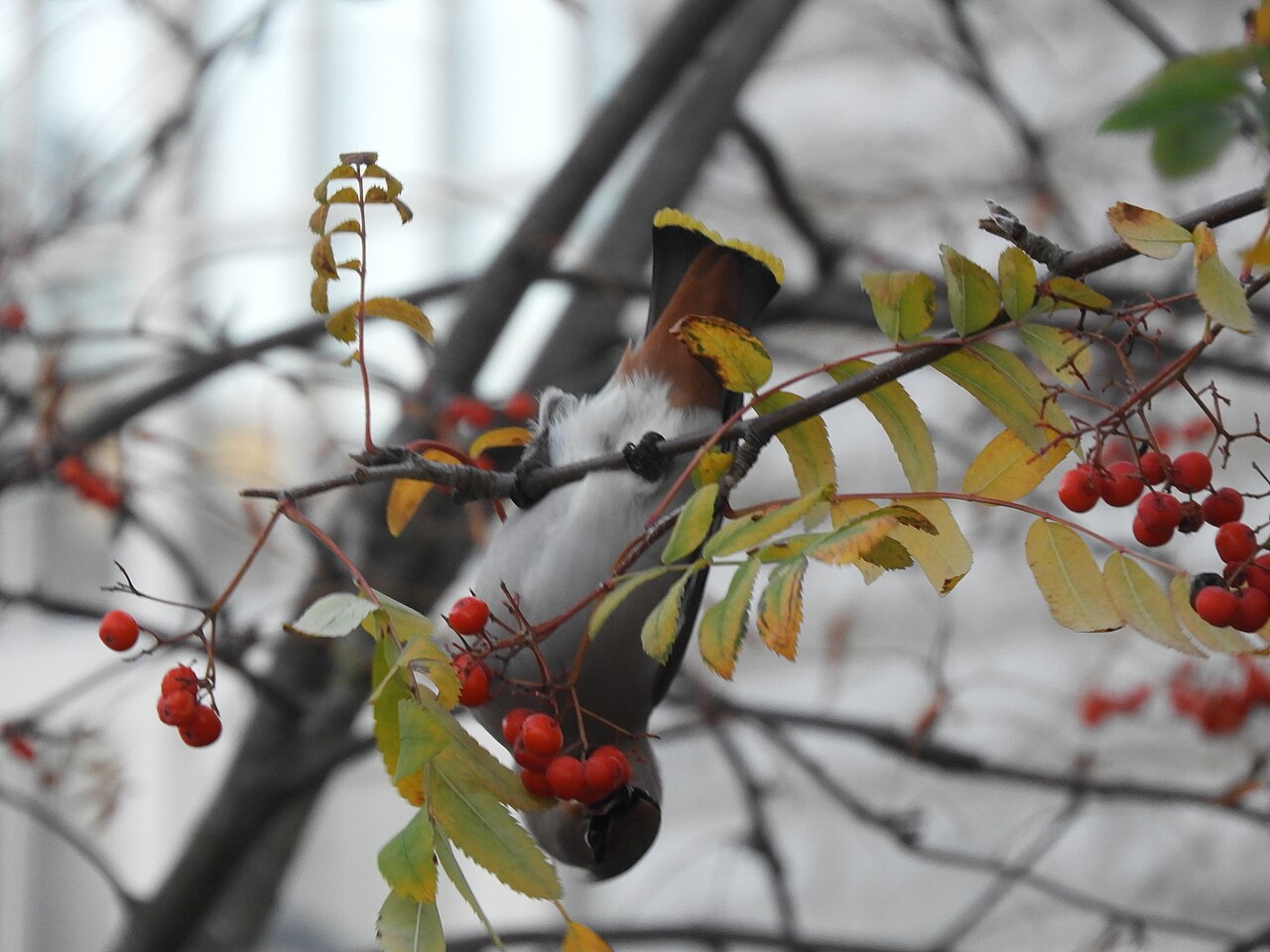


Bohemian Waxwing (Bombycilla garrulus): Complete Identification, Habitat Guide & Sound Library
Quick Answer: How to Attract & Identify the Bohemian Waxwing
The Bohemian Waxwing (Bombycilla garrulus) is the big northern waxwing of winter irruptions — grayish overall with a crest, black mask, rufous undertail coverts, waxy red wing tips, and a yellow tail band. It travels in flocks of hundreds, stripping mountain ash, crabapple, and juniper berries, with a high, buzzy trill call. Northern yards attract them with berry trees and open water. They share the winter fruit crop with the Cedar Waxwing and the American Robin.
Species Physical Profile & Morphometrics
The Bohemian Waxwing belongs to the waxwing family (Bombycillidae) and breeds across the boreal forest of Alaska and Canada, irrupting south in winter when the northern berry crop fails.
The identification formula: gray body + rufous undertail + yellow-and-white wing marks. The Cedar Waxwing is smaller, browner, and white under the tail; the Bohemian is bigger, grayer, and rust-vented, with more white and yellow in the wing.
Essential Morphometric Field Marks:
- Body Length & Mass: 7.5 to 9.1 inches (19–23 cm) and 1.6 to 2.5 ounces (45–70 grams) — a third bigger than a Cedar Waxwing.
- Wingspan: 12.6 inches (32 cm); flight is swift and direct, flocks swirling as one organism between berry trees.
- Bill Structure & Color: A short, wide, slightly hooked black bill — a berry plucker backed by a wide gape.
- Color Pattern: Grayish-brown body, black mask and bib, gray crest, rufous undertail coverts, yellow tail band, red waxy wing tips.
- Male vs. Female: The sexes are near-identical — his black bib is slightly larger; both wear the full waxwing finery.
The masked nomad: perched at the crown of a mountain ash, trilling softly, then leading two hundred birds down into the berries.
Near-identical — slightly smaller bib, same crest and wax tips; in the flock, only a caliper could part them.
Bohemian Waxwing Vocalization Guide (1 Field Recording)
The Bohemian Waxwing’s call is a high, buzzy trill — rougher and lower than the Cedar Waxwing’s thin whistles. All recordings below are real field audio via Wikimedia Commons — no simulations. For a deeper library, browse xeno-canto: Bohemian Waxwing.
1. The Buzzy Trill
2. The Flock Chorus
3. The Flight Calls
Habitat, Range & the Irruption Winter
The Bohemian Waxwing breeds in boreal forest and muskeg across Alaska and western Canada; in winter it wanders by berry crop — some years deep into the northern states, other years scarce south of the border.

The Berry-Crop Nomad
Breeding range spans the far northern forest; winter range shifts year to year with the mountain ash and juniper crop — big irruption years bring flocks to New England, the Great Lakes, and the mountain West.
For backyard birders: northern yards with mountain ash, crabapple, or juniper can host a flock in an irruption winter — a tree full of berries may hold hundreds for a day and be stripped by dark.
Backyard Behavioral Patterns & Social Dynamics
The Bohemian Waxwing is a nomadic berry specialist with a flocking lifestyle. Four behaviors explain most of what you will observe:
🍒 The Berry Storm
It feeds in coordinated flocks of hundreds — descending on a fruiting tree and stripping it in a single afternoon.
🧭 The Irruption
When the northern berry crop fails, the population floods south — irruption years bring the flocks to states that see none for a decade.
🍷 The Fermentation Risk
Overripe berries ferment, and the birds can get drunk — flocks occasionally tumble from perches after gorging on spoiled fruit.
💧 The Water Stop
Flocks visit open water daily — a heated bath beside a berry tree is the busiest corner of a northern winter yard.
Problem: “How Do I Identify and Host Bohemian Waxwings? What Should I Do?”
The three most common Bohemian Waxwing puzzles all have proven answers:
First, the waxwing split: check the undertail — rufous rust means Bohemian; clean white means Cedar. Bohemians are also grayer, bigger, and show yellow-and-white in the wing. Second, the vanishing flock: the birds strip a tree and leave — a yard full of waxwings at noon can be empty by dusk; enjoy the event, it is not a residency. Third, the year without them: irruptions are crop-driven and irregular — a yard with berries may see none for years and then hundreds; keep the trees and watch the forecasts each November.
Method 1: Set the Table — Mountain Ash, Crabapple & Juniper
Design for a winter berry nomad:
-
Plant Mountain Ash
European and American mountain ash — the premier waxwing magnet of the northern winter.
-
Keep Crabapples Standing
Persistent-fruited crabapples — fruit that holds into February feeds the late-winter flocks.
-
Add Junipers & Cedars
Berry-bearing junipers — the backup crop the flocks use between rowans.
-
Provide Winter Water
A heated bird bath — flocks drink daily, and water beside berries doubles the show.
Method 2: Build the Habitat — Safe Feeding for Hundreds
When the flock arrives, make the yard safe for the swarm:
-
Mark Big Windows
Screens, decals, or external markers — flock strikes happen when hundreds flush at once.
-
Diversify Fruit Timing
Early, mid, and late-ripening berry trees — fresh fruit all winter avoids the fermented-berry hazard.
-
Skip the Netting
Never net winter fruit — entangled waxwings are a preventable tragedy.
-
Watch the Forecasts
Irruption predictions come out each fall — finch and waxwing forecasts tell you if this is the year.
Tool Solution: Recommended Hardware for Bohemian Waxwing
Equipment matched to a northern berry flock:
Mountain Ash & Crabapple
Persistent-fruit trees — the crop that anchors a waxwing visit in an irruption year.
- • Trees: Rowan, crabapple
- • Feature: Winter-persistent fruit
- • Bonus: Robins & grosbeaks too
Heated Bird Bath
Open water through the freeze — the flock’s daily stop beside the berry trees.
- • Feature: Heated
- • Placement: Near fruit trees
- • Bonus: All winter birds
Berry Junipers
Cedar and juniper berries — the reserve food the flocks tap between rowan trees.
- • Plants: Native junipers
- • Season: Winter fruit
- • Bonus: Solitaires & bluebirds
Frequently Asked Questions
- Species Profile: The Bohemian Waxwing (Bombycilla garrulus) is a 7.5–9.1 inch, 1.6–2.5 ounce waxwing (Bombycillidae), band code BOWA — the northern berry nomad.
- ID in One Look: Gray body, rufous undertail, yellow tail band, crest and mask.
- The Sound: High buzzy trills in flock chorus; real field recordings above.
- Range & Habit: Boreal breeder; irruptive winter nomad following the berry crop.
- Feeder Formula: Berry trees and heated water — seed is ignored.
- The Irruption Rule: Some winters they come by the hundred; others not at all — plant for the big year.
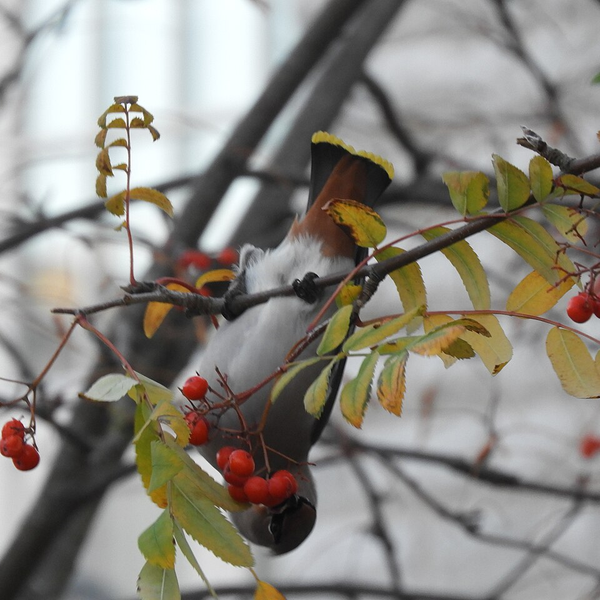
Bird Watching Log
Species: Bohemian Waxwing (Bombycilla garrulus)
| Bohemian Waxwing (Rufous Undertail Seen: Yes / No — Flock Size: ___ — Trill Heard: Yes / No — Berry Tree Used: ___ — Date & Time: ___) | |