
Carolina Chickadee
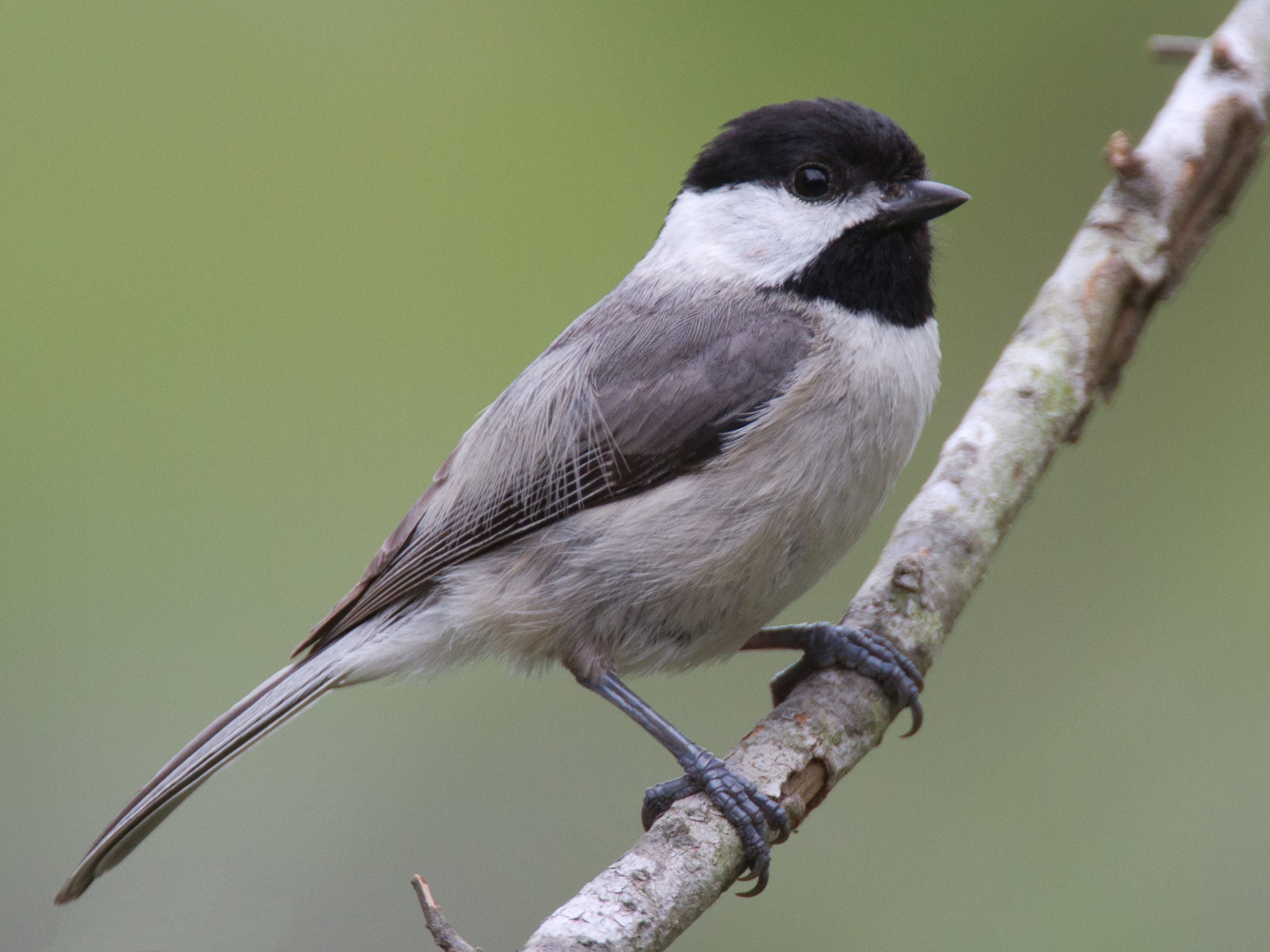


Carolina Chickadee (Poecile carolinensis): Complete Identification, Feeder Guide & Song Library
Quick Answer: How to Attract & Identify Carolina Chickadees
The Carolina Chickadee (Poecile carolinensis) is the southeastern twin of the Black-capped Chickadee — a tiny acrobat with a black cap and bib, bright white cheeks, and a smooth gray back, measuring just 3.9–4.7 inches and weighing under half an ounce. It is a non-migratory year-round resident of the southeastern United States and the mid-Atlantic, from New Jersey and Kansas south through Florida and central Texas. The surest way to separate it from its northern cousin is by voice: a four-note whistled song, “fee-bee fee-bay”, and a faster, higher-pitched “chick-a-dee-dee” call. Attract Carolina Chickadees with black oil sunflower seeds, peanut pieces, and suet in a tube feeder near tree cover — and hang a nest box with a 1-1/8-inch entrance, because this cavity nester readily moves into backyard boxes.
Species Physical Profile & Morphometrics
The Carolina Chickadee shares the classic chickadee build — oversized round head, tiny bill, plump body, and long narrow tail — and the same restless, acrobatic feeding style, hitching along twigs and hanging upside down to glean insects. It is a member of the tit family (Paridae) and the characteristic chickadee of the American Southeast.
The identification challenge is its near-twin, the Black-capped Chickadee. Compared side by side, the Carolina is slightly smaller, its folded wing shows duller gray feather edging instead of the Black-capped’s crisp white fringe, and the lower edge of its black bib is more ragged. Where their ranges meet, the two species sometimes hybridize — see the range section below. The southeastern Tufted Titmouse is larger, with a gray crest, peach flanks, and no black bib.
Essential Morphometric Field Marks:
- Body Length & Mass: Averages 3.9 to 4.7 inches (10–12 cm) with an adult mass of just 0.28 to 0.42 ounces (8–12 grams) — slightly smaller and lighter than the Black-capped Chickadee.
- Wingspan: Measures 5.9 to 7.9 inches (15–20 cm); wing feathers carry only dull gray edging, a key clue against the brighter white-fringed wings of its northern cousin.
- Bill Structure & Color: A short, stubby, solid black bill, used to hammer seeds held under one foot and to chisel nest cavities into soft, rotting wood.
- Color Pattern: Black cap and bib, bright white cheeks, smooth gray back, wings and tail, whitish belly, and warm buff flanks. Males and females look identical.
Crisp black cap flowing into a black bib with a slightly ragged lower edge, framing a clean white cheek patch. Back and wings are smooth medium gray with subdued feather edging; flanks carry a soft buff wash. Adult males and females cannot be told apart in the field.
Summer juveniles resemble fluffier, duller adults: the cap and bib look sooty and loose-textured rather than sleek, the cheeks are creamy, and the whole bird has a soft grayish cast until the first fall molt sharpens the pattern.
Carolina Chickadee Vocalization Guide (1 Recording + 2 Simulations)
Learn two sounds and you can find this bird anywhere in the Southeast: the four-note song “fee-bee fee-bay” and the quick “chick-a-dee-dee” call. Below is one public-domain field recording — Carolina Chickadees recorded in Wilkes County, North Carolina, by G. McGrane, hosted on Wikimedia Commons — followed by two faithful synthesized simulations labeled as such. For a deeper library of wild recordings, browse xeno-canto: Carolina Chickadee.
1. Wild Flock Recording — Wilkes County, NC
2. Whistled “Fee-Bee Fee-Bay” Song
3. “Chick-a-Dee-Dee” Contact Call
Habitat, Range & Year-Round Resident Biology
Carolina Chickadees live in deciduous and mixed woodland, forest edges, swamps, parks, and shaded suburbs throughout the southeastern United States — from the mid-Atlantic (New Jersey to Virginia) south through North Carolina, Georgia, and Florida, and west to central Texas, Oklahoma, and Kansas. They are strictly non-migratory: the same pair may hold the same wooded acres for years.

The Moving Boundary with Its Northern Twin
Along a narrow band from New Jersey through Pennsylvania, Ohio, and Missouri to Kansas, Carolina and Black-capped Chickadees meet — and sometimes hybridize, producing birds with intermediate plumage and scrambled songs. Long-term studies show this contact zone has been creeping northward, with Carolinas pushing into former Black-capped territory as winters grow milder.
A southern yard with mature shade trees, a shrubby edge, and a dependable feeder can host the same chickadee flock all twelve months. In winter the local flock travels with Tufted Titmice, nuthatches, and Downy Woodpeckers — where the chickadees lead, the others follow.
Backyard Behavioral Patterns & Social Dynamics
Carolina Chickadees run the same clever playbook as their northern relatives — tuned for southeastern woods. Four signature behaviors explain most of what you will observe:
🎵 The Four-Note Songster
The whistled “fee-bee fee-bay” — high-low, high-low — is the fastest way to confirm this species, and it carries surprisingly far through bare winter woods. Hearing a two-note “fee-bee” instead, at the northern edge of the range, is your first hint of a Black-capped intruder or a hybrid.
🧠 One Seed at a Time, Remembered for Weeks
Like other chickadees, Carolinas cache single seeds in bark crevices and needle clusters all autumn, and their spatial memory lets them retrieve those hidden meals weeks later — a survival strategy that rewards yards offering a steady supply of cacheable black oil sunflower.
🤝 Flock Leader of the Southeast
In winter, Carolina Chickadees anchor mixed-species feeding flocks of Tufted Titmice, Brown-headed and White-breasted Nuthatches, kinglets, and Downy Woodpeckers. Their sharp “dee-dee-dee” alarms warn every species in earshot — put out a feeder and the whole guild usually arrives together.
🪵 Cavity Nester That Loves a Box
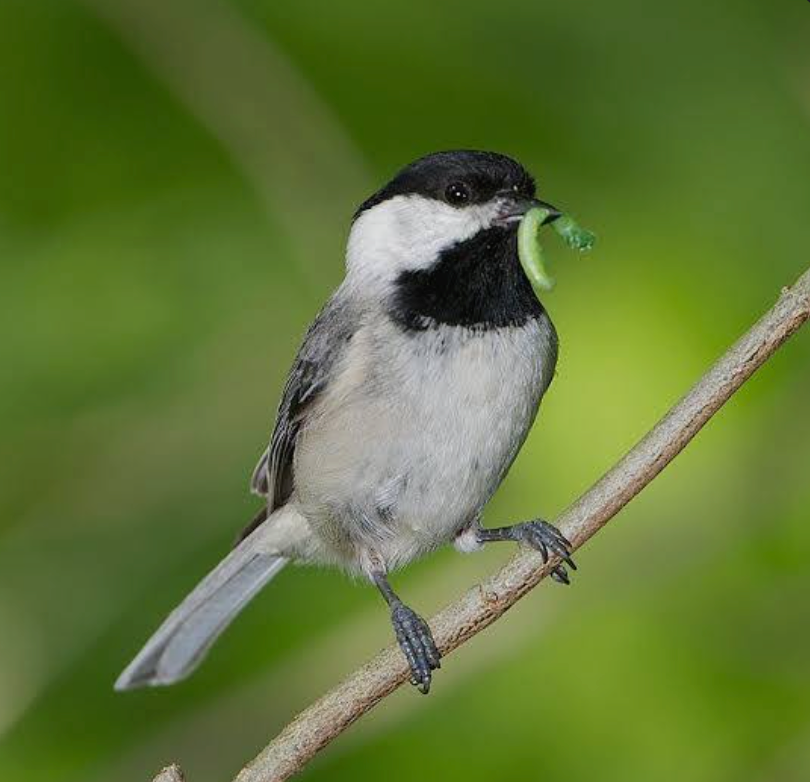
Pairs nest in natural cavities, old woodpecker holes, or self-excavated holes in soft dead wood — and they are among the most willing nest box tenants in the Southeast, especially when the box is pre-filled with wood shavings to “excavate.” The box-visiting bird in our gallery is typical spring behavior.
Problem: Why Your Yard’s “Chickadee” Gets Misidentified — or Skips You
In the Southeast, two frustrations dominate: calling every chickadee a “Black-capped” (they are almost all Carolinas), and watching a tiny bird get bullied off the feeder. The usual causes:
First, a Carolina Chickadee is a grab-and-go diner: it snatches one seed and dashes to cover to hammer it open. A feeder marooned in open lawn offers no safe retreat, so the local flock may visit a neighbor’s wooded edge instead. Second, at crowded hopper feeders, a 10-gram chickadee is outmuscled by cardinals, Blue Jays, and grackles many times its size. Third, stale seed and milo-heavy filler blends fail inspection — a bird that caches food checks every kernel. Fix cover, competition, and freshness, and two-second fly-bys become all-day traffic.
Method 1: Build Stations That Match the Grab-and-Go Style
Design for a tiny, acrobatic bird that eats one seed at a time — in cover, not in the open:
-
Hang a Tube or Mesh Feeder with Small Perches
A squirrel-resistant tube feeder with short perches favors clinging, upside-down chickadees while frustrating the bigger, heavier birds that dominate open trays. Our lab-tested roundup of the Best Tube Feeders for Small Birds compares proven models.
-
Place It Within 10 Feet of Trees or Shrubs
Chickadees commute between feeder and cover on every trip. A station one quick dash from a shade tree or dense shrub earns calmer, heavier traffic — and gives the flock an escape route when a hawk glides over.
-
Offer Fresh Seed in Small, Topped-Up Doses
Fill with less seed, more often. Southeastern humidity spoils seed fast, and chickadees inspect each kernel before taking it — a small, perpetually fresh feeder beats a large musty one every time.
-
Add a Suet Cage for Winter Calories
Even in the mild Southeast, cold snaps hit hard. A hanging suet cage beside the seed tube supplies concentrated fat, and in hot months a no-melt suet blend keeps the flock coming through summer.
Method 2: Stock the Year-Round Chickadee Pantry
Match the menu — and the real estate — to a resident that never leaves your block:
-
Lead with Black Oil Sunflower and Peanut Pieces
Thin-shelled black oil sunflower is the undisputed favorite — high fat, easy to hammer open, ideal for caching. Unsalted peanut pieces and sunflower chips are close runners-up. Skip blends padded with milo and wheat.
-
Hang a Nest Box with Wood Shavings by Late Winter
A box with a 1-1/8-inch entrance hole, mounted 5–15 feet up at the edge of trees, is often claimed by early spring. Add a layer of wood shavings — Carolina Chickadees strongly prefer to finish “excavating” the box themselves rather than move into a bare one.
-
Keep Water Available in Every Season
A shallow bath — shaded and scrubbed in southern summers — draws chickadees for quick drinks between foraging runs. In northern edge states, see the Best Heated Bird Baths for freeze-proof options.
-
Grow Native Trees and Skip the Pesticides
Chickadees stuff their nestlings almost entirely with caterpillars — hundreds a day at peak. Native oaks, cherries, and willows host the most caterpillars, and a pesticide-free yard keeps that protein pipeline flowing to the nest box.
Tool Solution: Recommended Hardware for Carolina Chickadees
Equipment sized for the smallest — and cleverest — regular at your feeder:
Squirrel-Resistant Tube Feeder
Weight-activated ports and short perches that favor acrobatic chickadees while shutting out squirrels and oversized bully birds.
- • Capacity: 2 lbs Black Oil Sunflower
- • Ports: 4–6 metal-reinforced feeding ports
- • Mount: Hang or 1-inch pole mount
Black Oil Sunflower + Peanut Pieces
Thin-hulled, high-fat kernels plus protein-rich peanut bits — the exact foods chickadees prefer to eat and to cache.
- • Purity: No milo or wheat filler
- • Kernel Ease: Thin shells, one-hammer open
- • Cache-Ready: Stores dry for weeks
Chickadee Nest Box (1-1/8″ Entry)
Cedar box sized for Paridae, with a predator-excluding 1-1/8-inch entrance — add wood shavings and let the pair finish the excavation.
- • Entrance: 1-1/8 in (28 mm) round hole
- • Floor: 4 × 4 in interior
- • Mount: 5–15 ft at woodland edge
Frequently Asked Questions
- Species Profile: The Carolina Chickadee (Poecile carolinensis) is a 3.9–4.7 inch, sub-half-ounce songbird with a black cap and bib, white cheeks, and buffy flanks; males and females look identical.
- Southeastern Resident: Non-migratory year-round, from the mid-Atlantic to Florida and west to Texas, Oklahoma, and Kansas; the chickadee of the southern backyard.
- ID vs. Black-capped: Slightly smaller, duller gray wing edging, more ragged bib edge — and a decisive four-note “fee-bee fee-bay” song; the two hybridize along a narrow, northward-creeping contact zone.
- Feeder Formula: A tube feeder with black oil sunflower and peanut pieces within 10 feet of cover, plus a suet cage — kept fresh and consistently stocked in humid southern weather.
- Nesting: Cavity nester that readily adopts nest boxes with a 1-1/8-inch entrance and a layer of wood shavings to finish “excavating.”
- Social Glue: Winter flocks led by chickadees bring Tufted Titmice, nuthatches, and woodpeckers to your feeders — one well-run station attracts the whole guild.
Bird Watching Log
Species: Carolina Chickadee (Poecile carolinensis)
| Carolina Chickadee (Subspecies / Notes: ____________________________) | |