
Blue Jay vs California Scrub-Jay


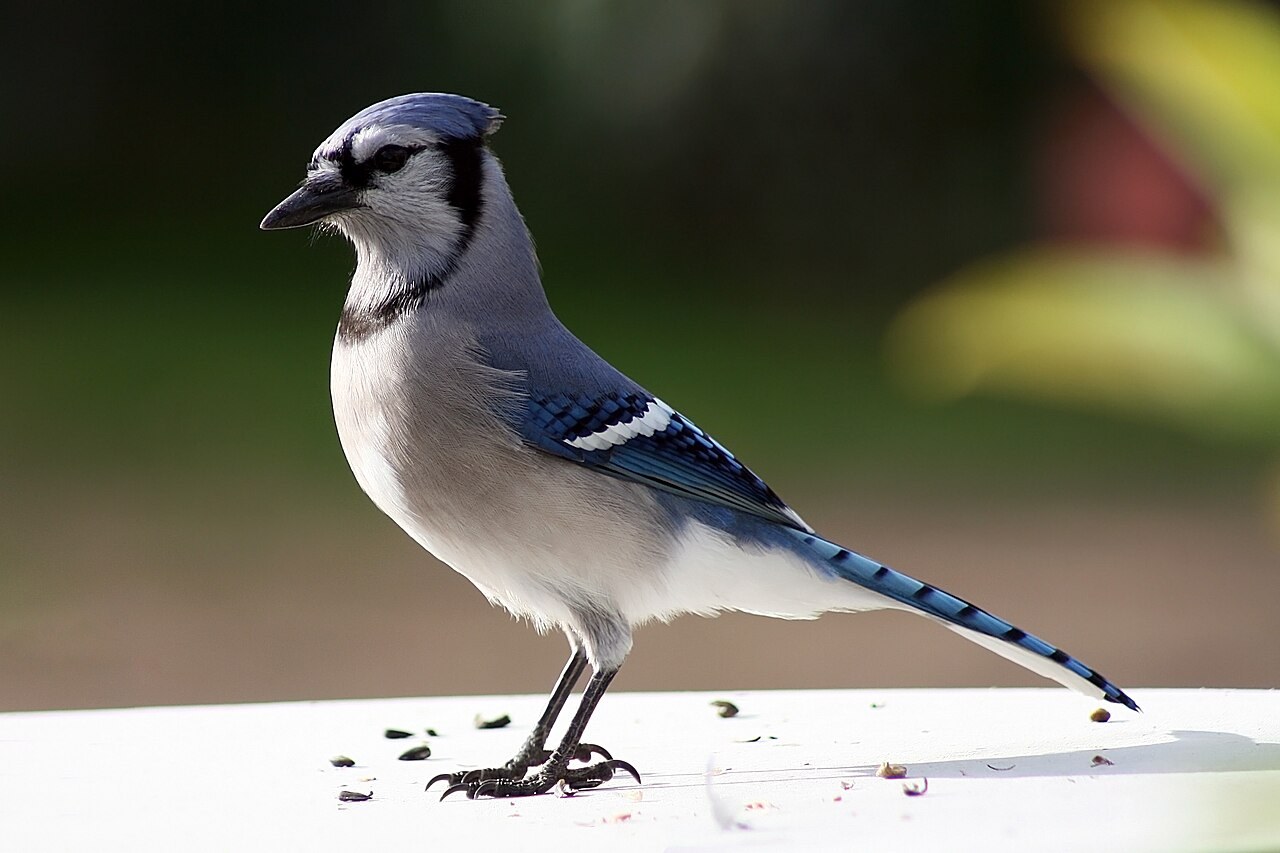


Blue Jay vs California Scrub-Jay (Cyanocitta cristata vs Aphelocoma californica): The Complete Backyard Identification Guide
Quick Answer: The Fastest Way to Tell Them Apart
The crested eastern jay and the crestless western jay. Three rules:
- Crest: present = Blue Jay; absent = California Scrub-Jay.
- Back: all blue = Blue Jay; gray-brown back patch = scrub-jay.
- Range: East = Blue Jay; Pacific slope = scrub-jay — they do not overlap.
At-a-Glance Comparison Table
The crested and the crestless, side by side. KEY rows separate fastest.
| Feature | Blue Jay | California Scrub-Jay |
|---|---|---|
| Scientific Name | Cyanocitta cristata | Aphelocoma californica |
| Length KEY | 9.8–11.8 in (25–30 cm) | 11.5 in (29 cm) |
| Wingspan | 13.4–16.9 in (34–43 cm) | 15.3 in (39 cm) |
| Weight | 2.5–3.5 oz (70–100 g) | 2.8 oz (80 g) |
| Overall Shape | Mid-sized crested songbird with a long tail | A long-tailed, crestless blue jay of the Pacific slope |
| Male Plumage KEY | Bright blue above, white below, black necklace and crest; white wing patches (sexes alike) | Blue head, wings and tail; gray-brown back patch; white throat set off by a blue necklace (sexes alike) |
| Female Plumage | Identical to the male | Identical to the male |
| Bill Shape | Strong black bill | Stout, black |
| Tail | Long blue tail barred with black and tipped white | Long, blue, unbarred |
| Core Range KEY | East of the Rockies; woods, suburbs and parks | Pacific slope from Washington to Baja — resident in oak and scrub |
| Migration | Partly migratory — northern birds move south in flocks some falls | Non-migratory |
| Feeder Presence | Daily visitor for whole peanuts, sunflower and suet; caches food in the yard | Bold feeder visitor — peanuts, sunflower, suet; caches acorns everywhere |
| Favorite Foods | Acorns, peanuts, sunflower, insects, occasional eggs | Acorns, insects, seeds, small eggs and nestlings |
| Song KEY | Loud “jay-jay” screams; also soft, musical murmurs | No true song; a repertoire of calls |
| Flight Call | Perfect imitations of Red-shouldered and Red-tailed Hawks | A harsh, rising “shreeenk” |
| Population Trend | Common; famous as the backyard sentinel | Stable; expanding into suburbs with planted oaks |
Male Field Marks, Side by Side
Blue Jay — Male
- Bright blue crest and back; black necklace.
- White face and underparts.
- Mimics hawks — clears a feeder in seconds.
California Scrub-Jay — Male
- Crestless blue jay with a gray back patch and white throat.
- Harsh “shreeenk” calls across the yard.
- Buries acorns by the thousand.
Female & Juvenile Marks, Side by Side
Blue Jay — Female
- Identical to the male.
- Caches acorns and peanuts across the yard.
- Loud alarm calls guard the whole flock.
California Scrub-Jay — Female
- Identical to the male.
- Pairs stay together year-round on territory.
- Watches cache sites jealously and re-hides robbed acorns.
Part-by-Part Anatomy Breakdown
Every part offers a check:
| Body Part | Blue Jay | California Scrub-Jay |
|---|---|---|
| Crest | Prominent blue crest | None — rounded head |
| Back | Blue | Gray-brown patch between blue wings |
| Throat | White with a black necklace | White set off by a blue necklace |
| Face | White face, black eye-line | Blue head with white brow spots |
| Tail | Blue with black bars and white corners | Long, plain blue |
| Range | East of the Rockies | Pacific slope, Washington to Baja |
| Voice | Loud “jay-jay”, hawk imitations | Harsh rising “shreeenk” |
Song & Call Comparison
Blue Jay
Voice: loud jay-jay screams, hawk imitations, and quiet musical “whisper songs”.
Behavior: the neighborhood alarm system — jays announce every predator.
California Scrub-Jay
Calls: a harsh, rising shreeenk and rapid scolds.
Behavior: sentinel birds scream at hawks and cats.
Range & Seasonal Presence
The Blue Jay lives east of the Rockies in woodlands, parks and suburbs.
The California Scrub-Jay owns the Pacific slope — oak woodland, chaparral and western suburbs. The continent between them means range alone settles the ID.
Feeder Behavior & Favorite Foods
- Blue Jay: whole peanuts, sunflower, corn — carried off to cache.
- California Scrub-Jay: the same menu — peanuts and sunflower cached under every bush.
- Feeder behavior: both haul food away rather than eat in place.
- Platform feeders: the best stage for watching either species work.
Temperament & Flock Behavior
Blue Jays are loud social schemers — mobbing owls, imitating hawks, emptying feeders.
California Scrub-Jays are bold sentinels — screaming at cats, watching caches jealously, and re-hiding acorns another jay saw them bury.
6-Step Backyard ID Checklist
- Crest. Present = Blue Jay; absent = scrub-jay.
- Back. All blue = Blue Jay; gray patch = scrub-jay.
- Necklace. Black = Blue Jay; blue = scrub-jay.
- Range. East = Blue Jay; Pacific = scrub-jay.
- Tail. Barred with white corners = Blue Jay; plain long blue = scrub-jay.
- Voice. “Jay-jay” = Blue Jay; “shreeenk” = scrub-jay.
Frequently Asked Questions
- Crest: Crested = Blue Jay; crestless = scrub-jay.
- Back: All blue = Blue Jay; gray patch = scrub-jay.
- Necklace: Black = Blue Jay; blue = scrub-jay.
- Range: East = Blue Jay; Pacific = scrub-jay.
- Voice: “Jay-jay” = Blue Jay; “shreeenk” = scrub-jay.
- Caching: Both plant forests of acorns.