
Broad-tailed Hummingbird vs Ruby-throated Hummingbird


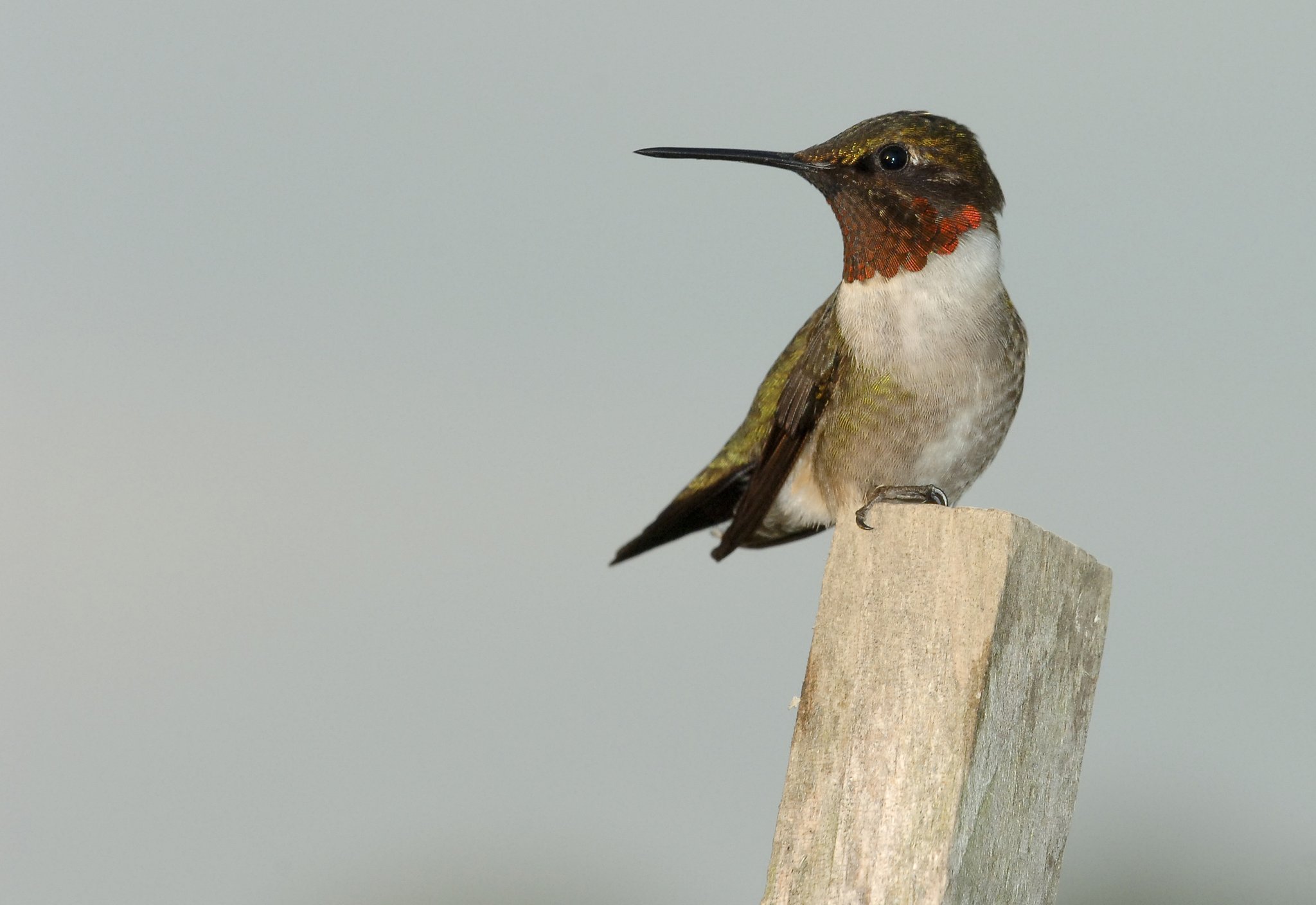


Broad-tailed Hummingbird vs Ruby-throated Hummingbird (Selasphorus platycercus vs Archilochus colubris): The Complete Backyard Identification Guide
Quick Answer: The Fastest Way to Tell Them Apart
The mountain hummer and the eastern hummer. Three rules:
- Male throat: rose-magenta = Broad-tailed; ruby-red = Ruby-throated.
- Wing sound: a metallic trill = Broad-tailed male; no trill = Ruby-throated.
- Range: western mountains = Broad-tailed; East = Ruby-throated.
At-a-Glance Comparison Table
The whistling westerner and the Gulf-crosser, side by side. KEY rows separate fastest.
| Feature | Broad-tailed Hummingbird | Ruby-throated Hummingbird |
|---|---|---|
| Scientific Name | Selasphorus platycercus | Archilochus colubris |
| Length KEY | 4.3 in (11 cm) | 3.1–3.5 in (8–9 cm) |
| Wingspan | 5.3 in (13 cm) | 3.1–4.3 in (8–11 cm) |
| Weight | 0.1–0.15 oz (3–4 g) | 0.1 oz (2–6 g) |
| Overall Shape | A Rocky Mountain hummingbird with a broad tail and a whistling wing-trill | Small, slim hummingbird |
| Male Plumage KEY | Iridescent rose-magenta throat, green back, white chest, rufous-washed sides; broad tail | Iridescent ruby-red throat (gorget) on a green body; forked tail; black mask |
| Female Plumage | Green above, white below with rufous flanks and a spotted throat; tail tips white | Green above, white below, no throat color; white-tipped rounded tail |
| Bill Shape | Long, straight, black | Straight, slender black bill |
| Tail | Broad, rufous-based in the male — and it whistles in flight | Forked (male) or rounded white-tipped (female) |
| Core Range KEY | Breeds in the Rocky Mountains and Great Basin; winters in Mexico | The only breeding hummingbird of the eastern US; winters in Central America |
| Migration | Long-distance migrant — the classic hummingbird of mountain meadows | Long-distance migrant, many crossing the Gulf of Mexico; present April–September |
| Feeder Presence | Sugar-water feeders all summer at mountain homes; red penstemon and scarlet gilia | The default sugar-water hummingbird of the entire East |
| Favorite Foods | Nectar and tiny insects | Nectar, sugar water (4:1), tiny insects and spiders |
| Song KEY | No true song; the male’s wings produce a loud metallic trill in flight | High squeaky chips and rapid twitters |
| Flight Call | Sharp “chit” notes | Quick “chip” notes; wings hum audibly |
| Population Trend | Stable; returns to the same mountain meadows each May | Increasing with feeder and garden planting |
Male Field Marks, Side by Side
Broad-tailed Hummingbird — Male
- Rose-magenta throat, rufous-washed sides.
- Wings whistle a metallic trill in flight — unmistakable.
- The hummingbird of Rocky Mountain meadows.
Ruby-throated Hummingbird — Male
- Ruby-red gorget — black-looking in shade, blazing in sun.
- Forked tail; black mask between eye and gorget.
- The East’s only breeding hummingbird.
Female & Juvenile Marks, Side by Side
Broad-tailed Hummingbird — Female
- Green and white with rufous flanks and white tail tips.
- Builds a lichen-covered cup on a pine or spruce branch.
- Arrives with the first mountain wildflowers.
Ruby-throated Hummingbird — Female
- Green and white, no throat color.
- White-tipped rounded tail.
- Aggressively defends feeders.
Part-by-Part Anatomy Breakdown
Every part offers a check:
| Body Part | Broad-tailed Hummingbird | Ruby-throated Hummingbird |
|---|---|---|
| Male Gorget | Rose-magenta | Ruby-red — black-looking in poor light |
| Wing Sound | Loud metallic trill (male) | Quiet whir |
| Male Flanks | Rufous-washed | Dusky green |
| Female Flanks | Rufous-washed | Plain pale |
| Female Tail | Rufous at the base | No rufous, white tips |
| Range | Rockies and Great Basin | East of the Rockies |
| Migration | To Mexico overland | Nonstop across the Gulf of Mexico |
Song & Call Comparison
Broad-tailed Hummingbird
Wing sound: the male’s wings produce a loud, metallic trilling whistle in flight.
Calls: sharp chit notes. (no open recording available)
Ruby-throated Hummingbird
Voice: high squeaky chips and twitters at feeders.
Behavior: males perform U-shaped dive displays in spring.
Range & Seasonal Presence
The Broad-tailed Hummingbird breeds in the Rocky Mountains and Great Basin, wintering in Mexico — the hummingbird of mountain meadows.
The Ruby-throated Hummingbird is the only breeding hummingbird of the East, migrating to Central America — many crossing the Gulf of Mexico nonstop. Their ranges barely touch on the central Plains.
Feeder Behavior & Favorite Foods
- Broad-tailed: mountain feeders, 4:1 sugar water — protect from freezing nights.
- Ruby-throated: eastern feeders hung by late April, cleaned twice weekly.
- Recipe: 1 part white sugar to 4 parts water for both; no dye.
- Flowers: penstemon and scarlet gilia (west); bee balm and trumpet vine (east).
Temperament & Flock Behavior
Broad-taileds are mountain showmen — whistling dive displays over flower meadows.
Ruby-throateds are fierce little generals — a single male will defend one feeder against a dozen rivals all summer.
6-Step Backyard ID Checklist
- Throat color. Magenta = Broad-tailed; ruby = Ruby-throated.
- Wing sound. Trill = Broad-tailed male.
- Range. Rockies = Broad-tailed; East = Ruby-throated.
- Female tail. Rufous base = Broad-tailed; none = Ruby-throated.
- Female flanks. Rufous wash = Broad-tailed; plain = Ruby-throated.
- Season. Midwinter hummingbird in the East = neither — likely a Rufous.
Frequently Asked Questions
- Throat: Magenta = Broad-tailed; ruby = Ruby-throated.
- Wings: Whistling = Broad-tailed male.
- Range: Rockies = Broad-tailed; East = Ruby-throated.
- Female Tail: Rufous base = Broad-tailed; none = Ruby-throated.
- Migration: Gulf-crosser = Ruby-throated.
- Nectar: 4:1 sugar water, no dye, for both.