
Broad-tailed Hummingbird


Broad-tailed Hummingbird (Selasphorus platycercus): Complete Identification, Feeder Guide & Mountain Attraction Handbook
Quick Answer: How to Attract & Identify Broad-tailed Hummingbirds
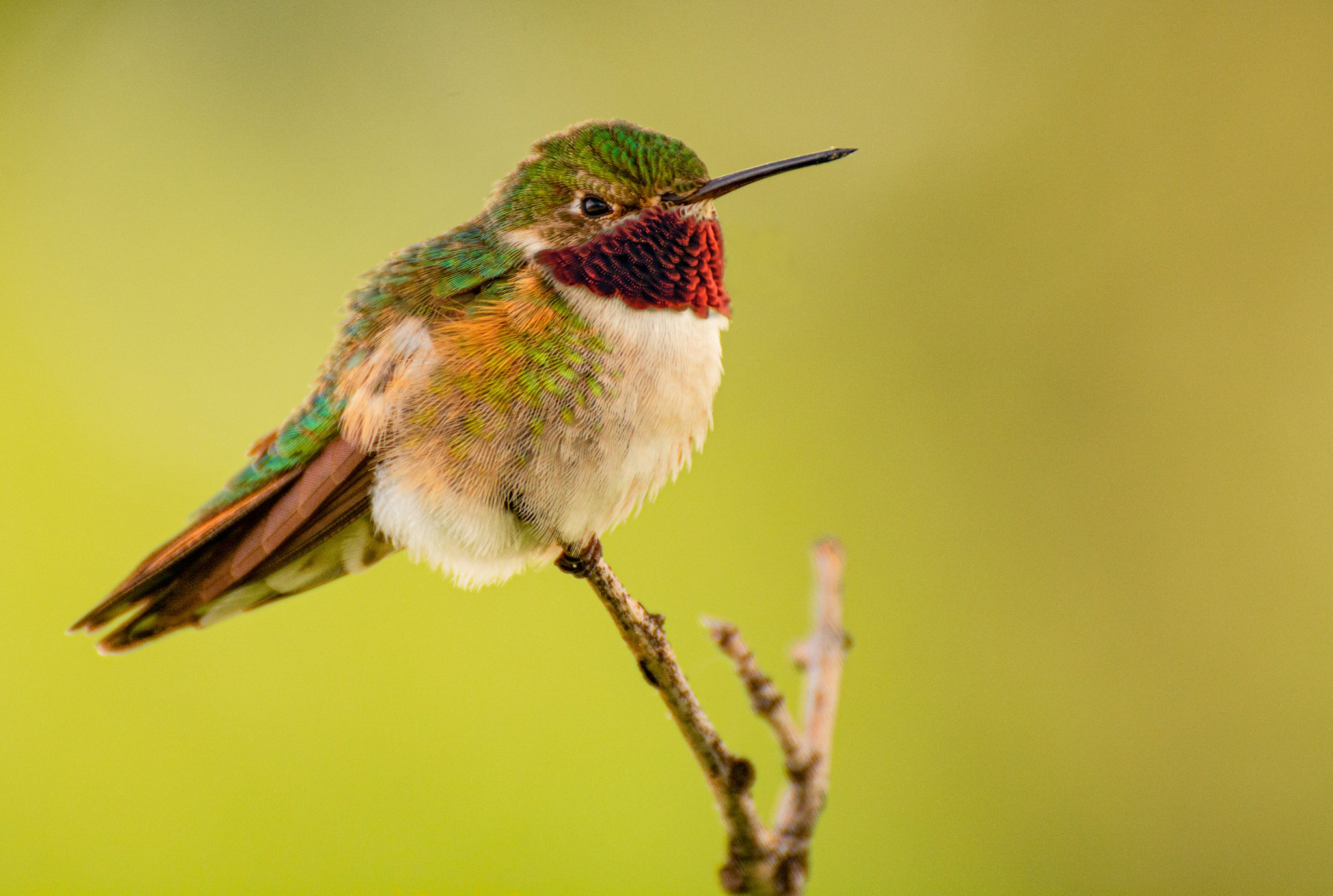
The Broad-tailed Hummingbird (Selasphorus platycercus) is the mountain hummingbird of the Rockies and Great Basin — a 3.5-inch bird that breeds in meadows and open pine woods up to 10,500 feet and announces itself with the male’s loud, metallic wing trill. The male wears a rose-magenta gorget over a white chest with buffy flanks; the female is green with cinnamon-washed sides. To attract them: hang red feeders of 4:1 white-sugar water by late April, protect them from late-spring freezes, and plant the mountain-meadow bloom — scarlet gilia, penstemon, Indian paintbrush, and columbine. It shares high-country yards with the migrating Rufous Hummingbird and the lower-elevation Black-chinned Hummingbird.
Species Physical Profile & Morphometrics
The Broad-tailed Hummingbird is a mid-sized member of the hummingbird family (Trochilidae) with a long straight bill, a broad rounded tail, and — on the male — wings that sing. In its mountain home it is often heard long before it is seen.
The identification formula: green-backed mountain hummingbird + buffy flanks + (on the male) a rose-magenta gorget + a metallic wing trill in flight. The classic confusion species is the Rufous Hummingbird, which shares the rusty flanks; the Broad-tailed’s green back and magenta (not orange-red) gorget settle it. Where their ranges meet, Broad-taileds have also been documented hybridizing with the Black-chinned Hummingbird.
Essential Morphometric Field Marks:
- Body Length & Mass: about 3.1 to 3.5 inches (8–9 cm) and 0.1 to 0.15 ounces (3–4 grams) — slightly larger and longer-billed than its Selasphorus cousins.
- Wingspan: about 5.25 inches (13 cm); the male’s tapered outer wing feathers produce the metallic trill that carries across an entire meadow.
- Bill Structure & Color: A long, straight black bill suited to the deep tubes of scarlet gilia, penstemon, and columbine that bloom through the high-country summer.
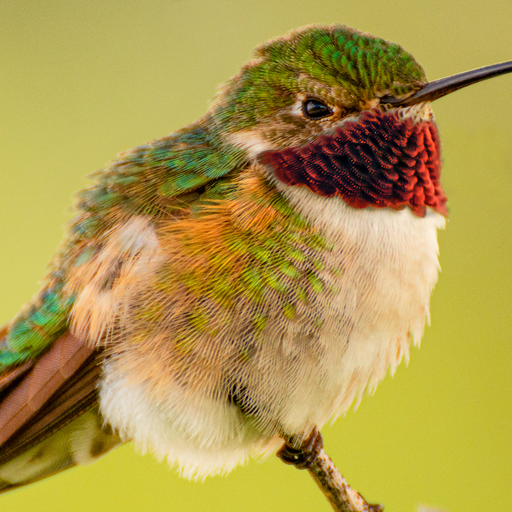
- Color Pattern: Male: green back and crown, white chest, buffy-cinnamon flanks, and an iridescent rose-magenta gorget that flashes pink-red in direct sun; tail broad, rounded, and dusky-green.
- Male vs. Female: The female lacks the gorget — green above, pale below with cinnamon-buffy flanks and white tips on the outer tail feathers. Juveniles resemble her; young males sprout scattered magenta throat feathers by late summer.
The trilling mountaineer: rose-throated and green-backed, he advertises his territory with a metallic wing trill on every flight and courts females with a steep, U-shaped display dive in which the trill swells into a pulsing whistle. He arrives on the breeding grounds before the females and claims the best flower patches.
The mountain mother: green and buffy, slightly heavier than her mate. She alone weaves the nest of plant down and spider silk, camouflages it with lichen, saddles it on a low branch — often near a mountain stream — lays 2 eggs, incubates about two and a half weeks, and raises the chicks solo through the short alpine summer.
Broad-tailed Hummingbird Vocalization Guide (3 Field Recordings)
The Broad-tailed’s signature sound is mechanical, not vocal: the male’s metallic wing trill, produced by specially tapered outer flight feathers and audible on every pass. The true voice is the high, thin chip note and the buzzy chatter of feeder disputes. All three recordings below are real field audio shared by observers on iNaturalist under commercial-use licenses — no simulations. For a deeper library, browse xeno-canto: Broad-tailed Hummingbird.
1. The Mountain Park Recording
2. The Foothills Voice
3. The Teton Recording
Habitat, Range & the Human Landscape
The Broad-tailed Hummingbird is a bird of altitude: mountain meadows, open pine and fir forests, aspen groves, pinyon-juniper slopes, and streamside willow thickets — plus the mountain-town yards, cabins, and decks that sit inside that world.

A Mountain Chain from the Rockies to Guatemala
The summer breeding range (yellow) runs down the Rocky Mountains and Great Basin ranges — from Idaho and Wyoming through Colorado and Utah to Arizona and New Mexico — at elevations up to about 10,500 feet. The green belt marks mountains where the species lives year-round: the highlands from Mexico south to Guatemala. Northern breeders winter in the Mexican highlands, commuting along the mountain chain rather than across the lowlands.
Backyards score best by keeping mountain time: feeders up by late April for the returning males, fresh nectar through the short June–August peak, and stations still clean in late summer when southbound Rufous Hummingbirds muscle through.
Backyard Behavioral Patterns & Social Dynamics
The Broad-tailed Hummingbird is built for thin air and cold nights, and armed with the loudest wings in the mountains. Four behaviors explain most backyard encounters:
🎻 The Wing-Trill Male
A flying male Broad-tailed trills metallically on every pass — a cricket-like “trrrr” made by his tapered outer wing feathers, not his voice. Once you learn it, you will census every male in the neighborhood by ear alone; females and juveniles fly almost silently.
🏔️ The High-Country Specialist
Few North American hummingbirds live higher: Broad-taileds breed in meadows and open conifer woods up to about 10,500 feet, arriving only when the snow retreats. Mountain yards see a compressed, intense season — the year’s whole hummingbird story runs May to August.
❄️ The Torpor Trick
High-country nights can freeze even in July. Broad-taileds survive them with torpor — a controlled overnight shutdown in which body temperature and heart rate plunge, cutting energy use dramatically. A bird that looks lifeless on a cold dawn perch is usually just waiting for the sun.
🌸 The Flower-Patch Loyalist
Males defend rich patches of scarlet gilia and penstemon — and productive feeders — with trilling fly-bys and pendulum display dives. Banded birds return to the same mountain meadows year after year, so a yard that feeds them well in June becomes a permanent stop on their summer circuit.
Problem: “A Late Snowstorm Hit and My Hummingbirds Vanished — Did I Lose Them?”
The three most common Broad-tailed Hummingbird frustrations all have proven answers:
First, the late hard freeze: almost certainly not a disaster. Broad-taileds ride out mountain cold snaps in torpor and switch to insects and sap wells when flowers shut down — they usually reappear with the thaw. Your job is the feeder: bring it in on freezing nights and hang it back out at dawn, so the first calories of the day are waiting. Second, the August bully: southbound Rufous Hummingbirds storm through mountain yards in late summer and try to own every feeder — hang a second station around a corner and out of sight. Third, the missed season: the mountain window is short — have feeders clean, filled, and hanging by the last week of April, because the first males arrive with the thaw and remember the yards that were ready.
Method 1: Mix & Serve Perfect Nectar (Mountain Edition)
Design for a species that fuels up between snowstorms:
-
The 4:1 Recipe
Mix 1 part plain white sugar to 4 parts water — ¼ cup of sugar per 1 cup of water — stirred until clear (brief boiling helps it dissolve; cool before filling). This matches the sweetness of the mountain wildflower nectar hummingbirds evolved on.
-
Never Red Dye, Never Honey
Skip red food coloring entirely — the red parts of the feeder itself are all the advertising needed. Honey is dangerous: it grows a fungus that is fatal to hummingbirds. White sugar only — no brown sugar, no raw sugar, no sweeteners.
-
Freeze-Proof the Routine
Mountain springs swing from t-shirt afternoons to hard freezes overnight. Bring feeders in when frost threatens and re-hang them at first light — hummingbirds need fuel most at dawn, straight out of torpor. Never let them drink from a feeder that froze and thawed cloudy.
-
Clean on a Schedule
Empty, scrub, and refill every week — every 2–3 days in warm spells — whether or not the feeder looks empty. Cloudy nectar is spoiled nectar: dump it, scrub with hot water, and give the ports an occasional 10% bleach rinse, rinsed thoroughly.
Method 2: Plant the Mountain Meadow Garden
Feeders win the visit; the right alpine bloom holds the season:
-
The Scarlet Anchors
The two flowers Broad-taileds are built for: scarlet gilia and Indian paintbrush — the red trumpets of the high meadows. Add penstemon and columbine and you have recreated the wildflower circuit the males patrol all summer.
-
Stagger the Bloom
The mountain season is short, so overlap it: columbine and larkspur for the June arrival wave, bee balm and salvia for the July peak, and late penstemon carrying birds into the August departure. A yard in bloom for ten straight weeks feeds two generations.
-
Leave the Cobwebs and the Fluff
Nesting females build from spider silk and plant down — willow fluff, dandelion clocks, thistledown. Leave eave cobwebs standing and a patch of seed heads untrimmed, and a female may saddle her lichen-camouflaged nest on a low branch within view of your window.
-
Skip the Pesticides, Add a Dripper
Hummingbirds need tiny insects and spiders for protein — nectar alone cannot raise chicks — so a pesticide-free garden feeds them twice. In dry mountain air a dripper or mister on foliage doubles as a bathing station and a beacon.
Tool Solution: Recommended Hardware for Broad-tailed Hummingbirds
Equipment matched to a high-altitude, freeze-tested nectar feeder:
Red Hummingbird Feeder (with Ant Moat)
A red feeder with a built-in ant moat and bee-proof ports that comes apart easily for scrubbing — light enough to carry in on freezing nights and re-hang at dawn for birds emerging from torpor.
- • Food: 4:1 white-sugar water, no dye, no honey
- • Style: Easy-clean reservoir, ant moat, bee guards
- • Routine: Indoors on freezing nights, out at dawn
Second Feeder (Out of Sight)
The reliable answer to late-summer Rufous bullies: a spare feeder hung around a corner or on the far side of the house, so no single bird can guard them all. Window-mounted versions double as close-up viewing stations.
- • Placement: Out of sight of the main feeder
- • Style: Window-mount for close viewing
- • Effect: Lets females and juveniles feed in peace
Mister or Dripper
Hummingbirds bathe in fine spray and on wet leaves rather than deep pools — a mister aimed at foliage, or a dripper over a shallow stone, gets heavy use in dry mountain air and echoes the streamside world they evolved in.
- • Depth: Fine spray or under 1 in of water
- • Extras: Timer for dry spells
- • Placement: Near perching branches, in view of flowers
Frequently Asked Questions
- Species Profile: The Broad-tailed Hummingbird (Selasphorus platycercus) is a 3.1–3.5 inch, 3–4 gram hummingbird (Trochilidae) of the Rockies and Great Basin — the male green-backed with a rose-magenta gorget, the female buffy-flanked, band code BTLH.
- ID in One Look: Green back + buffy flanks + (male) magenta gorget; in flight the male’s metallic wing trill settles the ID before you ever raise binoculars.
- The Mountain Range: Breeds up to 10,500 feet in the Rockies from May to August; northern birds winter in the Mexican highlands, and resident populations live year-round in mountains from Mexico to Guatemala.
- The Sound: The cricket-like wing trill of the flying male — a signature of Rocky Mountain summers — plus thin chip notes and feeder chatter; three real field recordings above.
- Feeder Formula: 4:1 white-sugar water, no dye and no honey, up by late April, indoors on freezing nights and out at dawn — plus a spare feeder out of sight for the August Rufous invasion.
- Garden Formula: Plant the mountain meadow — scarlet gilia, Indian paintbrush, penstemon, and columbine — no pesticides, cobwebs left standing, and a dripper for bathing in dry alpine air.
Bird Watching Log
Species: Broad-tailed Hummingbird (Selasphorus platycercus)
| Broad-tailed Hummingbird (Rose Gorget Seen: Yes / No — Feeder Visits: ___ — Wing Trill Heard: Yes / No — Buffy Flanks: Yes / No) | |