
Eastern Bluebird vs Indigo Bunting

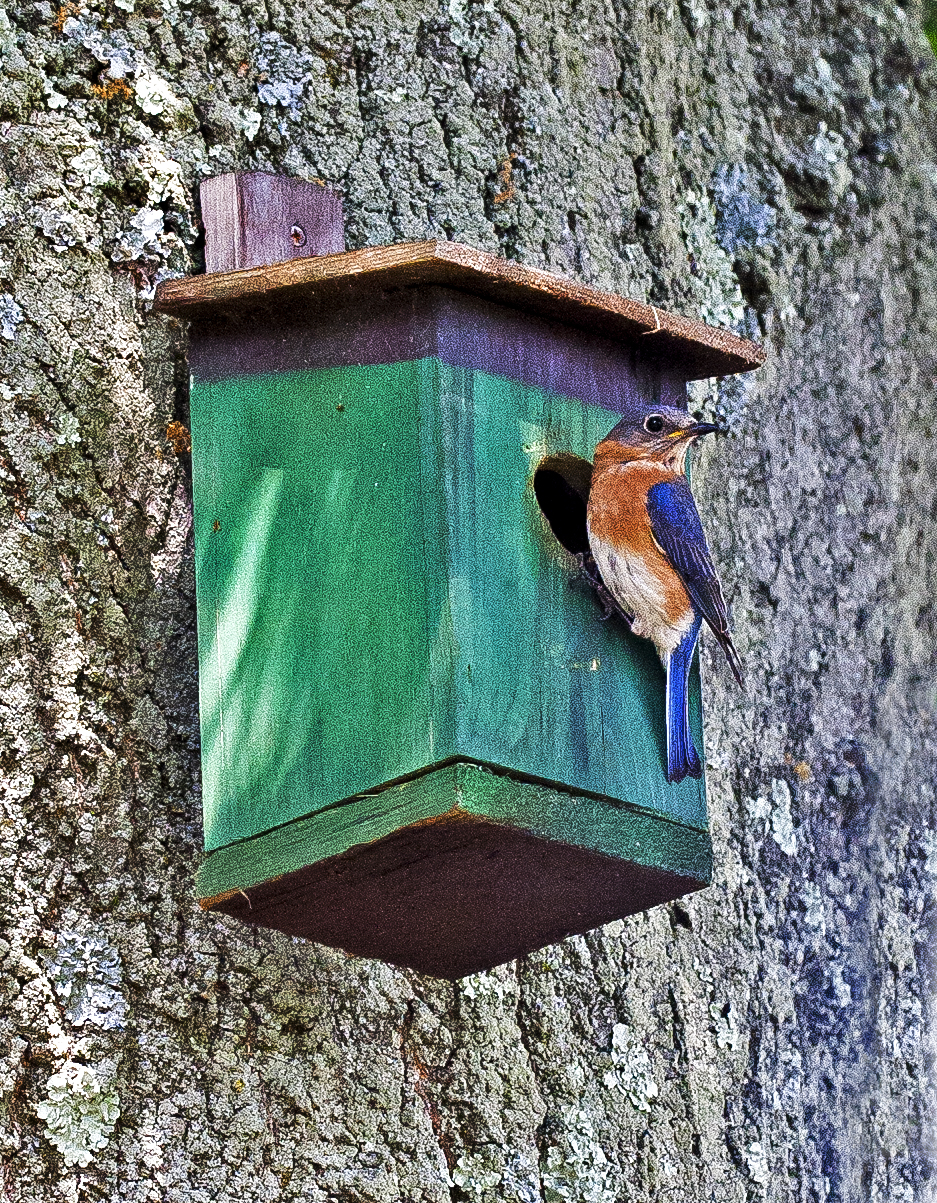


Eastern Bluebird vs Indigo Bunting (Sialia sialis vs Passerina cyanea): The Complete Backyard Identification Guide
Quick Answer: The Fastest Way to Tell Them Apart
The two “blue birds” of eastern summer. Three rules:
- Breast: rusty-orange breast = bluebird; all blue = Indigo Bunting.
- Bill: thin and straight = bluebird; thick seed-cracker = bunting.
- Perch: low on wires and nest boxes = bluebird; treetop song perch = bunting.
At-a-Glance Comparison Table
The blue thrush and the blue finch, side by side. KEY rows separate fastest.
| Feature | Eastern Bluebird | Indigo Bunting |
|---|---|---|
| Scientific Name | Sialia sialis | Passerina cyanea |
| Length | 6.5 in (16.5 cm) | 5.5 in (14 cm) |
| Wingspan | 12.2 in (31 cm) | 8.7 in (22 cm) |
| Weight | 1.0–1.2 oz (28–34 g) | 0.4–0.6 oz (12–18 g) |
| Overall Shape | Small, plump thrush with a round head and short bill | Small, slim seedeater with a neat conical bill |
| Male Plumage KEY | Brilliant royal blue above, rusty-orange throat and breast, clean white belly | Entirely indigo-blue (darker on the head), with a small gray bill; molts patchy brown in winter |
| Female Plumage | Grayer blue above with blue wings and tail; duller rusty breast and white belly | Plain warm brown with only faint breast streaks and a bluish tinge on wings or tail |
| Bill Shape KEY | Short, thin, dark | Small, neat conical bill |
| Tail | Short, blue, slightly notched | Shortish tail, often flicked |
| Core Range | East of the Rockies — meadows, orchards, open woods and nest-box trails | Breeds across the East and Midwest in brushy edges; winters in Central America and the Caribbean |
| Migration KEY | Partial migrant; southern birds resident, northern birds withdraw in winter | Long-distance nocturnal migrant; present May–September |
| Feeder Presence | Visits for live and dried mealworms and suet crumbles; nest boxes are the great attractant | Nyjer and white millet feeders in spring migration and summer near brushy edges |
| Favorite Foods | Insects, wild berries and fruit; mealworms at feeders | Nyjer, millet at feeders; grass seeds and insects in nature |
| Song | A soft, musical series of whistled phrases — “cheer-cheerful-charmer” | Bright, sweet phrases delivered in pairs: “fire-fire, where-where” |
| Flight Call | A soft “chur-lee” and dry chatter | A sharp, dry “spik” |
| Population Trend | Recovered strongly thanks to nest-box campaigns; stable to increasing | Common in brushy edge habitat; slightly declining where edges are lost |
Male Field Marks, Side by Side
Eastern Bluebird — Male
- Royal blue back and head with a rusty-orange breast.
- Clean white belly below the rust.
- Perches low and upright, scanning for insects.
Indigo Bunting — Male
- All-over indigo blue, darkest on the head — no wing bars, no rust.
- Small gray conical bill; slim build.
- Sings all day from high exposed perches in summer.
Female & Juvenile Marks, Side by Side
Eastern Bluebird — Female
- Gray-blue above with blue wings and tail.
- Paler rusty breast than the male.
- Accepts nest boxes readily — watch for carrying grass in spring.
Indigo Bunting — Female
- Plain warm brown with the faintest breast streaking.
- Bluish tinge on wings or tail clinches it.
- Small neat bill — much smaller than a Blue Grosbeak’s.
Part-by-Part Anatomy Breakdown
Every part offers a check:
| Body Part | Eastern Bluebird | Indigo Bunting |
|---|---|---|
| Male Underparts | Rusty breast, white belly | All deep blue |
| Male Head | Blue with a round head | Blue, often darker lores |
| Bill | Thin, straight, dark — an insect bill | Thick, conical — a seed bill |
| Size | 7 in, plump | 5.5 in, small and compact |
| Female | Gray-blue with rusty wash and white belly | Plain brown all over, faint streaks |
| Song | Soft, warbled “cheer cheerful charmer” | Loud, sweet paired phrases, “fire-fire where-where” |
| Hunting Style | Drops from low perches to the ground | Gleans insects and seeds in foliage |
Song & Call Comparison
Eastern Bluebird
Song: a soft, musical cheer-cheerful-charmer — gentle whistled phrases.
Calls: a soft chur-lee and dry chatter.
Indigo Bunting
Song: bright paired phrases — fire-fire, where-where, here-here — repeated for hours.
Calls: a sharp dry spik.
Range & Seasonal Presence
The Eastern Bluebird lives east of the Rockies in open country with scattered trees — pastures, orchards and nest-box trails — resident in the south, migrating from the north.
The Indigo Bunting breeds in brushy edges and overgrown fields across the East, migrating at night to Central America; it winters far south of the bluebird.
Feeder Behavior & Favorite Foods
- Eastern Bluebird: live mealworms from a tray; nest boxes on open posts; ignored seed.
- Indigo Bunting: nyjer and millet at feeders during spring migration, while still in molt.
- Water: both visit birdbaths — bluebirds especially in winter.
- Plant: berry bushes hold overwintering bluebirds; weedy edges feed buntings in fall.
Temperament & Flock Behavior
Eastern Bluebirds are gentle, deliberate thrushes — pairs sit side by side on wires and inspect nest boxes early in spring.
Indigo Buntings are tireless singers — males sing all day from the highest perch, even in August heat.
6-Step Backyard ID Checklist
- Breast. Rusty = bluebird; all blue = bunting.
- Bill. Thin = bluebird; conical = bunting.
- Size. Plump and bigger = bluebird; small = bunting.
- Perch. Low wire = bluebird; treetop = bunting.
- Female. Gray-blue with rusty wash = bluebird; plain brown = bunting.
- Season. Winter blue bird = bluebird; buntings are gone by fall.
Frequently Asked Questions
- Breast: Rusty = bluebird; all blue = bunting.
- Bill: Thin = bluebird; conical = bunting.
- Size: Bigger and plumper = bluebird.
- Perch: Low = bluebird; treetop = bunting.
- Female: Gray-blue = bluebird; brown = bunting.
- Boxes: Nest box user = bluebird.