
American Crow




American Crow (Corvus brachyrhynchos): Complete Identification, Feeder Guide & Call Library
Quick Answer: How to Attract & Identify American Crows
The American Crow (Corvus brachyrhynchos) is the big, entirely black corvid of towns, farms, and suburbs across nearly all of North America — stout black bill, fan-shaped tail, and the classic “caw-caw-caw”. To attract one: put out whole corn, unsalted peanuts, and meat scraps or eggs on a ground tray or big platform at the same time each day, with a shallow water dish nearby — crows soak dry food in water before swallowing. It shares neighborhood lawns with the Blue Jay and the Northern Flicker.
Species Physical Profile & Morphometrics
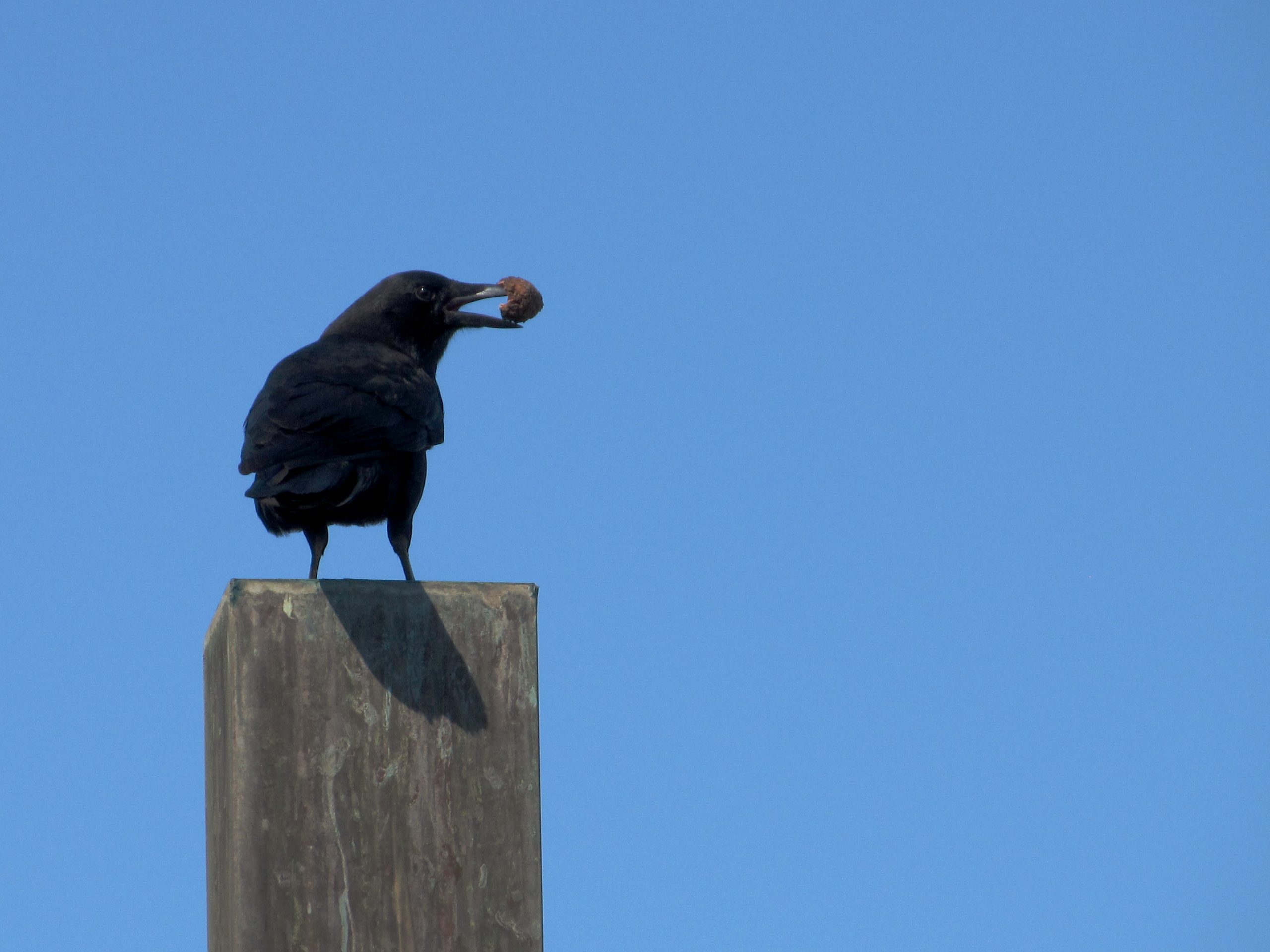
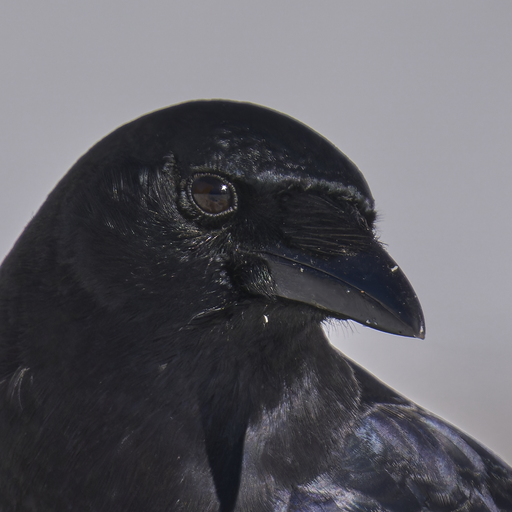
The American Crow is a large songbird of the crow and jay family (Corvidae) — one of the most familiar and most intelligent wild birds in North America. Everything about it is black: the bill, the face with its brush of nasal bristles, the body, the legs, the tail. In hard sunlight the black shows a subtle violet-green gloss.
The identification formula: all-black plumage + stout black bill + fan-shaped tail + rowing flight + “caw”. The two birds it gets confused with are the Common Raven (much bigger, wedge tail, deep croak) and the Fish Crow (near-identical look-alike of the coastal Southeast, separated by its nasal “uh-uh” call).
Essential Morphometric Field Marks:
- Body Length & Mass: about 16 to 21 inches (40–53 cm) and 11.2 to 21.9 ounces (316–620 grams) — imposing for a songbird, but only about half the bulk of a Common Raven.
- Wingspan: about 33.5 to 39.4 inches (85–100 cm); flight is a steady, rowing flap — crows rarely soar, while ravens glide for minutes.
- Bill Structure & Color: A stout, all-black bill with a brush of stiff nasal bristles over the nostrils — strong enough to tear carrion, precise enough to shell a snail or steal a single french fry.
- Color Pattern: Entirely black, with a violet-green iridescent gloss in good light. No white anywhere, ever — a black-and-white “crow” is a magpie. Tail fan-shaped in flight; wingtips show blunt, fingered primaries.
- Male vs. Female: The sexes look identical — males average larger. Pairs mate for years, and last year’s young often stay home to help raise the next brood.
Same uniform, bigger frame: plumage identical to the female, averaging larger and heavier-billed. He brings food to the incubating female and leads the family’s territory defense — the loudest voice in the mobbing chorus is often his.
Same uniform, the incubator: identical plumage. She builds the stick-nest cup with his help, incubates the 3–9 bluish-green, blotched eggs for about 18 days, and is fed at the nest by her mate and the family’s helpers.
American Crow Vocalization Guide (4 Field Recordings)
The crow’s voice is one of the most recognized sounds in North America: the loud, hoarse “caw-caw-caw”, softer rattles and coos between family members, and the chaotic chorus of a mobbing flock. All four recordings below are real field audio hosted on Wikimedia Commons, recorded by Jonathon Jongsma (mirrored from xeno-canto) — no simulations. For a deeper library, browse xeno-canto: American Crow.
1. The Flock Cawing Session
2. The Pair’s Treetop Duet
3. The Soft Rattle and Coo
4. The Mega-Roost at Dusk
Habitat, Range & the Human Landscape
The American Crow owns the human-modified landscape: farmland, suburbs, city parks, golf courses, campgrounds, and woodland edges — anywhere open ground for walking-and-hunting meets trees tall enough for nests and roosts. It avoids only unbroken deep forest and the driest desert interior.

Coast to Coast, Town to Farm
The range covers most of North America: southern Canada and virtually the entire Lower 48 except the driest Southwest, where ravens take over. Northern crows are partial migrants, shifting south in fall; birds across most of the United States stay home year-round. West Nile virus knocked populations down in the early 2000s, but crows have largely recovered.
Backyards score best with big lawns, mature trees, and a predictable routine. Crows map a neighborhood’s food sources precisely and visit the reliable ones on schedule — a yard that serves corn at 7 a.m. will have crows waiting at 6:55.
Backyard Behavioral Patterns & Social Dynamics
The American Crow is the neighborhood’s sharpest resident — it knows your face, your schedule, and your trash day. Four behaviors explain most backyard encounters:
🎭 The Face Memory
University of Washington experiments proved crows recognize individual human faces and remember them for years — scolding people who once trapped them, and reliably visiting people who feed them. Even more remarkable, the grudge is taught to their offspring: young crows mob a “dangerous” face they have never seen before.
👪 The Family Crew
Crows are cooperative breeders: grown offspring from previous years stay home as helpers, defending the territory and feeding their new siblings. The five crows working your lawn together in June are likely one pair plus last year’s kids.
🦉 The Mobbing Alarm
Find a perched Great Horned Owl by listening: crows gather and mob predators in a screaming, diving swarm that can last half an hour. The din is the best owl-finder in the woods — and the reason the neighborhood goes suddenly loud on a quiet morning.
🌙 The Mega-Roost
On winter nights crows pour into communal roosts of thousands — occasionally hundreds of thousands — in riverside groves and urban tree lines, arriving in noisy streams at dusk. Famous roosts in towns like Auburn, New York, and Chattanooga, Tennessee, have run for decades.
Problem: “Crows Scatter the Trash, Raid Nests, and Wake Me at Dawn. Can I Fix That?”
The three most common American Crow complaints all have workable answers:
First, the trash scattering: crows open weak bags like envelopes — the fix is a locking-lid or bungeed can put out in the morning rather than overnight, not war with a bird that outsmarts half-measures. Second, the nest raiding: crows do take some songbird eggs and nestlings, but research consistently finds habitat loss and free-roaming cats vastly outweigh crows as causes of songbird decline — and the same crows spend all summer eating grasshoppers, cutworms, and June beetle grubs out of your lawn. Third, the dawn cawing: a family announcing the day at first light is non-negotiable crow business, but a reliable feeding routine moves the daily gathering away from the bedroom side of the house — serve breakfast at the far corner of the lot and the alarm clock moves with it.
Method 1: Set the Table — Corn, Peanuts & Protein
Design for a big, smart, ground-feeding omnivore:
-
Lead with Whole Corn and Peanuts
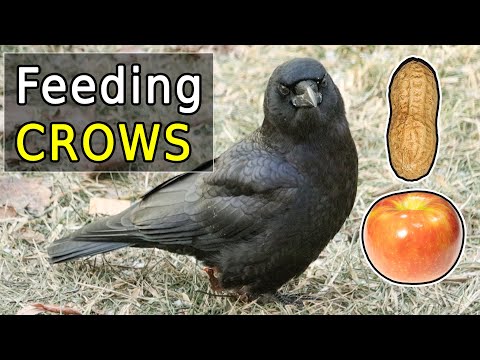
Cracked or whole dried corn and unsalted peanuts (in or out of the shell) are the classic crow staples — cheap, clean, and exactly the size for a crow to grab and carry. A handful on the same corner of the lawn each morning builds the habit fast.
-
Serve Meat Protein
Meat scraps, dry pet kibble, and hard-boiled or scrambled eggs (crushed shell and all) are crow gold — protein-rich and safe. Skip anything salted, seasoned, fried, or spoiled, and put out only what gets eaten in an hour.
-
Use Ground Level or a Big Platform
A crow won’t squeeze onto a tube feeder. A swept patch of lawn, a ground tray, or a large rigid platform is the serving style this walk-and-grab species was built for.
-
Feed on a Schedule, in Portions
Same time, same place, measured amount — crows learn the routine within days and arrive on the minute, eat, and leave. Scheduled feeding keeps the flock small and the neighbors happy; an all-day buffet invites the whole roost.
Method 2: Build the Trust — Routine, Water & Tall Trees
With crows, consistency is the attraction strategy:
-
Offer a Shallow Water Dish
Crows soak dry food before swallowing — kibble, bread, even crackers get dunked like donuts. A wide, shallow pan or ground bath near the feeding spot will be used daily, and yes, they will soften their breakfast in it.
-
Be Visible and Predictable
Crows bond to routines, not feeders. Step outside with the same container at the same hour, let them watch you set it down, then step back — within weeks the family will greet your silhouette instead of fleeing it.
-
Keep the Tall Trees
Mature oaks, pines, and cottonwoods supply nest sites, lookout posts, and shade. A crow family that nests within sight of your yard becomes a multi-year neighbor — the helpers you see this summer were raised in your own tree line.
-
Skip the Chemicals
An untreated lawn is a crow cafeteria: grubs, cutworms, crane-fly larvae, and beetles are staple protein. Pesticide-free turf feeds the crows that then patrol it for you all season.
Tool Solution: Recommended Hardware for American Crows
Equipment matched to a heavy, schedule-keeping, water-dunking corvid:
Ground Tray / Large Platform
A big rigid platform or simple ground tray — the only serving style a crow uses with confidence, sized for corn, peanuts, eggs, and kibble, and easy to clear and hose down daily.
- • Food: Corn, peanuts, meat scraps, eggs
- • Style: Large rigid tray, drain holes
- • Placement: Open lawn corner, same spot daily
Shallow Ground Water Dish
A wide, shallow pan set on the ground near the feeding spot — crows drink, bathe, and soften dry food in it; in winter, a heated basin becomes the busiest spot in the yard.
- • Depth: 1–2 in, wide diameter
- • Extras: Heater for freezing climates
- • Placement: Beside the feed tray, near cover
Heavy-Duty Suet Cage
A firmly mounted, heavy-gauge suet cage for plain suet blocks — a reliable winter protein draw that crows hammer at between lawn patrols, shared with jays and woodpeckers.
- • Food: Plain suet blocks, fat trimmings
- • Style: Heavy gauge, solid mount
- • Ration: One block at a time, mornings
Frequently Asked Questions
- Species Profile: The American Crow (Corvus brachyrhynchos) is a 16–21 inch, 316–620 gram corvid (Corvidae) of towns, farms, and suburbs across North America — entirely black, stout bill, fan-shaped tail, band code AMCR.
- ID in One Look: All black + fan tail + rowing flight + “caw”; half a raven’s bulk, and no white anywhere — a black-and-white “crow” is a magpie.
- Partial Migrant, Mega-Rooster: Northern crows shift south in fall; everywhere, winter dusk brings communal roosts of thousands into the same tree line.
- The Sound: The hoarse “caw-caw-caw,” plus soft rattles and coos between family — four real field recordings above, including a 20,000-bird roost.
- Feeder Formula: Whole corn, unsalted peanuts, meat scraps, or eggs on a ground tray at the same time each morning, plus a shallow water dish for the famous food-dunking habit.
- It Knows Your Face: Crows recognize individual people for years, teach their offspring who is friend or foe, and arrive on schedule for a keeper of routines.
Bird Watching Log
Species: American Crow (Corvus brachyrhynchos)
| American Crow (Flock Size: ___ — Food Dunked: Yes / No — Cawing: Yes / No — Mobbing Seen: Yes / No) | |