
Verdin
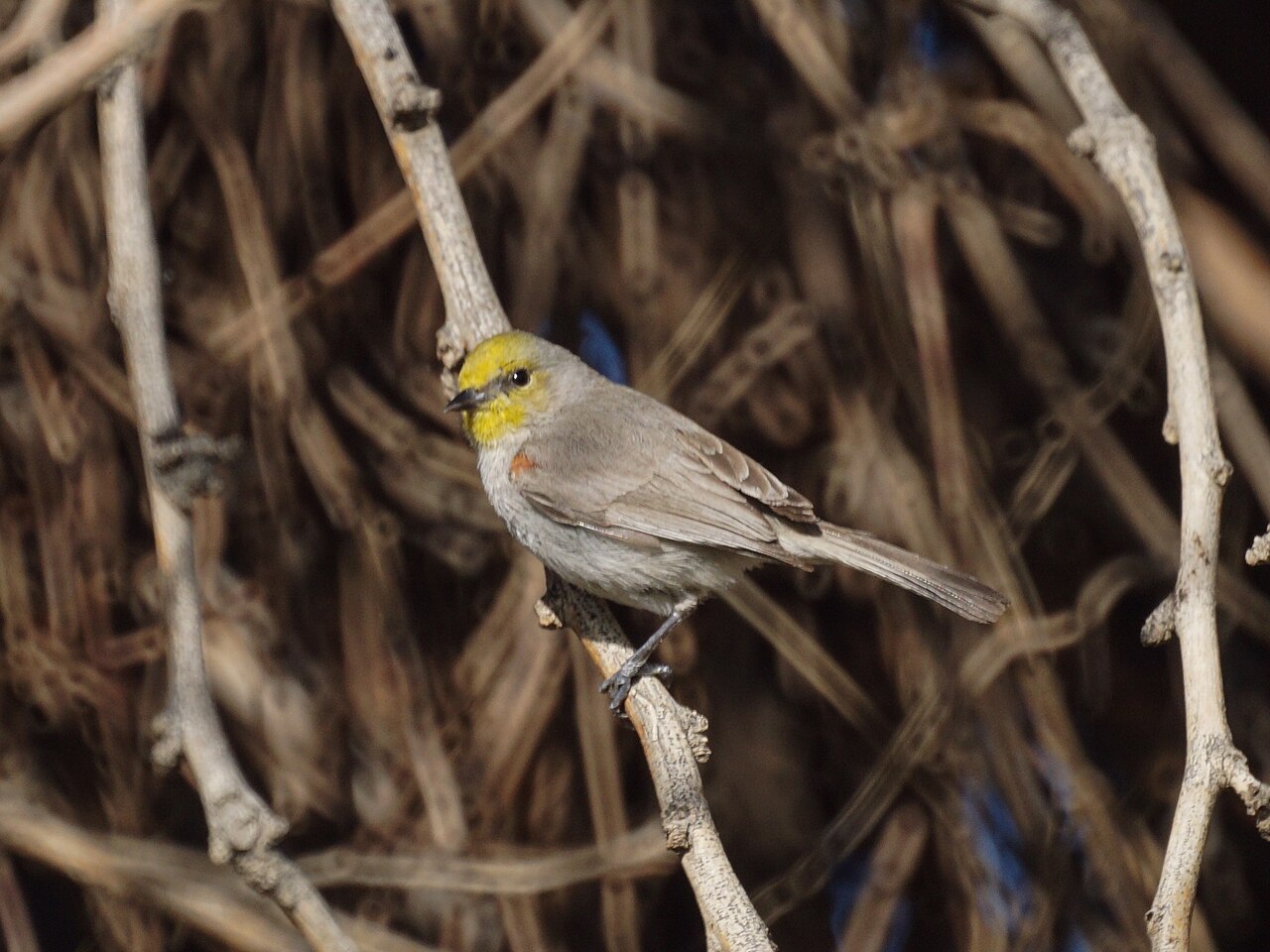
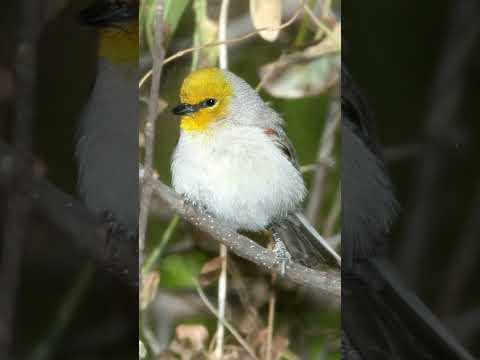


Verdin (Auriparus flaviceps): Complete Identification, Habitat Guide & Sound Library
Quick Answer: How to Attract & Identify the Verdin
The Verdin (Auriparus flaviceps) is the tiny yellow-faced songbird of the southwestern deserts — gray body, bright yellow head, a hidden chestnut shoulder patch, and a sharp, sweet tsee-tsee-tsee call. It weaves spherical pendant nests into thorn scrub — one for breeding, extras for winter roosting — and forages for insects and nectar among mesquite blooms. It is resident year-round. Desert yards attract them with native mesquite, flowering shrubs, hummingbird feeders, and suet. They share the thorn scrub with the Cactus Wren and the Bushtit.
Species Physical Profile & Morphometrics
The Verdin belongs to the penduline tit family (Remizidae) — the only member in North America — and is a year-round resident of southwestern deserts from California to Texas and deep into Mexico.
The identification formula: tiny gray body + yellow head + sharp bill + desert scrub. Bushtits are drabber with plain heads; Lucy’s Warbler is smaller with a rufous rump; the Verdin’s yellow face and chestnut shoulder are unique in the desert.
Essential Morphometric Field Marks:
- Body Length & Mass: 4.5 inches (11 cm) and 0.2 ounces (5.3–6.8 grams) — lighter than two sheets of paper.
- Wingspan: 6.5 inches (16.5 cm); flight is quick and direct between thorn shrubs, with constant foraging restlessness.
- Bill Structure & Color: A short, sharp, slightly decurved black bill — equal parts insect probe and nectar sipper.
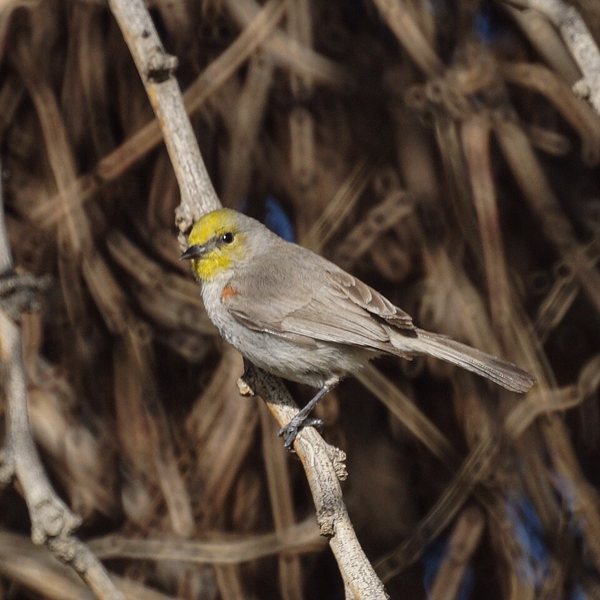
- Color Pattern: Plain gray body, bright yellow head and face, chestnut shoulder patch — understated until the sun hits the head.
- Male vs. Female: The sexes look alike — both carry nesting material and both sing the simple sweet phrases; juveniles are plain gray with a pale bill.
The yellow-faced builder: ferrying thorn-tipped twigs to a half-finished sphere, singing his thin sweet whistles between trips.
Identical in plumage — she lines the breeding nest with feathers and soft plant down deep inside the thorny shell.
Verdin Vocalization Guide (0 Field Recordings)
The Verdin’s voice is a sharp, sweet tsee-tsee-tsee — high, thin whistles given constantly while foraging. All recordings below are real field audio via Wikimedia Commons — no simulations. For a deeper library, browse xeno-canto: Verdin.
1. The Tsee-Tsee
2. The Sharp Tsip
3. The Dawn Whistles
Habitat, Range & the Thorn Scrub World
The Verdin lives in desert thorn scrub: mesquite, catclaw, palo verde, and creosote flats across the Southwest — and increasingly in suburban desert yards with native landscaping and hummingbird feeders.

The Desert’s Pendant Architect
Range covers the Sonoran, Mojave, and Chihuahuan deserts from California and Utah through Arizona and New Mexico to Texas — resident all year, weathering 110-degree summers and freezing desert nights.
For backyard birders: desert yards with native mesquite or palo verde, a hummingbird feeder, and a suet cage attract Verdins readily — one of the few desert songbirds that uses feeders.
Backyard Behavioral Patterns & Social Dynamics
The Verdin is a tiny architect with an all-season building habit. Four behaviors explain most of what you will observe:
🏗️ The Sphere Builder
It weaves spherical pendant nests with a side entrance into thorn scrub — breeding nests in spring, roosting spheres for winter nights.
🍯 The Nectar Sipper
It feeds on nectar and tiny insects at mesquite and mistletoe blooms — and readily visits hummingbird feeders.
🌵 The Thorn Fortress
Nests are placed deep in the thorniest branches available — catclaw and cholla make the walls do the guarding.
❄️ The Roost Nest
On cold desert nights it sleeps alone inside a roost sphere — the insulated private bedroom every desert winter.
Problem: “How Do I Attract Verdins? What Should I Do?”
The three most common Verdin puzzles all have proven answers:
First, the identity check: a tiny gray bird with a yellow face at your hummingbird feeder is not a warbler — the plain gray body, sharp bill, and desert address belong to the Verdin. Second, the old nest question: the spiky spheres in your mesquite are roost nests in active use — leave every one; winter survival depends on them. Third, the feeder etiquette: Verdins drink nectar but cannot hover — they perch at the port, so use feeders with perches, keep nectar fresh, and skip red dye entirely.
Method 1: Set the Table — Thorn Scrub & Sweet Ports
Design for a desert pendant-builder:
-
Plant Mesquite & Palo Verde
Native legume trees with thorny structure — nest sites, insect crops, and bloom nectar in one.
-
Hang a Hummingbird Feeder
4:1 nectar, perch ports, no dye — Verdins sip alongside the hummingbirds.
-
Add a Suet Cage
Plain suet near shrubs — a winter staple this tiny bird happily takes.
-
Leave Every Old Nest
Roost spheres are winter survival — the thorny balls in your tree are occupied bedrooms.
Method 2: Build the Habitat — Bloom & Drink
Keep flowers blooming and water shallow, and the pair stays all year:
-
Plant Desert Bloomers
Mistletoe, chuparosa, and fairy duster — native nectar flowers that feed Verdins and hummingbirds alike.
-
Provide Shallow Water
A shallow dish with stones — tiny birds need inch-deep water with easy footing.
-
Keep Thorny Cover
Catclaw and native thorn shrubs — the fortress walls the nests require.
-
Skip the Pesticides
Tiny insects are the protein half of the diet — sprayed desert is empty desert.
Tool Solution: Recommended Hardware for Verdin
Equipment matched to a desert pendant-builder:
Hummingbird Feeder with Perches
4:1 nectar at perchable ports — the fastest way to bring a Verdin into view, shared happily with hummingbirds.
- • Ratio: 4:1 water:sugar
- • Rule: No red dye
- • Bonus: Orioles visit too
Suet Cage near Shrubs
Plain suet within dash distance of thorny cover — cold-morning calories for a five-gram bird.
- • Type: Plain suet
- • Placement: Beside cover
- • Bonus: Woodpeckers & wrens
Shallow Dish with Stones
Inch-deep water with landing stones — safe drinking for the desert’s smallest songbirds.
- • Depth: 1 inch
- • Feature: Stone footing
- • Bonus: Bees & butterflies too
Frequently Asked Questions
- Species Profile: The Verdin (Auriparus flaviceps) is a 4.5-inch, 0.2-ounce songbird (Remizidae), band code VERD — the yellow-faced pendant builder of the desert.
- ID in One Look: Gray body, yellow head, chestnut shoulder flash, thorn scrub.
- The Sound: Thin sweet tsee-tsee whistles all day; real field recordings above.
- Range & Habit: Southwestern desert resident; weaves spiky sphere nests for breeding and winter roosting.
- Feeder Formula: Hummingbird nectar, suet, shallow water, and native mesquite.
- The Roost Nest Secret: The old thorny balls in your tree are occupied winter bedrooms — never remove them.
Bird Watching Log
Species: Verdin (Auriparus flaviceps)
| Verdin (Yellow Head Seen: Yes / No — Shoulder Patch Seen: Yes / No — Tsee Call Heard: Yes / No — Pendant Nest Found: Yes / No — Date & Time: ___) | |