
Audubon’s Oriole
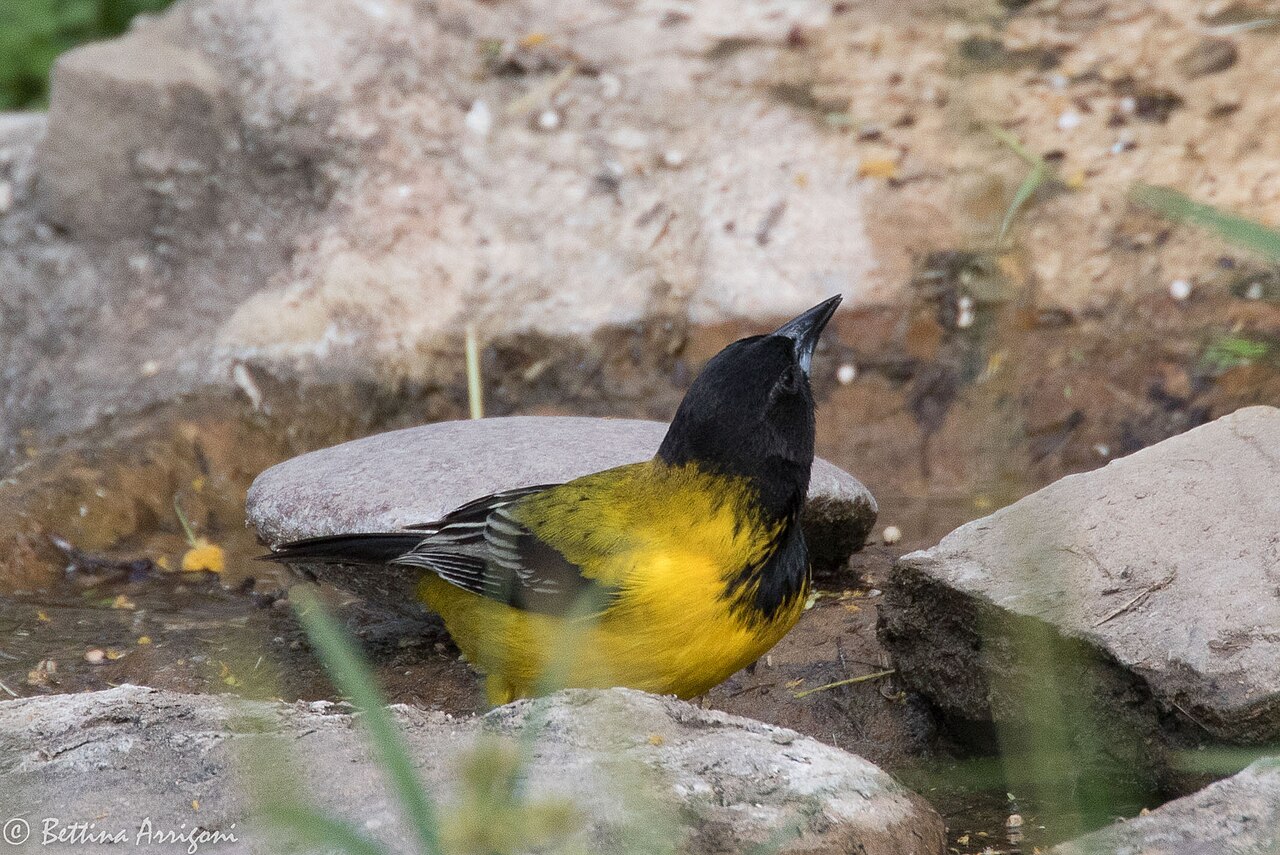
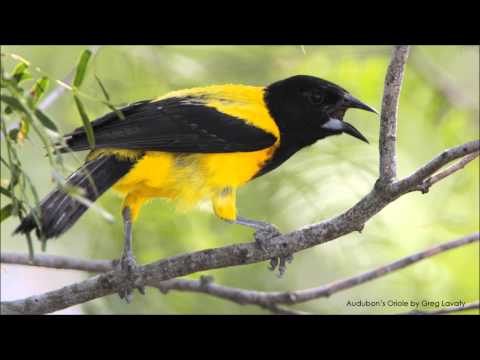


Audubon’s Oriole (Icterus graduacauda): Complete Identification, Habitat Guide & Sound Library
Quick Answer: How to Attract & Identify the Audubon’s Oriole
The Audubon’s Oriole (Icterus graduacauda) is the black-hooded yellow oriole of South Texas — bright yellow body, full black hood, black wings and tail, the sharpest two-tone in the family. Famously secretive, it slips through dense brush yet visits feeders for grape jelly, oranges, and suet. The song is a slow, hesitant series of whistles — a few slurred notes, then a pause. In the U.S. it lives only in South Texas, resident year-round. They share the brush with the Northern Cardinal and the Golden-fronted Woodpecker.
Species Physical Profile & Morphometrics
The Audubon’s Oriole belongs to the blackbird family (Icteridae) and barely enters the United States — a resident of South Texas brush country and Mexico, and one of the region’s signature specialties.
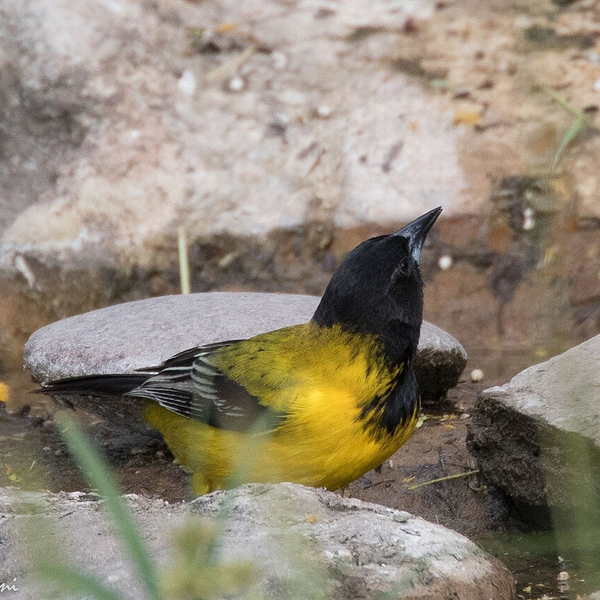
The identification formula: yellow body + full black hood + black wings and tail + South Texas. Scott’s Oriole has a black back but lives west; the Altamira Oriole is orange; nothing else in Texas wears the yellow body with the complete black hood.
Essential Morphometric Field Marks:
- Body Length & Mass: 7.5 to 9.4 inches (19–24 cm) and 1.1 to 1.9 ounces (31–53 grams) — a robust oriole, heavier than it looks in the brush.
- Wingspan: 12.6 inches (32 cm); flight is quick and low between cover — it would rather slip than soar.
- Bill Structure & Color: A slim, slightly decurved black bill — nectar, insects, and fruit all on one tool.
- Color Pattern: Bright yellow body, complete black hood, black wings with white edging, black tail — the sexes look nearly alike, an oriole exception.
- Male vs. Female: Nearly identical — she is slightly duller; the shared plumage is unusual among orioles.
The yellow shadow: glimpsed slipping through the brush with the full black hood, then pausing at the jelly dish when the yard goes quiet.
Nearly his twin — slightly duller yellow, sharing the hood; she weaves the hanging nest in dense cover and feeds the nestlings insects.
Audubon’s Oriole Vocalization Guide (1 Field Recording)
The Audubon’s Oriole’s song is a slow, hesitant series of slurred whistles — a few human-like notes, then a pause. All recordings below are real field audio via Wikimedia Commons — no simulations. For a deeper library, browse xeno-canto: Audubon’s Oriole.
1. The Hesitant Whistles
2. The Nyaah Call
3. The Dawn Whistles
Habitat, Range & the South Texas Brush
The Audubon’s Oriole lives in dense native brush and riparian woodland — in the United States, only South Texas; its real stronghold is Mexico. It favors cover over open ground at all times.

The Edge-of-Range Specialty
U.S. range is limited to South Texas — the Rio Grande corridor and brush country — where the species is resident all year; the bulk of the population lives in Mexico.
For backyard birders: South Texas yards with native brush, jelly feeders, and oranges host them year-round — patient observers at a quiet feeder get the full hood.
Backyard Behavioral Patterns & Social Dynamics
The Audubon’s Oriole is a brush-loving oriole with a sweet tooth. Four behaviors explain most of what you will observe:
🫥 The Brush Skulker
It moves through dense cover rather than open air — glimpses, not displays, are the rule.
🍇 The Jelly Devotee
It visits grape jelly, orange halves, suet, and even hummingbird nectar — a reliable feeder guest near brush.
🪺 The Hanging Nest
The nest is a woven hanging pouch in dense vegetation — hidden deep, like the bird itself.
🗣️ The Hesitant Song
The song is slow, slurred whistles with pauses — a sleepy, human-like voice from the brush.
Problem: “How Do I See and Attract an Audubon’s Oriole? What Should I Do?”
The three most common Audubon’s Oriole puzzles all have proven answers:
First, the glimpse problem: the bird is secretive by nature — put the jelly dish within ten feet of dense brush and watch from a window; open-lawn feeders get ignored. Second, the identity check: in South Texas compare hood extent — Audubon’s wears a complete black hood with a yellow body; Altamira is orange with a black face; Hooded is slim and orange. Third, the seasonal worry: there is none — the species is resident year-round; a quiet week means the pair is nesting deep in the brush, not gone.
Method 1: Set the Table — Cover-Adjacent Feeding
Design for a secretive oriole:
-
Place Feeders at Brush Edge
Jelly and oranges within a dash of cover — the shy bird’s comfort zone.
-
Serve Grape Jelly Daily
Small dish, refreshed daily — the most reliable Audubon’s attractant in Texas.
-
Add Orange Halves & Suet
Oranges on spikes, suet in cages — the full menu of a brush-country oriole.
-
Keep Native Brush
Ebenopsis, huisache, and mesquite thickets — the cover this species requires.
Method 2: Build the Habitat — Quiet Corners & Ground Safety
Keep the yard calm and the cover thick, and the pair stays all year:
-
Watch from a Window
Distance viewing respects the shyness — binoculars beat footsteps with this species.
-
Keep Cats Indoors
Brush-skulkers are cat prey — the rule that saves South Texas specialties.
-
Skip Brush Clearing
Dense native thickets are the habitat — cleared edges lose the oriole.
-
Expect the Quiet Weeks
Nesting birds go silent — the jelly dish traffic resumes after fledging.
Tool Solution: Recommended Hardware for Audubon’s Oriole
Equipment matched to a brush-country oriole:
Jelly & Orange Feeder at Brush Edge
Grape jelly and orange halves placed beside dense cover — the proven Audubon’s station.
- • Feed: Jelly + oranges
- • Placement: Beside brush
- • Refresh: Daily
Caged Suet Feeder
Suet within dash distance of cover — a staple this species takes readily.
- • Feed: Plain suet
- • Placement: Near brush
- • Bonus: Woodpeckers & wrens
Native Brush Thicket
Ebenopsis, huisache, mesquite — the dense cover that makes a South Texas yard oriole country.
- • Plants: Native brush
- • Rule: Never clear
- • Bonus: Cardinals & kiskadees
Frequently Asked Questions
- Species Profile: The Audubon’s Oriole (Icterus graduacauda) is a 7.5–9.4 inch, 1.1–1.9 ounce icterid (Icteridae), band code AUOR — the secretive yellow-hooded oriole.
- ID in One Look: Yellow body, complete black hood, South Texas address.
- The Sound: Slow hesitant whistles from the brush; real field recordings above.
- Range & Habit: South Texas and Mexico, resident; brush-bound and feeder-friendly.
- Feeder Formula: Jelly and oranges beside dense brush — placement is everything.
- The Shyness Paradox: The brightest bird in the brush is the hardest to see — feed at cover’s edge.
Bird Watching Log
Species: Audubon’s Oriole (Icterus graduacauda)
| Audubon’s Oriole (Black Hood Seen: Yes / No — Jelly Dish Visited: Yes / No — Whistles Heard: Yes / No — Brush Nearby: Yes / No — Date & Time: ___) | |