
Black-billed Magpie



Black-billed Magpie (Pica hudsonia): Complete Identification, Feeder Guide & Call Library
Quick Answer: How to Attract & Identify Black-billed Magpies
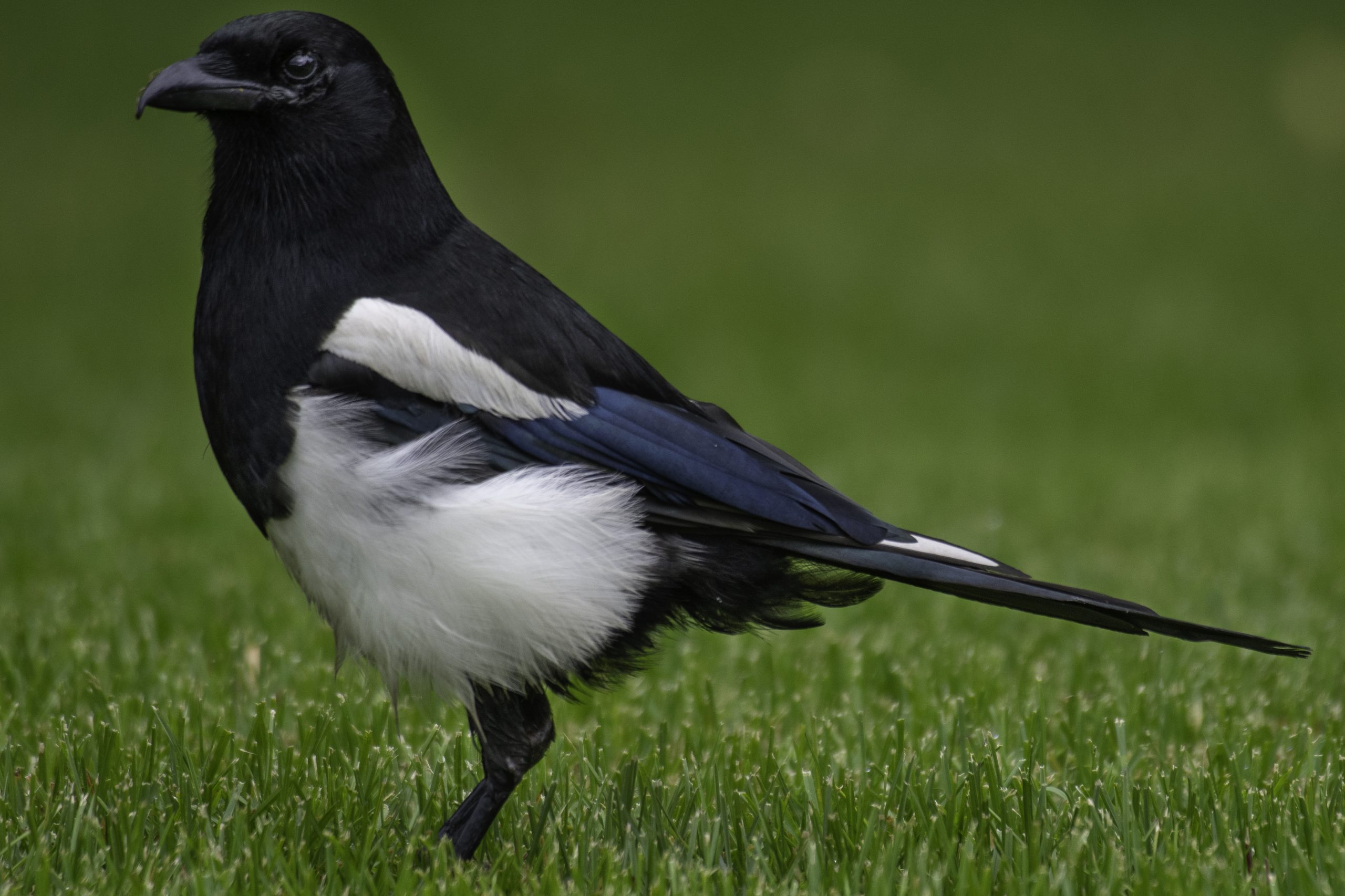
The Black-billed Magpie (Pica hudsonia) is the bold black-and-white corvid of the western Great Plains and Rocky Mountain valleys — jet black above with crisp white belly and shoulder patches and an extremely long, iridescent blue-green diamond tail. To attract one: offer suet, meat scraps, or large dry kibble on a big platform feeder near open ground, and keep a water source out. Listen for the raspy “mag-mag-mag” chatter. It shares rangeland with the Steller’s Jay and the Evening Grosbeak.
Species Physical Profile & Morphometrics
The Black-billed Magpie is a large songbird of the crow and jay family (Corvidae) — one of the longest passerines in North America, though half that length is tail. Lewis and Clark’s expedition recorded it along the Missouri in 1804, and it followed the great bison herds for millennia before that, picking ticks and scavenging the plains.
The identification formula: pied black-and-white plumage + white shoulder patches + extremely long diamond tail + stout all-black bill. In sunlight the “black” turns out to be anything but — wings and tail shimmer metallic blue, green, and bronze.
Essential Morphometric Field Marks:
- Body Length & Mass: about 18 to 24 inches (45–60 cm) tail included, and 5.1 to 7.4 ounces (145–210 grams) — crow-sized in length, but the tail alone accounts for roughly half of it.
- Wingspan: about 22 to 24 inches (56–61 cm); flight is a slow, rowing flap with the long tail streaming behind like a rudder.
- Bill Structure & Color: A stout, slightly curved, all-black bill — heavy enough to tear carrion, delicate enough to pluck a tick off a moose’s ear. All black, always: that is the species’ name and its field mark.
- Color Pattern: Black head, breast, and back; clean white belly and bold white shoulder patches; wings and long graduated tail flash iridescent blue-green and bronze in good light. In flight, large white wing patches flash at the primaries.
- Male vs. Female: The sexes look identical — males average slightly larger and heavier. Pairs mate for life and hold territory together year-round.
Same uniform, slightly bigger frame: plumage identical to the female. He does most of the heavy stick-hauling when the pair builds its domed fortress nest, and stands sentinel while she incubates deep inside it.
Same uniform, the interior architect: identical plumage, averaging about 20% lighter. She shapes the mud cup and soft inner lining inside the stick dome and does the incubating — invisible from outside the roofed nest for weeks.
Black-billed Magpie Vocalization Guide (4 Field Recordings)
The magpie’s voice is all business: a loud, raspy “mag-mag-mag” chatter, nasal scolding at predators, and soft gurgling conversation between mates. All four recordings below are real field audio hosted on Wikimedia Commons — including one from the Yellowstone Sound Library of a magpie working a bison carcass, the species’ most ancient feeding scene. No simulations. For a deeper library, browse xeno-canto: Black-billed Magpie.
1. The Classic “Mag-Mag-Mag” Chatter
2. The Group Scold
3. The Carcass-Site Calls
4. The Foraging Babble
Habitat, Range & the Open West
The Black-billed Magpie is a bird of open and semi-open western country: rangeland, ranch yards, river bottoms, sagebrush edges, and mountain valleys — anywhere scattered trees or shelterbelts meet big open ground. It nests in the trees and hunts in the open, a pattern unchanged since the bison days.

From Alaska to the Great Basin
The range covers western North America: Alaska and western Canada south through the Great Plains and Rockies to northern Arizona and New Mexico, and west to the Great Basin and eastern Sierra slope. It is a strictly resident species — no migration, just winter gatherings in communal roosts that can hold dozens of birds in a single shelterbelt.
Backyards score best in ranch and farm country, small towns, and mountain-valley suburbs with big lawns, livestock nearby, and tall cottonwoods or evergreens for nesting. In cities like Bozeman, Laramie, or Kamloops, magpies are simply part of the neighborhood.
Backyard Behavioral Patterns & Social Dynamics
The Black-billed Magpie is part ranch hand, part cleanup crew, part neighborhood watch. Four behaviors explain most backyard encounters:
🦬 The Cleanup Crew
Magpies are professional scavengers: they gather at roadkill and winter-killed carcasses, follow hunters, and work ranch pastures for afterbirth and carrion. They also pick ticks directly off the backs of deer, elk, moose, and livestock — pest control with wings.
🏰 The Stick Fortress
Both mates spend weeks building a domed stick nest with a roof and side entrances, anchored by a mud cup — one of the most elaborate nests of any North American songbird. Old fortresses get recycled by owls, kestrels, and ducks, so one magpie pair houses half the neighborhood over time.
🐕 The Dog Bowl Bandit
In ranch yards and small towns, magpies learn every outdoor pet bowl and compost pile on the block. Bold but cautious, they dart in for kibble the moment the dog walks off — and they remember exactly which yards tolerate them.
🌙 The Winter Roost
On cold nights, magpies pour into communal roosts of dozens of birds in dense spruce or shelterbelt trees, arriving noisily at dusk. If a group of magpies streams over your yard every winter evening, you live beside one of these roosts.
Problem: “Magpies Raid the Dog Food, Empty the Suet, and Hog the Feeder. Can I Fix That?”
The three most common Black-billed Magpie complaints all have workable answers:
First, the pet-food raiding: the honest fix is logistics, not conflict — feed pets indoors or on a covered porch, and pick bowls up between meals, because a magpie forgets nothing and will be back at the same hour tomorrow. Second, the emptied suet feeder: a magpie can carry off more suet than a woodpecker family eats in a week — serve measured portions each morning rather than keeping the cage topped up, and use an upside-down suet feeder so clinging woodpeckers keep access while the heavy magpie struggles. Third, the dawn chorus by the bedroom window: winter roosts are loud at first light. The roost moves every few weeks on its own — earplugs beat relocation, and the same birds spend their days eating grasshoppers, ticks, and carrion the neighborhood is glad to be rid of.
Method 1: Set the Table — Suet, Scraps & Kibble
Design for a big, bold, meat-minded omnivore:
-
Lead with Suet and Meat Scraps
Plain suet blocks are the fastest magpie draw in the West — raw suet, fat trimmings, or meat scraps on a platform match ten thousand years of scavenging instinct. Skip anything salted, seasoned, or spoiled.
-
Use a Large, Ground-Level Platform
A magpie won’t bother with swinging feeders. A big rigid tray, a fly-through platform, or a swept patch of bare ground is the serving style this ground-walking species trusts.
-
Add Kibble and Peanuts
Large-size dry dog kibble and in-shell peanuts are proven magpie staples — cheap, clean, and easy to ration. Serve a measured handful each morning instead of an open buffet.
-
Keep Small Birds a Separate Station
Magpies dominate any feeder they can land on. Hang tube feeders with short perches or caged feeders on the far side of the yard so chickadees and finches eat in peace while the magpie works its own table.
Method 2: Build the Country — Open Ground, Trees & Water
A magpie yard is a landscape, not a feeder:
-
Keep the Open Ground Open
Magpies hunt on foot across big lawns, pasture edges, and bare gravel. A yard with open sightlines and short grass is magpie habitat; an overgrown jungle is not.
-
Give Them Tall Anchors
Cottonwoods, spruces, and shelterbelt rows provide the nest sites, lookout posts, and winter roosts the species needs. If your property has a mature tree line, you already own the most valuable magpie real estate on the block.
-
Water Draws Them Year-Round
A stock-tank-style ground bath or a shallow basin with a heater serves magpies in a Montana January as reliably as in July — in frozen country, open water outdraws any food.
-
Leave the Winter Roost Alone
If a dusk roost settles into your spruce row, let it ride out the season — the flock will relocate on its own in a few weeks, and the daily dawn-and-dusk flyover is one of the great free shows in western birding.
Tool Solution: Recommended Hardware for Black-billed Magpies
Equipment matched to a heavy, ground-minded, meat-eating corvid:
Large Platform / Ground Tray
A big, rigid tray or ground-level platform — the only feeder style a 24-inch, tail-heavy magpie uses with confidence, and the natural stage for suet, scraps, and kibble.
- • Food: Suet, meat scraps, kibble, peanuts
- • Style: Large rigid tray, drain holes
- • Placement: Open lawn, near a high perch
Heavy-Duty Suet Cage
A stout, firmly mounted suet cage — choose an upside-down model if you want woodpeckers to keep access, or a standard cage if the magpies are your welcome guests.
- • Food: Plain suet blocks, fat trimmings
- • Style: Heavy gauge, solid mount
- • Ration: One block at a time, restock mornings
Heated Ground Bath
A ground-level basin with a thermostatic heater is the single best magpie magnet in frozen country — open water in January pulls in every corvid, grouse, and finch in the valley.
- • Depth: 1–3 in, rough-surface basin
- • Extras: Heater rated to -20°F for plains winters
- • Placement: Open ground with escape cover nearby
Frequently Asked Questions
- Species Profile: The Black-billed Magpie (Pica hudsonia) is an 18–24 inch, 145–210 gram corvid (Corvidae) of the western Great Plains and Rockies — black-and-white pied plumage, white shoulder patches, an iridescent blue-green diamond tail, band code BBMA.
- ID in One Look: Pied plumage + that impossibly long tail + all-black bill is unmistakable in the West; only California’s Yellow-billed Magpie is similar, and its bill is yellow.
- Strictly Resident: No migration — pairs hold territory all year, and winter brings communal roosts of dozens in dense shelterbelts.
- The Sound: A raspy “mag-mag-mag” chatter and nasal group scolding — four real field recordings above, including a Yellowstone bison-carcass scene.
- Feeder Formula: Suet, meat scraps, and large dry kibble on a big platform or ground tray near open lawn, plus open water year-round — ration portions, because a magpie never forgets a free lunch.
- The Cleanup Crew: Scavenges carrion and picks ticks off deer, elk, and livestock — and its roofed stick fortresses get recycled for years by owls, kestrels, and ducks.
Bird Watching Log
Species: Black-billed Magpie (Pica hudsonia)
| Black-billed Magpie (Flock Size: ___ — At Suet: Yes / No — Chatter Heard: Yes / No — Ground Walking: Yes / No) | |