
Cassin’s Finch


Cassin’s Finch (Haemorhous cassinii): Complete Identification, Feeder Guide & Call Library
Quick Answer: How to Attract & Identify Cassin’s Finches
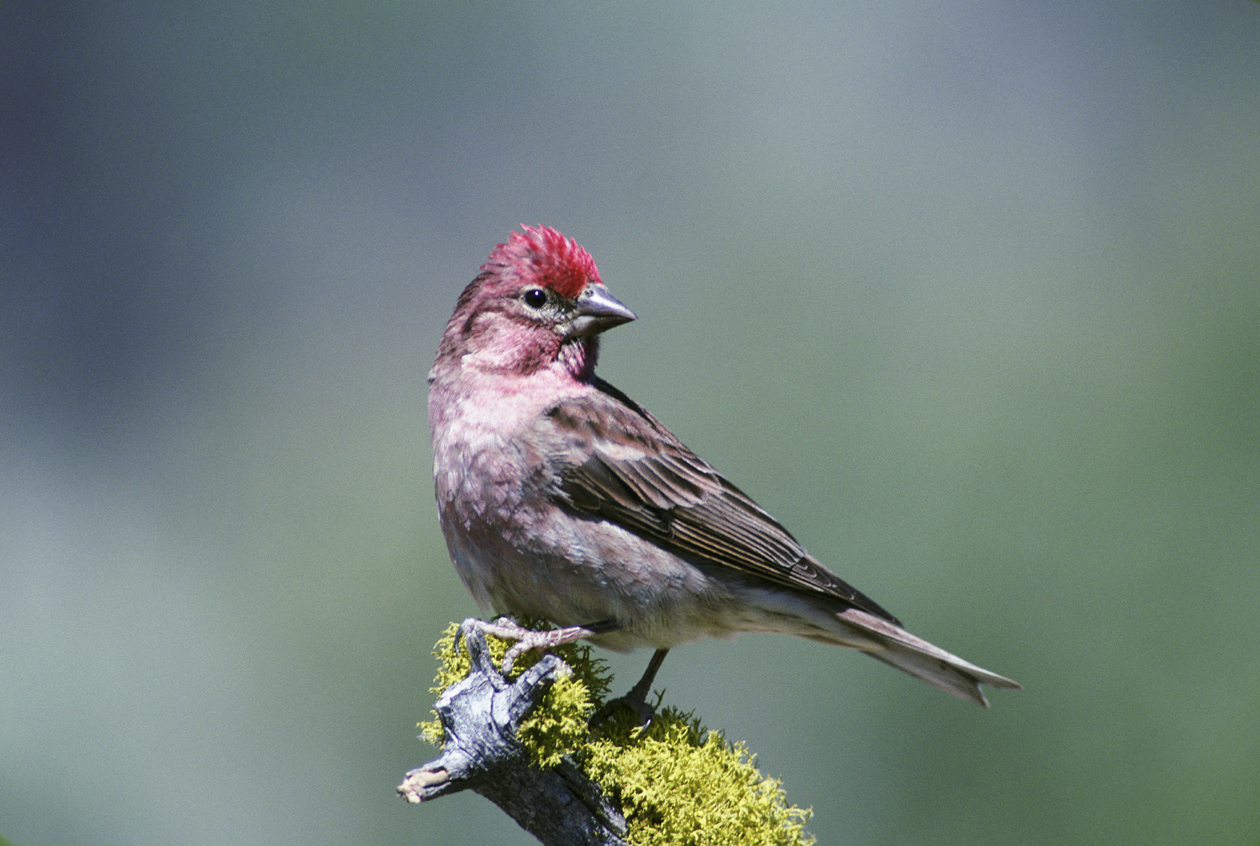
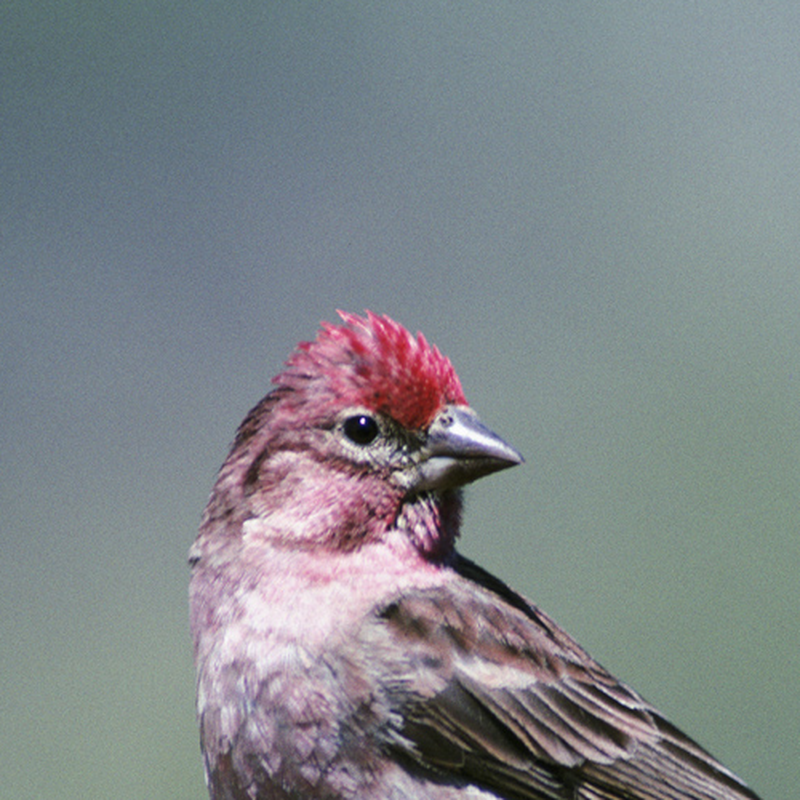
The Cassin’s Finch (Haemorhous cassinii) is the raspberry-red finch of the interior western mountains — a 6.3-inch conifer-forest bird with a long, straight conical bill. The male’s red is brightest in a sharply defined crimson crown, often raised in a small peaked crest; the female is finely streaked brown with a plainer face than the similar female Purple Finch. It breeds in high spruce, fir, and ponderosa pine forest and is an altitudinal migrant — in winter, many drift downslope to foothill yards and feeders. The song is a rollicking warble that mimics other birds, and the flight call is a liquid “tidilip.” Attract winter flocks with black oil sunflower seed near conifers, and keep open water available.
Species Physical Profile & Morphometrics
The Cassin’s Finch belongs to the true finch family (Fringillidae), genus Haemorhous — alongside the House Finch and the Purple Finch, its two closest relatives and its two biggest identification headaches. The species was named for John Cassin, the great Philadelphia ornithologist, who considered it the finest bird collected by the Pacific Railroad Survey of the 1850s.
Compared with the Purple Finch, the Cassin’s is slightly larger with a longer, straighter-sided bill and a longer primary wing projection. The male’s key mark is the peaked crimson crown — the reddest point on the bird, set against a paler pink wash on the breast and back. Both sexes show fine dark streaks on the white undertail coverts, a detail the Purple Finch lacks. Young males wear the streaked, female-like plumage through their first breeding season — yet sing full song, which fools many observers into thinking females sing.
Essential Morphometric Field Marks:
- Body Length & Mass: Averages 6.3 inches (16 cm) with an adult mass of 0.8 to 1.2 ounces (24–34 grams) — about House Finch size, but heftier and longer-billed.
- Wingspan: About 9.8 to 10.6 inches (25–27 cm), with long wings whose tips project well down the notched tail when perched.
- Bill Structure & Color: A heavy, conical bill that is noticeably longer and straighter-edged than a Purple Finch’s — a pointed, efficient seed-cracker with a straight culmen.
- Color Pattern: Male: raspberry red, most intense as a sharply defined red cap, with a streaked brown back and fine streaks on the undertail coverts. Female: brown and crisply streaked with a faint pale eyebrow, a plain face, and often a thin whitish eye-ring.
Raspberry red over head, breast, back, and rump — but the color concentrates in a brilliant, peaked crown that can be raised like a tiny crest, a “red-headed Bart Simpson” look unique among the red finches. The breast is a softer pink against a whitish belly, and the undertail coverts carry fine dark streaks. One-year males look like females but already sing.
Brown above, white below with short, crisp dark streaks, and a quiet face: only a faint pale eyebrow and often a thin eye-ring, without the bold white brow-and-whisker pattern of the female Purple Finch. Fine streaking on the undertail coverts clinches the ID.
Cassin’s Finch Vocalization Guide (3 Clearly Labeled Simulations)
The male’s song is a rollicking, joyful warble — longer and more complex than a House Finch’s or Purple Finch’s — and it often ends with a string of skilled imitations of other bird species, a cadenza that has sent many a field worker searching for a bird that was never there. The signature flight call is a liquid “tidilip” or “pwee-de-lip,” and the common contact call is a dry “kee-up.” No verified public-domain recording of this species was available at publication, so all three cards below are clearly labeled acoustic simulations built to published descriptions. For real wild audio, browse xeno-canto: Cassin’s Finch.
1. Song Simulation — The Rollicking Warble
2. Flight Call Simulation — “Tidilip!”
3. Contact Call Simulation — “Kee-up”
Habitat, Range & Mountain Movements
Cassin’s Finches breed in the dry, open conifer forests of the interior western mountains — ponderosa pine, Douglas-fir, spruce, and fir country from British Columbia and Alberta south through the Rockies, the Cascades’ east slope, and the Sierra Nevada to the mountains of Arizona and New Mexico. Most breed between 3,000 and 10,000 feet, often near treeline.

A Migrant That Moves Down, Not South
Cassin’s Finches are altitudinal migrants: after nesting high in the conifers, many simply drift downslope to foothills and valleys for winter, while plenty of others stay in the breeding range year-round. The northernmost breeders do move south — some as far as the mountains of central Mexico.
In the cold months they visit feeders in foothill and mountain-valley yards, often joining House Finches, goldfinches, and siskins — but numbers at any one yard swing dramatically from year to year.
Backyard Behavioral Patterns & Social Dynamics
The Cassin’s Finch is a high-country finch with a few signature habits. Four behaviors explain most of what you will observe:
🎭 The Mimic Songster
Males sing a rollicking warble laced with imitations of other birds — snippets borrowed from whatever species share the mountain forest. Biologists note that field workers are regularly fooled into searching for a “rare” bird that turns out to be a Cassin’s Finch showing off.
⛰️ The Vertical Migrant
Instead of flying hundreds of miles south, many Cassin’s Finches simply walk the seasons up and down the mountainside — high conifer forest to breed, foothill valleys to overwinter. It is one of the West’s classic altitudinal migrants.
🧂 The Salt Seeker
In late summer and fall, flocks — often traveling with crossbills — visit natural mineral deposits on the ground to satisfy a salt craving, a family trait shared with other finches. Bare, mineral-rich ground can draw them as reliably as a feeder.
👑 The Peaked Red Cap
The male’s brightest red sits in a crimson crown he can raise into a little crest — the “red-headed Bart Simpson” field mark. Catch a male flashing that peaked cap at your feeder and the ID is settled in an instant.
Problem: Why Is the Cassin’s Finch So Hard to Pin Down?
Birders across the interior West tell the same story: “A red finch I couldn’t name visited all February — then vanished for three years.” The reasons are built into the bird’s biology:
First, elevation: this is a high-mountain bird for most of the year, so only yards in the foothills and mountain valleys — and mostly in winter — get regular visits. Second, year-to-year variability: winter numbers at any given spot swing wildly with the mountain seed crop, so an empty feeder usually means a good cone year upslope, not a lost flock. Third, look-alikes: at a busy feeder the Cassin’s gets mentally filed as a House Finch or Purple Finch — without the peaked red crown, longer bill, and streaked undertail in mind, the differences slide right past. And fourth, habitat mismatch: yards without conifers, aspens, or open ground nearby offer little of what this forest bird wants. Stock sunflower before the cold sets in, keep water open, and learn the red cap — the “mystery finch” may have been a Cassin’s all along.
Method 1: Set the Table — Black Oil Sunflower & Winter Water
Design for a mountain finch that arrives with the cold and feeds in flocks:
-
Lead with Black Oil Sunflower
Black oil sunflower is the seed Cassin’s Finches take most readily at feeders — thin shells, high fat, and a perfect match for that long conical bill. Offer it in a multi-port tube feeder or covered hopper; our lab-tested roundup of the Best Tube Feeders for Small Birds compares proven models.
-
Add a Ground-Feeding Option
Cassin’s Finches are natural ground foragers — a low platform feeder, or simply a clean patch of seed scattered on bare ground or flagstone, suits them beautifully and serves the streaked females that feeders sometimes miss.
-
Skip the Salt Block — Offer Natural Minerals Instead
Wild Cassin’s Finches crave minerals and visit natural salt deposits, but never put out rock salt or table salt for birds — concentrated salt can harm them. The safe backyard version is a shallow dish of coarse sand or grit with crushed oyster shell, or simply leaving a patch of bare mineral soil undisturbed near the feeding area.
-
Keep Water Open Through Winter
A shallow bath near the feeders serves the whole winter flock. In freezing mountain valleys, a heated bird bath is often the single busiest feature in the yard.
Method 2: Keep the Habitat — Conifers, Aspens & a Clean Station
Feed the mountain finch’s natural menu and shelter:
-
Plant or Keep a Conifer
Ponderosa pine, spruce, fir, and Douglas-fir supply cone seeds, nesting sites, and the dense winter cover this species is built around. In the pinyon-juniper belt, junipers serve the same role.
-
Add Bud-and-Berry Natives
Cassin’s Finches eat quaking aspen buds and catkins in spring and berries in summer and fall — mountain ash is a proven favorite. Native trees feed them in the seasons when feeders matter less.
-
Leave Some Ground Bare
Ground-feeding finches need open, visible ground to work. An unmulched patch of mineral soil under or near the feeders doubles as a foraging floor and a natural grit source.
-
Keep the Station Clean
Winter finches crowd shoulder to shoulder, which spreads disease. Disinfect feeders every week or two and rake up old hulls — a clean station keeps a visiting flock healthy all season.
Tool Solution: Recommended Hardware for Cassin’s Finches
Equipment matched to a flocking, ground-and-perch feeding mountain finch:
Multi-Port Tube Feeder
A sturdy tube feeder with four to six ports, filled with black oil sunflower — the setup winter Cassin’s Finch flocks queue on in foothill yards.
- • Seed: Black oil sunflower
- • Ports: 4–6 perches
- • Season: Peak use Oct–Apr
Low Platform Feeder
A simple open platform set low or right on clean ground matches this species’ natural ground-foraging style — and gives the streaked females equal footing.
- • Seed: Sunflower or mix
- • Drainage: Mesh or slotted floor
- • Placement: Near shrub cover
Heated Shallow Bath
A shallow, gently sloped bath with a thermostatic heater — open water in a frozen mountain valley draws every winter finch in the neighborhood, Cassin’s included.
- • Depth: 1–2 in, gently sloped
- • Winter: Thermostatic heater
- • Placement: Near cover, off the lawn
Frequently Asked Questions
- Species Profile: The Cassin’s Finch (Haemorhous cassinii) is a 6.3-inch, 24–34 gram true finch (Fringillidae) of the interior western mountains, with a long, straight conical bill — banding code CAFI.
- Two Looks: Males are raspberry red with the color concentrated in a sharply defined, peaked crimson crown; females are crisply streaked with a plain face and faint eye-ring — plainer than the female Purple Finch.
- Mountain Movements: An altitudinal migrant — breeds in high conifer forest (mostly 3,000–10,000 ft) and drifts downslope to foothill feeders in winter, with numbers swinging year to year.
- Feeder Formula: Black oil sunflower in a tube or hopper feeder, a ground-feeding option, open winter water, and natural mineral grit — never rock salt — stocked by October.
- The High Nester: Nests 10–60 feet up in large conifers, sometimes semi-colonially; the female incubates 3–6 bluish-green speckled eggs for 12–14 days while the male feeds her.
- Voice: A rollicking warble famous for mimicking other birds, a liquid “tidilip” flight call, and a dry “kee-up” contact note.
Bird Watching Log
Species: Cassin’s Finch (Haemorhous cassinii)
| Cassin’s Finch (Red Crown / Flock Size: ____________________________) | |